
There are nights that refuse to pass. Nights when time stops to listen to its own heartbeat. In Lagos, sometime in the mid-1990s, the air felt heavy enough to be remembered. The city wasn’t sleeping; it was holding its breath. Soldiers were everywhere — at street corners, at newsstands, at cinema halls where laughter used to echo freely. People had learned to whisper their happiness. Under the weight of decrees and curfews, even music learned to hide behind metaphors.
That evening, somewhere in Surulere, Yemi Ayebo — better known as Yemi My Lover — was said to be editing scenes from his latest film. It was a story about a man who loved deeply and fought unseen forces for that love. Ironically, that same night, unseen forces were preparing to test the man behind the fiction. In a time when the boundaries between imagination and danger were blurred, one careless rumor could turn into a death sentence.
The story of that night has never been told the same way twice. Some remember it as a quiet arrest; others recall soldiers storming his residence. Yet the essence remains unchanged — a successful Yoruba filmmaker found himself caught between art and authority. No one could predict that a simple romantic title would soon become entangled in accusations of subversion.
It was the kind of moment that defines a generation — when creativity and survival collide. A man whose gift was storytelling suddenly became the subject of a story so dark it nearly ended his life.
The Rise of a Romantic Rebel
Before the arrest, Yemi My Lover was already a household name across Yoruba-speaking regions. He was more than an actor; he was a phenomenon. His debut film, Yemi My Lover (1993), mixed elements of love, folklore, and the supernatural — an unusual fusion at the time. Viewers were enthralled. It wasn’t just entertainment; it was a moral journey disguised as fantasy. The film’s mythical tone and emotional simplicity gave it a timeless appeal.
The character he played — a man trapped between affection and dark enchantment — mirrored the struggles of ordinary Nigerians trying to find light in uncertain times. The early 1990s were marked by inflation, unemployment, and the tightening grip of military power. Amid that darkness, Yemi’s stories offered escape. His films told people that love was not a weakness, but an act of endurance. That message resonated deeply in an era when tenderness itself felt rebellious.


His rise was meteoric. Market women sold his tapes alongside foodstuffs. Young actors began copying his style. Radio hosts quoted his dialogue as proverbs. What started as a low-budget production became a cultural wave. He had become a folk hero — a man who made love and magic respectable again.
But popularity carries weight. The regime, always suspicious of influence it couldn’t control, began to notice his reach. And when the name Yemi My Lover started to sound like a chant in public spaces, some in power began to wonder what exactly the people were worshipping.
The Shadow of Authority
Nigeria under General Sani Abacha was a landscape of fear disguised as order. Every expression — a song, a line in a play, a joke on television — could be interpreted as rebellion. Artists learned to speak through layers. Poets turned to riddles, musicians to parables, filmmakers to allegories. In that coded world, Yemi’s art was both beautiful and dangerous. His stories about love and spiritual warfare could easily be read as political metaphors.
The military government viewed mass attention as a form of power — and power outside uniform was intolerable. Cultural authorities began monitoring film content more closely. Yoruba filmmakers were particularly targeted because their stories reached deep into rural areas where state propaganda rarely penetrated. Within that context, Yemi My Lover — the man and the movie — became a mystery that intelligence officers couldn’t quite decode.
There were reports that a member of the regime’s cultural monitoring board described his films as “unpatriotic illusions.” Others claimed he was suspected of using cinema to mobilize youth subtly against the government. These claims were never proven, but under military rule, suspicion was proof enough. Files were opened, and names began circulating.
That was when the first shadow crossed his path. The artist who preached love and magic was now under watch for possible treason — a concept so absurd it could only belong to the Nigerian 1990s.
The Arrest
The arrest itself remains shrouded in half-light. Witnesses recall that it happened in the middle of production for a new film. He was said to be reviewing a scene when soldiers arrived, asking for him by name. There was no warrant, no explanation, just an instruction delivered with precision. He was taken away in a military van, leaving his crew frozen in disbelief.
That single moment split his life into two timelines — before and after. In the film world, rumors spread like wildfire. Some said he had been caught in a scandal involving the government; others believed his supernatural themes offended religious authorities. But the most persistent version was that his art had been misread as dissent — that somewhere within the myth of Yemi My Lover, officials believed they saw coded messages mocking the military elite.
Inside detention, the air would have been thick with uncertainty. Detainees during that period often disappeared without record. There were no trials for artists accused of “social sabotage.” The command was simple: silence them. He was reportedly interrogated about the meaning behind his scripts — the symbols, the chants, the names. To men who saw threat in every metaphor, Yemi’s imagination looked like conspiracy.
Days turned into weeks. Outside, his fans prayed. Inside, he waited for clarity that never came. Somewhere, an execution order was reportedly signed, but fate, as always, had other plans.
Between Life and Rumor
Rumors have long been Nigeria’s second history. After his arrest, multiple versions of his fate circulated simultaneously. One tabloid claimed he was executed secretly in Jos. Another insisted he was seen at a military hospital. A third version said he had been deported. None were true. The truth was stranger — he was alive, but marked. His release, when it came, was quiet, unannounced, almost apologetic.
The details of his survival remain murky. Some say a high-ranking officer’s wife, an admirer of his films, intervened. Others whisper that the pressure from Yoruba cultural elders saved him. What matters is that he walked out of detention thinner, quieter, but alive — something many did not manage in those years.

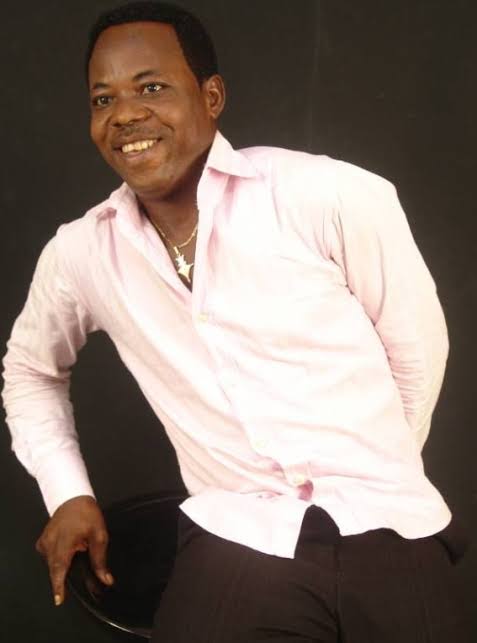
His return to civilian life was cautious. He didn’t grant interviews. He didn’t explain what had happened. The man who once filled screens with laughter now carried a silence that spoke volumes. Yet even that silence became part of his legend. People said he had seen something sacred — that his survival was proof that love, the very thing his films celebrated, could conquer fear itself.
By the time democracy returned, his story had evolved into folklore. To younger filmmakers, Yemi My Lover was no longer just a pioneer — he was a myth in human form, a man who lived through censorship and came back with wisdom.
Art as Survival
After his release, Yemi My Lover’s art transformed. He no longer chased glamour; he chased meaning. The themes in his subsequent films grew more reflective. Love was still central, but it was no longer naïve. His characters began to wrestle with destiny, power, and mortality. Behind every joke was a memory of fear, behind every romance, a hint of resistance.
Audiences noticed the change. His acting carried a new stillness, as though every line had been filtered through experience. Critics described it as maturity; friends described it as healing. His storytelling became less about spectacle and more about endurance — the quiet strength to keep believing in goodness even after the world tried to kill it.
Through this evolution, he became one of the quiet revolutionaries of Yoruba cinema. Without slogans or protests, he turned film into refuge. His works became parables for resilience, reminders that even under oppression, imagination could not be executed. He didn’t fight the government; he simply outlasted it. That was his rebellion.
Years later, when interviewed about his career, he avoided political commentary. Instead, he spoke about love — not romantic love, but the love of humanity, of endurance, of truth. That, he said, was what kept him alive.
The Years After the Shadow
The 2000s ushered in democracy and nostalgia. The Nigerian film industry, now called Nollywood, began to flourish. Yemi My Lover, though quieter, was recognized as one of the architects of that early magic. His ordeal became a whispered part of his biography, discussed only by those who understood how thin the line between fame and punishment had once been.
He collaborated with younger filmmakers, guiding them to use storytelling as moral compass rather than weapon. Many of those he mentored — including actors and directors of the Yoruba screen — carried traces of his philosophy: simplicity, sincerity, and courage in storytelling.
Public appearances were rare, but when they happened, he was welcomed like a survivor of an ancient war. The film industry itself had changed — technology replaced old cameras, democracy replaced decrees, but memory lingered. Each time he appeared on set, older crew members would look at him with unspoken reverence, as though filming beside him meant touching history.
Through all of it, Yemi My Lover maintained his humility. Fame, for him, was no longer an achievement; it was a responsibility — the duty to remind people that stories can heal, and that laughter, no matter how fragile, is still the purest defiance against tyranny.

Legacy of a Survivor
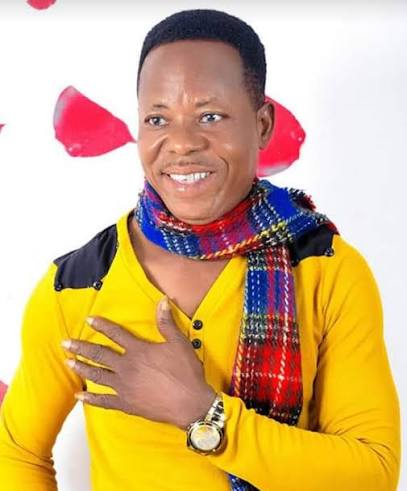
Today, Yemi My Lover’s legacy stands as a cautionary tale wrapped in affection. He is remembered not just for his romantic roles, but for surviving an era that punished imagination. His 1996 arrest has become a symbol of how easily art can be misunderstood under fear. When he acts now, every gesture feels like testimony — a man who once looked into the eyes of power and returned to tell the tale.
His influence continues to ripple through Nigerian cinema. Filmmakers now explore spiritual and moral themes with more freedom, walking paths he helped clear through sacrifice. Each time a Yoruba film dares to blend the mystical with the emotional, a trace of Yemi’s legacy breathes through it.
Culturally, his story echoes the struggles of artists across generations — from Fela’s imprisonment to Funmi Ransome-Kuti’s activism to the censorship faced by comedians in the 2000s. The lesson is constant: art in Nigeria is never neutral; it always bears the fingerprints of survival.
If Yemi My Lover’s life teaches anything, it’s that creativity cannot be silenced, only delayed. A regime can suppress an artist, but not the truth his art carries.
The Return of the Lover
Years after the ordeal, when his old films resurfaced online, a new generation discovered him. They laughed at his dramatic expressions, adored his honesty, and had no idea they were watching a man who once stood on the edge of execution. That is how history often hides — behind joy, behind nostalgia, behind the simplicity of a smile.
To this day, his story remains both mystery and mirror — a reflection of Nigeria’s uneasy dance between art and authority. The title Yemi My Lover has outlived its time, turning from a name into a philosophy: to love deeply, even when fear surrounds you; to create, even when creation costs your freedom.
He remains one of the few whose lives remind us that survival itself can be art — that to keep dreaming, under repression or ridicule, is a form of quiet rebellion. His legacy lives not in loud protest, but in persistence.
And so, decades later, the story ends where it began — in Lagos, under the restless night sky, where an artist once dared to imagine love in a loveless time and nearly paid for it with his life. The city has changed, the soldiers are gone, but the echo remains. Somewhere, his old film still plays, flickering on a dusty screen — a reminder that even when art is imprisoned, the heart that created it can never be.