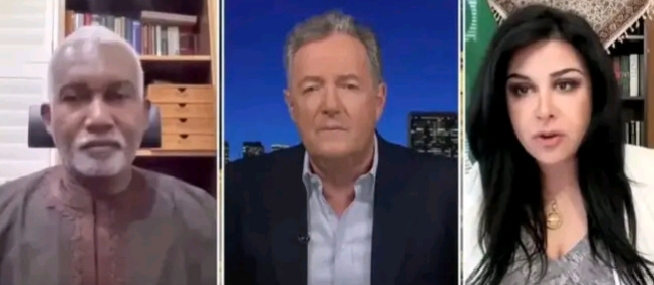
The lights in the studio on Wednesday November 19, 2025, weren’t just bright—they were almost blinding, bouncing off glass and panels like they were trying to signal tension. Two people, miles apart in life experience but now on the same stage: Minister Yusuf Tuggar, Nigeria’s Foreign Affairs chief, calm but sharp, and Goldie Ghamari, former Canadian lawmaker, ready to hit every nerve with her words.
No one knew who’d land the first punch. This wasn’t just a TV debate on British Broadcaster Piers Morgan’s Uncensored programme. It was a clash of worlds—local versus global, lived experience versus advocacy reports, numbers versus feelings. And both knew the stakes: the world was watching. Policymakers, diasporas, activists, and media outlets all had their eyes on every word.
Ghamari came with her charts, stats, and righteous fire. Tuggar brought context, caution, and the weight of a diplomat who has felt terror firsthand. The tension wasn’t in the opening line—it was in the pause before they spoke, in the way the audience leaned forward, waiting to see which narrative would dominate. Every number, every claim, every rebuttal had the power to spark outrage, shift perception, and maybe even alter policy.
This wasn’t just about who was right. It was about who could tell a story that felt real, urgent, and credible, while carrying the weight of millions of lives caught in the middle.
Trump’s Bombshell Threat: “Christian Genocide” in Nigeria, or Just Loud Rhetoric?
U.S President Donald Trump lit the match before Tuggar ever spoke. He posted on Truth Social that Christians in Nigeria face an “existential threat,” accused “radical Islamists” of a mass slaughter. He even ordered his Department of War (yep, that’s what he called it) to “prepare for possible action,” threatening to go in “guns‑a‑blazing” if aid stops and the carnage continues.
Nigeria slammed back fast. Tuggar and other officials rejected the claim as false, holding up Nigeria’s constitution and saying their government does not sanction religious persecution. They argued the situation isn’t about one faith being hunted—it’s a messy security problem, not a genocide.
Minister Yusuf Tuggar: Calm in the Storm
Tuggar’s life has been one of navigation. Between politics, diplomacy, and personal tragedy, he learned early that words could kill as much as bullets sometimes. On the show, he wasn’t just defending Nigeria—he was holding a mirror to the world, saying: “Look closer. Don’t judge too fast.”
He spoke calmly but with conviction. Violence happens, he admitted. People die. Churches get attacked. But these attacks aren’t happening because someone decided Christians need to be wiped out. They’re part of a bigger picture: criminal gangs, Boko Haram, land disputes. Religion is often the headline, but rarely the whole story.
Then came the personal note. Tuggar’s father-in-law was killed by extremists. That hurt? Yes. But he used it not to score points, but to underline a point: violence hits Nigerians across religions, not selectively. It made his defense more human, more believable, because he wasn’t talking numbers only—he was talking life.
When he shared his stats—177 Christian deaths, 102 church attacks in five years—he wasn’t being cold. He was precise, emphasizing methodology. His numbers weren’t inflated. They were grounded in government reports, and he repeatedly stressed that victims are treated as Nigerians first, faith aside. Tuggar’s calm, slightly weary tone carried authority. It said: “I’ve lived this, I understand this, don’t mistake my caution for denial.”
Goldie Ghamari: The Firebrand from Afar
Ghamari came swinging. Her tone sharp, her words deliberate. She painted the violence in broad strokes: genocide, jihad, systematic targeting. She cited Intersociety numbers—over 50,000 Christians dead since 2009, 18,000 churches destroyed. Those numbers hit the audience like a punch, and they weren’t just stats—they were a moral call to action.
She drew connections to Iran, Islamist networks, and Nigerian leadership, framing the attacks as part of a global web of religious extremism. Her approach was clear: this isn’t random crime; it’s a targeted campaign. And by framing it so dramatically, she forced viewers to feel urgency, outrage, and moral responsibility.
Some called her tone aggressive; others called it honest. She knew the studio, cameras, and international audience were her amplifier. Every word was aimed at making the world notice what she sees as neglected suffering. And while Tuggar’s calm argued for context, Ghamari’s fire argued for accountability, demanding that the world not look away.
Numbers in the Crossfire
The numbers, man—they were the bullets. Tuggar with his methodical, government-verified stats. Ghamari with the big-picture, heart-pulling figures. Both had credibility, both had stakes, and both were staking moral ground with every mention.
Ghamari’s stats screamed crisis. Tuggar’s stats whispered caution. The clash wasn’t just a numbers game—it was a framing game. Numbers are never neutral. Tuggar’s body language was screaming, “Check your methodology, check your sources.”.. “Check your conscience, check your eyes.”
What happened here was bigger than math. Every figure carried the weight of real lives—families grieving, churches rebuilding, communities in fear. For viewers, the numbers weren’t just abstract—they were human stories waiting to be acknowledged. And that’s what made the debate hit differently than your usual “facts-only” segment.
Framing the Violence: Religion or Security?
Here’s where it got sticky, Ghamari called it jihad, Tuggar called it criminality. Both had points, Nigeria’s conflicts are messy, with religion, ethnicity, land disputes, and politics tangled up like wires in a breaker box.
Tuggar argued simplification is dangerous. Reduce it to “Christians vs Muslims” and you risk igniting flames the country doesn’t need. He used Sudan as a cautionary tale—foreign interpretation can fracture nations. Ghamari pushed back, saying some things aren’t complicated—they’re moral wrongs, visible patterns that demand naming.
It was a battle not just over truth, but language. One word—jihad, genocide, terrorism—could tilt perception globally. The stakes weren’t just academic; they were human, political, and potentially diplomatic.
Emotion in the Mix: When Numbers Meet Real Human Pain
Numbers aside, the personal stakes hit hard in the studio. Tuggar’s loss was real and raw, carrying the quiet weight of someone who has felt terrorism strike his own family. Ghamari’s urgency was palpable, the kind of intensity that makes you lean in because you can feel the moral pressure radiating from her words. The tension between them was like watching two storms collide: Tuggar’s measured, deliberate, careful with every phrase; Ghamari’s blazing, urgent, impossible to ignore. Both were human, both fallible, both commanding attention in ways that went beyond what charts or statistics could ever convey.
It was obvious neither was there for applause or to play the media game. Tuggar wanted understanding, to make people see the full picture, while Ghamari wanted action, to ensure the suffering she highlighted would not be ignored. The audience felt it—not through data points, not through graphs, but through the weight of experience and observation that each brought into the conversation. The emotional tension was heavy, almost tangible, stretching across every camera angle and every word exchanged.
Domestic Stakes: Balancing Unity and Outrage in Nigeria
For Nigerians watching from their homes or online, the tension was more than dramatic flair—it was personal. Tuggar’s worry about misrepresentation was grounded in reality: framing violence purely as religious persecution could inflame divisions and spark tensions between communities. He compared the stakes to Sudan’s history, a cautionary reminder that misunderstanding could fracture a nation.
Ghamari’s framing, meanwhile, was designed to compel international attention and immediate response. She put a spotlight on incidents that may otherwise be ignored, but Tuggar’s concerns remained valid: highlighting religion over context can inadvertently escalate local tensions, adding pressure on communities already living in fear. Both perspectives mattered, and both had consequences. In Nigeria, stories are not abstract; they collide with lived experiences, and the way they are told can influence whether communities heal or further fracture.
Media as the Messenger and the Battlefield: Where Accusations Fly
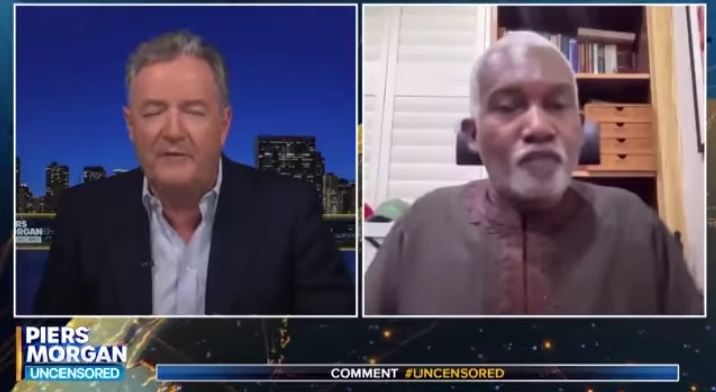
Piers Morgan’s platform wasn’t just hosting a debate—it was a stage for confrontation. Goldie Ghamari didn’t hold back. She accused Minister Tuggar of “lying” and “whitewashing” the violence, describing it as a targeted campaign—or, in her words, “jihad”—against Christians in Nigeria. Her tone was sharp, urgent, almost like she was daring the world to ignore the suffering she spotlighted. Every word was calculated to push viewers into questioning official narratives and demanding accountability.
Tuggar, calm but firm, didn’t flinch. He rejected her characterization, insisting that the violence, while tragic, is not organized persecution of Christians but part of a wider security crisis. He emphasized methodology, accuracy, and context, warning that misrepresentation could fracture Nigeria. His insistence on airing the interview unedited wasn’t just procedural—it was about defending credibility and preventing selective editing from miscasting him as dishonest.
The clash went beyond numbers or rhetoric—it was a human confrontation, a collision of perspectives. Ghamari relied on the platform’s reach to amplify urgency and outrage, while Tuggar leaned on his lived experience and official knowledge to insist on nuance. Every viewer became a judge, and every clip or social media snippet could inflame debate, trigger outrage, or spark discussion, turning a single studio argument into a global conversation.

Policy and Global Consequences: When Allegations Travel Beyond Borders
Allegations of genocide carry immense weight. They can trigger sanctions, reshape aid priorities, and push diplomatic pressure. Tuggar argued for measured, contextual responses, warning that misinterpretation could lead to misguided international action or harm to citizens. His insistence on accurate, verified data was not just bureaucratic—it was protective and strategic.
Ghamari, on the other hand, argued for moral clarity and urgent action. The stories she shared and the patterns she highlighted demanded attention, emphasizing that hesitation could mean ignoring suffering. The debate illuminated a broader truth: policy cannot exist in a vacuum, and public perception—shaped by narratives, statistics, and emotional framing—directly influences the decisions of governments and international bodies. Every word, every statistic, every framing choice mattered, carrying consequences that extended far beyond the studio.
Closing Thoughts: No Simple Answers, Only Human Complexity
When the cameras finally powered down, there was no clear “winner.” Tuggar defended context and accuracy, insisting on nuance. Ghamari demanded moral urgency, refusing to let numbers obscure the human toll. Both perspectives illuminated different angles of the same reality: violence is real, suffering is real, and the narratives that describe them matter immensely.
Numbers, framing, emotion—they all intersected in the debate, making it clear that truth is never simple. The world may never fully reconcile the two sets of figures, yet the conversation revealed a fundamental reality: human lives, stories, and suffering cannot be separated from the narratives that convey them. And when billions are watching, every word counts, every framing matters, and every human story deserves attention.