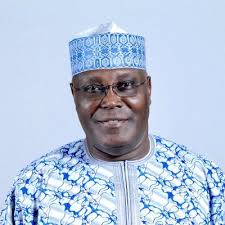
The former vice president, Atiku Abubakar, officially joined the African Democratic Congress, ADC, on Monday, signalling his alignment with the coalition-backed party ahead of the 2027 elections.
His registration at Jada 1 Ward, Jada Local Government Area of Adamawa State, comes 130 days after he resigned from the Peoples Democratic Party, PDP, a platform on which he had unsuccessfully contested the presidency twice.
Atiku, who has now joined six political parties over 38 years, will turn 81 in 2027, prompting observers to note the longevity of his pursuit of the presidency.
The former vice president began his political journey in the early 1990s with the People’s Front of Nigeria, PFN, serving as national vice-chairman by 1989 and participating in the Constituent Assembly tasked with drafting a new constitution.
During the Third Republic, Atiku contested the Social Democratic Party, SDP, presidential primaries but stepped down for Chief MKO Abiola after persuasion from late Shehu Musa Yar’Adua.
After a two-decade career in the Nigeria Customs Service, he joined the PDP and won the Adamawa State governorship election in 1998 but was chosen by General Olusegun Obasanjo as his running mate, becoming vice president on May 29, 1999.
While serving as vice president, Atiku was appointed chairman of the National Council on Privatisation, overseeing the sale of state-owned enterprises that left an enduring mark on the Nigerian economy.
Relations with President Obasanjo deteriorated, particularly during the 2003 PDP presidential primaries and over discussions on constitutional amendments, including the proposed third term for Obasanjo.
Atiku left the PDP for the Action Congress, AC, in 2006 to contest the 2007 presidential election but was unsuccessful.
He returned to the PDP in 2009 and sought the presidential ticket in 2011, losing to incumbent Goodluck Jonathan.
In 2014, Atiku and other PDP leaders formed the n-PDP faction and joined the APC, seeking its presidential ticket but losing to late Major General Muhammadu Buhari, who later won the presidency.
Before the 2019 elections, he returned to the PDP, became its presidential candidate, but was defeated by Buhari in the general election.
His political career has been marked by resilience, with multiple party changes and continued participation in national politics despite repeated setbacks.
In July 2025, he resigned from the PDP for the third time, citing differences with the party’s trajectory, and aligned with the ADC in a strategic move to contest in 2027.
Atiku described his registration with the ADC as the start of a national realignment aimed at ending the governance challenges he attributes to the ruling party, the APC.
Observers note that his current party alignment is the sixth political platform he has formally joined since entering national politics.
The former vice president has emphasised national unity, urging citizens to focus on governance and development beyond ethnic or religious divisions.
Through decades of political engagement, he has occupied multiple leadership positions, influenced policy decisions, and maintained visibility in Nigeria’s evolving political landscape.
His political transitions have included moves between the SDP, PDP, AC, APC, and now ADC, illustrating a pattern of strategic repositioning ahead of electoral contests.
While some commentators question the effectiveness of these shifts, Atiku’s long-term pursuit of the presidency highlights a commitment to national leadership.
The former vice president’s tenure has also included the management of national economic reforms, engagement in party structuring, and participation in constitutional processes.
As he enters the 2027 elections under the ADC, questions remain about the outcome of his decades-long quest and whether the new party platform will alter his electoral prospects.
Atiku’s journey reflects a complex interplay of party politics, leadership roles, strategic realignment, and sustained engagement with Nigeria’s political system.
The 2027 elections will mark another chapter in his long political career, and his performance under the ADC banner will be closely watched by analysts, voters, and stakeholders across the country.
His latest move underscores the continuity of his ambition while highlighting the fluid nature of party affiliations in Nigeria’s political environment.
Atiku’s career trajectory shows that the pursuit of national leadership in Nigeria often involves persistent effort, adaptation to changing circumstances, and navigation across multiple political platforms.
Whether his efforts through the ADC will yield success in 2027 remains a question for the electorate, marking a continuation of his three-decade pursuit of the presidency.