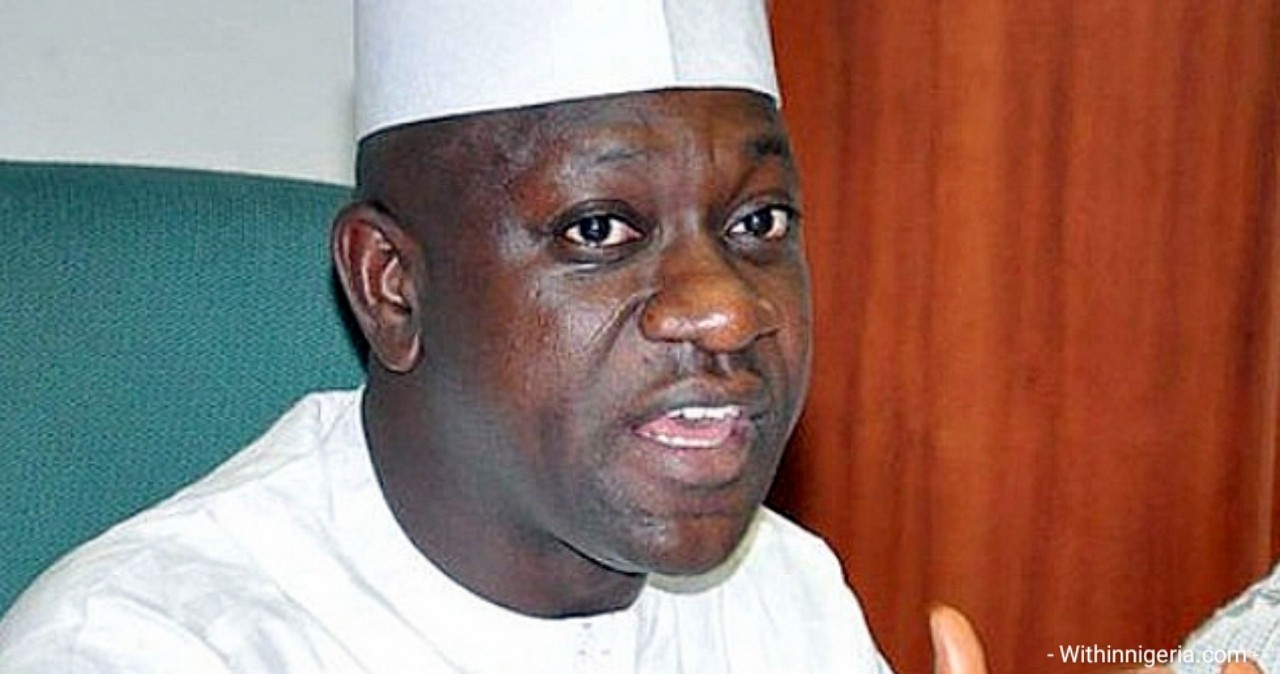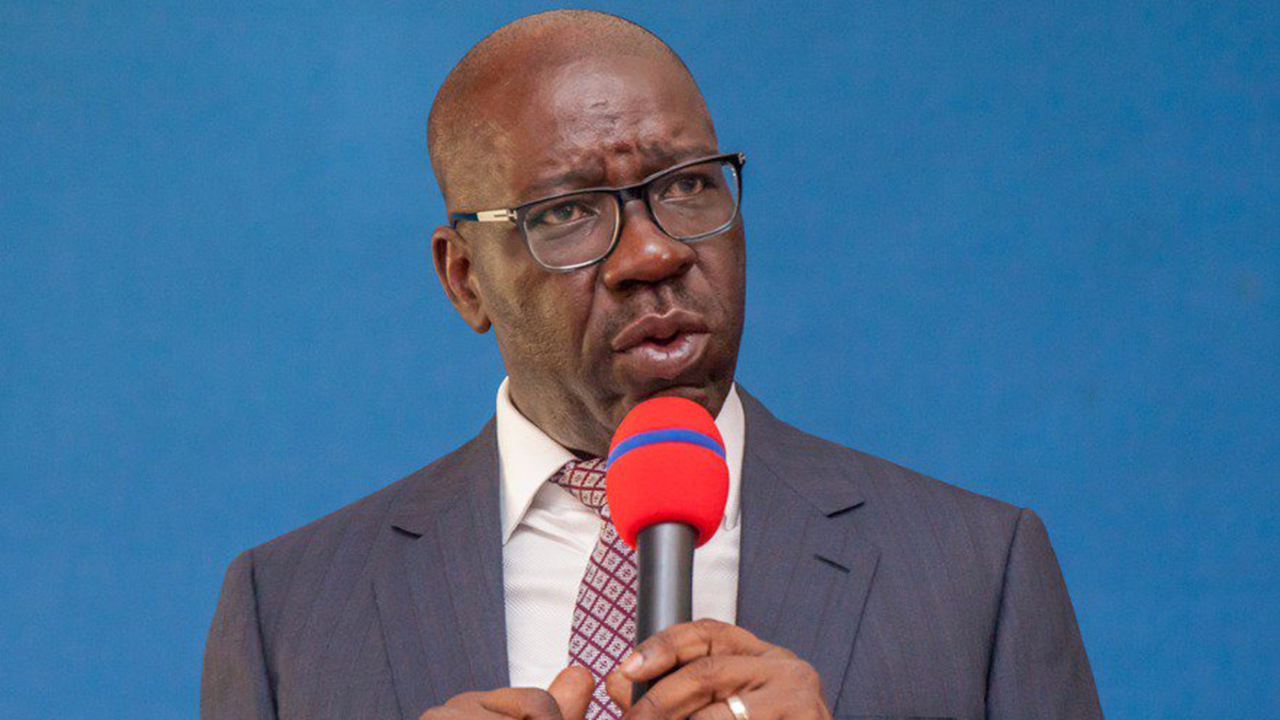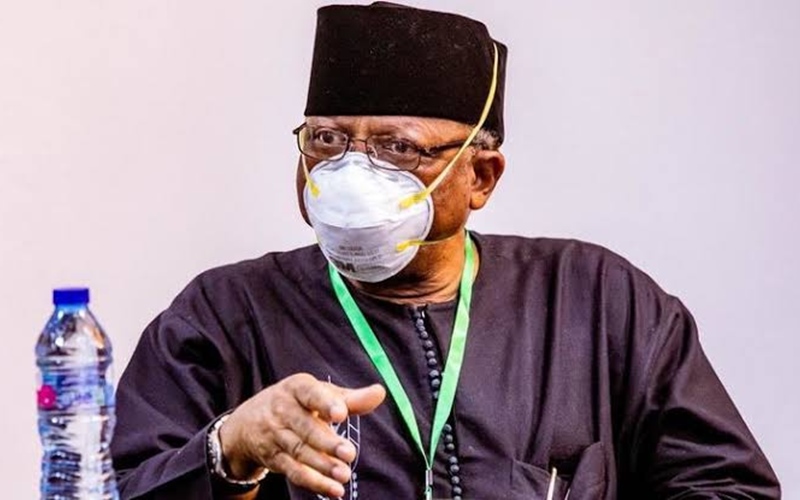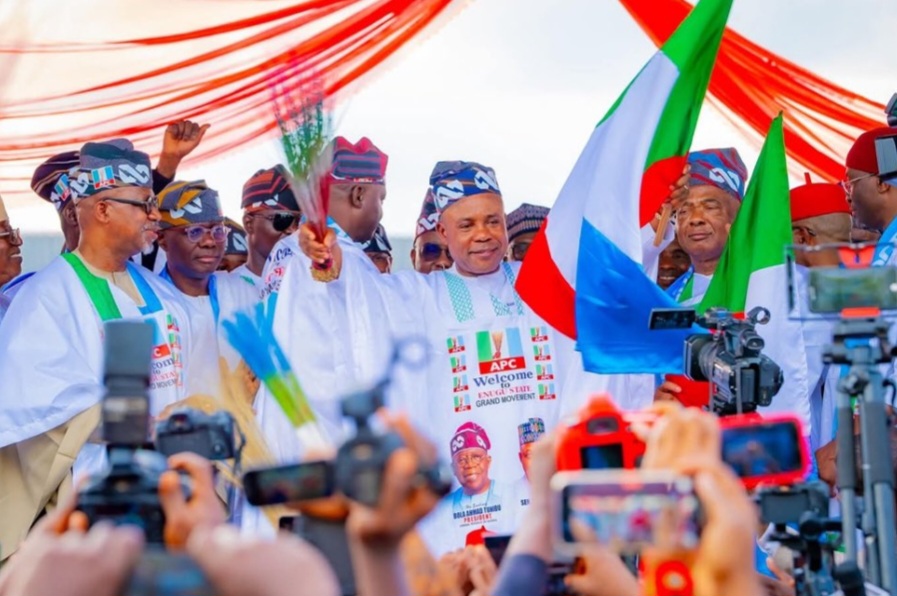
Nigeria’s political space is witnessing an increasing movement of elected officials from opposition parties to the ruling party across several states of the federation.
This trend has raised renewed focus on the strength of multiparty democracy and the future balance of political competition in the country.
Defections have affected governors, lawmakers at both federal and state levels, and several high-ranking party officials.
The movement has been most visible within parties that previously formed the main opposition bloc.
In many states, defections have shifted the political structure within state assemblies and altered long-standing alignments.
Some defectors explain their decisions as efforts to align with the federal government for administrative cooperation.
Others describe their actions as moves driven by internal party disputes and leadership disagreements.
Political analysts note that such explanations are not new in Nigeria’s political history. The country has experienced several waves of defections since the return to democratic rule in 1999.
What makes the current trend distinct is that most of the movements appear to be flowing in a single political direction. This pattern has reduced the numerical strength of major opposition parties in several regions.
In some zones, opposition parties that once controlled state governments now hold limited elective positions.
The Peoples Democratic Party, which ruled at the federal level for sixteen years, has experienced the highest level of exits in recent times.
Once dominant in over two-thirds of the states, the party now faces shrinking territorial control. Several governors elected on its platform have moved to the ruling party in quick succession.
Legislators at the National Assembly and in state assemblies have also followed similar paths. These movements have reshaped legislative leadership structures in multiple chambers.
With each defection, the opposition’s ability to mobilise votes and influence policy debates becomes further constrained.
Multiparty democracy thrives on competition among political groups with alternative programmes and policy directions.
Where opposition numbers decline sharply, checks on executive authority become weaker.
In such settings, legislative scrutiny, budget oversight and policy debates may lose depth.
The present situation has placed renewed attention on the internal structure of political parties. Many parties operate without strong ideological foundations, making membership fluid.
Party loyalty in several cases appears tied more to personal ambition than to shared political principles.
This flexibility has made it easier for office holders to cross from one platform to another.
Electoral victories at different levels are often built around personalities rather than party systems. As a result, political parties struggle to retain elected officials once power dynamics shift.
The absence of strict regulatory limitations on defections has also contributed to the trend. The constitution permits legislators to defect under certain conditions linked to party division.
These provisions, while intended to protect freedom of association, have also been used broadly. In some cases, entire blocs of lawmakers have moved together to new political homes.
At the state level, repeated defections have changed the numerical composition of assemblies. In some legislatures, opposition parties that once held significant seats now occupy minimal positions.
This has influenced voting patterns on state budgets, confirmations and policy resolutions.
At the federal level, numerical dominance has become more visible within both chambers of the National Assembly.
The ruling party now controls a substantial majority of seats in both the Senate and the House of Representatives.
This dominance gives the governing party strong leverage in passing bills and approving executive requests.
Concerns have grown over whether alternative policy positions are receiving sufficient legislative space.
Civil society groups continue to monitor how shrinking opposition strength affects political accountability.
Observers note that democratic systems rely on open political contest to remain healthy.
When competition fades, voter interest and public engagement may decline.
Low political competition can also affect the quality of electoral campaigns and public debates.
Candidates may face reduced pressure to present detailed policy plans where opposition is weak. In recent elections, several states recorded victories where opposition presence was minimal.
Such outcomes have further fueled public discussion about political balance ahead of future elections.
The growing dominance of one political bloc also places increased responsibility on internal party discipline.
Where one party holds overwhelming control, internal disagreements may replace external opposition. This can shift political contest into internal party factions rather than across party lines.
The situation ahead of the 2027 general elections remains uncertain. If defections continue at the present pace, several states may enter the next election cycle with limited opposition choices.
This could influence voter turnout and the range of candidates presented on the ballot. The strength of Nigeria’s democracy has historically depended on competitive political engagement across multiple parties.
Sustaining that competition requires parties to rebuild internal structures, strengthen grassroots networks and clarify policy positions.
It also depends on public confidence in the fairness of the political process. As the nation approaches another election cycle, the direction of party politics remains under close watch.
The decisions taken by political actors in the coming months will shape whether Nigeria’s multiparty system expands or contracts.