For a long time, Pastor Benjamin Egbaji existed in official records only as a name attached to a case number. No public charge sheet, no courtroom photographs. No clear narrative that explained how a Nigerian cleric crossed a border and vanished into the machinery of a neighboring state. What lingered instead was silence. The kind that stretches across months and then years, slowly turning concern into fatigue, and fatigue into forgetting.
In diplomatic corridors, his name surfaced occasionally, often lowered in tone, framed as a sensitive matter, a delicate situation, a file that required patience. Outside those corridors, among ordinary Nigerians, there was little to hold on to. No interviews. No regular updates. No confirmation of guilt or innocence. Just the uncomfortable awareness that a citizen had been detained abroad and that time was passing without resolution.
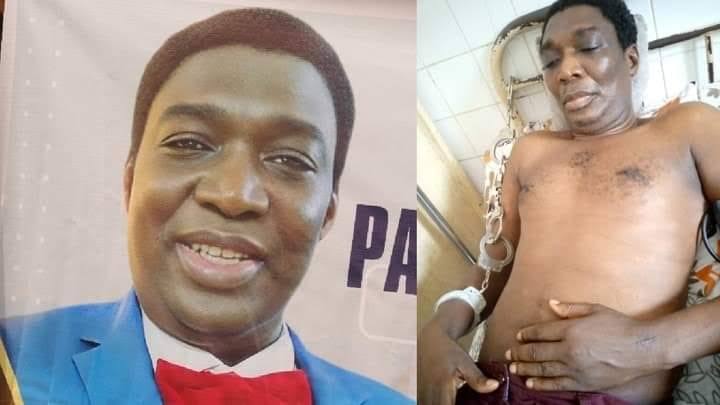
That silence broke not through a court ruling or a formal press briefing, but through an image. A photograph that carried weight precisely because it was not supposed to exist. A man restrained to a hospital bed, his frailty visible, his dignity stripped not by judgment but by circumstance. In a digital age where outrage travels faster than explanation, that image did what legal documents could not. It forced attention.
By the time January 2026 arrived, the story of Pastor Benjamin Egbaji was no longer simply about detention. It had become a question about power, mercy, diplomacy, and the quiet calculations that lead a president to sign a pardon that closes one chapter while leaving many questions unresolved.
The Man Before the Case
Before his name became attached to diplomatic cables and ministerial visits, Benjamin Egbaji lived a life that did not attract international attention. He was known primarily within religious and business circles, moving between Nigeria and neighboring countries in ways that were common among West African traders and clerics. His roots in Cross River State grounded him in a region accustomed to cross border interaction, where commerce, faith, and family often stretch beyond national lines.
He was not a public intellectual or a political activist. There were no speeches preserved for posterity, no viral sermons, no controversies that followed him online. This absence of public footprint later complicated his case. Without a widely known profile, there was little immediate pressure on institutions to explain his detention or justify its length. He was visible enough to be noticed when gone, but not famous enough to demand instant accountability.
Within Benin, he entered a system that operates largely out of international view. Judicial processes there rarely attract global media unless attached to political upheaval or foreign nationals with significant diplomatic backing. For a long time, Egbaji had neither. His case moved slowly, if it moved at all, through channels that offered little transparency to outsiders.
As months turned into years, the man himself receded from public consciousness, replaced by fragments of information. Reports of illness. Claims of harsh conditions. Hints of unresolved accusations. What was missing was clarity. And in the absence of clarity, narratives begin to fill the gaps.
Detention Without Definition
One of the most unsettling aspects of the Egbaji case was not the fact of detention itself, but the lack of publicly articulated resolution, Detention implies process. Process implies movement toward judgment. In this case, movement was difficult to trace. The charges, while referenced, were never fully outlined in the public domain. Legal timelines appeared elastic. Accountability was diffuse.
This ambiguity placed Nigerian authorities in a delicate position. Diplomatic norms discourage public confrontation over ongoing judicial matters in another sovereign state. Yet prolonged silence carries its own cost. Each passing month raised questions about whether due process was being observed, and whether humanitarian considerations were being sidelined by procedural inertia.
Inside Benin, officials framed the matter as internal. Outside, Nigerian observers began to view it through the lens of citizen protection. These perspectives did not easily align. The result was a slow build up of quiet pressure rather than an immediate clash.
By the time health concerns became central to the discussion, the case had already crossed from legal territory into moral territory. It was no longer simply about what the law permitted, but about what continued detention meant for a man whose physical condition was visibly deteriorating.
When an Image Changes Everything
The photograph that circulated online did not come with context. It did not explain jurisdiction or procedure. It did not outline charges or defenses. It simply showed a restrained human body in a medical setting. In that moment, the case stopped being abstract.
Images bypass analysis, they go straight to instinct. For many Nigerians, the photograph crystallized fears that had previously been vague. That a citizen could disappear into a neighboring country’s system and reemerge only as a patient chained to a bed. Whether that perception was fully accurate mattered less than its emotional impact.
Public reaction followed a familiar arc. Outrage, demands for explanation, and calls for government intervention. What was different this time was the timing. The image surfaced after years of detention, not days. It forced institutions to respond to a problem that had been allowed to linger.
Within diplomatic circles, the photograph altered the tone of engagement. What had once been discussed cautiously as a legal matter now carried humanitarian urgency. Health became the language through which negotiations advanced. Mercy became a viable option where litigation had stalled.
Diplomacy Behind Closed Doors
The involvement of Nigeria’s Ministry of Foreign Affairs did not begin with the photograph, but it intensified after it. Ambassador Bianca Odumegwu Ojukwu emerged as a visible figure in the effort, not through rhetoric, but through presence. Her visit to Egbaji in August 2025 signaled a shift from distant advocacy to direct engagement.
Diplomacy in such cases rarely produces dramatic breakthroughs. It works through accumulation. Repeated conversations. Carefully worded appeals. Emphasis on shared regional values and long standing bilateral relations. In this instance, the argument was framed less around innocence or guilt and more around humanity and health.
Requests were made quietly, transfer for medical care, Possibility of serving any remaining sentence in Nigeria. Consideration of clemency. None of these demanded that Benin concede wrongdoing. They offered an exit that preserved sovereignty while addressing international concern.
By late 2025, the path toward a presidential pardon had become visible, even if it was not publicly acknowledged. The gazetting of the pardon in December suggested that the decision had been made weeks before the public announcement. January 2026 was not the beginning of mercy, but its formal conclusion.
Why a Pardon and Not a Verdict
Presidential pardons occupy a unique space in governance. They do not necessarily declare innocence. They do not overturn facts. They close files without reopening arguments. For Benin, granting a pardon allowed the state to resolve a sensitive case without exposing judicial processes to external scrutiny.
From a political perspective, the pardon served multiple purposes. It addressed humanitarian concerns. It eased diplomatic pressure. It reinforced executive authority. Most importantly, it ended a story that was becoming increasingly uncomfortable to explain.
For Nigeria, the outcome validated a citizen centered foreign policy narrative. It demonstrated that prolonged engagement could yield results without confrontation. It also avoided the risks associated with escalating the matter into international legal forums.
The choice of a pardon, rather than deportation or judicial dismissal, reflected a compromise. It allowed both states to move forward without forcing a public reckoning over the years that preceded it.
After Freedom Comes Recovery
Freedom does not erase damage. For Pastor Egbaji, release marked the end of confinement but not the end of consequence. Years of detention under uncertain conditions left physical and psychological traces that cannot be undone by a single signature.
Official statements described him as being in high spirits, a phrase often used to signal optimism without detail. Behind that phrase lies a reality that requires care, rehabilitation, and reintegration. The transition from captivity to normal life is rarely seamless.
For Nigerian diaspora communities in Benin, the case reinforced a sense of vulnerability but also of possibility. It showed that advocacy, when sustained, can reach the highest levels of power. It also highlighted the many other cases that do not receive the same attention.
As the headlines faded, the deeper questions remained. About transparency. About detention practices. About the quiet spaces where individuals wait while states deliberate.
What the Pardon Ultimately Meant
The presidential pardon granted to in January 2026 was not simply an act of mercy. It was a resolution shaped by time, pressure, and the limits of law when confronted with human fragility. It closed a chapter that neither country was eager to keep open.
In granting it, Benin chose stability over scrutiny. Nigeria chose patience over escalation. And between those choices stood a man whose life had been suspended long enough to make freedom feel almost unreal.
History will likely record the date, the name, and the signature. What it may not capture fully is the slow accumulation of moments that made that signature inevitable.