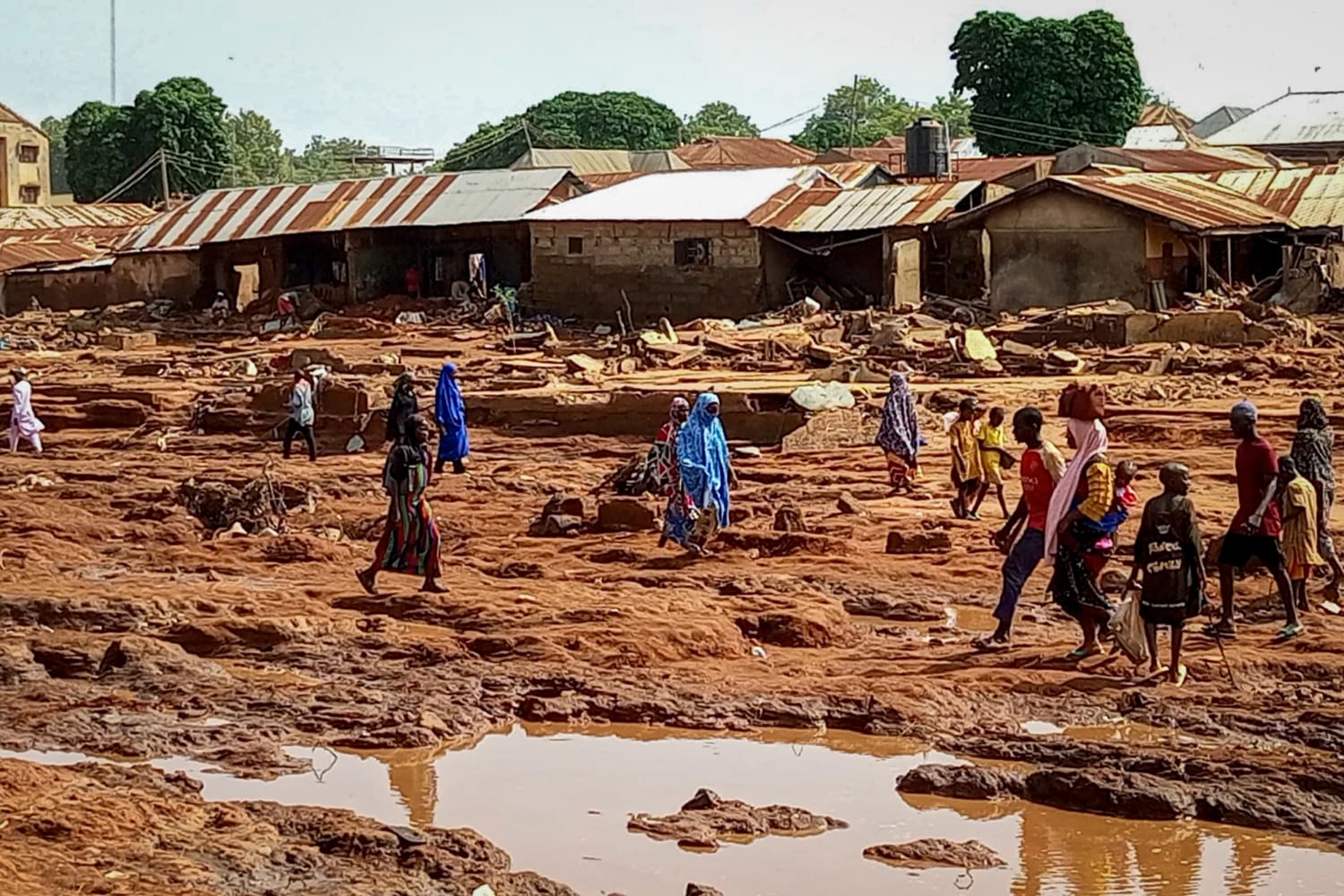
Across Nigeria, conversations about the weather have shifted from casual remarks to urgent reflections as communities experience rising temperatures, unpredictable rainfall and destructive flooding with increasing frequency.
In cities such as Lagos, Port Harcourt and Onitsha, residents say daily heat has become more intense, disrupting work routines, sleep patterns and household energy use.
“I have lived here for over 30 years and I have never felt heat like this before,” said a trader in Mushin, Lagos, who noted that fans and air conditioners now run for longer hours.
In northern states including Kano, Katsina and Sokoto, farmers report shorter harmattan periods and longer dry spells that affect planting cycles and crop survival.
A maize farmer in Giwa Local Government Area of Kaduna State said, “the rains no longer come when we expect them, and sometimes they stop suddenly after planting.”
Meteorological data from the Nigerian Meteorological Agency show that average temperatures across the country have increased steadily over the past decades, while rainfall patterns have become more erratic.
Flooding has also emerged as one of the most visible impacts, with communities along riverbanks and low-lying areas experiencing repeated displacement.
In 2024 alone, the National Emergency Management Agency recorded floods in more than 30 states, affecting millions of people and destroying homes, farmlands and infrastructure.
Residents of communities along the Niger and Benue rivers say annual flooding has become more severe, washing away crops and forcing families into temporary shelters.
“We rebuild every year, but the water always comes back stronger,” said a resident of a riverine community in Kogi State.
Urban flooding has also worsened due to blocked drainage systems, rapid urbanisation and heavier rainfall, leaving streets submerged and businesses closed for days.
In Ibadan, Oyo State, shop owners in flood-prone areas said sudden downpours now overwhelm drainage channels within minutes.
Climate experts explain that Nigeria’s experiences reflect broader global climate trends driven by rising greenhouse gas emissions.
A climate scientist at the University of Nigeria, Nsukka, said higher temperatures increase evaporation, intensify rainfall and raise the risk of both droughts and floods.
“The climate system is becoming more unstable, and countries like Nigeria are feeling the effects more sharply because of existing vulnerabilities,” he said.
Health workers have also linked changing weather conditions to public health challenges, including heat stress, malaria outbreaks and waterborne diseases.
A public health officer in Bayelsa State noted that flooding often contaminates water sources, increasing cases of cholera and diarrhoea after heavy rains.
Children, the elderly and low-income households are considered the most exposed, particularly in areas with limited access to healthcare and social protection.
In rural communities, women say they now travel longer distances to find water during prolonged dry periods.
“We used to fetch water close to home, but the streams dry up faster now,” said a resident of a village in Nasarawa State.
The federal government has acknowledged the growing risks, describing climate change as a major threat to national development and food security.
Nigeria’s updated climate commitments under its Nationally Determined Contribution include plans to reduce emissions and strengthen adaptation measures.
Officials say these measures involve improving flood control, expanding climate-smart agriculture and investing in renewable energy.
However, environmental groups argue that implementation remains slow and uneven across states.
A representative of a civil society organisation focused on climate issues said local communities are often left to cope on their own.
“People are already adapting in small ways, but they need stronger institutional support,” the representative said.
Some communities have begun local responses, such as elevating homes, clearing drainage channels and adjusting farming practices.
In parts of Anambra State, residents now raise household floors higher than before to reduce flood damage.
Farmers in Benue State have started planting earlier-maturing crop varieties to cope with shorter rainy seasons.
Despite these efforts, many Nigerians say the pace of change feels overwhelming.
“What we are seeing now is not normal weather,” said a civil servant in Abuja, who described extreme heat followed by sudden storms.
As climate impacts continue to unfold, experts warn that adaptation will require coordinated action involving government, communities and the private sector.
For many Nigerians, climate change is no longer an abstract concept discussed at conferences but a daily reality shaping how they live, work and plan for the future.