As each election season winds down, a familiar movement takes shape, with state leaders nearing the end of their tenure shifting focus towards seats in the senate.
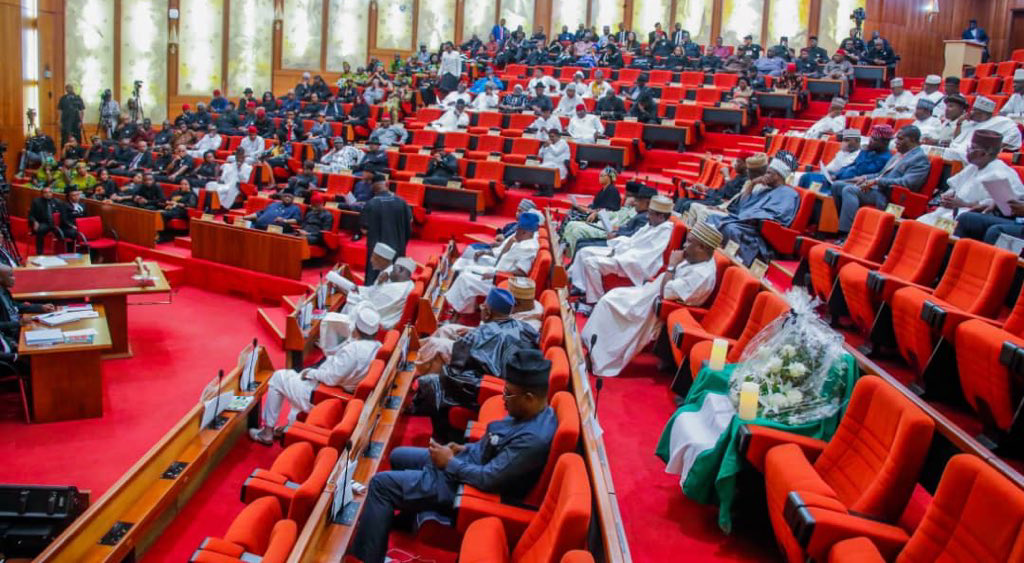
In the present 10th national assembly, at least 15 former governors now serve as senators, extending a pattern where state executives move almost directly into federal lawmaking roles.
This steady flow has stirred renewed discussion about whether the upper chamber is gradually turning into a destination for established political figures instead of a space that encourages broader representation.
Supporters of the pattern say it brings tested leadership and administrative knowledge into parliament, while critics warn it may narrow the range of voices in national debate.
POWER AFTER OFFICE
In Nigeria’s political environment, stepping down from office rarely ends a politician’s influence, as many former governors retain strong party structures, loyal supporters, and financial backing.
For many of them, the senate offers an avenue to remain visible in national politics and stay connected to federal decisions.
Ebube Mbah, an African Democratic Congress figure in Imo state, said the motivation for many is continued relevance.
“Most of them get there, and you no longer hear their voices,” Mbah said.
“They simply want access to power and to remain relevant within their political parties.”
He added that the governorship often offers wider opportunities for direct impact than a legislative seat.
“There is hardly any impact you can make as a senator that you cannot make more exhaustively as a governor,” he said.
EXPERIENCE VERSUS PERFORMANCE
Those who support the trend argue that the senate requires individuals who already understand governance and public administration.
Tony Nwulu, a former lawmaker and director-general of the Youth in Parliament Forum, said experience is an advantage in legislative work.
“The senate is not really a place where I expect young people should play a lot,” Nwulu said.
“The senate is a bit more advanced when it comes to leadership experience, and those experiences come with age in some cases.”
However, some observers question whether executive experience automatically leads to strong legislative contributions.
They note that while a number of former governors are active in sponsoring bills and participating in debates, many others play less visible roles in the chamber.
Names frequently mentioned among the more engaged members include Orji Uzor Kalu, Adams Oshiomhole, Danjuma Goje, Gbenga Daniel, and Aminu Tambuwal, who have taken part in policy discussions and committee work.
Even so, analysts say their combined output does not always reflect their numerical presence in the senate.
INFLUENCE WITHIN THE CHAMBER
Former governors often occupy influential positions within senate leadership and committee structures.
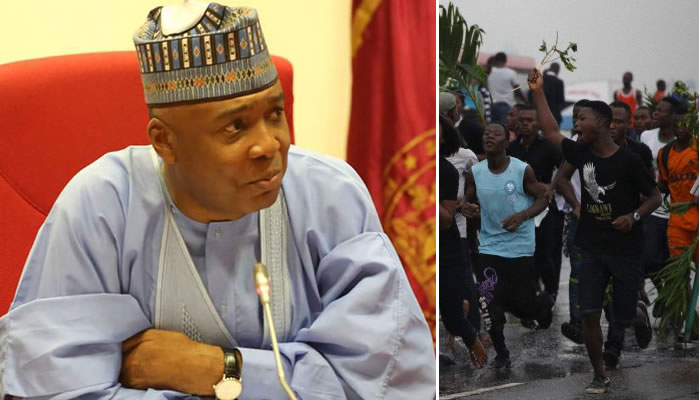
Past and present senate presidents such as Bukola Saraki and Godswill Akpabio both rose from governorship into leadership of the chamber, highlighting the weight carried by executive backgrounds.
Committee leadership roles also tend to be assigned to former governors, sometimes ahead of lawmakers with longer legislative experience.
Critics argue that this may tilt the internal balance of the chamber towards a smaller circle of powerful figures.
At the same time, electoral outcomes show that not all former governors succeed in their bids for senate seats, as several prominent names lost in the last general elections.
LOOKING TOWARDS 2027
Signals from different states suggest that the pattern may continue into the next election cycle.
In Delta state, youth groups have encouraged the former governor, Ifeanyi Okowa, to seek a senate seat, while discussions in Ogun state have linked the governor, Dapo Abiodun, with a possible move to the red chamber after his tenure.
In Kogi state, the former governor, Yahaya Bello, has also indicated interest in representing his constituency at the national level.
These developments reinforce the perception that the senate is often viewed as a next step for outgoing governors.
At the same time, stakeholders note that sectors such as agriculture, health, and infrastructure require both experience and new thinking, which depends on the diversity of lawmakers.
The continued presence of former governors in the senate therefore raises broader questions about political renewal, institutional balance, and representation.
As the country moves closer to another election cycle, voters and political parties may ultimately decide whether the upper chamber remains dominated by established figures or becomes more open to new entrants in national lawmaking.