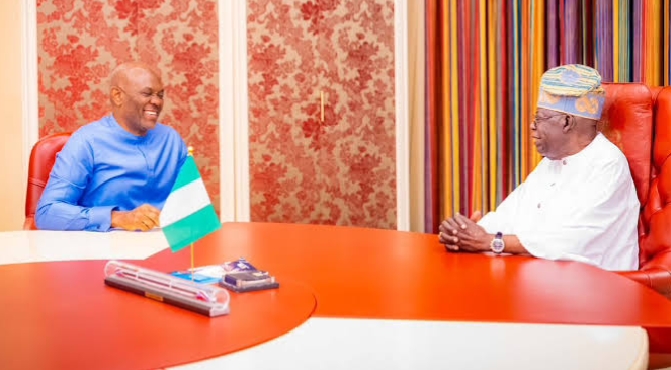
In this month February 2026, one of Nigeria’s most prominent business figures, Tony Elumelu, met with President Bola Tinubu at the Presidential Villa in Abuja in a meeting that attracted immediate attention from both economic analysts and the media. The encounter was widely reported across reputable Nigerian outlets and quickly became a focal point for discussions on the direction of the Nigerian economy. The meeting, though brief, was considered strategically significant because it brought together one of the foremost voices in African business with the President during a period of ongoing economic reforms and structural adjustments. Observers noted that the timing, shortly after the release of recent macroeconomic indicators and currency stability reports, suggested the government’s intention to deepen engagement with private-sector leaders to reinforce growth and policy alignment.
The context of the meeting is anchored in Elumelu’s dual role as both a leading entrepreneur and a member of the Presidential Economic Council. In this capacity, he has consistently positioned himself as an advocate for the private sector, providing insights on business constraints, growth opportunities, and mechanisms to enhance economic inclusivity.
In this article, we will discuss what happened during the meeting, explore the themes and issues that were likely raised, and consider what it could mean for Nigeria’s economy and its entrepreneurs.
Economic Reforms at the Center
A significant portion of the meeting focused on economic reforms currently being implemented under the Tinubu administration. Elumelu publicly praised the progress on stabilising the foreign exchange market, noting that business owners now enjoy better predictability when accessing FX for operational needs. This is particularly important in sectors such as manufacturing and import-dependent industries, where unpredictable currency policies have historically constrained growth. Elumelu highlighted that, for the first time in recent years, many entrepreneurs can plan with greater certainty, negotiate contracts with confidence, and allocate capital more efficiently. He described these improvements as a pivotal step toward restoring investor confidence and facilitating economic expansion across multiple sectors.
Beyond currency stability, the discussion addressed macroeconomic indicators that are essential to Nigeria’s long-term growth trajectory. Inflation trends, interest rate movements, and fiscal policy adjustments were examined through the lens of private-sector realities. Elumelu reportedly reinforced that while reforms have laid the groundwork for stability, sustained policy consistency is necessary to encourage domestic and foreign investment. His emphasis was on building bridges between government policy frameworks and the operational environment that businesses navigate daily, ensuring that economic measures translate into tangible outcomes for enterprises of all sizes.
Support for Small and Medium-Scale Enterprises
Another key area of discussion was the critical role of small and medium-scale enterprises in Nigeria’s economy. Elumelu repeatedly described SMEs as the engine of economic growth, highlighting that they drive employment, innovation, and community development. He advocated for further strengthening of institutions like the Bank of Industry and commercial banks to expand access to finance for entrepreneurs, particularly those in early-stage ventures and underserved regions. The meeting underscored ongoing efforts to refine tax policies that reduce burdens on SMEs while maintaining revenue streams for the government, creating an environment where small businesses can thrive sustainably.
Elumelu also stressed the importance of entrepreneurship education and mentorship. Drawing from his own foundation’s initiatives across Africa, he suggested that providing technical training, business development guidance, and practical support to young entrepreneurs can complement financial reforms. These measures, he argued, are necessary to cultivate the next generation of business leaders who can contribute to Nigeria’s economic diversification and job creation goals. Observers noted that this segment of the meeting reflected a broader vision of inclusive growth that blends fiscal policy with human capital development.
Electricity and Power Sector Challenges
Access to reliable electricity emerged as one of the most candid and urgent topics of discussion. Elumelu stressed that ongoing power deficits continue to hamper productivity, raise operational costs, and limit Nigeria’s global competitiveness. He specifically pointed out the need for timely payments owed to power generators so that they can expand capacity, maintain infrastructure, and improve supply. While acknowledging progress on some fronts, including privatization reforms and regulatory improvements, Elumelu positioned the electricity challenge as a structural constraint that requires immediate attention to avoid undermining broader economic reforms.
The discussion reportedly included dialogue on strategies for incentivizing investment in power generation, distribution, and maintenance. Elumelu advocated for innovative approaches to energy financing, public-private partnerships, and regulatory frameworks that ensure both efficiency and sustainability. By highlighting power issues alongside currency stability and SME support, the meeting painted a holistic picture of the key levers necessary to strengthen Nigeria’s economic foundations.
Alignment Through the Presidential Economic Council
Elumelu’s role as a member of the Presidential Economic Council adds a distinct dimension to the February 13 meeting. Beyond personal advocacy, his attendance was a mechanism to ensure alignment between government policy and the realities facing the business sector. This council serves as a formal platform for integrating private-sector expertise into national economic planning, allowing leaders like Elumelu to provide feedback on reform implementation, highlight systemic bottlenecks, and suggest actionable solutions.
During the meeting, it was reported that Elumelu emphasized the importance of ongoing dialogue between policymakers and business leaders. He highlighted that collaboration can accelerate reforms, optimize resource allocation, and improve outcomes in sectors ranging from manufacturing to services. His participation underscored the principle that economic growth is a shared responsibility, requiring coordination across government, private sector, and civil society actors to achieve sustainable results.
Tone and Messaging
Media analysis of the meeting indicated that the tone was broadly positive, reflecting support for Tinubu’s economic policies while maintaining constructive critique where necessary. Elumelu publicly commended efforts to stabilize the FX market, signaling approval of macroeconomic management and the predictability it affords entrepreneurs. At the same time, his remarks on the electricity sector conveyed urgency and candor, demonstrating that even supportive voices are willing to highlight persistent structural challenges.
Observers noted that this balance between endorsement and critique reinforces confidence in Nigeria’s business-government dialogue. By publicly supporting key reforms while advocating for targeted improvements, Elumelu positioned himself as a pragmatic advisor whose insights are grounded in operational realities rather than partisan alignment. This approach is consistent with his broader advocacy for entrepreneurship, inclusive growth, and business-enabling policies.
Entrepreneurial Implications: What SMEs Can Take Away
The meeting carries implications for Nigeria’s SMEs and broader entrepreneurial ecosystem. By elevating dialogue on access to finance, tax reform, and structural constraints, the administration signals that private-sector input will inform policy decisions. Entrepreneurs can interpret the engagement as both reassurance that their concerns are being heard and as an indication that reforms are designed to address systemic barriers to growth.
The focus on SMEs also aligns with broader economic strategies aimed at diversifying revenue sources, reducing unemployment, and fostering innovation-led growth. By championing these initiatives, Elumelu advocates for policies that have both immediate and long-term benefits, particularly in creating a more resilient and inclusive business environment across urban and rural Nigeria.
Nigeria in Context: Macro Trends and Global Challenges
The meeting took place against the backdrop of ongoing global economic volatility, domestic fiscal challenges, and currency management pressures. Nigeria, like many emerging markets, faces complex dynamics in balancing macroeconomic stability, investor confidence, and the socio-economic needs of its population. In this context, high-level engagements between government and private-sector leaders become critical for ensuring coherent policy responses.
Elumelu’s February 13 visit signals the administration’s openness to private-sector insights while underscoring the importance of coordinated strategies across multiple economic dimensions, including currency management, energy infrastructure, fiscal policy, and enterprise support. Analysts observed that such engagements help reduce policy uncertainty and can reinforce investor confidence both domestically and internationally.
Media and Public Reception
Following the meeting, major Nigerian media outlets highlighted Elumelu’s endorsement of economic reforms and his candid acknowledgment of structural challenges. Headlines focused on his support for FX stabilization, his commitment to SME development, and his emphasis on electricity as a critical constraint. Public discourse interpreted the meeting as both a strategic alignment between government and business leaders and a demonstration of proactive problem-solving in Nigeria’s economic governance.
The constructive tone, combined with the visibility of Elumelu as a prominent entrepreneur, contributed to a broader narrative that private-sector engagement is a vital component of Nigeria’s economic recovery and growth strategy. Social media commentary reinforced the perception that collaboration between government and influential business figures can accelerate reform adoption and policy effectiveness.
Policy Recommendations Highlighted
While the meeting itself was brief, several policy implications can be inferred. First, continued FX market predictability is essential for investment and business planning. Second, expanding access to finance for SMEs remains a priority for sustainable economic growth. Third, structural investment in electricity infrastructure and resolution of outstanding debts to power generators is critical to unlocking productivity gains. Finally, integrating private-sector feedback through formal mechanisms like the Presidential Economic Council ensures that reforms are grounded in operational realities rather than theoretical policy assumptions.
How This Shapes Economic Trajectories
The February 2026 meeting between Tony Elumelu and President Bola Tinubu may signal a pattern of ongoing high-level engagements that bridge government and private-sector perspectives. By institutionalizing such dialogues, policymakers can obtain real-time insights into the challenges businesses face, while entrepreneurs gain a clearer understanding of policy intentions, timelines, and expectations.
In practical terms, the meeting may influence upcoming fiscal policies, financial sector adjustments, and energy sector interventions. By publicly addressing both achievements and remaining gaps, Elumelu sets a precedent for transparent, constructive engagement that balances encouragement with accountability.
Leaving With This
Tony Elumelu’s visit to President Bola Tinubu in February 2026, represents a significant convergence of private-sector expertise and public-sector policy-making. The meeting reinforced positive developments in FX stability and SME support while highlighting ongoing electricity challenges that require urgent attention. As a member of the Presidential Economic Council, Elumelu’s engagement underscores the importance of aligning government reforms with practical business realities, ensuring that Nigeria’s economic growth is both inclusive and sustainable.
The encounter also illustrates a broader dynamic in Nigerian governance, where constructive dialogue between influential business figures and state actors can accelerate reform implementation, boost investor confidence, and promote economic resilience. As policymakers and entrepreneurs continue to collaborate, meetings like this are likely to shape the trajectory of Nigeria’s economic landscape in the months and years ahead, offering both immediate support to enterprises and long-term structural benefits for the national economy.