The 10th house of representatives opened in June 2023 with the All Progressives Congress (APC) entering the new legislative term without a clear majority for the first time since Nigeria’s return to civil rule in 1999.
At the time of inauguration on June 13, 2023, the ruling party occupied 175 seats, falling short of the 181 required to control proceedings in the 360-member chamber.
Opposition parties together held 182 seats, with the Peoples Democratic Party securing 116, the Labour Party 35, the New Nigeria Peoples Party 19, the All Progressives Grand Alliance five, and the African Democratic Congress, Social Democratic Party, and Young Progressives Party two each, while three seats remained unresolved by court processes.
Despite the fragmented outcome, the APC secured the leadership of the house as the speaker, Tajudeen Abbas, and the deputy speaker, Benjamin Kalu, emerged with backing that cut across party lines.
Observers at the time noted that the result reflected coalition building within the chamber rather than numerical strength alone.
In the months that followed, changes in party alignment gradually altered the political balance inside the green chamber.
The first notable switch occurred in July 2024 when the member representing Ijumu/Kabba Bunu federal constituency in Kogi state, Idris Salman, left the ADC for the APC, beginning a steady stream of defections.
Lawmakers who moved cited reasons such as internal disagreements, leadership disputes, and concerns about their political futures in their former parties.
Analysts also linked the pattern to the attraction of federal influence and the perceived advantage of aligning with the ruling party ahead of the next election cycle.
Alongside defections, deaths and judicial rulings also reshaped the composition of the house during the term.
Five members died during the period, including Abdulkadir Danbuga, Isa Dogonyaro, Olaide Akinremi, Ekene Adams, and Adewunmi Onanuga, with most of them elected on the platform of the APC.
A court of appeal judgment later removed Danbuga posthumously and declared the PDP candidate, Saidu Bargaja, winner of the Sokoto seat, briefly reducing the APC’s tally.
Subsequent by-elections in August 2025 saw the APC win four of five vacant seats, while the PDP secured one seat in Oyo state.
The ruling party also filled the Ovia North-East/Ovia South-West constituency seat in Edo state after the former occupant, Dennis Idahosa, became deputy governor.
The pace of defections increased through 2025 as more lawmakers crossed from the PDP, NNPP and other parties into the APC in successive batches.
Figures compiled from parliamentary records showed a gradual rise early in the year before a sharper increase in the later months, including a peak in December when at least 13 members changed party.
The trend reflected shifting political calculations as the 2027 general election approaches and as some opposition parties faced internal divisions.
Beyond publicly declared movements, additional lawmakers are expected to formalise their switches on the floor of the house after recess.
Through a combination of these defections and court-related seat changes, the APC’s numbers rose to 241 seats, taking it past the constitutionally significant two-thirds threshold.
This level of representation gives the ruling party the capacity to influence legislative decisions that require a supermajority under the constitution.
With this position, executive proposals such as budgets and policy bills are likely to receive smoother passage through the chamber.
However, some observers have raised questions about how the new balance may affect legislative oversight of the executive arm of government.
There are also discussions about whether reduced opposition strength could limit the frequency of investigations, hearings, and other accountability measures.
The PDP, LP, and NNPP have continued to experience defections and organisational challenges as the term progresses.
The legislative and policy expert, Chibuzo Okereke, said numerical dominance does not always translate to uniform voting behaviour in the national assembly.
“It doesn’t really have a significant implication because party loyalty and causes are weak in the national assembly and mostly not the basis for decision-making,” he said.
He added that lawmakers often act in line with local interests and political considerations beyond party affiliation.
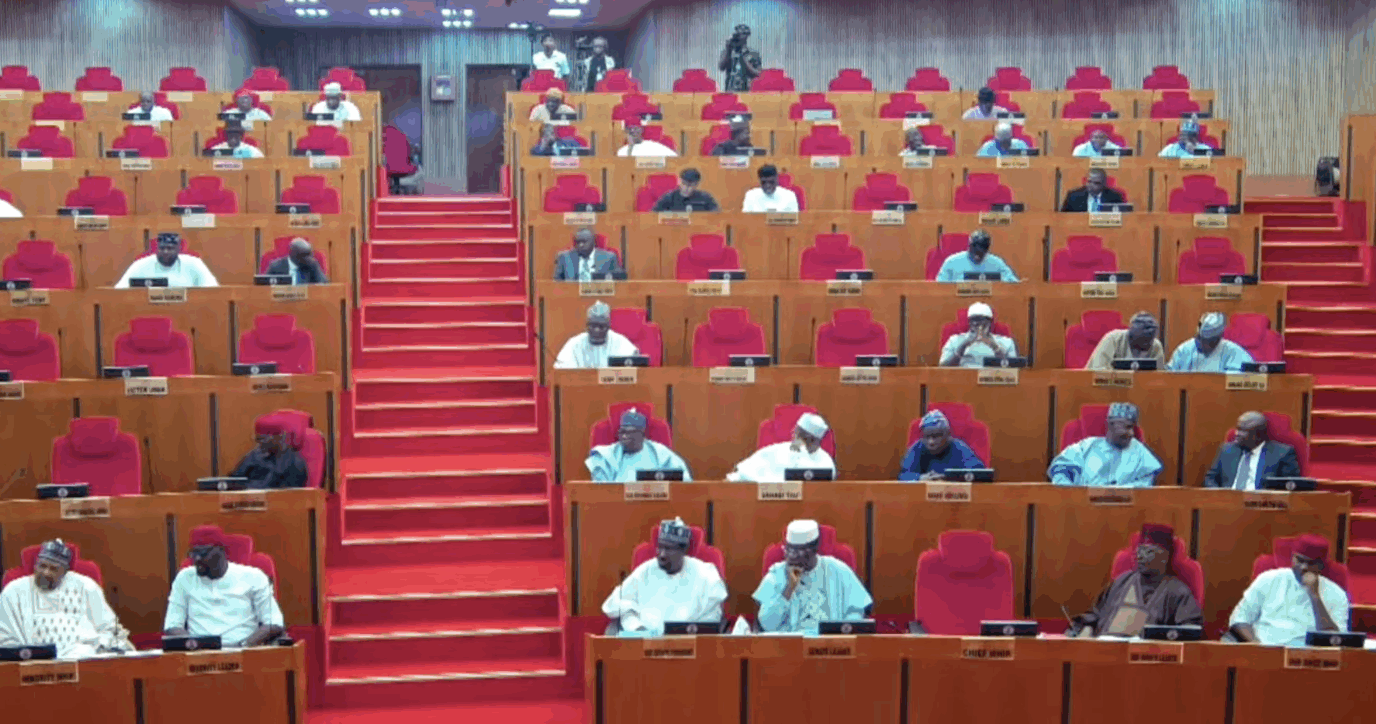
A similar pattern has emerged in the senate where the APC has also built a large majority since the inauguration of the 10th assembly in June 2023.
At the start of that term, the APC held 59 seats out of 109, while the PDP had 36 and the Labour Party eight, with smaller parties sharing the rest.
As the political calendar moves closer to the next general election, attention has shifted to how the legislature will use its strengthened numbers in shaping governance outcomes.
The current alignment in both chambers marks a shift from the initial balance of power that followed the 2023 elections.
How that alignment influences lawmaking, oversight, and inter-branch relations remains central to Nigeria’s democratic process in the years ahead.