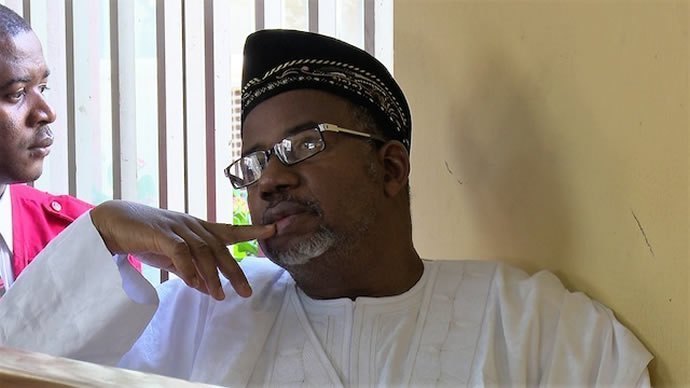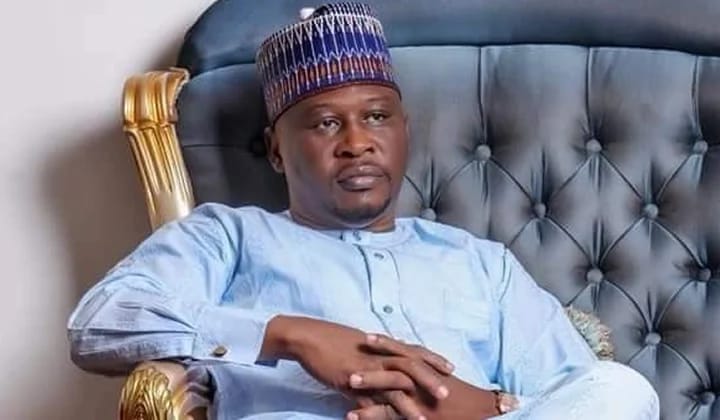
There is growing political anxiety across Adamawa State as discussions intensify over a possible move by the governor of adamawa state, Ahmadu Umaru Fintiri, to the All Progressives Congress, a development that has unsettled political actors and sparked debate across party lines.
Political observers say such a decision, if it happens, would not be a routine defection but a significant shift in alliances capable of redrawing the state’s political map ahead of future elections.
Stakeholders within the political space note that the governor has built a reputation for calculated political moves that are often anchored on negotiation and mutual advantage.
Available electoral records show that the Peoples Democratic Party maintained a strong footing in Adamawa during the 2023 presidential and governorship elections, recording a combined total of 848,472 votes from both contests.
Breakdowns from the polls indicate that the PDP secured 417,611 votes in the presidential election and 430,861 votes in the governorship race, demonstrating a consistent voter base across the state.
By comparison, figures from the All Progressives Congress show that the party has electronically registered about 450,000 members across Adamawa State, reflecting an existing but smaller organisational base.
Political analysts say the contrast between these figures has fuelled arguments that any alliance involving the governor would significantly alter the balance of power within the state’s political structure.
Within the ruling party, there have been reports of strategic engagements between some APC leaders and the governor, with stakeholders describing such interactions as part of routine political consultations.
Observers also point to the governor’s series of visits to local government areas as an effort to maintain grassroots connections and reinforce his political network across communities.
Available data shows that the PDP structure under the governor extends across 226 wards, 21 local government areas, and three senatorial zones, forming a wide political network anchored on governance programmes and constituency engagement.
Analysts say that if such a network aligns with the APC, it would introduce an existing system of mobilisation and voter outreach into the party’s structure.
Some political watchers describe the governor’s governance record as centred on public engagement and project delivery, which they say has contributed to sustained political participation within the state.
Within the APC, opinions remain divided, as some members view the possibility as an opportunity for expansion while others express concern about internal balance and leadership influence.
Political analysts note that apprehension among some actors may be linked to concerns about how influence and political space would be shared within the party if new entrants bring strong support bases.
However, other stakeholders say the situation reflects a common feature of Nigerian politics where alliances shift based on evolving interests, electoral calculations, and negotiations among political actors.
Observers also point out that discussions about possible realignments often emerge ahead of major electoral cycles, as parties seek to strengthen their chances through strategic partnerships.
A legislative analyst, Chibuzo Okereke, said political alignments in Nigeria are often shaped by personal interests, local considerations, and constituency demands rather than party labels alone.
“It doesn’t really have a significant implication because party loyalty and causes are weak in the national assembly and mostly not the basis for decision-making,” he said.
“So even if APC has an overwhelming structure in a state, that may not translate into automatic support for all political decisions, as lawmakers and actors often prioritise local and personal interests.”
Political stakeholders also say that any movement by a sitting governor into another party often carries symbolic and strategic weight that extends beyond numbers.
They add that such a move could influence voter perception, campaign strategies, and party organisation at both state and national levels.
Despite the ongoing discussions, there has been no official confirmation from the governor regarding any intention to change party affiliation.
Party officials in both the PDP and APC in Adamawa have also maintained silence on the matter, describing it as speculation within the political space.
Analysts conclude that while the debate continues, the situation highlights the fluid nature of political alliances in Nigeria, where shifts in loyalty and structure can redefine the landscape within a short period.
They note that the ultimate impact of any such development would depend on how stakeholders manage negotiations, internal party dynamics, and voter expectations in the build-up to the next electoral cycle.