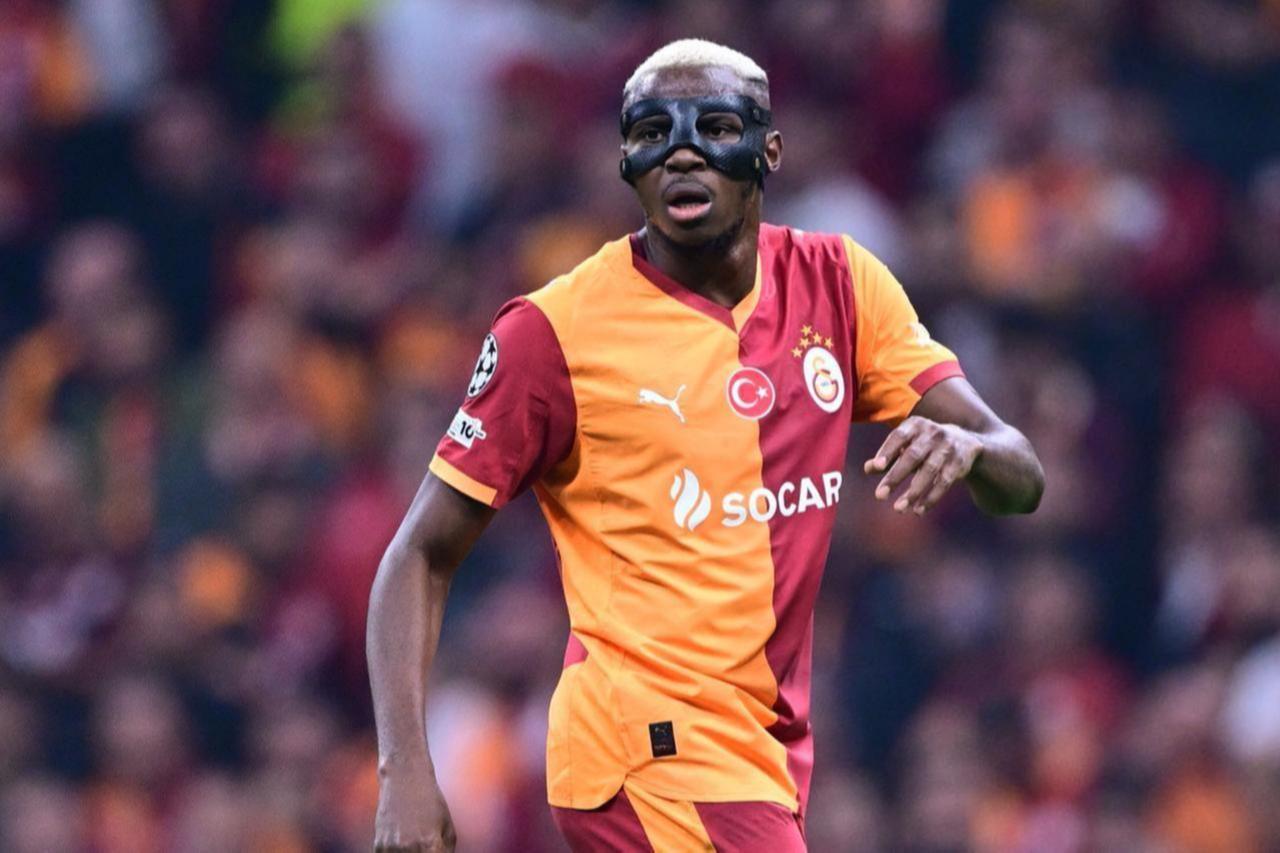
There is a version of events in which Victor Osimhen is currently leading the line at Juventus, not scoring an ice-cold extra-time goal to eliminate them from the Champions League. In February 2026, in front of 41,000 stunned fans at the Allianz Stadium, Osimhen finished calmly through the legs of Mattia Perin to kill off a heroic Juventus comeback and send Galatasaray into the last 16. It was, for anyone paying attention, the moment the full weight of what Juventus had lost finally landed.
- A Gentleman’s Agreement That Was Never Kept
- The TikTok Video That Broke Everything
- Juventus Called, Napoli Said No
- How Galatasaray Got Their Man
- What Osimhen Did in Istanbul
- The Anti-Serie A Clause: Why Juventus Cannot Just Buy Him Back
- Juventus and the Striker Crisis That Followed
- The Night in Istanbul and the Night in Turin
- What It All Means Going Forward
- The Price Juventus Are Still Paying
- A Transfer Saga That Serves as a Cautionary Tale
The story of how Osimhen ended up at Galatasaray rather than Turin is not a simple one. It involves broken promises, a public humiliation on social media, a meddling club president, financial red tape, and a player who ultimately chose loyalty to his own dignity over the pull of one of the biggest clubs in Italian football. Juventus wanted him. Osimhen was open to them. And yet here they are: eliminated from Europe’s premier club competition by the very striker they could have had, blocked at every turn by a situation that did not have to end this way.
Why Juventus Lost Osimhen to Galatasaray
Understanding why Juventus lost Osimhen to Galatasaray requires going back to a relationship that curdled long before the transfer saga peaked. The Nigerian striker did not fall into Istanbul by accident; he was pushed there by a sequence of events at Napoli that left him feeling disposable and disrespected. For Juventus, the consequences have been painfully visible ever since.
A Gentleman’s Agreement That Was Never Kept
In December 2023, Victor Osimhen signed a contract extension with Napoli. On paper, it looked like a commitment to the club. In reality, it was a tactical manoeuvre from both sides. Napoli wanted to keep his market value high and maintain control over his price tag. Osimhen agreed, but only on the basis of a verbal understanding: he could leave the following summer. That gentleman’s agreement, as he later described it, was never honoured.
Speaking to Gazzetta dello Sport ahead of Galatasaray’s Champions League playoff first leg against Juventus in February 2026, Osimhen made his feelings clear. He said the club did not fully respect the commitment they had made to him and that he was sent from one potential destination to another without any real agency over his own future. His words were pointed: “They tried to send me anywhere to play, and they treated me like a dog. Go here, go there, do this, do that. I worked so hard to build my career, and I could not accept that kind of treatment. I am not a puppet.”
For context, this was a player who had delivered one of Italian football’s great individual seasons just a year earlier. In 2022-23, Osimhen scored 26 goals across all competitions and fired Napoli to their first Serie A title in 33 years, a drought stretching back to the Diego Maradona era. He won the league’s top scorer award and was named Serie A Footballer of the Year. To be treated as a commodity to be shifted around once his usefulness was deemed to be waning at that club was, understandably, something he was not prepared to accept.
The TikTok Video That Broke Everything
Before the failed transfer window of 2024, before the legal wrangling and the eventual move to Turkey, there was a turning point that many outside Naples may have underestimated. In September 2023, after Osimhen missed a penalty against Bologna, Napoli posted a mocking TikTok video ridiculing the miss. The clip, which was later deleted, contained what Osimhen described as racist insinuations. He did not forget it.
“After Napoli posted that video on TikTok, something broke,” he said. “Anyone can miss a penalty, and anyone can be mocked for it. Napoli did it only to me, and with certain kinds of insinuations as well. I was the victim of racist insults, and I made my decision.” He removed photos of himself wearing the Napoli shirt from his Instagram. The club’s response was to attempt to use that action to turn the fanbase against him. From that moment forward, the relationship between player and club was irreparably damaged.
It is worth underlining just how significant this rupture was. Osimhen was not a player who had checked out of a contract or let his performances drop. He was still the most important player at the club, still training, still wanted by half of Europe. But the environment around him had turned toxic, and the people responsible for the institution he had given so much to were now publicly humiliating him. His determination to leave became absolute.
Juventus Called, Napoli Said No
The conventional narrative around why Juventus missed out on Osimhen points to Chelsea’s failed loan pursuit or Saudi Arabian interest as the primary factors. The fuller picture is more damning for Napoli. Osimhen has since confirmed that Juventus made a genuine, concrete attempt to sign him through then-sporting director Cristiano Giuntoli in 2024, before any of the Galatasaray negotiations had taken place.
Giuntoli’s involvement is significant. He had been at Napoli as sporting director during the years when Osimhen developed into one of the best strikers in Europe. He knew the player, understood his capabilities, and clearly believed he was worth pursuing for Juventus. Osimhen was receptive. “When Juventus call, regardless of everything, you sit down and listen,” he told Gazzetta dello Sport. He spoke with people at the club. Interest was mutual.
But Napoli president Aurelio De Laurentiis killed the move. The idea of selling their star striker to a direct Italian rival, especially one with the history and stature of Juventus, was evidently not something De Laurentiis was willing to countenance. It did not matter that Osimhen himself was open to the move. It did not matter that the football logic was sound. The president blocked it, and the striker who had delivered a Scudetto was left with no viable domestic path forward.
“I could have been at two other top Serie A clubs today,” Osimhen admitted, referring to Juventus and another unnamed club. “I spoke with a couple of people from the club. They showed interest, but I knew that he would not let me leave.” The use of the word “he” without naming De Laurentiis was deliberate. The Napoli president received no direct mention throughout the entire interview, a snub that spoke louder than any name could.
How Galatasaray Got Their Man
With the summer 2024 window closing and Osimhen still without a club after Napoli excluded him from their Serie A squad, Galatasaray emerged almost out of nowhere as the most viable option. The situation was peculiar: Chelsea had come closest to signing him during the window, with a loan deal agreed in principle before collapsing over his wage demands. Al-Ahli had made an offer from Saudi Arabia. Napoli’s new manager Antonio Conte had even asked him to stay, a conversation Osimhen still speaks about with respect.
“Of course, even if some people said he did not want me. Are we serious? Which coach at that moment would not have wanted me? As soon as he arrived, Conte called me into his office and said he was aware of the situation but that, despite everything, he wanted me to stay.” Osimhen told him he would have loved working with Conte, but his decision was already made. He was not staying somewhere he was unhappy.
Galatasaray agreed to cover his salary for the season, reportedly in the region of 9 to 10 million euros, and Napoli allowed the loan to go through with no buy option and no obligation. Napoli simultaneously reduced the release clause in his contract to 75 million euros, with a club option to extend his deal to 2027. It was, at the time, presented as a temporary arrangement. What followed made it permanent in the most emphatic way possible.
What Osimhen Did in Istanbul
The 2024-25 season at Galatasaray was not a holding pattern. It was a statement. Osimhen scored 35 goals in 39 official matches, breaking the all-time record for the most goals scored in a single season by a foreign player in Turkish football, surpassing Mario Jardel’s long-standing benchmark of 34. He finished as the Supe Lig’s top scorer with 26 league goals, won the domestic double with the club, and converted the decisive brace in the Turkish Cup final against Trabzonspor.
More than the numbers, it was the manner of his performances that removed any lingering doubt about whether Galatasaray was a step down or a step sideways. Osimhen played with the kind of unburdened, liberated energy that comes from a player who genuinely loves where he is. He described Istanbul as a fresh start, a city and a club that welcomed him in a way that made the toxicity of his final Napoli months feel remote. “I found a club and a city that I love. As soon as you arrive in Istanbul, you understand why anyone who has played here has fallen in love with the team and the people. I had never experienced anything like it.”
By July 2025, the permanent transfer was confirmed. Galatasaray paid Napoli 75 million euros, making Osimhen the most expensive transfer in Turkish football history. Napoli inserted an anti-Serie A clause into the deal. It was a final act of territorial control from the club that had lost him: if Galatasaray were to sell Osimhen to any Serie A club in 2026, they would owe Napoli a 70 million euro penalty. That figure drops to 50 million in 2027 before expiring entirely on July 1, 2027.
The Anti-Serie A Clause: Why Juventus Cannot Just Buy Him Back
The anti-Italy clause is the clearest evidence that Napoli understood exactly what they had allowed to slip away and took steps, however punitive and counterproductive to football logic, to prevent anyone in their own league from benefiting from it. For Juventus, the clause represents a financial wall that renders any pursuit effectively impossible in the short term.
If Galatasaray were to sell Osimhen to Juventus this summer, they would need to pay Napoli 70 million euros on top of whatever they require from the buying club to recoup their 75 million euro investment, while also paying Napoli a 10 percent sell-on fee embedded in the contract. Osimhen’s reported wage of 15 million euros net per season, rising to approximately 21 million euros with bonuses, sits beyond the current wage structure of most Serie A clubs, particularly without the now-defunct Decreto Crescita tax relief scheme that once made foreign player wages more manageable for Italian clubs.
Osimhen himself has spoken warmly about the idea of Juventus. Before the Champions League playoff, he told reporters that Juventus is “one of the most important clubs, rich in history with so many legends,” and that if an opportunity arose, playing there would be a privilege. But sentiment and structural reality are different things. Unless Juventus can negotiate directly with Napoli to waive or reduce the penalty, or wait until July 2027 when the clause fully expires, the deal cannot happen on reasonable financial terms.
Juventus and the Striker Crisis That Followed
Juventus’s striker situation since losing out on Osimhen has been the source of persistent frustration. Dusan Vlahovic, the Serbian centre-forward who has been the club’s main number nine since his 70 million euro arrival from Fiorentina in January 2022, has oscillated between flashes of quality and extended spells of inconsistency. His contract expires in June 2026, his wage of 12 million euros net per season is the highest on the club’s books, and the gap between what Vlahovic earns and what the club want to pay him in a renewal has made negotiations awkward.
In November 2025, Vlahovic suffered a high-grade adductor injury against Cagliari that ruled him out for what manager Luciano Spalletti estimated would be two to three months. The timing was particularly damaging: Juventus were managing a congested schedule in both Serie A and the Champions League. The club brought in Randal Kolo Muani on loan from Paris Saint-Germain as cover, but the Frenchman was always intended as a temporary measure, not a long-term solution.
The contrast with Osimhen has become impossible to ignore. In the 2025-26 Champions League campaign, Osimhen scored seven goals in eight matches for Galatasaray across the group stage and knockout rounds. While Juventus were scrapping through Vlahovic’s injury absence and relying on Jonathan David and Lois Openda to contribute from wider positions, Osimhen was being the decisive striker every elite club in Europe covets: physical, clinical, relentless.
The Night in Istanbul and the Night in Turin
The two legs of the Champions League playoff between Galatasaray and Juventus in February 2026 served as a kind of compressed, theatrical version of the entire saga. The first leg, played at RAMS Park in Istanbul on February 17, ended 5-2 to Galatasaray. Osimhen did not score but was central to the performance: aggressive, disruptive, the focal point that pulled defenders out of position and created the space that teammates exploited.
He did not celebrate a goal against Juventus in those two legs; there was no need for theatre. His influence was felt in other ways. The second leg, on February 25 in Turin, produced one of the most dramatic nights the Allianz Stadium has seen in recent memory. Juventus, playing with ten men for most of the second half after Lloyd Kelly’s controversial sending off, clawed their way back from 5-2 down on aggregate to 5-5, forcing extra time in the process. The atmosphere was electric. Alessandro Del Piero, watching from the broadcast studio, was on his feet.
Then Osimhen scored. In extra time, with Juventus exhausted and the crowd braced for the miraculous, he finished composedly through the legs of Mattia Perin to restore Galatasaray’s aggregate lead. Baris Alper Yilmaz added a second in the 119th minute to seal a 7-5 aggregate victory. The final whistle confirmed it: Galatasaray were through. Juventus were out. The striker they had tried to sign, the one their president had been blocked from pursuing by Napoli’s intransigence, had just eliminated them from Europe.
What It All Means Going Forward
Juventus are now in a position where they need a world-class striker and cannot sign the one they most clearly want. Vlahovic’s future at the club is unresolved, with the player himself reportedly preferring a move to Barcelona when his contract expires. The club has tentatively opened renewal talks, but the salary impasse remains. The summer window of 2026 will require Juventus to make significant decisions about the future of their attack without Osimhen being a viable option.
Osimhen, for his part, is under contract at Galatasaray until 2029. His market value has risen substantially since the permanent transfer, with reports suggesting it has doubled from the 75 million euros paid to somewhere in the region of 150 million euros, driven by his Champions League performances and the profile he has built over two seasons in Turkey. Premier League clubs face no anti-Italy clause and have been monitoring the situation quietly. Chelsea, who came extremely close to signing him in 2024 before a disagreement over wages scuppered the deal, are among those watching his contract situation.
For Napoli, the anti-Serie A clause was an act of defensive positioning, a way of ensuring that if the asset they sold was going to increase in value, no Italian rival would profit from it without a crippling financial penalty. Whether that logic will prove sound over the remaining year of its duration remains to be seen. What is not debatable is that the clause, alongside everything that preceded it, has made the Osimhen-Juventus story one of the more vivid illustrations of how off-field dysfunction can cost a club on the pitch.
The Price Juventus Are Still Paying
Remove the clause, and you are still left with the core question: how did Juventus end up being beaten by a striker they tried to sign? The answer runs through De Laurentiis’s refusal to facilitate a domestic move in 2024, through the TikTok humiliation that accelerated Osimhen’s desire to leave, through the absence of any viable alternative for Juventus in the period that followed, and through a Champions League playoff in February 2026 that underlined exactly what they have been missing.
Juventus are not a club in crisis. They finished the 2024-25 season under Thiago Motta with a Champions League place secured and won the Coppa Italia. Under Spalletti, the squad has genuine talent in Kenan Yildiz, Teun Koopmeiners, Jonathan David, and others. But the striker question has lingered across two managerial tenures, and every time Osimhen scores a decisive goal at the highest level, the lingering becomes a little harder to ignore.
A footballer of Osimhen’s quality, in the form he has sustained across two seasons in Istanbul, would have transformed Juventus. Instead, he transformed Galatasaray. He made them the most expensive transfer in Turkish football history and delivered on that valuation immediately. He set records that had stood for decades and helped the club reach the Champions League last 16. And on a cold night in Turin, he scored the goal that ended Juventus’s European season.
The price Juventus are paying is not just the clause or the contract or the wage structure. It is watching the striker they should have had become the striker who knocked them out. That is a cost that no transfer fee, however large, can fully account for.
A Transfer Saga That Serves as a Cautionary Tale
The Osimhen-Juventus-Galatasaray saga is not simply a transfer story. It is a study in how a breakdown in trust between a player and a club can reshape the landscape for everyone involved. Napoli lost their greatest player of a generation under circumstances that were entirely avoidable. Juventus were denied the striker they identified as the answer to their problems by the very club whose mismanagement created the opening. And Galatasaray, by being available and willing at the right moment, landed one of the best centre-forwards in world football.
The anti-Serie A clause means Juventus must wait. The financial arithmetic means waiting is rational. But as Osimhen continues to perform at the highest level, eliminating Italian clubs from the Champions League in the process, patience may be the most painful strategy Juventus have ever been forced to adopt. They know exactly what they are missing. They can see it every time he plays. They simply cannot have it. Not yet.