1979 was a year of quiet revolution in Nigeria. The country, emerging from years of military rule, was restless with hope and tension. The streets of Lagos buzzed with traffic, markets overflowed, and radios carried the sound of a nation finding its voice. In the midst of this energy, two figures stood out—not just for their talent, but for the power of what they represented.
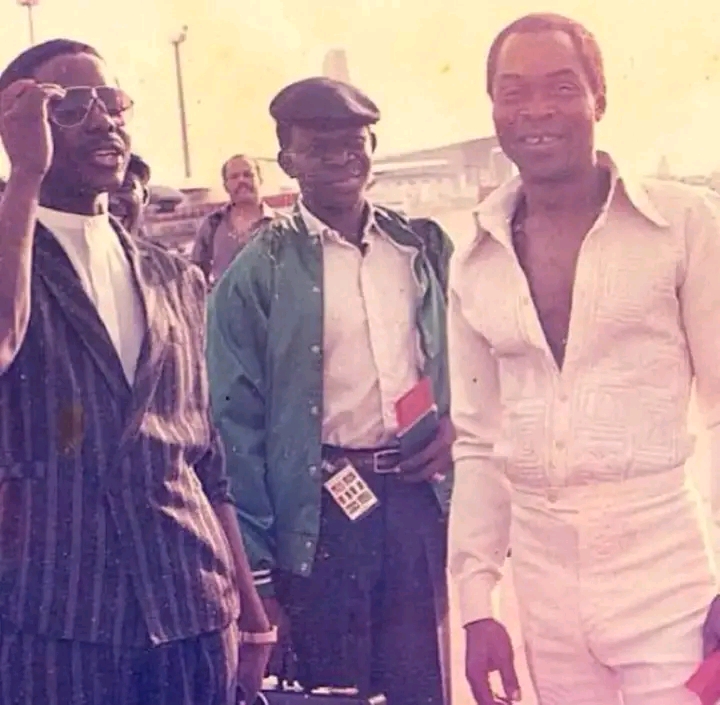
A single photograph captured Fela Anikulapo Kuti and King Sunny Adé together at an airport. Faces calm yet charged, the image hints at something larger than a casual encounter. Here were two Yoruba musical innovators, each commanding a soundscape that defined Nigeria. Their presence in one frame was both symbolic and prophetic, a meeting that whispered of the dialogue between tradition, modernity, resistance, and celebration.
The photograph does not reveal words spoken, but it speaks volumes. Fela, the radical architect of Afrobeat, radiated intensity and purpose. Sunny Adé, the master of Jùjú, carried elegance and rhythmic sophistication. Together, they embodied the spectrum of Yoruba music in 1979—a cultural language that spoke to both the oppressed and the celebratory.
For historians, musicians, and fans alike, that frozen moment remains iconic. It is more than a photograph; it is a portal into Nigerian musical history, Yoruba heritage, and the enduring power of sound as both a weapon and a balm.
The Titans of Yoruba Sound: Fela and Sunny Adé
Fela Kuti was never just a musician. Born in 1938 into a politically active Yoruba family, he inherited a commitment to activism from his mother, Funmilayo Ransome-Kuti. By 1979, Fela had transformed Lagos with the Afrika Shrine, a cultural hub where music became protest, resistance, and identity. His Afrobeat fused jazz, funk, highlife, and Yoruba rhythms, creating a hypnotic yet confrontational sound.
King Sunny Adé represented a different approach. Born in 1946, he modernized Jùjú music with electric guitars, synthesizers, and layered vocals. His sound was polished, joyful, and deeply rooted in Yoruba storytelling. Sunny Adé’s music offered celebration and continuity, reminding listeners of the enduring strength of culture amid political uncertainty.
Despite their differences, both men drew from the same Yoruba musical tradition. Talking drums, chants, and percussive rhythms informed every note. Both artists reimagined these roots for modern audiences, blending ancestral soundscapes with contemporary sensibilities.
Their paths rarely crossed in collaboration, yet respect existed. Each recognized the power of the other’s work. The 1979 photograph, capturing them together, visually represents this mutual admiration. It is a silent dialogue of influence, pride, and shared heritage.
Nigeria in Transition: Music as a Mirror
The nation in 1979 was shifting from military rule to civilian governance. Citizens hoped for reform, yet uncertainty remained. Music became a reflection of society—both critique and comfort. Fela’s compositions spoke of injustice and corruption, demanding accountability. Sunny Adé’s rhythms brought joy and communal unity, offering a cultural anchor.

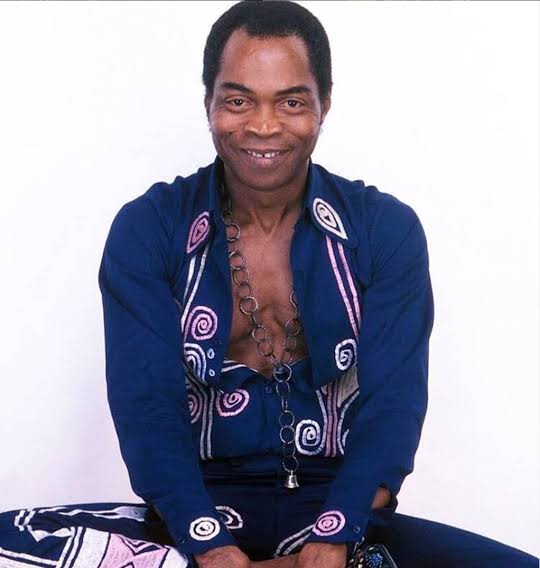
Lagos itself was alive. Streets teemed with energy, nightclubs pulsed with live bands, and radio broadcasts carried both political commentary and popular music. Music was a living conversation, a way to navigate the tension between modernity and tradition.
The airport photograph assumes added significance in this context. Airports are liminal spaces, where arrivals and departures converge. The meeting of these two musical giants in such a space symbolized a crossing of ideas, styles, and generations.
For the public, the image was more than celebrity. It was a visual metaphor for Nigeria itself: dynamic, transitional, and rich with cultural potential. The moment encapsulated the duality of Yoruba music—resistance and celebration, protest and joy, tradition and innovation.
The Sound of Yoruba Identity: Afrobeat’s Rebellion and Jùjú’s Elegance
Fela Kuti’s music was fire incarnate. Each horn blast and polyrhythmic drumbeat carried a political message, a call to conscience. Afrobeat was not entertainment alone; it was a soundtrack of resistance. Lyrics decried corruption, tyranny, and societal decay, challenging listeners to confront uncomfortable truths. The rhythm was relentless, hypnotic, and impossible to ignore.
King Sunny Adé’s music moved differently. Jùjú embraced celebration and communal participation. The guitars and talking drums intertwined with Yoruba proverbs, carrying meaning beyond the notes themselves. Dancing to Sunny Adé was both a spiritual and cultural act, an affirmation of Yoruba identity and continuity. His music reminded listeners that joy and heritage could withstand societal upheaval.
The contrast between the two styles highlighted the richness of Yoruba musical tradition. Fela represented the confrontational, outward-facing voice, while Sunny Adé expressed the inward, reflective, and restorative spirit. Together, they defined a spectrum that reflected Nigeria’s complexity—a society negotiating freedom, modernity, and cultural pride.

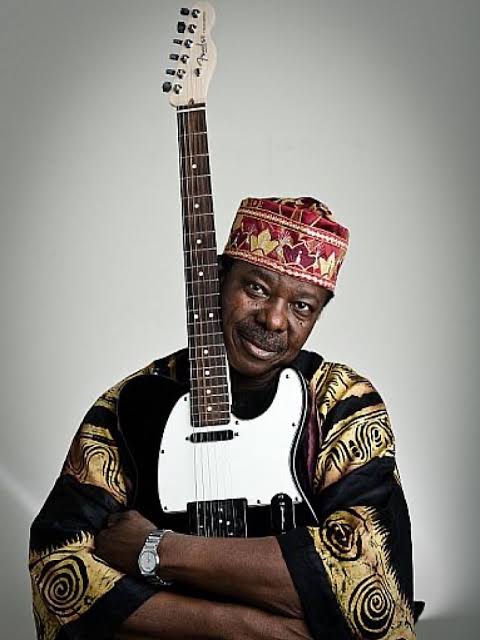
The 1979 photograph captures this duality. One frame, two men, and a visual dialogue that transcended spoken words. Fela’s intensity and Sunny Adé’s elegance meet in a moment of mutual acknowledgment, symbolizing the coexistence of protest and celebration within Yoruba culture. The image invites listeners to appreciate the depth and diversity of Nigerian music, where rhythm becomes a language of identity.
The Airport Encounter: Symbolism in a Single Frame
Airports are thresholds, spaces where lives intersect fleetingly. The 1979 meeting of Fela and Sunny Adé at such a place transforms this ordinary setting into a moment of cultural significance. Both men were on journeys, literally and metaphorically, yet their paths converged long enough to leave an indelible mark on Nigerian music history.
The photograph itself is telling. Fela, standing with a mix of defiance and confidence, embodied the radical energy of Afrobeat. Sunny Adé, with calm poise and a gentle smile, radiated the polished sophistication of modern Jùjú. Their body language conveys mutual respect and recognition of each other’s genius. No words are needed; the image speaks volumes.
This encounter also reflected Lagos itself: a city in transition, dynamic, restless, and bursting with creativity. The airport, a point of departure and arrival, mirrors Nigeria at the time—on the threshold of political change, with culture and music as guiding forces. It becomes a metaphorical space where Yoruba musical heritage intersects with modernity, innovation, and global recognition.
Even decades later, the photograph remains iconic. Musicians, scholars, and fans study it, searching for insight into a moment that transcended music. It captures the unseen conversations between tradition and innovation, rebellion and celebration, proving that a single frame can encapsulate the soul of a nation.

Mutual Admiration and Unspoken Influence
Though Fela and Sunny Adé rarely collaborated, admiration ran deep. Fela recognized the power of Sunny Adé’s modernized Jùjú, the way it carried Yoruba stories with joy and elegance. Sunny Adé, in turn, understood the audacity and cultural weight of Fela’s Afrobeat, the courage it took to challenge authority through music.
The 1979 meeting allowed a subtle exchange of ideas. One imagines Fela absorbing the layered guitar harmonies, while Sunny Adé witnessed the precision and drive of Afrobeat’s rhythms. Even without collaboration, influence seeped through the shared ancestry of Yoruba music, a reminder that artistic dialogue does not always require words or formal partnerships.
Fans and historians later reflected on this dynamic. The photograph symbolizes an unspoken mentorship of sorts, a recognition that two paths could coexist while enriching Nigerian music in complementary ways. It was a visual affirmation of Yoruba creativity’s versatility—how one culture could sustain multiple, equally powerful expressions.
Through the decades, the encounter inspired countless musicians. Afrobeats, highlife, and contemporary Jùjú fusion draw from both traditions, blending political awareness with danceable joy. The photograph, therefore, is not merely historical; it is a blueprint for future generations to explore, innovate, and honor their roots.
Legacy Across Generations: From Lagos to Global Stages
The 1979 photograph of Fela Kuti and King Sunny Adé continues to resonate across decades. It symbolizes a pivotal moment in Nigerian music when two visions of Yoruba creativity converged. Afrobeat’s boldness and Jùjú’s elegance became templates for subsequent generations, inspiring artists to blend rhythm, culture, and message.
Global recognition followed. Fela’s Afrobeat influenced musicians in Europe, the Americas, and beyond, laying the groundwork for Afrobeats as a worldwide phenomenon. Sunny Adé’s Jùjú reached international stages in the 1980s, captivating audiences with its intricate guitar work and layered percussion. Both artists became cultural ambassadors, carrying Yoruba musical philosophy to the world while staying deeply rooted in their heritage.
For contemporary Nigerian artists, the photograph is both a relic and a guide. Burna Boy, Wizkid, Tiwa Savage, and others draw inspiration from Fela’s activism and Sunny Adé’s joyful sophistication. They inherit a dual legacy: music as a tool for social commentary and music as a vessel of cultural celebration. The symbolic meeting in 1979 serves as a reminder that identity, creativity, and global impact can coexist.
Even for scholars and historians, the image remains a focal point. It encapsulates how Yoruba music has the capacity to adapt, resist, and celebrate simultaneously. The dialogue between the two legends continues to influence curriculum, performance practice, and popular music theory, bridging past, present, and future.
Enduring Lessons: Identity, Resistance, and Celebration in Nigerian Music
Fela and Sunny Adé’s meeting illustrates a fundamental principle: music can express complexity, layered meaning, and cultural pride. Afrobeat and Jùjú, though different in approach, are united by Yoruba tradition. Fela’s rhythms called for societal awakening; Sunny Adé’s melodies called for community participation and spiritual reflection. Together, they reflect Nigeria’s duality: struggle and joy, critique and affirmation.
The photograph embodies lessons for both musicians and audiences. It teaches that dialogue can occur without collaboration, that influence can be subtle yet profound, and that heritage can guide innovation. Observers recognize that the convergence of two distinct paths can strengthen a cultural ecosystem rather than dilute it.
Beyond music, the encounter offers insight into Nigerian society. It demonstrates how culture, politics, and artistry intersect, showing that identity is both preserved and evolved through creative expression. Fela and Sunny Adé remind us that resisting oppression does not preclude celebration; tradition does not hinder experimentation.
Today, decades later, the image continues to inspire reflection, creation, and reverence. It is studied in music schools, cited in biographies, and shared on social platforms as a symbol of excellence. It immortalizes the meeting of two giants whose legacy transcends genre, geography, and time—a Yoruba musical dialogue that still speaks to the world.
Conclusion: The Photograph as Eternal Dialogue
The photograph of Fela Kuti and King Sunny Adé is more than a historical document. It is a meditation on Nigerian identity, Yoruba heritage, and the transformative power of music. One frame captures centuries of rhythm, innovation, and cultural dialogue. It freezes the moment when rebellion and celebration stood side by side, acknowledging one another in mutual respect.
For those who study Nigerian music, the image is a reminder that creativity thrives in conversation—sometimes verbal, sometimes silent. Fela and Sunny Adé never needed words to convey the depth of their artistry; their shared presence speaks across decades, teaching lessons in identity, courage, and communal pride.
As Nigeria continues to produce global music sensations, the photograph remains a benchmark. It reminds artists to honor tradition while pushing boundaries, to celebrate life even as they challenge injustice, and to recognize that genius comes in many forms, coexisting in dialogue.
Fela Kuti and King Sunny Adé, through that single airport encounter, created more than a memory—they created a cultural touchstone. It is a testament to the enduring power of Yoruba music, the resilience of Nigerian artistry, and the profound impact two visionaries can have when worlds meet, even briefly.