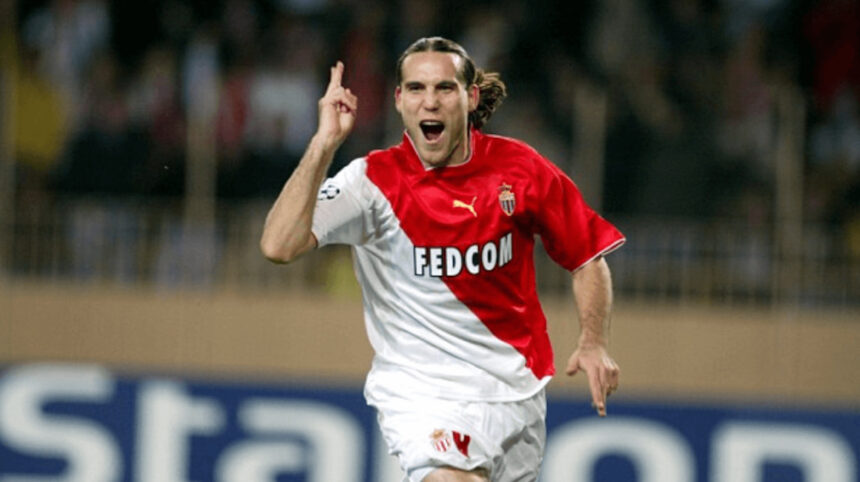
Football has trained us to expect strikers to arrive early. By twenty, they should already be frightening defences. By twenty-three, they should be carrying teams. By twenty-six, they are either stars or written off as “what could have been.” That timeline has become so normal that we rarely stop to question it. Yet when you look closely at football history, some of the most reliable, dangerous, and influential strikers did not follow that script at all. Their best years came later, sometimes much later, after setbacks, lower-league seasons, quiet transfers, or long periods where nobody was really paying attention.
This is where the idea of strikers who peaked late becomes more than just a list of surprising names. It becomes a reminder that football careers are shaped by timing, opportunity, confidence, and environment as much as raw talent. Some players needed the right system. Some needed maturity. Some simply needed one season to finally go their way. When that moment arrived, their numbers, influence, and status changed completely.
In this article we will take a look at those strikers whose careers only truly made sense in the second half. Not as fairytale stories, not as lucky accidents, but as real examples of how football development is not linear. From non-league routes to late Golden Boots, from overlooked squad players to league leaders, their stories challenge the idea that greatness must always arrive early. And in doing so, they quietly expose one of football’s biggest myths: that if a striker has not peaked young, he never will.
7 Strikers Who Peaked Late
Football careers rarely follow clean timelines, especially for strikers. Some forwards arrive early, score quickly, and build reputations before their mid-twenties. Others take longer to understand their role, their strengths, and the type of team they need around them. Because football culture often judges players by early output, late-blooming strikers are easy to overlook until their peak is already happening.
These strikers achieved peak performance later than anticipated, questioning the assumption that football development follows a predictable path. Their stories show how tactical maturity, physical adaptation, confidence, and opportunity can matter more than age. The list below focuses on players whose careers only made full sense once time, experience, and the right environment finally aligned.
1. Jamie Vardy


Jamie Vardy’s career path still reads like a contradiction to everything football development systems usually promise. Born in Sheffield, he was released by Sheffield Wednesday at 16 and dropped into non-league football with Stocksbridge Park Steels, earning a modest wage while working in a factory. Even after showing clear pace and finishing instincts, his progression remained slow by elite standards. Moves to Halifax Town and then Fleetwood Town only happened because lower-league scouts were willing to trust production rather than reputation. By the time Leicester City signed him in 2012, he was already 25, an age when most Premier League clubs have already decided whether a striker is worth serious investment.
His first Premier League seasons did not immediately confirm him as a late genius either. Vardy struggled with adaptation, confidence, and consistency, and at one point he considered leaving professional football altogether. What changed was not just form, but understanding of his own profile. Under Claudio Ranieri, Leicester built a system that allowed Vardy to play directly off the shoulder of defenders, attack space rather than wrestle centre-backs, and conserve energy for decisive movements. That tactical clarity unlocked him at an age when many strikers are already being labelled as past their peak.
The 2015–16 title season remains one of the clearest examples of late peak performance in modern football. Vardy scored 24 league goals, broke Ruud van Nistelrooy’s Premier League record by scoring in 11 consecutive matches, and became the vertical threat that defined Leicester’s counter-attacking identity. What made that run remarkable was not only the numbers, but the timing. Vardy was already 29, still learning the highest level, and performing like a striker who had spent a decade in elite systems.
His peak did not end there. In 2019–20, at 33, he won the Premier League Golden Boot with 23 goals, becoming the oldest player to ever claim the award. That season was not built on pace alone, but on improved movement, finishing variation, penalty box timing, and tactical discipline. He adapted his game to age rather than fighting it. As Leicester transitioned into a more possession-oriented side under Brendan Rodgers, Vardy remained productive by refining his runs, his pressing timing, and his link play.
By the early 2020s, Vardy had already secured his place as one of the Premier League’s most unusual success stories. Even as Leicester experienced relegation and Championship football, he remained central to their identity, helping the club regain promotion and maintaining leadership into his late thirties. His career proves that development is not only about talent, but about environment, patience, and the willingness to evolve. Vardy did not just peak late. He peaked repeatedly, long after football had decided when his prime was supposed to arrive.
2. Antonio Di Natale
Antonio Di Natale’s rise followed a very different rhythm from the standard Italian striker narrative. He spent years moving through lower-profile clubs, developing quietly without major media attention. Empoli provided his first real platform, but even there he was not treated as a future superstar. His early Serie A seasons were productive, yet rarely framed as elite. It was only after his move to Udinese in 2004, when he was already 27, that his career entered a completely different phase.
Udinese did not surround Di Natale with superstar teammates, but they built their attacking structure around his intelligence, movement, and finishing reliability. Freed from expectations of being a physical target man, Di Natale became a striker who thrived on timing, angle creation, and composure. His understanding of space allowed him to score from positions that looked unthreatening seconds earlier. This was not a sudden technical transformation, but a tactical one. The team finally matched the player.
Between his late twenties and mid-thirties, Di Natale produced the most consistent scoring stretch of his career. He won the Capocannoniere twice, scored more than 20 league goals in multiple seasons, and remained among Serie A’s top scorers well into his thirties. In 2009–10 and 2010–11, he scored 29 and 28 league goals respectively, outperforming younger and more celebrated forwards in a league known for defensive discipline. At 33 and 34, he was operating at a level many strikers never reach at any age.
Internationally, his role with Italy was more limited, partly because his peak arrived when Italy already had established attacking hierarchies. Still, his individual recognition continued to grow. He won Italy’s Footballer of the Year awards and consistently ranked among Serie A’s most respected professionals. Importantly, he chose to remain at Udinese during his prime rather than chasing glamour transfers, which further reduced global spotlight while reinforcing his local legend status.
Di Natale retired as Udinese’s all-time top scorer and one of Serie A’s most efficient late-career forwards. His story shows how tactical fit and role clarity can unlock a player long after the usual timeline says development should be complete. His peak did not arrive early, and it did not rely on physical dominance. It arrived through refinement, intelligence, and stability.
3. Luca Toni


Luca Toni’s career might be the clearest argument against linear football development. He spent much of his early twenties moving through Italy’s lower divisions, rarely viewed as a future international striker. His physical size was obvious, but his refinement took time. Even when he reached Serie A with Palermo in his late twenties, he was still seen as a functional centre-forward rather than a future European star.
Everything changed in his late twenties and early thirties. At Fiorentina in the 2005–06 season, Toni scored 31 Serie A goals, breaking long-standing league records and redefining his reputation overnight. That season was not a statistical accident. It reflected years of physical development, positional understanding, aerial dominance, and finishing consistency finally aligning. He was no longer just strong. He was efficient, patient, and tactically mature.
His rise continued at Bayern Munich, where he won the Bundesliga and Golden Boot, and then with Italy at the 2006 World Cup, where he played a crucial role in the tournament-winning squad. At 29, he was performing on the global stage for the first time, not as a prospect, but as a finished striker. His style suited tournament football because he provided hold-up play, box presence, and scoring reliability without needing constant service.
What makes Toni’s story even more striking is his longevity. He returned to Serie A in his late thirties and still delivered high-level performances, including a 22-goal league season with Hellas Verona at age 37. That season alone would be considered a career peak for many players half his age. His game aged well because it relied on positioning, strength, and timing rather than pace.
Toni’s career demonstrates that physical strikers do not always peak early. For some, understanding space, body control, and finishing angles matters more than youthful explosiveness. His best football arrived when experience met physical maturity, not when youth met opportunity.
4. Ciro Immobile
Ciro Immobile’s career is one of the clearest examples of how a striker can look unsettled for years and then suddenly appear completely at home in his own game. Early on, he was viewed as talented but unstable. After breaking through at Pescara under Zdeněk Zeman in 2011–12 with 28 Serie B goals, expectations rose quickly.
Juventus signed him, but he never found space in a squad already built around established forwards. Loans to Genoa and Torino followed, and although his Torino spell brought a Serie A Golden Boot in 2013–14 with 22 goals, his reputation still carried a sense of uncertainty. His move to Borussia Dortmund in 2014 was supposed to be the real breakthrough, yet it turned into one of the most uncomfortable periods of his career, with limited minutes, tactical mismatch, and declining confidence.
What followed only deepened the idea that Immobile might never fully settle at elite level. Sevilla was another short and awkward stop, and by the time Lazio signed him in 2016, the move felt more like a reset than a step toward superstardom. At that point, Immobile was already 26, with a career that looked busy but directionless. Lazio changed everything, not because he suddenly became a different player, but because the club gave him a role that matched his strengths and a structure that trusted him as the focal point of the attack.
Under Simone Inzaghi, Lazio built an attacking system that allowed Immobile to operate between the last defender and the goalkeeper, using his movement, anticipation, and finishing rather than asking him to play with his back to goal constantly. The confidence this brought was immediate and sustained.
From 2017 onward, Immobile became one of the most reliable scorers in Europe, winning multiple Capocannoniere awards and finishing among the top scorers in Europe season after season. His 2019–20 Serie A campaign, where he scored 27 league goals, was not just a personal high point. It was a statement season in which he matched Robert Lewandowski for the European Golden Shoe, despite playing in a team that did not dominate possession like Europe’s biggest clubs.
What makes Immobile’s late peak particularly important is how complete it became. He was no longer just a poacher. He developed better link play, improved his penalty execution, refined his off-ball movement, and became Lazio’s tactical reference point. Even in his early thirties, he remained central to Lazio’s attacking identity, regularly carrying the scoring burden while younger attackers rotated around him. His leadership role in the squad also grew, showing that his maturity off the pitch matched his stability on it.
Internationally, his Italy career remained complicated, often disrupted by tactical changes and competition for places, but his club-level consistency could not be dismissed. By the time he reached his early thirties, Immobile had transformed from a striker constantly searching for belonging into one of Serie A’s most dependable goal scorers of the modern era. His story shows that a slow start does not mean a limited ceiling. It simply means the environment has not yet caught up with the player.
5. Teddy Sheringham

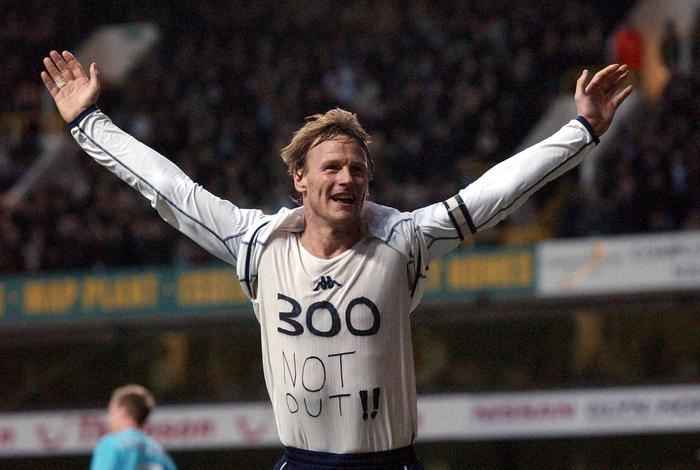
Teddy Sheringham’s career never followed the shape usually associated with elite English strikers. He did not burst into top-flight football as a teenage sensation, and he did not build his reputation on raw athleticism or early physical dominance. His early years were spent in the lower divisions, learning the game through repetition, adaptation, and positional understanding rather than hype. When he finally made a strong impression with Nottingham Forest in the early 1990s, he was already 25, an age when many modern strikers are expected to be approaching their peak.
Sheringham’s move to Tottenham Hotspur allowed his game to grow in a more visible setting, but even then he was not framed as a future superstar. His strengths were subtle. He read space better than most forwards, linked midfield and attack naturally, and scored through timing rather than power. These qualities aged well. Instead of declining as he entered his thirties, Sheringham became more influential because his game relied on decision-making rather than physical advantage.
His move to Manchester United in June 1997 came when he was already in his early thirties, yet those years became some of the most productive and memorable of his career. At United, Sheringham was part of a squad built for relentless competition, and rather than being overwhelmed by younger teammates, he thrived in it. His understanding of movement and combination play allowed him to complement strikers with very different profiles, including Dwight Yorke, Andy Cole, and later Ole Gunnar Solskjær.
The 1998–99 season remains central to his late-career narrative. Sheringham scored vital goals across competitions, including the dramatic equaliser in the Champions League final against Bayern Munich, moments before Solskjær completed the comeback. That contribution alone would define many careers, yet for Sheringham it was simply another chapter in a period where his intelligence, composure, and positioning were more valuable than raw speed.
He continued to perform at a high level into his late thirties, winning Premier League titles, domestic cups, and European honours while remaining a reliable scorer. Even after leaving United, he returned to Tottenham and later West Ham, where he maintained productivity long past the age when most strikers fade out of top-level relevance.
Sheringham’s late peak was not built on physical reinvention. It was built on accumulated understanding. His career proves that football intelligence, when combined with professional discipline, can stretch a striker’s influence far beyond conventional timelines. He did not need an early explosion to define his legacy. His game matured into its best version when others were already being written off.
6. Dado Pršo

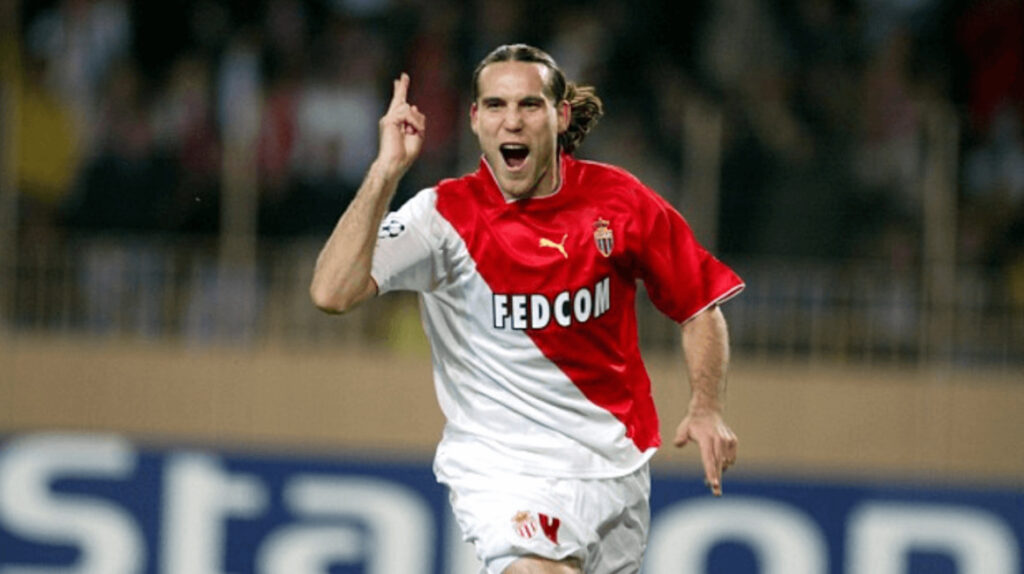
Dado Pršo’s story is the kind that sounds exaggerated until you line up the dates and realise it really happened that way. He was born in Zadar on 5 November 1974, came up through a messy football era in the former Yugoslavia, and then moved to France in his late teens chasing a career that was never guaranteed. The part that people remember because it feels almost unreal is that he worked as a car mechanic while still trying to keep his football alive in the lower leagues. That was not some cute backstory added later. It was part of the grind, the kind of “I need to survive first” reality that a lot of late bloomers understand, even if they never say it out loud.
What makes Pršo fit this article perfectly is that his peak did not come from being a teenage wonderkid who got polished early. It came from a slow climb where he kept improving in environments that did not offer glamour, spotlight, or clean pathways. He had spells at smaller French clubs, then eventually got into the Monaco ecosystem, went on loan to Ajaccio, and only really became a widely feared striker in his late twenties when Monaco began to lean on him more.
Then the “late peak” became undeniable in Europe. The match people always go back to is Monaco’s 8–3 win over Deportivo La Coruña in the Champions League group stage, when Pršo scored four goals. It happened on 5 November 2003, which was his 29th birthday, and it remains one of those Champions League nights that feels too chaotic to be real. UEFA’s match report is very clear about what he did: he became one of the few players to score four in a single Champions League match, and he did it in the space of about 23 minutes from his first goal to his fourth.
That season did not end as a “one crazy night” story either. Monaco went all the way to the 2004 Champions League final, which matters because it puts Pršo’s rise into proper context: this was not a late bloomer padding numbers in a minor competition, this was a striker becoming central to a team making the biggest European final in club football.
The next part of his career reinforces the same theme. In May 2004 he moved to Rangers and immediately scored heavily in his first league season, helping them win the Scottish Premier League and the League Cup. That is another pattern you see with late-peaking strikers: by the time the wider football world starts paying attention, the player has already built enough internal confidence and problem-solving ability to handle new environments quickly. Pršo did not need five years to adjust. He arrived already formed.
7. Cyriel Dessers


Cyriel Dessers’ career is a very modern version of late peaking, and it is also one fans will recognise because his rise did not follow the usual “teenager at a super-academy” pathway. He was born in Belgium on 8 December 1994, qualifies for Nigeria through his mother, and spent years moving through clubs where he had to earn visibility the hard way. There was no early global spotlight around him. The goals and reputation came later, after he had already bounced through different leagues and roles.
Even before Genk, his scoring showed signs of a striker who was still building his level step by step. He had that huge season at NAC Breda (29 league goals), then solid numbers at Utrecht and Heracles. At Heracles, the 2019–20 Eredivisie season was cut short, but Dessers still finished as joint top scorer with 15 league goals, which tells you he was already doing elite output in the Netherlands before most people outside that league were paying attention.
The Genk move in June 2020 is where the “late peak” story really begins to look like a proper European-level rise. It did not instantly click there in the way it later did at Feyenoord, but the important part is what happened next: Feyenoord took him on loan in August 2021, and that season became the clear turning point in his career narrative. He ended the 2021–22 Europa Conference League as the competition’s top scorer with 10 goals and was named in the Team of the Season, while also hitting 20 goals in 41 matches across all competitions for Feyenoord. That is not a small hot streak. That is a full-season body of work, in Europe and domestically, arriving when he was already in his late twenties.
After that, his career path kept proving the same point this article is making: late bloomers can still have high-impact peaks, but it often comes through the “wrong” kind of career shape, with detours that make casual fans underrate the player. Dessers moved to Cremonese, then to Rangers in July 2023, and his time in Scotland became another example of output arriving later than expected.
Rangers confirmed he scored 52 goals and made over 100 appearances before leaving for Panathinaikos on 1 September 2025. That is a serious return, especially considering how frequently he was debated and doubted in public conversation while he was still producing numbers.
Dessers’ career shows that late peaking is not always about suddenly becoming better at football overnight. Sometimes it is about finally landing in the right tactical setup, the right league rhythm, and the right confidence cycle at an age when football culture wrongly assumes the story should already be finished.
Why Some Strikers Peak Late
When we look at careers like Jamie Vardy, Antonio Di Natale, Ciro Immobile, or more recent examples such as Cyriel Dessers, one common theme emerges: their peak did not coincide with the age ranges that scouts, pundits, or analytics models often label as “prime years” for strikers. The reasons for this pattern are varied, but there are clear factors that consistently appear in late-blooming paths.
Late Opportunity and Exposure
A striker’s environment and opportunity structure have a strong influence on when his career visibly accelerates. Players like Vardy did not have traditional academy progression or early elite opportunities. Vardy was in non-league football well into his early twenties, meaning he was physically mature before he ever trained in a professional first-team environment at scale.
His opportunity to play week in and week out, and then move to higher levels gradually, was not available earlier in his career. That accumulation of competitive minutes in lower leagues, where physicality and mental resilience are tested intensely, gave him a platform to survive and then thrive when given a Premier League role.
Similarly, Di Natale spent his early career at smaller, less visible clubs where tactical responsibility was not designed to build a superstar forward; it was about team stability. Only when he moved to Udinese, at age 27, did he find a tactical environment that amplified his scoring traits. That late exposure at the right club is a structural pattern: talent needs the right platform, and access to that platform often arrives later for players who did not emerge through major youth systems.
Tactical Maturation
Movement, anticipation, space exploitation, and anticipation of defensive patterns are not purely innate. These traits can improve with experience and with exposure to different tactical systems. Football intelligence is often one of the last attributes to fully mature, simply because it requires thousands of hours of match and training situations to refine. Strikers who rely on spatial understanding and decision-making, as opposed to pure speed or athleticism, often get sharper with age, not weaker.
Teddy Sheringham’s career illustrates this: he was not a statistically explosive athlete in his early twenties. What he offered was link play, awareness of mid-block spaces, and the ability to combine effectively with midfield runners, skills that only improved as he played more tactical systems and read more in-game situations. By the time he was a regular contributor at Manchester United in his early thirties, his game was about intelligent positioning and coordination with teammates rather than peak physical attributes.
Physical Understanding and Compensation
There is a widespread assumption that athletic decline begins sharply in a player’s late twenties, and while raw pace can decrease, other physical elements such as balance, strength, stamina, and the ability to protect the ball often improve or plateau into the early thirties. Strikers who structure their game around body position, set-piece mastery, and finishing from controlled momentum can extend their productive years beyond what pure sprint-based models would predict.
Luca Toni offers a clear example of this. His best goal totals arrived after the standard “peak age” range. Toni’s game was never about quick bursts or closing speed. It was his ability to occupy space, win aerial duels, control knock-downs, and convert from half chances. These are physical skills that do not erode quickly and can even benefit from experience and muscle memory honed over years.
Confidence and Environment
Late bloomers tend to peak when confidence and environment align. Confidence is a subtle but measurable force in player performance; players who feel secure in their role, who trust coaching systems, and who are regularly selected tend to produce outputs that reflect that stability. Immobile’s career is illuminating here. Early instability at clubs in Germany and Spain coincided with inconsistent scoring output. Once Lazio offered him a stable tactical role and managerial trust, his scoring rates increased dramatically and were sustained over multiple seasons.
A stable environment allows a striker to build patterns, refine timing with teammates, and internalise tactical expectations. When combined with confidence, players can increase their shot volume, improve decision making, and convert higher-value chances. Clubs that provide that stability often cultivate late peaks precisely because they protect and develop strikers through transitional seasons rather than discarding them at the first sign of inconsistency.
Taken together, these factors show that striker development is not linear because it does not depend on a single trait or a fixed timeline. It depends on opportunity, tactical maturity, physical adaptation, and psychological stability, factors that align differently for different players. Late peaking is not an anomaly. It is the outcome of multiple developmental dimensions converging at a later stage in a player’s career.
Statistical Patterns — What Data Suggests About Peak Age in Striking
When statistical analysts study goal scoring over time, the age at which a striker peaks is not consistent across leagues, systems, or player profiles. Research that maps performance against age frequently shows that the distribution of goal output has wide variance. While early models pegged a striker’s peak around age 25–27, more recent analytics research suggests that peak scoring output can occur as late as the early 30s, particularly when a player’s style is built around positioning and cognition rather than explosive athletic traits.
Age Curves and Distribution of Output
Performance curves in football do not follow a bell shape that tightly clusters around a single age. When analysts examine goal output by age brackets across multiple leagues, they find “shoulders” on the distribution more often than a sharp peak. What this means is that while many strikers do produce high output in their mid-20s, a non-negligible number deliver their highest seasonal numbers after 28, with distinct clusters even into ages 30–33.
For example, the Premier League Golden Boot winners for the last decade include players like Vardy (Golden Boot at 33 in 2019–20) and Mohamed Salah, who maintained high output well past his mid-20s. This does not come from anomalous seasons but from sustained periods where shot success, expected goals (xG) per 90 minutes, and goal share in team output remain high across age groups up to and beyond age 30.
Contextualising Analytics with Style Profiles
Football analytics platforms like Opta, Stats Perform, and FBref categorise strikers by style: poacher, target man, link striker, complete forward, and so on. Statistical trends indicate that players classified as “positional strikers” or “link play finishers”, that is, those who rely more on reading runs, combining with midfielders, and occupying half spaces, tend to maintain or even improve their performance metrics later in their careers compared with pure runners.
This aligns with spatial models of goal scoring that prioritise shot quality and positional advantage over volume of sprints or pressing intensity. In these models, experience allows strikers to place themselves in higher-value zones more consistently, and data shows that higher shot quality correlates more reliably with scoring than mere shot quantity. Players like Di Natale and Immobile, who maintained high expected goal rates later in their careers, exemplify this pattern.
Comparisons Across Leagues and Systems
Statistical research also highlights that peak ages vary by league context. In leagues with slower tactical rhythms, such as Serie A or Ligue 1, peak performance ages often cluster later than in the Premier League or Bundesliga, where physical intensity tends to be higher and tactical turnovers more rapid. This suggests the game environment interacts with individual development curves. Strikers in systems that emphasise possession, sustainable build-up, and tactical discipline, as in Serie A, can afford to mature later because physical decline is offset by positional intelligence and team structure roles.
Performance Metrics Beyond Goals
Modern football analytics uses composite metrics such as expected goals (xG), non-penalty goals, shot-creating actions, link play involvement, and progressive runs to evaluate finishing beyond raw goal counts. These metrics often show that a striker’s influence on team success can peak independently of age. For example, Immobile’s high xG output in his early 30s confirms that his role was not just goal conversion but pattern creation in attack. Similarly, data shows that strikers like Vardy maintained unusually high shot conversion rates well past 30, which goes against older models that assumed a consistent physical decline post-28.
Research published in journals such as the Journal of Sports Analytics and working papers on football performance patterns reinforce that peak age is not a narrow window but a range influenced by tactical context, role definition, and team dynamics. These statistical patterns dismantle simplistic narratives about athletic peak age and support the idea that effective striking ability can mature late rather than diminish predictably.
What Late Bloomers Teach Us About Player Development
The stories of Vardy, Di Natale, Immobile, Sheringham, Pršo, Dessers, and others are not interesting merely because they are exceptions. They are instructive because they show how development, opportunity, and performance interact in ways that conventional thinking does not fully capture.
Rethinking Scouting and Recruitment
Traditional scouting often prioritises early output and athletic markers, sprint speed, jump height, first touch at 18, and so on. But late bloomers highlight that those early signals are incomplete. Scouts and recruitment analysts increasingly use performance lead indicators, such as spatial intelligence, expected goal involvement, movement pattern recognition, and tactical adaptability. These metrics are less age-dependent and more predictive of long-term contribution potential.
For example, a player’s ability to consistently find space between defensive lines, or to time runs into high-value zones, is not something that always shows up in traditional scouting reports for 19-year-olds. But when it does, combined with positive psychological traits (resilience, learning orientation), it can predict viability as a late bloomer.
Patience in Development Pathways
Clubs that provide stable environments and patience tend to see more long-term returns from players who might otherwise be dismissed early. Immobile’s resurgence at Lazio came not because of a single tactical trick, but because he was given consistency in selection, a clear role, and managerial trust. Football development is rarely linear, and giving a striker consistent minutes, structured feedback, and tactical clarity can unlock performance that early fluctuations obscure.
Valuing Tactical Fit Over Age
Late peakers often excel when their skill sets match the tactical system they are part of. This suggests that tactical fit, matching strikers to systems that play to their strengths, is a more reliable predictor of late success than age benchmarks. Clubs now often use system profiling to identify forwards whose movement patterns, positioning, and shot profiles align with tactical models that prioritise particular spatial relationships.
Flexible Career Planning
From a player development perspective, late peakers also show that career arcs can be extended and reshaped rather than front-loaded. Athletic trainers, psychologists, and performance staff are increasingly integrating long-term workload management, psychological resilience training, and positional refinement into player programmes. This acknowledges that peak performance can come at varying times for different players, and that early career fluctuations should not be interpreted as ceilings.
Broader Implications for Football Culture
Finally, late-blooming strikers underline that football culture itself needs to adjust its timelines. Pundits, media, and fan discourse often conflate age with value. But data and real careers show that value can emerge later, persist longer, and be more context-dependent than age stereotypes suggest. This has implications for contract negotiations, player valuation, and narrative framing in the sport.
Conclusion
When the careers of these strikers are placed side by side, the idea of a fixed football timetable becomes difficult to defend. Jamie Vardy did not enter the Premier League until most elite forwards are already established. Antonio Di Natale and Luca Toni produced their best seasons when many peers were being described as “past their prime.” Ciro Immobile needed stability and tactical trust before becoming one of Serie A’s most consistent goal scorers. Teddy Sheringham built his finest years on intelligence and timing rather than early physical dominance. Pršo and Dessers followed quieter, less visible routes before finding stages where their impact suddenly became undeniable. None of these careers follow the straight, academy-to-superstar line that football culture often treats as normal.
What these stories collectively show is that development in football is shaped as much by context as by talent. Opportunity, tactical fit, confidence, physical understanding, and psychological maturity interact in different ways for different players. A striker can have the ability at twenty and only find the environment to express it at thirty. Another can need years of competitive struggle to sharpen the instincts that later define his peak. The sport rewards timing as much as it rewards talent, and timing is rarely predictable.
Late bloomers also challenge how clubs, analysts, and fans judge potential. Early success is not the only signal of future greatness, just as early struggle is not proof of limitation. Football history keeps offering reminders that careers can accelerate long after the age most models describe as a peak. Strikers, in particular, often mature through experience, learning how to manage space, pressure, and decision-making in ways that no youth system can fully teach.
In the end, these careers do not just celebrate late success. They force a rethink of how the game understands growth. Football is not a straight line from promise to peak to decline. It is a landscape of detours, delays, restarts, and late breakthroughs. And for strikers who peak late, that reality is not a weakness in their story. It is the very reason their careers remain some of the most instructive and compelling in the sport.