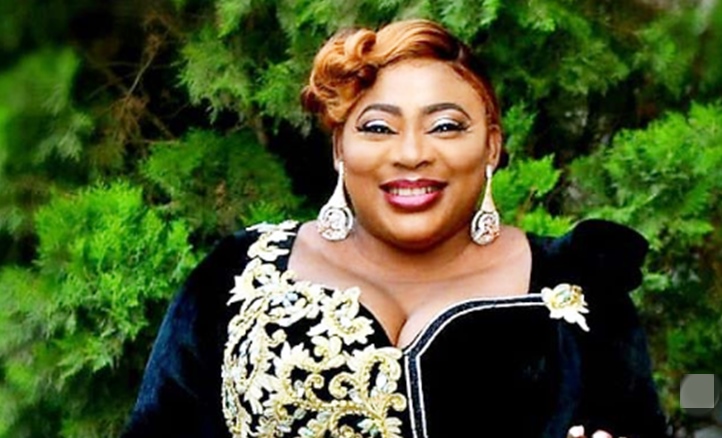
A scene from a Nollywood film featuring Bolaji Ogunmola and IK Ogbonna has triggered widespread backlash online, forcing the actress to issue a public apology amid accusations of cultural insensitivity.
The clip, which began circulating on social media, drew criticism from viewers who accused the film of promoting negative stereotypes about Yoruba women. As reactions intensified across platforms, Ogunmola moved quickly to respond, clarifying the intent behind the scene while expressing regret over its impact.
The incident has since sparked a broader conversation about humour, cultural boundaries, and the growing influence of online audiences in shaping accountability within Nollywood.
The Scene in Question (What Happened)

At the centre of the controversy is a scene from the Nollywood film An Imperfect Match, featuring Bolaji Ogunmola and IK Ogbonna. In the now-viral clip, Ogbonna’s character is a rich Igbo man who delivers a line widely criticised as offensive. He referred to Yoruba women in derogatory terms, specifically suggesting they are “dirty.” The dialogue goes further, describing unhygienic habits in a way many viewers found insulting and unnecessary, especially given Nigeria’s sensitive ethnic dynamics. In his words:
“Yoruba girl, you people are very dirty. Are you not seeing my house? Everywhere is clean. Now that you have entered here, I will be seeing tissue up and down, your pants will be hanging on the staircase, that bra that is like curtain, I will come and see it in my parlour.”
In another scene, IK Ogbonna enters the kitchen and meets Ogunmola’s character preparing a Yoruba meal, particularly ewedu soup. He then remarks that it smells like soakaway.
While the film itself was originally conceived as a romantic comedy exploring cultural differences between two tribes, the scene stood out for the wrong reasons. What may have been intended as humour or exaggeration within a fictional relationship dynamic was instead received by audiences as a direct reinforcement of long-standing stereotypes about Yoruba women.
The backlash was not just about the line itself. It was about what it meant and how casual dialogue in entertainment can become offensive when it touches on people’s identity, dignity, and how they are seen.
How It Went Viral & Backlash


The controversy gained momentum after a clip from the film began circulating widely across social media platforms, particularly X (formerly Twitter) and Instagram. As the video spread, viewers quickly isolated the moment where IK Ogbonna’s character made the now-infamous remark about Yoruba women, triggering instant reactions and resharing.
Netizens didn’t refer to how the movie ended, which was on a hopeful note where both characters played by IK and Bolaji fall in love, rise above tribalism and live happily ever after.
What should have remained just another scene in a romantic comedy instead became a viral talking point, as netizens reposted the clip with criticism, outrage, and commentary. Many accused the film of reinforcing long-standing stereotypes, especially those related to hygiene and behaviour. Unfortunately, these issues have historically been sensitive within Nigeria’s ethnic discourse.
As engagement grew, so did the backlash. Netizens called out Bolaji Ogunmola for her role in the production, with some questioning how such a line made it into the final cut. Others went further, demanding accountability and an apology, arguing that Nollywood should be more mindful of how it portrays different cultures.
Within days, the situation escalated beyond criticism to intense online pressure, with the actress facing insults, threats, and attempts by some users to report or disrupt her digital platforms.
Bolaji Ogunmola Speaks & Pressure Behind the Apology


In her statement, the actress apologised to Yoruba audiences for the offensive line delivered by IK Ogbonna in An Imperfect Match, acknowledging the hurt it caused. She explained that the film was produced about three years earlier and was intended as a lighthearted romantic comedy exploring cultural differences, not an attempt to stereotype any group.
Bolaji also clarified her role in the production, noting that although she was a producer, she was acting in that particular scene and did not control the final delivery of the dialogue. According to her, decisions on set ultimately rested with the director, and she neither wrote the script nor deliberately included any disrespectful language.
Beyond the clarification, her statement revealed the intensity of the backlash. She disclosed receiving threats to her life, career, and even her family, describing the experience as “extremely disturbing.” The volume and tone of reactions, she suggested, played a significant role in prompting her swift and public response.
While maintaining that there was no harmful intent behind the scene, Ogunmola took responsibility as the film’s producer, admitting that, in hindsight, better judgment could have been exercised. She reiterated her pride in her Yoruba identity and stressed that the goal of the film was to promote unity, not division.
Comedy vs Culture: The Bigger Conversation
The backlash surrounding Bolaji Ogunmola’s film has reignited a familiar debate within Nollywood: where should the line be drawn between comedy and cultural sensitivity?
In explaining the controversy, Ogunmola maintained that An Imperfect Match was conceived as a comedy about cultural differences between two tribes, with a storyline ultimately promoting love and unity, not division.
However, audience reactions suggest that intent is no longer enough. For many viewers, the issue was not just the joke itself, but the long history of similar portrayals in Nigerian films where humour sometimes leans on exaggerated tribal stereotypes. Critics argue that such depictions, even when framed as comedy, can reinforce harmful narratives when they target identity and cultural pride.
This shows a wider change in what audiences expect. Social media has made it easier for people to speak up about how their culture is shown on screen. What once seemed like harmless banter is now questioned in real time, and filmmakers are being held responsible for both what is said and its impact, in a bid to make them do better.
In the industry, it also points to the role of improvisation, which is common in Nollywood. Ogunmola said the line was not in the script but came up during acting. This raises questions about control and responsibility when actors go off script.
In the end, it shows a clear reality. In today’s digital age, comedy does not stand alone. Cultural context matters more than ever, and audiences are paying close attention.
Conclusion
The movie scene that was meant to pass quietly has turned into a bigger conversation about responsibility in Nollywood. For Bolaji Ogunmola, the controversy led to a public apology and showed how fast audience reactions can shape a story today.
The incident shows a clear change. Viewers are no longer just watching, they speak up and criticise what they find offensive. As Nollywood grows, expectations about how culture is shown are becoming clearer.
In the end, the backlash over An Imperfect Match is not just about one line. It reflects a changing industry where humour, culture, and responsibility are now closely linked.