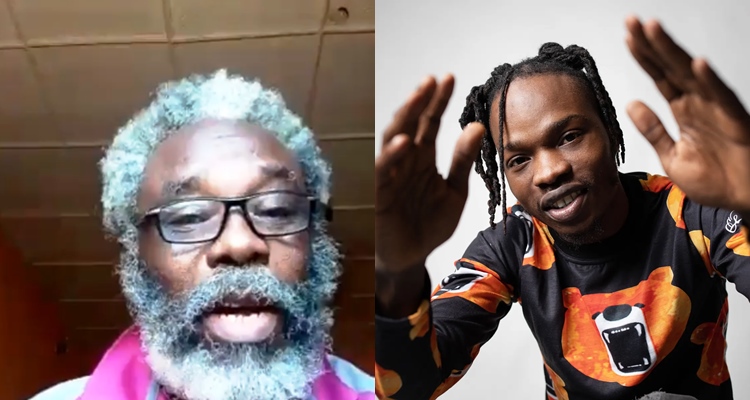
A recent court judgment in Lagos has sparked fresh conversations about how netizens behave on social media in Nigeria and the dangers of spreading false information online. On May 15, a Federal High Court sentenced Samuel Adeboye Adeyeye, popularly known on X as @Swanky0001, to two years in prison after he posted a false tweet about the daughter of superstar musicians Adekunle Kosoko aka Adekunle Gold and Simi.
The case has become one of the strongest examples yet of how Nigerian authorities are beginning to treat online harassment and fake news more seriously. For years, many netizens saw trolling and shocking posts as part of the norm online. But this judgment has shown that actions taken online can now carry very real legal consequences.
What started as a tweet meant to attract attention quickly turned into a criminal case involving digital investigations, court charges, and eventually a prison sentence.
The Tweet That Started It All

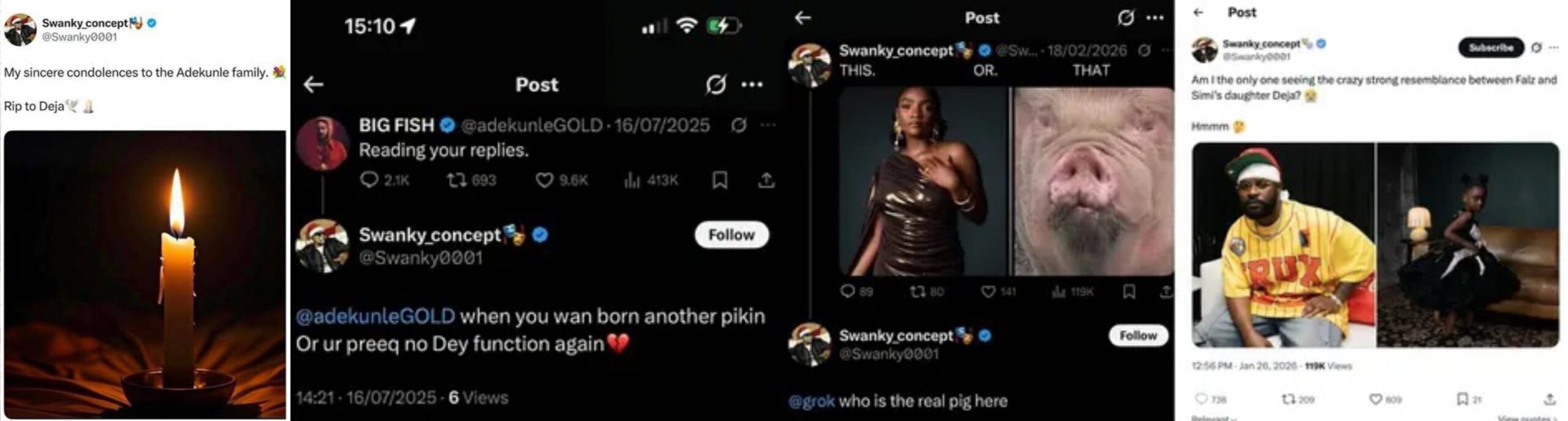
The case centred around a short post shared on X. In a seeming attempt to gain attention and engagement, Adeyeye posted:
“My sincere condolences to the Adekunle family. Rip to Deja.”
The tweet falsely claimed that Deja, the young daughter of Adekunle Gold and Simi, had died. He was also accused of carrying out a long period of online harassment against Adekunle Gold and his family between July 2025 and March 2026, before his eventual arrest.
During the trial, prosecutors presented evidence showing how @Swanky001 repeatedly used X to attack Adekunle Gold with false and offensive claims about the paternity of his daughter, while also sharing defamatory photos of Simi.
Many netizens today chase likes, reposts, and followers by posting shocking stories, controversial opinions, or fake information. This trend, often called “engagement farming,” has become more common as platforms reward viral content with visibility and, in some cases, money.
But this particular post crossed a major line because it involved a child and spread a completely false story about her death.
Instead of handling the matter privately or accepting a public apology, the celebrity couple reportedly chose to involve law enforcement authorities. Security operatives then carried out a digital investigation to trace the account behind the tweet.
Investigators reportedly tracked IP addresses and examined the suspect’s phone before linking the account directly to Adeyeye. He later admitted that the story was completely made up and posted only to gain online attention.
The Legal Side Of The Case


The case against Samuel Adeboye Adeyeye was built mainly on Nigeria’s Cybercrimes Act. In the suit filed as IGP v. Adeboye Samuel Adeyeye, the police accused him of cyberbullying, cyber-threats, and cyber-harassment over the false tweet about Adekunle Gold and Simi’s daughter.
The charges were linked to Section 24 of the Cybercrimes Act, which makes it illegal to knowingly spread false information online in a way that causes fear, emotional distress, insult, or harm to another person.
According to the charges filed in court, Adeyeye faced two years imprisonment for cyberbullying, another two years for cyber-threats, and one year for cyber-harassment. The sentences were ordered to run at the same time, with the court also giving him the option of paying a ₦1 million fine.
During the case, Adeyeye pleaded guilty and admitted that the story about the child’s death was completely false. He also admitted that the post was made mainly to attract attention and gain engagement online.
His lawyer reportedly appealed to the court for mercy, arguing that he was sorry for his actions and had no previous criminal record.
In its final judgment on May 15, the Federal High Court sentenced him to two years in prison. Although the sentence ran concurrently and included the option of a fine, the judgment still sent a strong message about the growing legal risks tied to harmful social media behaviour in Nigeria.
The court also added another important condition to protect the family. A permanent restraining order was issued against Adeyeye, stopping him from posting any defamatory or harmful content about the complainants in the future.
The Old Adekunle Gold Tweet That Changed The Conversation

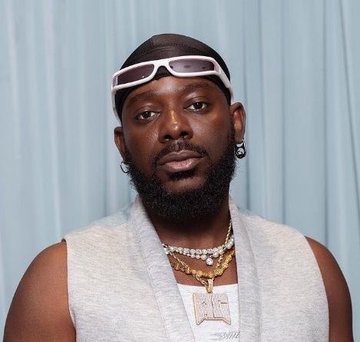
Not long after news of the sentence spread online, attention suddenly shifted away from the convicted man and moved toward Adekunle Gold himself.
Netizens dug up an old tweet from the singer dating back to 2012 during the Occupy Nigeria protests against former President Goodluck Jonathan. In the resurfaced tweet, Adekunle Gold had written:
“Dear God, if you give us Dagrin back, we will give you Jonathan in return.”
The old post immediately divided netizens. Some people, including activist Omoyele Sowore, argued that the government appeared to be protecting celebrities while ordinary citizens faced harsh punishment for online speech. They questioned whether there was now a double standard when it came to freedom of expression.
Others strongly disagreed with that comparison. They argued that there is a clear difference between political comments made during protests and falsely announcing the death of a child just to gain traffic online.
At the same time, older tweets from Simi were also dragged into the conversation.
Conclusion
The case has become one of the biggest conversations about social media accountability in Nigeria this year. More than anything, it has shown that authorities are beginning to take online harassment and false information far more seriously than before.
While the debate over free speech and old tweets continues online, the court’s message was clear: social media is no longer seen as a space without consequences.
For many Nigerians who spend hours daily on X, Instagram, TikTok, and Facebook, the judgment is a reminder that chasing engagement at all costs can come with serious consequences. What some people once dismissed as “cruise” or online banter can now end in criminal prosecution, especially when innocent people and sensitive issues are involved.