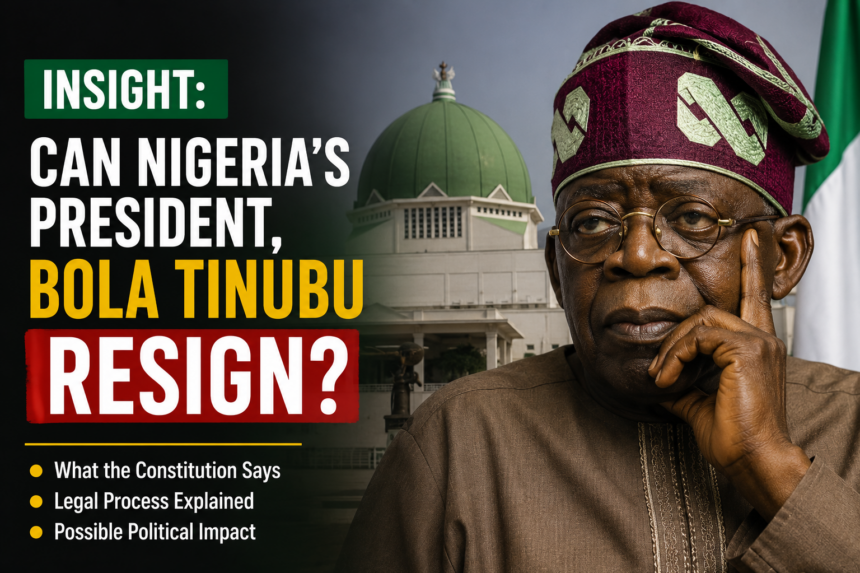
“I, therefore, join Nigerians of goodwill in calling for the resignation of the President over monumental failure in governance,” Peter Obi, the Nigeria Democratic Congress (NDC) presidential candidate, told Nigeria’s President, Bola Tinubu.
This comes after Keir Starmer stepped down as Labour leader and prime minister of the United Kingdom. Starmer had faced swelling criticisms for his party’s heavy losses in local elections, and his leadership and policy agenda.
Obi argued that the British leader’s decision to step down amid public dissatisfaction with economic conditions and unmet campaign promises offers lessons for countries seeking to strengthen democratic governance.
While relating the situation to Nigeria, he noted that the president should take a cue from Starmer, as conditions in the country had deteriorated since Tinubu assumed office, emphasising that critical sectors had witnessed setbacks rather than progress.
“At present, however, these conditions have worsened. Electricity supply remains unreliable, insecurity has intensified in many areas, including kidnappings, and economic hardship has deepened rather than eased. Similar concerns are reflected across other critical sectors such as security, infrastructure, transportation, and anti-corruption efforts, all of which have regressed. We are in the worst possible condition,” he said.
President Tinubu promised end to insecurity, it worsened

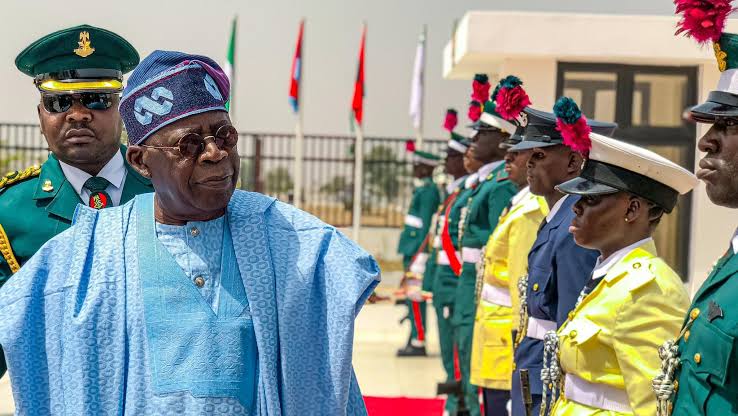
Tinubu’s promises continue to fall short as insecurity continues to cause fear and panic across the country. Ending insecurity was at the top of President Tinubu’s agenda when he clinched power in 2023. He promised to defend the nation from terror and all forms of criminality that threaten the peace and stability of the country.
However, recent data reveal that Nigeria remains one of the most terror-affected countries globally, recording over 14,500 conflict-related deaths between June 2025 and May 2026, second only to Sudan in the Sahel region.
Despite not ranking highest in fatalities, Nigeria is still among the world’s top 5 countries most impacted by terrorism (4th in GTI 2026), placing it alongside countries like Mali, Burkina Faso, and Niger as a major hotspot of insecurity.
Recent cases of insecurity have heightened concerns. On May 15, gunmen abducted dozens of pupils from Government Day Junior Secondary School in Askira-Uba Local Government Area of Borno State. That same day, armed men dressed in military camouflage opened fire sporadically and abducted seven teachers and 39 students in Oyo State
Resignation is lawful in Nigeria
In response to Obi’s demands for Tinubu’s resignation, presidential aide Bayo Onanuga rejected the comparison between Nigeria’s political system and that of the United Kingdom, arguing that Nigeria runs a presidential system, with the president elected to a fixed 4-year term.
Within Nigeria spoke to Adeyinka Oyesanmi, a lawyer, who explained the constitutional provisions regarding Onanuga’s claim to a four-year fixed term.
Oyesanmi noted that in a constitutional democracy, resignation is a legitimate and lawful option available to a President who, for personal, political, health, or other compelling reasons, is unable or unwilling to continue in office. According to him, resignation of the president is neither unconstitutional nor unprecedented in democratic governance.
“ What is important is that any transition occurs strictly in accordance with constitutional provisions to preserve stability, continuity of government, and public confidence in democratic institutions,” he said,
Oyesanmi explained that it is difficult to insist on the President’s constitutional entitlement to complete a term and seek re-election, while downplaying other constitutional provisions.
“Constitutionalism requires consistency, not selective reliance on provisions that suit a political narrative,” he said.
He noted the Nigerian Constitution provides a clear and orderly process to ensure that governance continues seamlessly even where a President resigns, dies, is removed from office, or becomes permanently incapacitated.
Citing sections of the 1999 Constitution (amended), he said that Sections 306(1), (2) and (5) of the Constitution (as amended) expressly empower the President to resign by a written notice addressed to the President of the Senate. In addition, he emphasised that Section 146(1) provides for succession by the Vice-President whenever the office of President becomes vacant, including through resignation
“ This reflects the constitutional principle that public institutions are stronger and more enduring than any individual office holder. The Spokesperson’s position appears selective. The Constitution provides for a four-year presidential term, but it also expressly allows for resignation and other circumstances that may end a presidency before the expiration of that term,” he emphasised.