The 2026 FIFA World Cup has barely reached the knockout rounds, and it’s already rewriting record books that had stood for decades. With 48 teams competing for the first time in tournament history, the numbers were always going to look different this year. But nobody predicted quite how much history would be made before a ball is even kicked in the final.
Lionel Messi, Cristiano Ronaldo and Kylian Mbappé have turned the group stage and early knockouts into a personal arms race, trading records with each other almost matchday by matchday. Below is a running list of everything that’s fallen so far, and it keeps growing.
Messi Becomes the All-Time Leading Scorer
Argentina’s opener against Algeria set the tone for the whole tournament. Messi scored a hat-trick, his first ever at a World Cup, and immediately ran into the history books. At 38 years and 357 days old, he became the oldest man to score a World Cup hat-trick, taking the record from Ronaldo.
He didn’t stop there. That hat-trick pulled him level with Miroslav Klose on 16 World Cup goals, and by the time Argentina beat Austria in their second group game, Messi had gone past Klose entirely to become the outright top scorer in men’s World Cup history. He’s now sitting on 19 goals, a number that once looked untouchable.
Messi also became the first player to score in seven consecutive World Cup matches, and he holds the record for the most tournament appearances (six), the most matches played (29), and the most minutes on the pitch across World Cup history. He’s the youngest and oldest scorer in Argentina’s World Cup history too, having found the net at 18 years and 357 days back in 2006, and again this year at 38.
Ronaldo Answers Back
If Messi has dominated the headlines, Ronaldo hasn’t been far behind. Portugal’s 5-0 demolition of Uzbekistan saw him become the first player ever to score at six different World Cups, a feat Messi has actually equalled by playing at six tournaments but never managed to score at every one of them.
Ronaldo’s brace that day also made him the oldest player to score twice in a World Cup match, at 41 years and 138 days, breaking a record Messi himself had set earlier in the same tournament. He’s now the second-oldest scorer in World Cup history behind Cameroon’s Roger Milla, who scored at 42 in 1994.
There’s a strange symmetry between the two rivals here. Ronaldo joined an exclusive club of just three men who’ve been both the youngest and oldest World Cup scorer for their country, alongside Denmark’s Michael Laudrup and, yes, Messi again.
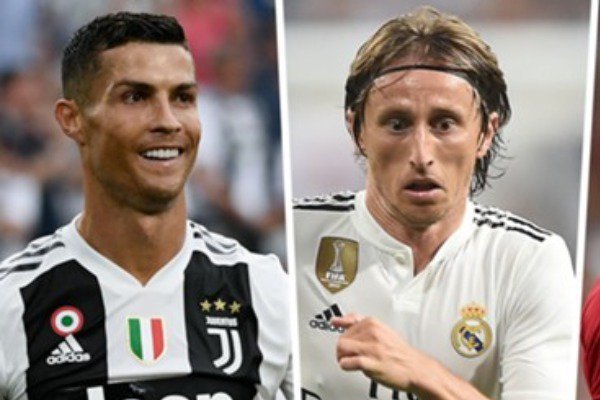
Ronaldo also tied Lothar Matthäus for the second-most World Cup appearances in history with his 25th cap in the tournament, sitting behind only Messi, who now has 29.
Mbappé Closes the Gap Fast
While the two veterans have grabbed most of the attention, Kylian Mbappé has quietly been building one of the great World Cup records of a generation. His brace against Sweden in the round of 32 pushed his career World Cup goal tally to 18, level with Klose for second on the all-time list and just one behind Messi’s 19.
That same match made Mbappé the outright leader in World Cup knockout-stage goals with 10, passing Brazilian legend Ronaldo Nazário. Add his assists into the mix and Mbappé now has 22 goal contributions across World Cup tournaments, second only to Messi’s 27 and ahead of Pelé.
France have also benefited collectively. Mbappé’s goals helped them win their opening four matches for only the second time in their history, the first being when they lifted the trophy on home soil in 1998.
Kane, Modric and the Supporting Cast
England’s Harry Kane became his country’s all-time leading World Cup scorer during the group stage, moving past Gary Lineker’s long-standing tally. His side also finished top of their group in consecutive World Cups for the first time in English football history, even though a goalless draw with Ghana along the way handed them a less flattering record: England’s 13th scoreless draw at a World Cup, more than any other nation.
Luka Modric has been just as busy padding his own legacy. He made his 200th appearance for Croatia during the tournament, becoming only the fourth man in international football history to reach that mark, and he’s now led Croatia to the knockout stage for a third consecutive World Cup. Alongside teammate Ivan Perisic, Modric also became one of the first Croatians to start 20 World Cup matches.
Elsewhere, Michael Olise has been in scintillating form for France, notching five assists so far and sitting just one behind Pelé’s all-time single-tournament record of six, set back in 1970. Erling Haaland hasn’t been far off the goalscoring pace either, with five goals of his own and a streak of finding the net in 13 straight competitive internationals for Norway.
A Tournament Built Different
Some of the most striking numbers from 2026 have nothing to do with individual players at all. FIFA confirmed that the group stage alone drew more than 4.6 million fans across 72 matches, already the biggest attendance in World Cup history, with an average of three goals scored per game.
A record nine African teams made it through to the knockout stage, comfortably beating the previous best of two, which had been set twice before, in 2014 and 2022. Bosnia and Herzegovina, Cabo Verde, Canada, DR Congo, Côte d’Ivoire, Egypt and South Africa all reached the knockouts for the first time in their history. Cabo Verde went one better, becoming the only tournament debutant to go through the group stage unbeaten.
Canada’s 6-0 win over Qatar was the heaviest defeat ever inflicted by a CONCACAF nation in a World Cup match, and Congo DR’s win over Uzbekistan sent them into the knockout rounds for the first time ever. Japan’s win over Tunisia, meanwhile, happened to be the 1,000th match in World Cup history, a quiet milestone that got a little lost in everything else going on that day.
Even the substitutes have been rewriting the rulebook. More than 21% of goals scored at this World Cup have come from players introduced off the bench, the highest share in tournament history, beating the previous high of 18.7% set in 2014.
The Golden Boot Race Is Wide Open
Mbappé’s assist tally has actually put him ahead of Messi in the race for the Golden Boot, even with the two locked at six goals apiece heading into the knockouts. FIFA’s tiebreaker rewards assists first, so for now it’s the Frenchman who tops the charts, with Haaland lurking one goal back and capable of a hot streak given his recent scoring run for Norway.
It’s worth remembering how differently these three attack a tournament. Messi tends to build his numbers steadily and then explode in the knockouts, which is exactly what happened in Qatar four years ago. Mbappé front-loads his damage early and rarely goes quiet for long. Haaland is more feast-or-famine, capable of a hat-trick out of nowhere against a side that thought it had shut him down. Whoever finishes on top likely won’t be decided until the final whistle of the final itself.
Records With a Bit of Bad Luck Attached
Not every record set at this World Cup has been something to celebrate. Panama arrived in North America with plenty of optimism but left the group stage having lost every one of their five matches, a run bettered in futility only by El Salvador, who once lost six in a row. Along the way, Panama also posted the fewest shots and lowest expected-goals tally in a first half by any team this tournament, twice.
There have been seven scoreless draws so far, tying the record for a single edition set in 2022, 2014, 2010, 2006 and 1982, and the format’s extra round of matches means that number could still climb before the knockouts are finished. England’s stalemate with Ghana was a particularly odd one statistically. Thomas Tuchel’s side had 79% possession, the highest ever recorded by a team that failed to score in a World Cup match over the last 60 years, yet came away with nothing to show for it.
Then there are the records nobody sees coming. Austria’s Marko Arnautovic became just the fourth player aged 37 or older to score multiple goals in a single tournament, joining Messi, Ronaldo and Cameroon’s Roger Milla in a club that spans five decades. And the Algeria vs Austria draw produced the first World Cup match in history to feature both a go-ahead goal and an equalizer scored in stoppage time.
What’s Left to Fall
With the knockout rounds only just getting started, there’s still a real chance Messi and Ronaldo could finally meet on a World Cup pitch for the first time in either man’s career, assuming both Argentina and Portugal keep winning. Mbappé is two goals away from tying Messi’s all-time scoring record. After the Argentine star opened the scoring against Cabo Verde in the round of 32, with France looking sharp, that gap could close within hours rather than days.
Whatever happens from here, the 2026 World Cup has already given football fans more history than most tournaments manage in their entirety. Keep this page bookmarked. At the rate these records are falling, this list won’t stay finished for long.