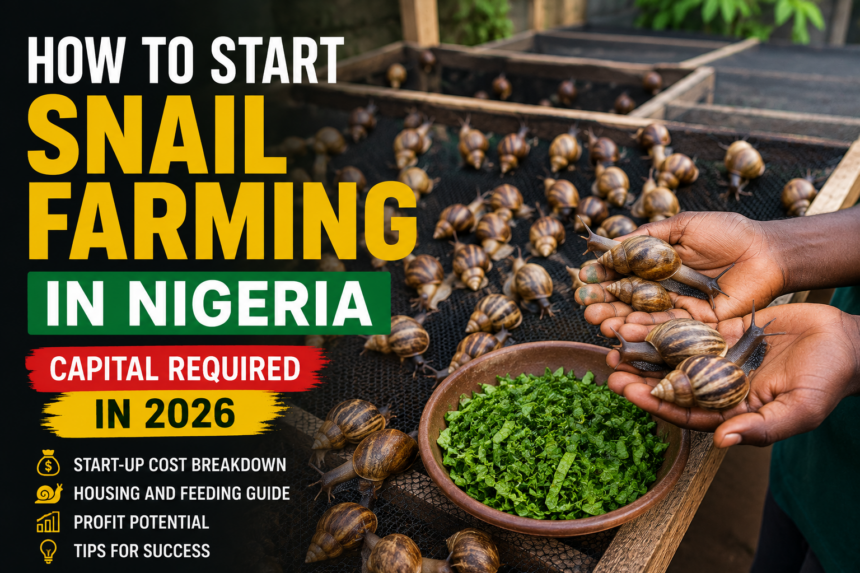
Snail meat has been on the Nigerian table long before anyone called it a business. In Yoruba households, it shows up in pepper soup, peppered snail, and party small chops. In the South-South, it goes into banga soup. In Igbo cooking, it seasons stews in ways that chicken and fish sometimes cannot. People have always wanted snails. The problem has always been that not enough people are farming them.
- Why the Snail Supply Gap in Nigeria Is Still an Opportunity in 2026
- The Three Species Worth Your Attention, and One You Should Start With
- What You Actually Need to Set Up Your First Snail Farm
- How Much Capital You Need for Snail Farming in Nigeria: A Realistic Breakdown
- Feeding Your Snails Without Spending Heavily
- The Seasonal Pricing Advantage Most Beginners Miss
- Where to Sell Your Snails and How to Find Buyers Early
- What Can Kill Your Farm Before It Even Starts
- From Backyard to Business: Scaling What You Build
- Making a Real Decision About Snail Farming
The gap between what Nigerians eat and what commercial farms actually produce has stayed wide for years. Most of the snails that end up in Lagos markets, Abuja restaurants, and Port Harcourt hotels are still handpicked from bushes, mostly during the rainy season. When the dry season comes, that supply dries up too. Prices shoot up. Buyers scramble. And the person with a well-managed farm, even a small backyard setup, suddenly has leverage.
What makes 2026 a particularly interesting time to look at this business is that the cost of starting has not moved dramatically, but the prices buyers are willing to pay have. Big snails in Lagos and Abuja are selling between N1000 and N4,000 each. The market has grown beyond market women and home cooks to include hotels, restaurants, event caterers, processed snack brands, and export buyers. The demand is real. The supply, from structured farms, is still not catching up.
How to Start Snail Farming in Nigeria
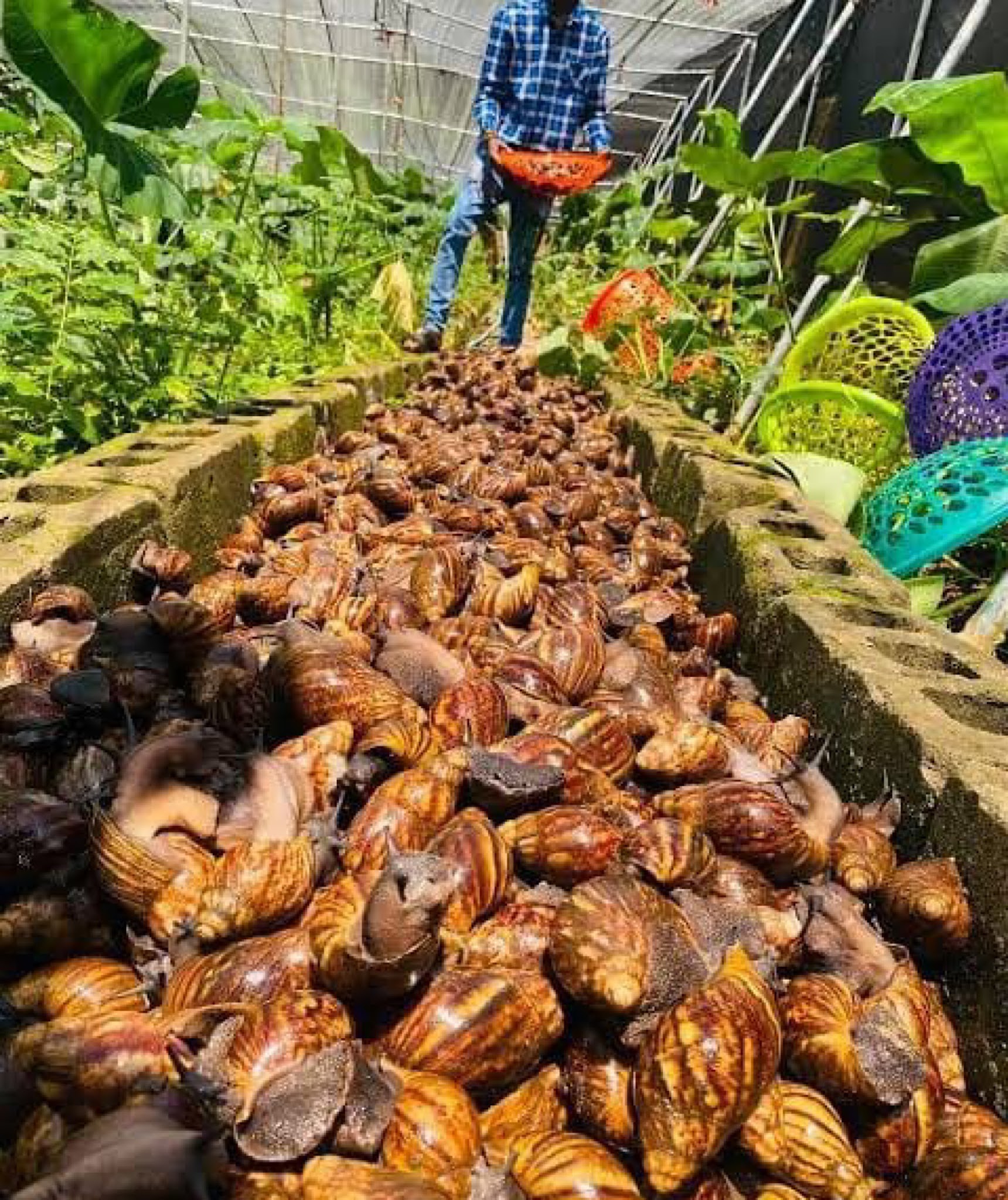

Snail farming in Nigeria sits at that rare intersection where the entry cost is low, the market is hungry, and most of the competition is still disorganized. This article breaks down exactly what it takes to get started, from choosing the right species to building a pen, feeding your stock cheaply, and understanding what the business actually costs at each scale.
Why the Snail Supply Gap in Nigeria Is Still an Opportunity in 2026
The way snails have traditionally gotten to market in Nigeria says a lot about why farming them is still an underexplored opportunity. A large portion of snail supply comes from people who go into bushes and forests after rain, pick snails off the ground and tree bases, and bring them to sell in local markets. This works fine during the rainy season, roughly April through October. But once the rains stop and the harmattan sets in, snails go dormant. They burrow into the soil or seal their shells and wait out the dry months. There is almost nothing to handpick.
That seasonal gap has never been properly filled by commercial farms. According to data from Babban Gona, one of Nigeria’s prominent agricultural organizations, the limited number of snail farmers in Nigeria means there is a persistent gap between demand and supply, particularly during the dry season when market supply is almost entirely dependent on the small fraction of farmers who actually rear snails in controlled environments. That is the position any new snail farmer steps into the moment they have live snails available between November and March.
The cosmetics and pharmaceutical angle adds another dimension that most beginners are not even thinking about. Snail slime, specifically the mucin secreted by African giant land snails, has become a key ingredient in skincare products sold globally. Demand for snail-based cosmetics is rising across Europe and Asia, and Nigerian snail slime is part of that trade. BusinessDay reported in July 2025 that rising demand for snail-based cosmetics and export opportunities have driven a surge in Nigeria’s snail farming industry, far outpacing local production and opening a significant gap for investors. That is a wider market than pepper soup will ever give you.
The nutritional case for snail meat also keeps strengthening its position in the local market. Research published in the Journal of Life Sciences and Biomedical in 2025, examining snail farming in Imo State, confirmed that growing awareness of the health risks associated with cholesterol is pushing more consumers toward snail meat, which is low in fat, high in protein, iron, calcium, and selenium, and carries anti-inflammatory properties. Health-conscious middle-class Nigerians, the same people buying organic food and protein shakes, are increasingly a market for snail products.
The Three Species Worth Your Attention, and One You Should Start With
Three species dominate snail farming in Nigeria: Achatina achatina, Archachatina marginata, and Achatina fulica. All three are African land snails, all three grow to commercially useful sizes, and all three have established buyers in local and export markets. But they are not the same business proposition.
Achatina achatina, also called the giant Ghana snail or giant tiger snail, is the biggest of the three. It is the most desired species in Nigerian markets because of its size and meat yield. A well-fed, mature Achatina achatina can lay up to 1,200 eggs in a year across multiple clutches. That reproduction rate is what makes it so attractive for commercial scaling. The catch is that it is harder to manage than the other species. It requires more precise environmental control, is more sensitive to temperature swings, and takes longer to reach maturity, anywhere from 18 to 24 months depending on feeding and conditions.
Achatina fulica grows faster and lays eggs more frequently, but the snails are smaller and fetch lower prices in Nigerian markets. It has value in short-term operations where turning over stock quickly matters more than per-unit price, but it is not the first choice for someone trying to build a premium supply chain.
Archachatina marginata, commonly called the giant West African snail, is the most practical starting point for beginners in Nigeria. It reaches sexual maturity between 8 and 10 months, which is faster than Achatina achatina. It lays between 5 and 11 eggs per clutch, two to three times a year, which is modest but manageable. It adapts well to the Nigerian climate, tolerates beginner-level husbandry better than the other species, and commands good prices because buyers recognize it as quality snail. Afrimash, one of Nigeria’s leading agricultural e-commerce platforms, sells Archachatina marginata as its core breeding stock, with minimum purchase orders of 100 snails. Starting with this species reduces your mortality risk while you are still learning the rhythms of the business.
What You Actually Need to Set Up Your First Snail Farm

The physical infrastructure for snail farming is simpler than most livestock businesses, but there are still things you genuinely cannot skip. Snails need a pen that does three things: keeps them in, keeps predators out, and maintains moisture. Everything else builds from that basic requirement.
For a beginner, a hutch box setup works well enough to learn the business without committing large money to construction. A hutch box is a wooden frame covered with wire mesh or netting, filled with loamy soil to a depth of at least 10 centimeters, and covered to prevent escape and keep humidity in. The cost of building a basic hutch box pen in Nigeria currently ranges from around N20,000 to N60,000 depending on size and materials. Wood from timber markets, wire mesh from a hardware store, and nails are all the materials you need.
For anyone who wants to scale beyond a few hundred snails, a trench system is the next step. This involves digging trenches into the earth, lining them with concrete blocks, and covering them with netting. It holds more snails, maintains humidity more naturally because the soil is in contact with the ground, and is easier to manage in terms of egg collection. Ọmọlará, a snail farmer profiled by Zikoko in July 2025 who scaled her farm from N30,000 in 2016 to N100 million in annual revenue by 2024, spent approximately N1.5 million building a trench system on a plot behind her house in 2019. That is a scale-up cost, not a starting cost.
The soil inside the pen matters a lot. Snails lay their eggs by burying them in soil, and the soil needs to be loose, loamy, and free of chemicals. Sandy soil will not work because it does not hold moisture well and eggs will not hatch properly in it. Clay-heavy soil compacts and drowns eggs. Loamy topsoil from a garden or farm supply is what most experienced Nigerian snail farmers use.
Beyond the pen and soil, you need a water source for regular misting. Snails need moisture but cannot survive waterlogging. Spraying the pen lightly once or twice a day, morning and evening, keeps the humidity at the level snails need to stay active and feed. You will also need calcium sources in the pen at all times, eggshells, limestone powder, or crushed oyster shells work well, because snail shells need calcium to grow thick and strong. Weak shells are a sign of calcium deficiency and lead to slower growth and higher mortality.
How Much Capital You Need for Snail Farming in Nigeria: A Realistic Breakdown
One of the reasons snail farming gets so much attention is that you can genuinely start small. But the numbers people throw around online are often either too optimistic or too vague to be useful for planning. Here is a grounded breakdown based on current market conditions.
A small-scale operation with 100 to 200 snails will cost between N50,000 and N150,000 to set up. This covers building a basic hutch box pen (N20,000 to N60,000), buying snail stock (N30,000 to N80,000 depending on species and size), initial feeding supplies, calcium sources, and misting equipment. Monthly running costs at this scale are low because snails eat vegetable scraps, pawpaw leaves, plantain, banana, cucumber, and similar kitchen or garden material that you can often source cheaply or forage. You are largely learning the business at this scale, not expecting it to be your primary income yet.
A medium-scale operation with 200 to 500 snails sits in the N150,000 to N400,000 range. At this level, you are taking the business seriously enough to invest in better housing, source quality breeding stock from a reputable supplier, and start building market relationships before your first harvest. This is also the scale where the business begins to show real return potential. A farmer in Ogun State who started with 200 snails reportedly earned over N1 million in a year, according to data cited by FarmPays, though exact conditions were not specified.
A large-scale operation with 1,000 or more snails will require N500,000 to N850,000 and above, depending on whether you are building concrete trench infrastructure or using modular housing. At this level, feeding costs also become a line item that requires planning. On large farms, monthly feeding costs can reach N450,000, as reported by Ọmọlará in her Zikoko profile. Labor, pen maintenance, and transport to buyers all add up at this scale. The gross revenue potential is significantly higher, but so is the management complexity.
Regardless of the scale you start at, do not buy snails before you have your pen ready and your soil prepared. Many beginners buy stock first and then scramble to set up housing, losing snails in the confusion. The pen goes up first, sits for a day or two to stabilize humidity, and then the snails go in.
Feeding Your Snails Without Spending Heavily
Feeding is one area where snail farming genuinely has an advantage over most other livestock businesses. Snails are herbivores and they eat things that are cheap or free in almost any Nigerian household or neighborhood.
Their preferred foods include pawpaw leaves and fruit, plantain peels, banana, cucumber, watermelon rind, lettuce, cabbage, pumpkin leaves (ugwu), sweet potato leaves, cassava leaves, and corn. They will eat almost any vegetable or leafy material that has not been salted. Salt is the one absolute prohibition in snail feeding. Even a small amount of salt can kill snails quickly because it draws moisture out of their bodies through osmosis. Never use kitchen scraps that have been seasoned or salted.
Calcium supplementation is not optional. Snails that do not get enough calcium grow slowly, develop fragile shells, and die at higher rates. The cheapest way to provide it is crushed eggshells, which you can collect from your household or from restaurants and bakeries that use large quantities of eggs. Limestone powder from construction material suppliers is another option. Some farmers also use crushed oyster shells. The key is to keep a calcium source available in the pen at all times, not just occasionally.
In practice, the feeding cost on a small farm is close to zero if you are resourceful. A household that cooks regularly generates more than enough vegetable material to feed 100 to 200 snails. Medium farms might need to source from vegetable markets, where wilting produce that vendors cannot sell is often available cheaply. Large commercial farms with thousands of snails do need to budget seriously for feed, but at that scale the income also justifies it.
The Seasonal Pricing Advantage Most Beginners Miss
This is one of the most practical advantages in Nigerian snail farming and it does not get discussed enough. Snails in Nigeria are priced very differently depending on the time of year, and the pattern is predictable enough to plan around.
During the rainy season, from roughly April through September or October, handpicked snails flood the market. Supply is high, prices are moderate, and competition from bush-picked snails is at its peak. This is when you will see snails at N300 to N500 in roadside markets, especially in the South. During the dry season, November through March, handpicked supply collapses. Market snails become scarce. Prices in cities like Lagos and Abuja climb to between N800 and N2,000 per snail depending on size. Restaurants and hotels that need consistent snail supply are willing to pay more, and they will prioritize a farmer who can guarantee delivery over someone who is inconsistent.
A well-managed farm can hold live snails for weeks by keeping their environment moist and slightly cool, which is another advantage over handpicked bush snails that have to be sold immediately or they die. This storage capacity gives farmers pricing control. You do not have to sell at the low rainy-season prices if you can afford to wait. You can stock up your pen during the rainy season when buying breeding snails is cheaper, grow them through the farming cycle, and be ready to sell at the higher dry-season prices.
Snails can also be sold at different stages of development, which keeps cash flowing throughout the year rather than waiting for a single annual harvest. Growers (younger snails not yet at market weight), point-of-lay snails (sexually mature and ready to breed), breeders, and full jumbo adults all command different prices from different buyers. Ọmọlará described this multi-stage sales model as the mechanism that kept her farm generating consistent monthly revenue of N700,000 to N1 million even before she diversified into training and consultancy.
Where to Sell Your Snails and How to Find Buyers Early
The mistake most beginners make is starting to look for buyers after the snails are ready to sell. By then, the pressure to move stock before it dies or grows past peak market size creates desperation, and buyers can feel it. Finding your buyers before your first harvest is part of running the farm, not something you do after.
The most reliable buyers for a new snail farmer are restaurants, hotels, and event caterers. These businesses buy in bulk, need consistent supply, and are willing to pay above-market prices for quality product that arrives reliably. The way to approach them is direct. Walk in, ask to speak to the chef or purchasing manager, introduce yourself as a local snail farmer, and offer a free sample. If the product is good, the conversation continues.
Market traders and foodstuff sellers in major markets are another channel, particularly for volume. They buy at lower per-unit prices than restaurants but move large quantities. In Lagos, markets like Mile 12, Oyingbo, and Mushin foodstuff sections always have buyers. In Abuja, Garki Market and Wuse Market are active. In Port Harcourt, Mile 3 Market handles significant volumes of snail trade.
Online sales through WhatsApp, Instagram, and Facebook have become an increasingly serious channel for snail farmers who build a following. Ọmọlará grew her business significantly through social media documentation of her farming process, picking up bulk orders, training clients, and diaspora buyers who wanted snails shipped to specific buyers in Nigeria on their behalf. Building even a small audience around the farm, posting feeding videos, hatching updates, and harvest content, creates a customer base that is already sold on the product before you even quote them a price.
For those interested in the export market, the Nigerian Export Promotion Council (NEPC) is the relevant government body. Snail meat is an exportable commodity and Nigeria does have buyers in Europe and Asia, particularly for processed and frozen product. Export requires meeting sanitary and packaging standards that are more demanding than local sales, so it is typically not a first-year play. But it is a real ceiling-raiser for farmers who eventually want to scale.
What Can Kill Your Farm Before It Even Starts
Snail farming looks simple from the outside and it can be, once you know what you are doing. But there are specific failure patterns that take out new farmers repeatedly and they are worth naming directly.
Overcrowding is one of the most common problems. Too many snails in a pen compete for food, stress each other, and are more vulnerable to disease spread. As a rule, snails need enough space to move freely, feed without competition, and find soil for egg-laying. Crowding also traps moisture unevenly and creates warm pockets where bacterial and fungal infections develop. If your pen starts smelling, your population is too dense or your cleaning routine is too irregular.
Predators are a genuine threat, particularly on small backyard farms. Ants are the most dangerous predator for a snail farm. A single ant colony that finds its way into a pen can kill snails in significant numbers, particularly hatchlings. Rats, toads, and birds also target snails. A well-built pen with wire mesh on all sides, a proper lid, and ant-proof legs or bases (some farmers stand their hutch boxes in water-filled troughs to create a barrier) reduces this risk substantially.
The other major killer is dryness. Snails that do not have enough moisture stop feeding, retract into their shells, and eventually die. Lagos and the broader South-West have naturally high humidity for most of the year, which works in your favor. But during harmattan, particularly January and February, the air gets very dry and regular misting becomes critical. Snails in an underwatered pen in harmattan will go dormant and stop growing.
Beyond the physical threats, poor record-keeping quietly destroys profitability. If you do not know how many snails you stocked, how many have died, how many have laid eggs, and how many are ready for sale, you cannot manage the farm or project income. Even a simple notebook tracking weekly pen checks, mortality counts, and egg incubation dates will tell you more about the health of your business than any amount of optimism.
From Backyard to Business: Scaling What You Build
Snail farming scales in a way that not many agricultural businesses do at the same cost level. The reproductive math works in your favor over time. Ọmọlará’s farm stocked 2,000 breeding snails in 2019 and produced approximately 12,000 offspring from that cohort, even after accounting for a 10% mortality rate. That multiplication is the engine of the business, and it works whether you started with 50 snails or 500.
The farms that grow most consistently in Nigeria tend to do a few things right. They sell at multiple stages rather than waiting for a single annual harvest. They maintain relationships with multiple buyers rather than depending on one restaurant or one market trader. They reinvest early revenue back into housing and stock rather than taking it all out before the farm is properly established. And they document everything, because a farm with records can get agricultural loans, apply for grants from organizations like the Bank of Agriculture, and pitch investors with actual numbers.
The training and consultancy model is also worth noting as an income stream that serious snail farmers have added. As snail farming gets more attention in Nigeria, people are willing to pay for hands-on training from someone who has actually done it. Farmers who are three or four years into the business and have documented their process can run paid workshops, sell starter packs with snails and materials, and offer ongoing consultation. It does not replace the farming income, but it diversifies it.
What the business ultimately requires is consistency more than capital. Someone who puts N80,000 into a well-managed small farm and monitors it properly will outperform someone who puts N500,000 into a large farm and checks it once a week. Snails reward attention. They need daily feeding, daily misting, regular pen checks, and prompt response when something looks wrong. The farmers who build snail farming into a real income stream are the ones who treat it like a business from day one, not as a passive side project that will take care of itself.
Making a Real Decision About Snail Farming
Snail farming in Nigeria is not a get-rich-quick scheme and it is not a hobby. It is a low-barrier agribusiness with a proven market and documented examples of Nigerians who have scaled it from backyard experiments into seven and eight-figure operations. The entry cost is real, N50,000 to N150,000 at minimum for a serious small-scale start, but it is far more accessible than poultry, fish farming, or cattle rearing at comparable quality standards.
What the research consistently shows is that the market gap is genuine. Nigeria’s annual demand for snail meat remains far larger than what structured farms supply. The dry season alone creates a pricing window that any farmer with live stock can exploit. Export demand for snail meat and slime adds a ceiling that most beginners are not even factoring in yet.
The practical starting point is simple: pick Archachatina marginata, build a decent hutch box pen, stock 50 to 100 snails, and spend the first few months learning the patterns before scaling up. Talk to your buyers before your first harvest. Keep records from day one. Treat the first year as education with income potential, not as immediate profit. The farmers who have built serious snail farming businesses in Nigeria all say the same thing: the business rewards preparation and consistency far more than it rewards size or capital.