The disclosure by the Presidency that the Presidential Foreign Intervention Promotion Council (PFIPC) was never an authorised government agency has triggered fresh questions about how an organisation it describes as fictitious allegedly operated within official circles for months.
The controversy surfaced publicly on June 11 when the chief of staff to the president, Femi Gbajabiamila, issued a disclaimer distancing the Presidency from the appointment of Adeniyi Adeyemi as head of the council.
While the statement initially appeared to be a routine clarification, subsequent revelations drew attention to the activities, funding claims and institutional engagements linked to the organisation.
At the centre of the debate is the allegation that an agency the presidency insists does not exist reportedly occupied office space in the federal secretariat, maintained accounts with the Central Bank of Nigeria (CBN), secured budgetary allocations and interacted with top public officials.
The questions became more pronounced after Adeyemi publicly rejected the Presidency’s position and insisted that the council had official backing.
Addressing journalists in Abuja, he maintained that the organisation operated from government premises, held CBN accounts and obtained approval from the office of the head of the civil service of the federation to recruit more than 300 personnel.
According to him, the council was established to “serve a simple but powerful purpose: to support the administration of President Bola Tinubu”.
The controversy deepened after details emerged that the 2026 Appropriation Act allocated about N1.3bn to the council for personnel, overhead and capital expenditure.
On July 1, the special adviser to the president on information and strategy, Bayo Onanuga, reaffirmed the presidency’s position that the council was not a recognised government institution.
He disclosed that complaints about the council’s operations had prompted Gbajabiamila to notify security agencies in October 2025.
According to Onanuga, forged appointment letters allegedly bearing Gbajabiamila’s signature, official seals and reference numbers were used to project legitimacy.
The development has raised questions about why the matter remained largely unknown to the public despite investigations reportedly commencing several months earlier.
Before the public dispute, Adeyemi had cultivated a visible presence within government and policy circles through meetings, public engagements and media appearances.
In July 2025, he met The deputy speaker of the house of representatives, Benjamin Kalu, where he sought collaboration with the national assembly on economic policy matters.
“As the Presidential Economic Advisory Council, we serve Mr President with evidence-based research on economic policy and implementation. To achieve this, we need the collaboration of the national assembly,” he said.
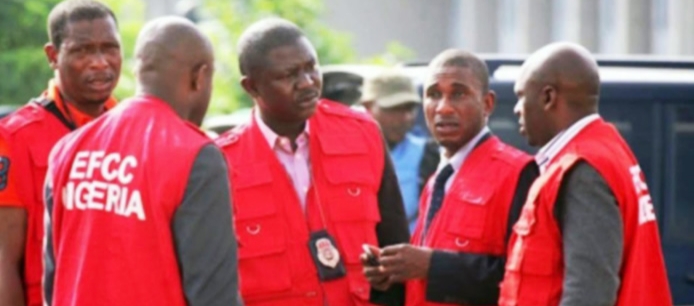
Two months later, he also held discussions with The chairman of the Economic and Financial Crimes Commission (EFCC), Ola Olukoyede, on possible areas of cooperation.
An August 2025 social media post linked to the council claimed that Tinubu had approved the recruitment of 314 additional personnel and the establishment of offices across Nigeria and in several foreign locations.
The statement read that the President had “graciously approved the waiver to recruit an additional 314 new staff, the establishment of PFIPC offices in all the 36 states of the federation, the rollout of 127 global offices across the world, the visionary support strengthens our resolve to champion Nigerian enterprise and attract foreign direct investments across every border”.
The organisation also received visits from traditional rulers, including the soun Of Ogbomoso, Oba Afolabi Olaoye, who reportedly pledged support for its activities.
Further evidence of institutional recognition emerged through a September 2025 letter from the senate committee on anti-corruption and financial crimes inviting the council to nominate officials for an anti-corruption study programme in London.
The correspondence addressed the council as an “esteemed organisation” and was directed to its purported director-general.
Despite the Presidency’s position, the council continued to maintain active social media platforms and public engagements throughout the period.
According to Onanuga, Adeyemi was arrested by the police in October 2025 and a criminal case was subsequently instituted at the Federal High Court in Abuja.
The matter remains before the court and is expected to continue in July 2027.
The controversy has also revived interest in the Presidential Economic Advisory Council, a body established by former President Muhammadu Buhari in 2019 to provide economic policy advice.
The council functioned until 2022 and is not known to operate under the current administration.
Beyond the allegations against Adeyemi, analysts say the larger issue concerns the apparent ease with which the organisation reportedly gained access to official platforms, recognition and funding channels.
With questions still lingering over its operations, budget allocation, office accommodation and interactions with government institutions, the PFIPC saga has become a test case for accountability and verification within the public sector.
Until the ongoing legal and institutional processes provide clearer answers, uncertainty remains over how an agency now described as non-existent allegedly acquired the appearance of legitimacy across multiple levels of government.