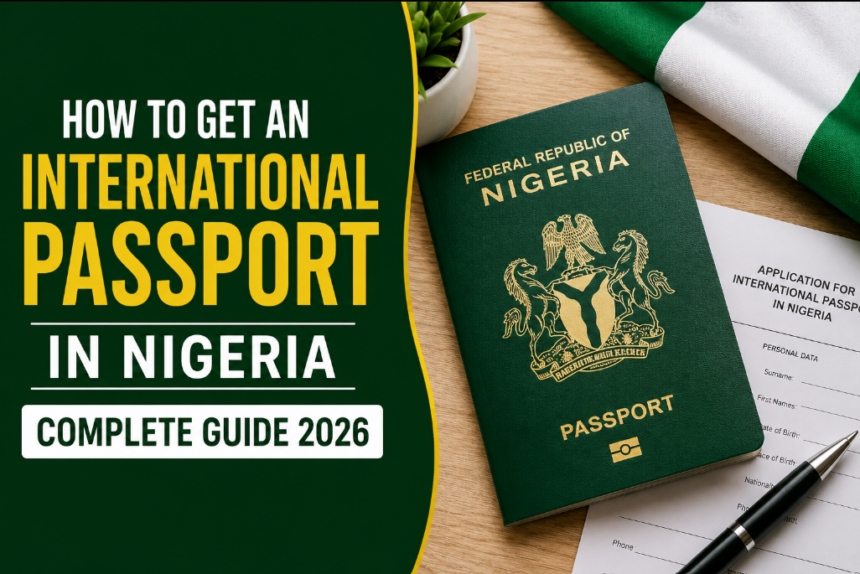
Each year, millions of Nigerians begin a journey that has nothing to do with airports or boarding gates. It starts at a computer screen, with a registration form, a payment gateway, and the quiet hope that by the time the process ends, they will hold a green booklet that tells the world exactly who they are. For some it is smooth. For many others, it involves missed appointments, mismatched names, confusing portals, and the particular frustration of being asked to pay more than they expected.
- Types of Nigerian International Passports: Which One Is Right for You
- How to Get an International Passport in Nigeria
- Documents You Must Have Before Visiting the Portal
- Step-by-Step: How to Apply for International Passport in Nigeria Online
- What Happens at Your Biometric Appointment
- How Long It Takes to Get Your Passport
- Renewing a Nigerian Passport
- The NIN Problem That Derails Thousands of Applications
- Common Mistakes That Add Weeks to Your Application
- What the Nigerian Passport Gets You and What It Does Not
- The Green Booklet and What It Takes to Get It
Since September 2025, the cost of that booklet jumped to N100,000 for a 32-page passport and N200,000 for the 64-page version. The Nigeria Immigration Service (NIS) announced the increase in late August, signed off by its Public Relations Officer, saying the revision was aimed at sustaining the quality and integrity of the Nigerian passport. Civil society groups pushed back. Critics called it anti-people policy. The fees held. And Nigerians, as they have always done, adapted.
This guide covers the complete process for obtaining an international passport in Nigeria in 2026: the documents required, the online application steps, the biometric appointment, renewal procedures, processing timelines, and the errors most likely to set you back. Everything here reflects current official requirements and fees.
Why Getting a Nigerian Passport Now Costs More Than It Used To
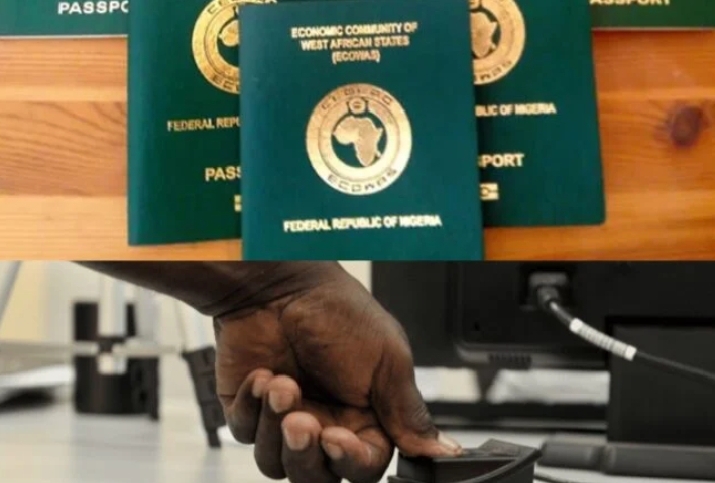

The current fee structure is the result of two consecutive increases in roughly twelve months. Before September 2024, a 32-page passport cost N35,000 and the 64-page version cost N70,000. The NIS raised those figures to N50,000 and N100,000 respectively in September 2024. Then, a year later, both fees doubled again. As of September 1, 2025, a 32-page passport with five-year validity costs N100,000, and a 64-page passport with ten-year validity costs N200,000. These rates apply only to applications processed within Nigeria.
Nigerians in the diaspora pay differently. Applications submitted through Nigerian embassies, high commissions, and consulates abroad are charged $150 for the 32-page passport and $230 for the 64-page version. The NIS confirmed these rates remain unchanged following the September 2025 review.
The government’s stated rationale for the hike centred on improving service delivery. Speaking at the Ministry of Interior’s mid-tenure performance retreat in August 2025, Interior Minister Dr. Olubunmi Tunji-Ojo said the target was for every Nigerian to have their passport in hand within one week of enrolment, and that centralising the approval process would eliminate the corruption and extortion that had forced some applicants to wait months or pay unofficial fees running into six figures just to move their applications forward.
Whether that target has been met in practice is a separate matter. What the fee increase has definitively done is raise the financial bar for a document that the Nigerian Constitution treats as a citizenship right. Civil society group SERAP wrote to President Tinubu in August 2025 arguing that the increases were “arbitrary, unlawful, unjustified, and excessive,” and that they amounted to discriminatory denial of access to millions of economically vulnerable Nigerians. The government did not reverse the fees. For Nigerians planning to apply, these are the costs in effect.
Types of Nigerian International Passports: Which One Is Right for You
The NIS issues three categories of passports: the Standard Passport (green cover), the Official Passport (blue cover), and the Diplomatic Passport (red cover). The Official and Diplomatic passports are issued only to government officials on the recommendation of relevant authorities. For the vast majority of Nigerians, travel, education, business, and personal purposes are covered by the Standard e-Passport.
Within the Standard Passport category, there are two options. The 32-page booklet carries a five-year validity. The 64-page booklet carries a ten-year validity. For applicants who travel rarely or are applying for the first time, the 32-page option at N100,000 may seem the more economical entry point. However, frequent travellers and those who regularly visit countries that apply entry and exit stamps should think carefully before choosing it: a 32-page booklet fills quickly, and renewing again in five years means paying another N100,000 at whatever the fee is at that point.
The 64-page passport at N200,000 provides ten years of validity and considerably more page space. Spread over a decade, the cost-per-year is lower than the 32-page option. For anyone who expects to travel regularly across those years, the 64-page booklet is the practical choice. It is also worth noting that as of the September 2025 fee review, separate reduced rates for minors or senior citizens were removed. The new flat rates apply to all applicants regardless of age.
How to Get an International Passport in Nigeria
Applying for an international passport in Nigeria is now a fully online process, from account creation to payment, with only the biometric capture requiring a physical visit to an immigration office. The system has improved considerably since the backlogs that plagued the NIS in 2022 and 2023, but there are still specific steps that catch applicants off guard, and specific mistakes that push timelines from six weeks to several months. Getting it right the first time requires knowing exactly what the process demands before you start.
Documents You Must Have Before Visiting the Portal
The NIS portal is built around your National Identification Number. Without a valid NIN, the application cannot proceed. The portal uses your NIN to auto-populate your personal details from the NIMC database, which means any inconsistency between your NIN record and the information you provide in your application will cause problems. Resolve your NIN record before opening the portal.
For first-time applicants who are Nigerian citizens by birth, the standard document requirements include: a birth certificate issued by the National Population Commission (NPC), or a signed declaration of age from a High Court if the applicant was born before December 1992 or a birth certificate is unavailable; a valid National ID, Voter’s Card, or Driver’s Licence; a letter of identification from the applicant’s Local Government or state of origin; two passport-sized photographs with a white background, at 600 by 800 pixels; and a completed guarantor’s form sworn before a Commissioner for Oaths, accompanied by a photocopy of the guarantor’s passport data page and one passport-sized photograph of the guarantor.
Applicants who are married women and applying under a changed name are required to produce a marriage certificate. Those who have undergone a court-ordered name change must provide the relevant court documentation. Naturalised citizens must present their Presidential Certificate of Naturalisation, and registered citizens must present their Certificate of Registration.
For minors under 18, additional requirements apply: the birth certificate must be issued by the NPC, and both parents’ passports or relevant identification must be provided, along with a written letter of consent from the parent or guardian. All minors must be accompanied to the biometric appointment by a consenting parent.
Gather every document before creating your portal account. Incomplete applications frequently stall at the biometric stage when officers discover missing paperwork, at which point you may need to reschedule your appointment and restart parts of the process.
Step-by-Step: How to Apply for International Passport in Nigeria Online
The application begins at the NIS passport portal, accessible at passport.immigration.gov.ng. First-time applicants should click “Create Account” and register with a valid, active email address. This address will be used for all future communications from the NIS about your application, including appointment confirmations and collection notifications. Use an email you check regularly.
After creating your account, log in and select “Fresh Passport Application” from your dashboard. You will be asked to enter your NIN and date of birth. The system will attempt to pull your personal details from the NIMC database. Once your NIN is verified, fill in the remaining required fields, including your contact address and next-of-kin information. Select your preferred passport booklet type (32-page or 64-page) and choose the NIS office or processing centre where you want to attend your biometric appointment.
Upload your passport photograph. The NIS specifies ICAO-standard photos: white background, 600 by 800 pixel resolution, with the face clearly visible and centred. Photographs that do not meet the specification are rejected, which delays the application. Upload any supporting documents the portal requests based on your applicant category.
Review all your information carefully before submitting. Once submitted, proceed to payment. The NIS accepts payment only through the official portal using a debit or credit card. Cash payments at any passport office are not accepted, and the NIS has explicitly warned applicants against paying third-party agents or intermediaries who claim to facilitate portal transactions. Pay only through the official system and keep your transaction reference number and payment receipt. Print both the payment slip and the acknowledgment slip generated after successful submission.
The final step in the online phase is booking a biometric capture appointment. The portal allows you to select your preferred NIS office and choose an available date and time. Choose a date you can commit to: missed appointments can require you to rebook, which extends the entire timeline. Arrive at least 30 minutes before your scheduled time to avoid rescheduling.
What Happens at Your Biometric Appointment
Biometric capture is the only part of the process that cannot be done remotely. You must appear in person at the NIS office you selected during the online application. Bring the originals of every document you uploaded, your printed payment slip, your acknowledgment slip, and your NIN slip. Officers at the counter will cross-check your physical documents against what was submitted online. Arriving with only printed copies and no originals will result in your appointment being turned away.
The biometric capture itself involves fingerprint scanning, facial image capture, and signature verification. The entire enrolment process takes approximately 15 minutes per applicant. Busy offices, particularly those in Lagos and Abuja, can have significant queue volumes during peak periods. Arriving early in the morning on a Tuesday, Wednesday, or Thursday tends to result in shorter waiting times than Monday mornings or Friday afternoons, which are peak periods at most NIS offices.
After enrolment, you will receive an enrollment slip with a 12-digit enrollment number. Keep this slip carefully. It is the reference you will use to track your passport’s progress on the NIS tracking portal at track.immigration.gov.ng. You will also use it to follow up if there is a delay. The clock on your official processing timeline starts from the date of successful biometric capture, not from the date you started your online application.
How Long It Takes to Get Your Passport
The NIS Service Level Agreement sets the following benchmarks after successful biometric enrolment: 42 days for fresh (first-time) passport applications and change-of-data requests, and 21 days for passport renewals and re-issues. These are the official processing windows. They do not include the time it takes to secure a biometric appointment, which varies by location and demand. Your total wait from application submission to passport collection can therefore be longer than the SLA timelines suggest.
In practice, applicants at high-volume centres in Lagos and Abuja report processing times of between three and six weeks post-biometrics when documentation is complete and no data discrepancies exist. During peak travel seasons, or when a centre is experiencing high application volumes, timelines stretch toward the upper end of that range or beyond. Applications with NIN mismatches or missing documents can sit significantly longer, pending correction.
The most important practical advice is to start early. If you have a known travel date, begin your passport application at least three months in advance, not three weeks. This gives you room to absorb delays in appointment scheduling, correct any data issues, and still receive your passport before you need it. Applying six months ahead of an intended travel date is the standard recommendation issued by the Nigerian Consulate General in New York, and it reflects the realistic picture on the ground across NIS offices.
To check where your application stands, visit track.immigration.gov.ng and enter your application details. The tracker shows each stage of processing from capture through to printing. When the Production segment shows “Passport Issued” and all stages are ticked, your passport is ready for collection at the office where you enrolled, unless other collection arrangements were confirmed during your appointment.
Renewing a Nigerian Passport
Passport renewal follows the same online-to-biometric sequence as a fresh application, with one additional step: you must present your existing passport at the biometric appointment for cancellation. The NIS portal has a dedicated “Passport Renewal” option on the applicant dashboard. After logging in, select this option and enter your current passport details. The portal will compare your existing passport data against your NIN record.
Make payment using the updated fee structure: N100,000 for a 32-page renewal or N200,000 for a 64-page renewal. Select your preferred booklet size and processing centre, book your biometric appointment, and attend with your original documents and your current passport. The old passport will be physically cancelled (stamped or punched) at the office and either returned to you or retained, depending on the processing centre’s practice.
Renewal applicants should not wait until their passport expires before beginning this process. Many countries require that a passport have at least six months of remaining validity at the point of entry. If your passport expires in, say, October 2026, you need a renewed passport in hand well before then, which means starting the renewal application by May or June at the latest. Factor in that renewal appointments at busy centres in Lagos can take weeks to become available.
If your passport was lost or stolen, you will need a police extract reporting the loss, a sworn affidavit from a court, and a newspaper publication announcing the loss. The NIS portal classifies lost passport replacement as a separate application category with its own documentation requirements and an additional non-refundable administrative charge beyond the standard passport fee.
The NIN Problem That Derails Thousands of Applications
If there is one issue responsible for more passport application delays in Nigeria than any other single factor, it is a mismatch between the applicant’s NIN record and the data on their application form. The NIS portal pulls personal information directly from the NIMC database. If your name on your NIN reads “Oluwafemi Babatunde Adeyemi” but you write “Babatunde Oluwafemi Adeyemi” on your application, the system will flag the discrepancy. The NIS has explicitly confirmed that the arrangement of names and date of birth on the passport application must match the NIN record exactly, including spelling.
Applications with NIN mismatches do not automatically fail, but they do pause. The applicant must then visit a NIMC office to correct or update their NIN record before the application can advance. Depending on the nature of the correction and the backlog at the NIMC office, this can add weeks to the process. In more complicated cases, where a name was changed through marriage or a court order and the NIN has not been updated to reflect it, the correction may require submitting affidavits and supporting documents to NIMC before the passport process can resume.
Before touching the NIS portal, verify your NIN record through the NIMC self-service platform at self.nimc.gov.ng, or visit a NIMC enrolment centre to confirm exactly how your name and date of birth appear in their system. Compare this against the name on every other document you intend to submit. Where there are differences, resolve them at NIMC first. This single preparation step prevents the majority of application delays reported by Nigerian passport seekers.
Common Mistakes That Add Weeks to Your Application
Passport photographs are a consistent source of rejection. The NIS specifies white backgrounds and 600 by 800 pixel resolution. Many studio photos use off-white or light-blue backgrounds that do not pass portal validation. Some applicants upload JPEGs that are compressed below the required resolution. Take your photographs at a studio familiar with NIS specifications, or take them against a clean white wall with adequate lighting and check the pixel dimensions before uploading.
Payments to unofficial agents or third parties are another recurring problem. There is no shortage of people near NIS offices and online offering to “help” with passport applications for a fee, sometimes claiming to offer express processing or guaranteed fast-tracking. The NIS has repeatedly warned that payments outside the official portal carry no guarantees and provide no legal remedy if something goes wrong. Pay only on the NIS portal and retain all receipts.
Missing biometric appointments without rescheduling in advance creates one of the more frustrating delays: in some offices, rescheduled appointments are placed at the back of the queue for available slots, which can push your date back by weeks. If you cannot attend your appointment, log back into the portal and reschedule before the date, rather than simply not showing up.
A non-refundable administrative fee of N30,000 applies for any change of data on an existing passport, such as a name correction or date-of-birth update. This is separate from the standard passport fee. Applicants who discover errors on a passport they already hold must go through this correction process before they can renew, adding cost and time to the overall journey. Double-checking every detail during the initial application is considerably cheaper than correcting it after the fact.
What the Nigerian Passport Gets You and What It Does Not
On the 2025 Henley Passport Index, the Nigerian passport ranked 88th globally, with visa-free or visa-on-arrival access to 55 countries. That places it among the lower-performing passports worldwide, trailing regional peers and significantly behind the top-ranked passports, which access close to 200 destinations without a prior visa. The score has fluctuated between 88th and 94th over recent years, reflecting both small diplomatic gains and losses.
For most of the destinations Nigerians frequently travel to, particularly the United Kingdom, Canada, the United States, and Schengen countries in Europe, a visa application is required. Nigeria’s Schengen visa rejection rate stood at 45.1 percent in 2022, among the highest for any country applying to European missions. This reality makes the passport itself a necessary but insufficient document for international mobility: it opens the door to the process, but the visa application is where a significant number of Nigerian travellers encounter their real obstacles.
Within the ECOWAS region, the picture is different. Nigerian passport holders can move freely across the sixteen member states of the Economic Community of West African States under the ECOWAS Free Movement Protocol, without requiring a separate visa. For Nigerians travelling to Ghana, Senegal, Ivory Coast, or other ECOWAS countries, the passport alone is sufficient. There are also a number of African countries, including Kenya, Rwanda, and Ethiopia, that grant Nigerian passport holders visa-on-arrival or visa-free access.
The passport’s domestic function is equally significant. Beyond travel, it serves as one of Nigeria’s primary legal identification documents, accepted as proof of identity and citizenship across banking, government applications, and institutional processes. For many Nigerians, obtaining the passport is not principally about international travel: it is about having a document that works across all formal systems.
The Green Booklet and What It Takes to Get It
Getting a Nigerian passport in 2026 is a more expensive undertaking than it was two years ago. At N100,000 for the short-validity option and N200,000 for the ten-year booklet, the government has set costs that sit beyond comfortable reach for a substantial portion of the population. The debate about whether those fees are justified will continue. What will not wait for that debate to resolve is the travel deadline, the job abroad, the university admission, the medical appointment across a border.
The process itself, for all its friction, is manageable if approached systematically. Verify your NIN record before anything else. Gather every required document before opening the portal. Pay only through official channels. Book your biometric appointment and keep it. Track your application actively and follow up in writing if delays extend beyond the SLA window. Federal High Courts have in recent years ordered the NIS to issue passports when delays were deemed unreasonably long, a legal remedy that exists but one that is far better avoided through thorough preparation.
Beyond the procedural details, the passport question is ultimately a citizenship question. For Nigerians, a travel document that cost N35,000 four years ago now costs N100,000. The green booklet opens fewer doors abroad than most would like, and getting it requires navigating a process that rewards preparation and punishes disorganisation. None of that changes the fact that for millions of Nigerians, holding that document is the first step toward wherever they need to go next.