There is a persistent lie that circulates in Nigerian economic conversations: that you need millions to start a business worth starting. Walk through Alaba, Balogun, or any motor park in Oshodi and you will see it is not true. The men and women running serious operations in those places often started with far less than a million naira. What separated them from the people who are still waiting for the perfect conditions was the decision to begin with what they had, in a market that, despite everything, remains one of the most active on the continent.
- The Best Business to Start in Nigeria with 100k (2026)
- The POS Business: A Neighbourhood Cash Point That Keeps Paying
- Thrift Clothing and the Businesses Nigerians Start with a Bale
- Freelance Digital Services: The Business Built on Skills You Already Have
- Small Chops, Catering, and the Events Economy That Never Slows Down
- Dropshipping and WhatsApp Commerce for Nigerians Who Prefer Not to Hold Stock
- Tax, CAC Registration, and What the 2026 Business Environment Actually Requires
- Picking the Right Business for the Person Holding the Capital
Nigeria’s inflation rate, which had been cutting household purchasing power brutally since 2023, eased to 15.06 percent in February 2026, according to the National Bureau of Statistics. That is the lowest reading since November 2020. It does not mean things are cheap. It means the economic pressure is beginning to shift, and that small businesses that survived the worst of it are now in a stronger position. For someone with 100,000 naira and the discipline to deploy it intelligently, this moment is better than people realise. The question is not whether the capital is enough. The question is which business makes the most sense for the person holding it.
The businesses that consistently generate returns for Nigerians at this capital level share one thing: they solve a daily, recurring problem for people who do not have time, access, or skills to solve it themselves. They do not depend on foreign exchange. They do not require warehouse space or complicated supply chains. They meet people where they already are and charge accordingly.
Why 100,000 Naira Is Not Small Money If You Know Where to Put It

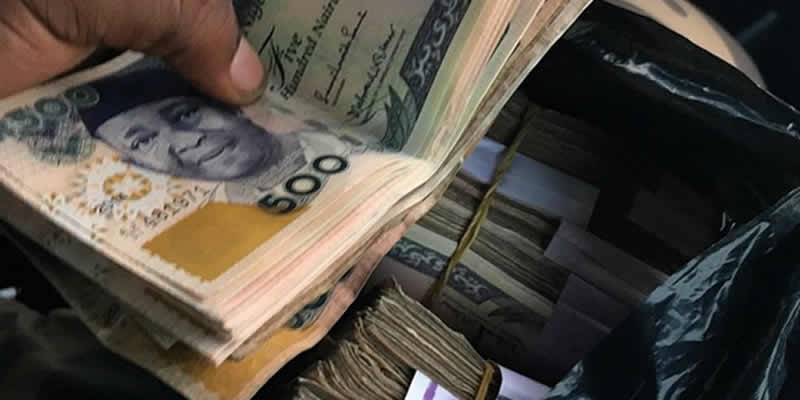
The perception that 100,000 naira is insufficient for a real business comes from comparing it to the wrong benchmarks. Compare it instead to the actual startup costs of businesses that work in Nigeria’s informal and semi-formal economy, and the picture changes considerably. A POS terminal can be operational for under 100,000 naira. A thrift bale costs between 80,000 and 100,000 naira. A freelance digital service business can be launched with a fraction of that, using existing skills. A small-chops catering operation can start from a home kitchen with the same.
The informal sector is not a consolation prize in Nigeria. According to National Bureau of Statistics data from the second quarter of 2024, self-employment accounts for 85.6 percent of total employment in the country. Informal employment sits at 93 percent of all employment. This is not a temporary condition. It is the structure of the Nigerian economy, and it means that the overwhelming majority of working Nigerians have already built their livelihoods in exactly the environment a 100,000-naira entrepreneur is entering. The market is proven. The customers exist. The challenge is execution and positioning.
What 100,000 naira should not be used for is padding. There is a version of starting a business where half the capital disappears into branding, stationery, office furniture, and unnecessary registrations before a single customer appears. That version fails at every capital level, not because the capital was insufficient, but because it was spent on signals rather than substance. Lean starts, in the right sectors, beat overcapitalised starts in the wrong ones every time.
The Best Business to Start in Nigeria with 100k (2026)
Choosing the best business to start in Nigeria with 100k requires more than enthusiasm and a list of ideas. It requires an honest assessment of what the capital can actually cover, which sectors are growing despite inflation, and where local demand is strong enough to sustain a business through its first three months. The options laid out here have been evaluated against those criteria specifically. Each one is viable with disciplined execution.
The POS Business: A Neighbourhood Cash Point That Keeps Paying
No business at the 100,000-naira level in Nigeria has a more reliable and immediate revenue model than the Point of Sale agency business. The Central Bank of Nigeria introduced the framework in 2013 as part of its financial inclusion drive, and it has grown steadily ever since. In markets, student corridors, residential estates, and motor parks where ATM coverage is thin, POS agents handle withdrawals, deposits, transfers, and utility bill payments for a fee. The demand is not seasonal. It is daily, driven by the basic need to access money.
Startup costs for a POS business typically range from 70,000 to 100,000 naira, covering the terminal itself, seed capital for float, a small kiosk or umbrella setup, and CAC registration. CAC registration, which the CBN requires for formal agency banking, costs between 25,000 and 35,000 naira. Fintechs including Moniepoint and OPay have significantly lowered the barrier to entry. A Moniepoint terminal can be obtained for around 25,000 naira with delivery within 24 to 72 hours of application approval. OPay terminals are available for approximately 20,000 naira. Both companies are licensed by the CBN to operate agency banking.
Daily revenue potential for a well-located POS point runs between 3,000 and 7,000 naira per day, according to market data from multiple Nigerian small business sources. Location is the single most important decision in this business. Remote communities, student environments, markets, and areas with few banks or ATMs are ideal. A point set up in competition with three other terminals on the same street will not reach those numbers. One placed strategically in an underserved location frequently exceeds them. The business also has natural expansion paths: pairing the terminal with airtime reselling, data bundles, or betting wallet top-ups increases daily transaction volume without significant additional cost.
Thrift Clothing and the Businesses Nigerians Start with a Bale
The thrift clothing trade in Nigeria, locally called okrika, has undergone a genuine repositioning over the last four years. What was previously understood as clothing for people who could not afford new items has been reclaimed by a younger generation for whom vintage denim, branded T-shirts, and second-hand jackets represent both value and identity. Lagos Instagram pages and TikTok reels now build audiences entirely around okrika styling. The customer has changed, and so has the money that follows them.
Starting in this business at the 100,000-naira level means buying either a full bale or a mini-bale. A mini-bale in the 80,000 to 100,000 naira range can yield enough sorted pieces to sell for two to three times the cost price, depending on the quality of the bale and the skill of the sorting. Bales are sourced from major textile markets: Balogun in Lagos, Onitsha Main Market in Anambra, and Aba in Abia State all have reliable bale suppliers. The critical skill is sorting, knowing which pieces in the bale have resale value and at what price point to move them.
The sales channel matters enormously. Physical market tables in residential areas generate steady foot traffic but limit the margin. Instagram and TikTok shops, by contrast, allow a seller to reach buyers across Lagos, Abuja, and beyond without the overhead of a physical location. Lifestyle photography that shows the clothing worn, not laid flat on a surface, is what moves units on social media. Sellers who treat each batch as a curated drop rather than a clearance event consistently report better margins. The learning curve is real, but it is short, and the capital required to reload after the first batch is usually recovered within the same cycle.
Freelance Digital Services: The Business Built on Skills You Already Have
Nigeria had 107 million internet users at the start of 2025, according to DataReportal’s Digital 2025 report. Monthly internet data consumption surged 93 percent by January 2025, reaching over one million terabytes, driven by growing smartphone penetration, per data from the Nigerian Communications Commission. This is not background noise. It is the operating environment for an entire class of businesses that require no inventory, no physical location, and no supply chain. Content writing, social media management, SEO consulting, copywriting, and digital marketing all sit inside this category.
What does 100,000 naira buy in a digital services business? Not much in terms of physical assets, which is the point. It covers the cost of a short professional course or certification, the first three to six months of a portfolio website subscription, a basic design tool like Canva Pro, and the first round of paid social media promotion to attract initial clients. The actual product is skill and reliability, two things that cannot be purchased but can be developed with discipline. A content writer with six months of consistent client work can typically earn between 60,000 and 200,000 naira monthly, depending on niche and client base.
The Nigerian market for these services is growing because businesses of all sizes have recognised the need for a consistent online presence without having the budget to hire a full-time staff member. Small businesses, local brands, and startups across Lagos, Abuja, and Port Harcourt are actively searching for freelancers who can manage their Instagram pages, write their product descriptions, or run their email lists. The competitive advantage for Nigerian freelancers working within the domestic market is straightforward: time zones, cultural context, and pricing that suits the client’s budget. For freelancers targeting international clients through platforms like Upwork or direct outreach, the dollar earnings converted to naira represent a significant multiplier on local pricing.
The discipline this business demands is consistency. Clients leave when quality drops or deadlines are missed. The businesses that succeed in this space treat it with the same seriousness they would apply to a shop they had physically opened. Client acquisition, quality control, and reliable delivery are the three pillars. Everything else is secondary.
Small Chops, Catering, and the Events Economy That Never Slows Down
Nigeria’s events culture is not a stereotype. It is a verifiable, constant economic reality. Weddings, naming ceremonies, burials, office parties, and birthday celebrations happen every weekend across every city and town in the country. The demand for quality small chops, which include puff-puff, spring rolls, samosas, fried chicken, and peppered snails, is attached to that culture at every income level. A well-executed small-chops business has one of the fastest return-on-investment cycles available at the 100,000-naira level.
Starting this business from a home kitchen costs far less than 100,000 naira in raw setup. The capital goes into quality ingredients, packaging materials, and the first round of marketing, primarily through WhatsApp status, Instagram, and direct outreach to event planners and party organisers. Referrals are the engine of this business. One satisfied customer at a naming ceremony becomes three bookings for the following month. The compounding is not metaphorical; it is how the business actually works in practice. Multiple Nigerian entrepreneurs who started with exactly this model have grown into full catering operations within 18 to 24 months.
The trap in this business is pricing. New entrants frequently underprice to win their first bookings, then find they are working at a loss once they account for gas, transport, packaging, and their own time. Setting prices that cover costs and return a margin from the first booking is not a luxury. It is the condition for survival past the first quarter. Knowing the going rate for 100 pieces of puff-puff in your city, the cost per unit of spring roll wrappers, and the transport cost to any given estate are not peripheral details. They are the business.
Dropshipping and WhatsApp Commerce for Nigerians Who Prefer Not to Hold Stock
The dropshipping model, which allows a seller to take orders and receive payment without physically holding inventory, has found a natural home in Nigeria’s smartphone-driven commerce culture. WhatsApp, Instagram, and to a growing extent TikTok, function as storefronts for millions of Nigerian sellers who have never had a physical shop. The capital at the 100,000-naira level in dropshipping goes into product photography or samples, initial paid social media promotion, and building the infrastructure of the business rather than the product itself.
Beauty and weight loss products are among the highest-converting niches for Nigerian dropshipping sellers because the demand is constant, the repurchase rate is high, and the products are compact enough to ship economically within the country. Skincare serums, hair growth products, slimming teas, and waist trainers move consistently through Instagram and WhatsApp channels. The challenge is sourcing: reliable local suppliers or mini-importation channels from China through Alibaba or 1688 are both viable, but due diligence on product quality matters significantly. Nigerian buyers are not forgiving of products that underperform, and negative reviews spread faster than positive ones.
The platform matters, too. Listing products on Jumia or Konga gives access to an existing customer base and handles payment logistics, but takes a commission and imposes competition from dozens of similar listings. A seller who builds their own audience on Instagram or WhatsApp over three to six months before selling has more control over pricing and relationship with the customer. Both approaches are valid, and many successful Nigerian sellers use both simultaneously: the marketplace for reach and the personal channel for repeat customers.
What Nigeria’s 2026 business environment adds to dropshipping is the improving reliability of local logistics. Companies including Kobo360, Kwik Delivery, and GIG Logistics have expanded coverage and reliability significantly across major cities. For a seller operating within Lagos or Abuja, same-day or next-day delivery is now achievable, which closes the primary objection customers have to ordering online from individual sellers rather than established platforms.
Tax, CAC Registration, and What the 2026 Business Environment Actually Requires
Starting a business with 100,000 naira in Nigeria in 2026 does not happen in a regulatory vacuum. The Federal Inland Revenue Service has updated its tax compliance requirements, and while micro-businesses below certain thresholds may not face immediate audit risk, formalisation creates access to banking relationships, business accounts, and future grant opportunities that informal operation forecloses. CAC registration for a business name costs between 11,700 and 35,000 naira, a figure that should be built into the startup budget rather than deferred. The Corporate Affairs Commission’s online portal allows the process to be completed without visiting a physical office.
For the POS business specifically, the CBN requires CAC registration as a condition of agency banking approval. A valid means of identification, a registered business name, proof of address, and a Bank Verification Number are the standard requirements across most issuing institutions. The process typically takes two weeks to a month. Skipping registration to save the fee creates a ceiling: unregistered POS agents cannot access certain fintech products, higher transaction limits, or formal credit facilities that registered agents qualify for.
Competition is the other reality that every 100,000-naira business plan must account for. The POS space in dense urban areas is saturated in many locations. Thrift clothing on Instagram is crowded. The catering market in Lagos alone has thousands of operators. None of this means these businesses are not viable. It means differentiation is not optional. The sellers who grow past survival into actual scale are the ones who took their market positioning seriously from the first week, whether that was a better location, a distinctive product presentation, or a customer service approach that competitors were too lazy to match.
Picking the Right Business for the Person Holding the Capital
The answer to which business to start in Nigeria with 100,000 naira is not universal. It depends on the person. Someone who lives near a market or residential estate with poor ATM coverage and has the discipline for daily cash management will find the POS business the most immediately rewarding. Someone with a proven skill in writing, design, or social media strategy should put the capital into building a client pipeline rather than buying inventory. Someone who can cook and already has a network of friends and family who host events has a catering business that needs only to be formalised.
The common denominator across every option that works is execution quality. Nigeria’s consumer base is not short of choices. It is short of reliable operators. The trader who shows up every day, responds to messages, delivers what was promised, and does not disappear after the first payment has a structural competitive advantage in any of these categories. That advantage is not related to how much money was used to start. It is related to conduct. A 100,000-naira business run with that standard outlasts a million-naira business run carelessly, in Nigeria as anywhere else.
The economic conditions of 2026, with inflation moderating after two brutal years, smartphone penetration driving new consumer behaviours, and the informal economy absorbing the majority of working Nigerians, are not ideal. They are real. And within that reality, there is serious money being made by people who started with exactly what is being discussed here.