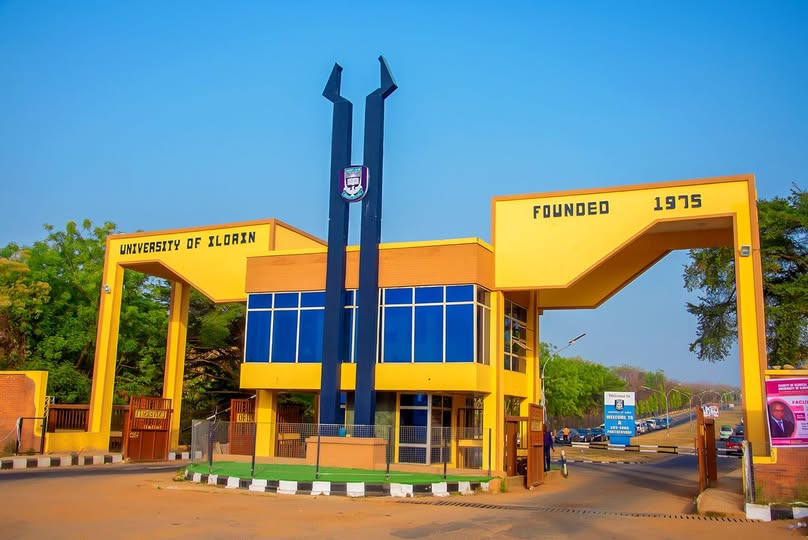
Nearly one year after completing their medical training, 44 graduates of the University of Ilorin have remained unable to begin the next phase of their professional careers due to an induction quota restriction that has sparked wider concerns about the future of medical students still undergoing training at the institution.
The affected graduates spent about eight years studying Medicine and Surgery, a period extended by disruptions linked to the COVID-19 pandemic and industrial actions by the Academic Staff Union of Universities.
Having completed their final MBBS examinations in August 2025, the graduates expected to proceed to induction and subsequently commence their mandatory housemanship programmes.
Instead, only a portion of the graduating class was inducted in November 2025, leaving 44 graduates without a pathway to professional registration despite fulfilling their academic requirements.
The delay has fuelled anxiety among the affected graduates, many of whom say they have watched their colleagues move on to house jobs while they remain unable to advance professionally.
In a statement shared on their X accounts earlier this year, the graduates expressed frustration over what they described as a prolonged period of uncertainty.
“We were promised induction within six to eight weeks after the first batch. That timeline has passed, yet there is still no date, no clear plan, and no official update,” they wrote.
“Our colleagues have started house jobs, while we remain stagnant despite meeting all academic requirements.”
The roots of the situation lie in the institution’s approved induction quota as determined by the Medical and Dental Council of Nigeria.
Responding to public concerns in February, the Director Of Corporate Affairs, Kunle Akogun, said reports suggesting that the affected graduates would automatically be merged with a subsequent graduating class for induction were inaccurate.
Providing details of the development, the Provost Of The College Of Health Sciences, Biodun Alabi, explained that 194 students participated in the final MBBS examinations conducted in August 2025.
According to him, 175 candidates passed the examinations outright, while 19 others were required to sit resit examinations before eventually qualifying.
He stated that when the university invited the Medical and Dental Council of Nigeria for induction, the council maintained that only 150 students could be inducted in line with the institution’s approved quota.
As a result, the university ranked the successful candidates and inducted the first 150 students in November 2025, while 25 successful candidates and 19 students who later passed their resit examinations were left awaiting induction.
“We were assured that the remaining 25 that passed and the other 19 that had resit exams would be inducted at a later date,” Alabi said.
The provost added that the university had continued discussions with the regulatory body in an effort to secure induction for the outstanding graduates.
He also disclosed that the Vice-Chancellor, Professor Wahab Egbewole, directed relevant officials to initiate steps towards inviting the MDCN for a fresh accreditation exercise aimed at increasing the institution’s approved quota beyond 150 students.
Despite those assurances, the affected graduates say no specific date has been communicated regarding their induction.
The implications of the quota challenge extend beyond the 44 graduates currently awaiting induction.
Information available indicates that about 205 students are presently in the university’s final MBBS class and are expected to sit their professional examinations later this year.
Even if all members of that class successfully complete the examinations, the existing quota means the institution may be unable to induct every qualified candidate unless changes are made to the approved capacity.
Under the current arrangement, only about 150 students from the class could be accommodated for induction, potentially leaving dozens of others facing delays similar to those experienced by the 2025 graduates.
Some observers familiar with the matter argue that the problem reflects a longer-running issue linked to compliance with regulatory requirements.
One source alleged that previous administrations failed to adequately address concerns relating to the institution’s approved induction quota, creating challenges that have now become more pronounced.
“For several years, the College of Health Sciences, University of Ilorin, has been committing infractions against the MDCN’s regulations regarding the induction quota,” the source said.
“Consequently, the MDCN, exercising its full regulatory oversight and legal authority, has sanctioned the college. This is the root cause of our present situation.”
As discussions continue, reports have emerged suggesting that the university is exploring solutions that could include revised indexing arrangements designed to gradually reduce the backlog over several induction cycles.
The institution has also dismissed suggestions that admissions into its MBBS programme may be suspended, maintaining that admissions will continue for the 2026/2027 academic session.
Addressing concerns about both the waiting graduates and current students, Akogun said the university remained committed to resolving the issue through sustained engagement with relevant authorities.
“Affected graduates are encouraged to remain patient and can expect further updates,” he said.
He further assured students that measures would be taken to protect their academic interests and future prospects.
“The academic progress and welfare of our students remain our priority, and we will continue to take proactive steps to sustain their academic strides,” he said.
While discussions between the university and the MDCN continue, the absence of a definite induction timetable has left the affected graduates and many students still in training watching developments closely as they await a resolution to a challenge that has cast uncertainty over their professional futures.