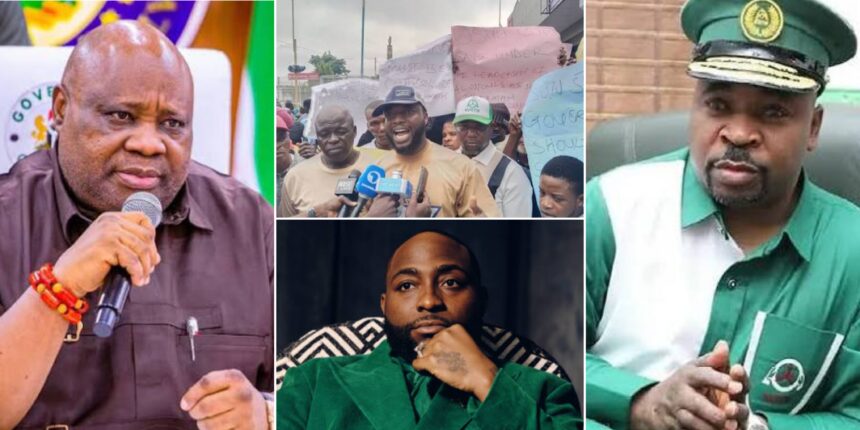
Power, influence, security, politics, public order, and one of Nigeria’s biggest transport unions have collided in a dispute that has continued to attract national attention. What started as a leadership crisis within the Osun chapter of the National Union of Road Transport Workers has gradually grown into a wider confrontation involving a state government, a powerful union structure, and some of the biggest names connected to the unfolding drama.
The disagreement between Governor Ademola Adeleke’s administration and MC Oluomo’s NURTW leadership has moved beyond the boundaries of motor parks, raising questions about authority, control, legal powers, and the limits of government intervention. With both sides holding firmly to their positions, every new statement and decision has added another layer to a story that continues to develop.
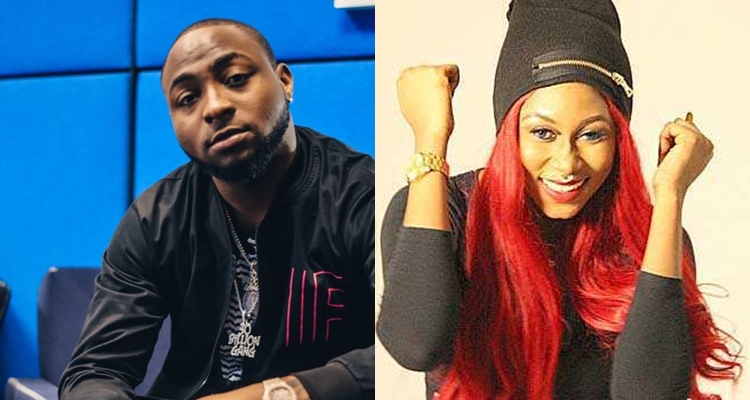
Then came another unexpected angle. Afrobeats superstar Davido, who is closely connected to Governor Adeleke, entered the conversation with a social media reaction that quickly drew attention and added a fresh dimension to the ongoing clash. His comment placed even more spotlight on a dispute that had already become one of Osun State’s most discussed issues.
From the events that triggered the suspension of NURTW activities, to MC Oluomo’s response, the caretaker committee controversy, the legal questions surrounding the dispute, and Davido’s latest reaction, here is the story behind the ongoing Osun NURTW clash.
Background Behind The Crisis
Events leading to the current disagreement can be traced to growing leadership tensions within the Osun chapter of the National Union of Road Transport Workers. Rival factions had reportedly disagreed over control of the union’s affairs, with disagreements becoming increasingly difficult to contain as competing interests struggled for recognition. Rather than remaining an internal administrative issue, the conflict gradually spilled into public spaces where supporters openly confronted one another. The atmosphere became tense enough to attract widespread concern among residents who feared that the situation could deteriorate further if urgent steps were not taken to restore calm.
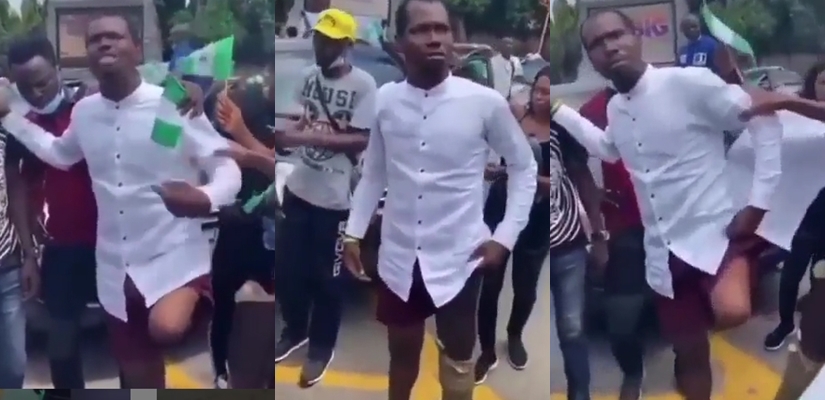
Reports that emerged during the crisis indicated that violent clashes erupted in Osogbo, the Osun State capital, where rival supporters allegedly confronted each other over leadership control. The disturbances reportedly created panic within surrounding communities after gunshots were heard during the confrontation.
Residents who witnessed the unrest described scenes of confusion as businesses slowed their activities while many people hurried away from the affected areas. Security concerns immediately became the dominant issue, pushing government authorities to closely monitor developments before deciding on the next course of action.
Beyond the immediate violence, the crisis also highlighted the strategic importance of transport unions within many states across Nigeria. Motor parks serve as major commercial centers where thousands of passengers, commercial drivers, traders, transport operators carry out daily economic activities.
Any disruption within that structure has the potential to affect transportation, revenue collection, movement of goods, general public confidence. Those realities made the Osun situation more significant than an ordinary leadership disagreement because the consequences extended far beyond the union itself.
Government Response Following Security Meeting

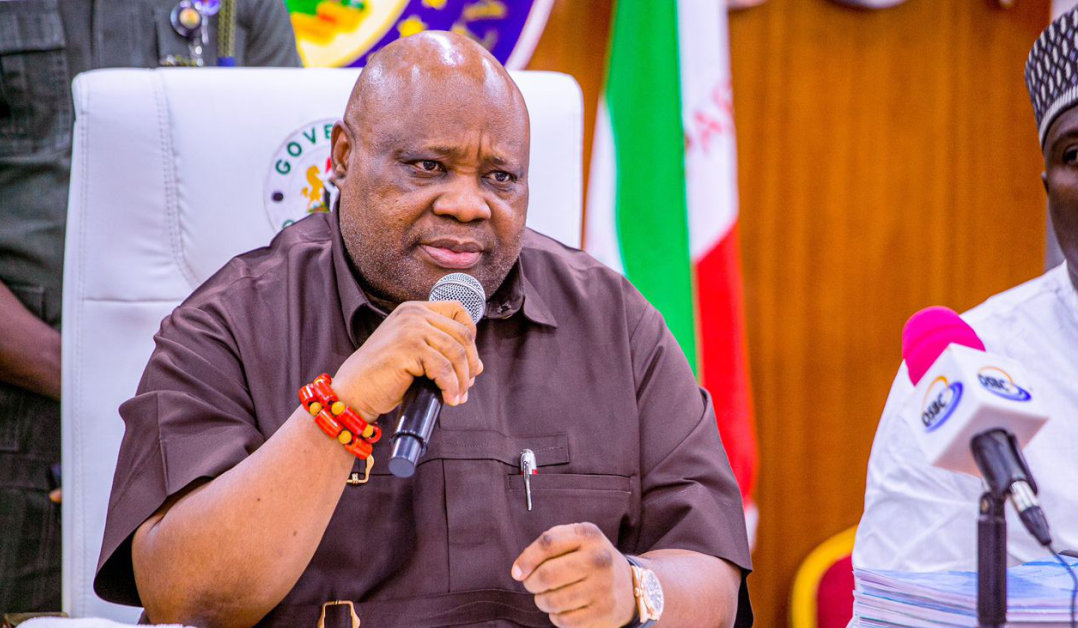
Following reports of the disturbances, Governor Ademola Adeleke convened a meeting of the Osun State Security Council to evaluate the unfolding situation. Security agencies reportedly presented assessments regarding developments within the affected motor parks while government officials considered measures aimed at preventing additional violence. Following deliberations, the state government announced a series of immediate directives intended to restore public order before the situation escalated further.
One of the major decisions announced by the state government was the immediate suspension of all National Union of Road Transport Workers activities within motor parks across Osun State.
Authorities also suspended the collection of transport levies during the period covered by the directive. Security agencies were instructed to ensure compliance while anyone operating as a union official despite the suspension risked arrest. Government officials explained that the decision was introduced as a temporary security measure rather than a permanent administrative action against the union.
Officials later clarified another important aspect of the directive after questions began to emerge regarding its scope. According to the state government, the decision did not amount to dissolving the existing executives of the union within Osun State. Rather, authorities maintained that the suspension affected operational activities while efforts continued to restore peace across the affected areas. That clarification became an important part of the debate because it distinguished the government’s position from claims that it had attempted to abolish the union entirely.
National Union Rejects Suspension
The National Union of Road Transport Workers responded through its national leadership shortly after the government’s announcement became public. Speaking through Deputy National President Aliyu Issa Ore, the union rejected the state’s decision, maintaining that the action exceeded the constitutional powers available to a state government concerning the affairs of a nationally registered trade union.
According to the national leadership, the National Union of Road Transport Workers derives its legal status from federal labour laws governing registered trade unions across Nigeria. Based on that position, the union argued that no individual state government possesses the constitutional authority to suspend the existence or lawful operations of the organization. Officials further maintained that previous attempts by some state governments to interfere with the administration of the union had reportedly resulted in legal challenges, reinforcing their belief that such matters remain within the authority of the national organization.
National officers equally maintained that the Osun chapter could not be left without recognized leadership during a period of internal disagreement. They insisted that maintaining an officially recognized administrative structure remained necessary for the effective coordination of union activities once normal operations eventually resumed. That position laid the foundation for another major development that further intensified the disagreement between both sides.
Caretaker Committee Takes Shape
Seeking to reinforce its administrative authority over the Osun chapter, the national leadership inaugurated a 7 member caretaker committee to oversee the affairs of the union within the state. The committee was headed by Kazeem Oyewale, who is widely known by the nickname Asiri Eniba. National officials explained that the committee would provide temporary leadership while efforts continued to address the internal disputes that had contributed to the crisis.
The announcement immediately attracted nationwide attention because it signaled that the national leadership intended to continue exercising administrative authority despite the suspension announced by the Osun State Government. Rather than waiting for the state directive to be lifted before making further appointments, the union proceeded with its own internal administrative process. That move effectively placed both sides on separate paths regarding who possessed legitimate authority over the affairs of the union within Osun State.
Members of the caretaker committee were expected to coordinate administrative responsibilities ordinarily handled by recognized state executives. National officers stated that the arrangement remained temporary until lasting solutions emerged regarding the leadership disagreement. While that explanation reflected the position of the national body, it did not alter the position already adopted by the Osun State Government regarding the suspension of operational activities.
State Rejects Caretaker Leadership
Shortly after the caretaker committee was announced, the Osun State Government publicly rejected the arrangement. Officials maintained that there was no leadership vacuum requiring the appointment of an interim committee because the existing executives remained the recognized leadership within the state. Government representatives therefore stated that the caretaker committee would not receive official recognition under the prevailing circumstances.
Authorities specifically reaffirmed that the Alowonle led executive remained the recognized structure despite the temporary suspension of activities. From the government’s perspective, suspending operations for security reasons did not automatically terminate the tenure of elected officials already recognized within the state’s administrative framework. That distinction became central to the disagreement because it reflected fundamentally different interpretations of authority between the national leadership, the state government.
Another issue raised by the state government involved allegations concerning Kazeem Oyewale’s legal circumstances. Officials stated that criminal charges involving the caretaker committee chairman formed part of the reasons why the government would not recognize his appointment. That position further complicated efforts to find immediate common ground because it introduced additional considerations beyond the original dispute surrounding administrative authority.
MC Oluomo’s Response To The Suspension Order

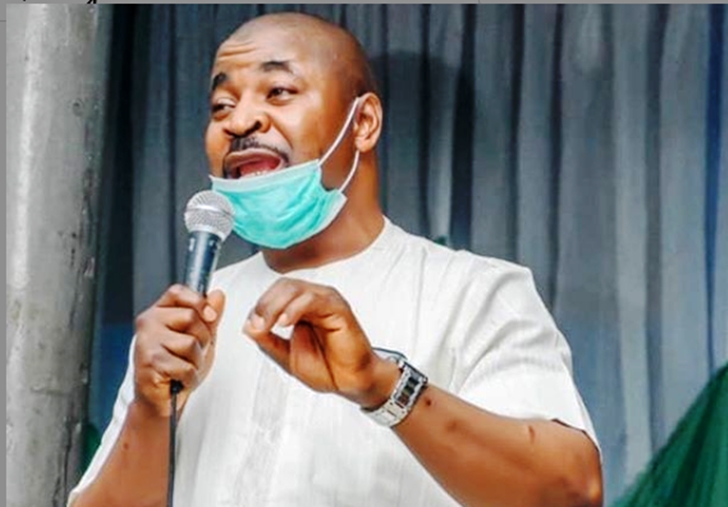
The reaction from MC Oluomo’s camp came shortly after the Osun State Government announced the suspension of NURTW activities across motor parks in the state. Represented by the Deputy National President of the union, Aliyu Issa Ore, the national leadership rejected the decision, arguing that the state government exceeded its authority by attempting to halt the operations of a nationally registered trade union.
According to the union’s position, NURTW is not controlled by individual state governments because its existence and administration are guided by federal labour regulations. Speaking during the inauguration of the caretaker committee, Aliyu Issa Ore stated that the state government lacked the legal power to suspend the union’s activities.
“We heard that the state governor in Osun suspended the activities of our union, which they don’t have the power to do,” Ore said while delivering MC Oluomo’s position on the matter.
The union further argued that no governor has the authority to suspend NURTW operations because the organization operates under a legal framework established at the federal level. The leadership maintained that while state governments have responsibilities concerning security and public order, those powers do not extend to taking over the internal administration of a registered national trade union.
The national leadership also questioned the basis of the suspension, insisting that the appropriate approach would have been dialogue and internal conflict resolution rather than stopping union activities completely. According to MC Oluomo’s camp, the decision created uncertainty for transport workers and affected the structure of the union within Osun State.
Explaining the need for a caretaker committee, the union stated that it could not allow the Osun chapter to operate without recognized leadership. The national body argued that maintaining an administrative structure was necessary to protect the interests of members and ensure continuity of union responsibilities.
The union also referenced its existing relationship with the Independent National Electoral Commission regarding transportation arrangements during elections. According to the national leadership, the approaching 2026 governorship election made it important for the union to maintain a functional structure within Osun State.
MC Oluomo’s camp maintained that the caretaker committee was not created to challenge the authority of the state government but to provide temporary leadership while the internal disagreement within the Osun chapter was addressed. The move, however, became another major point of disagreement because the Osun Government rejected the committee and maintained that the existing elected executives remained the recognized leadership of the union.
Davido Enters The Conversation

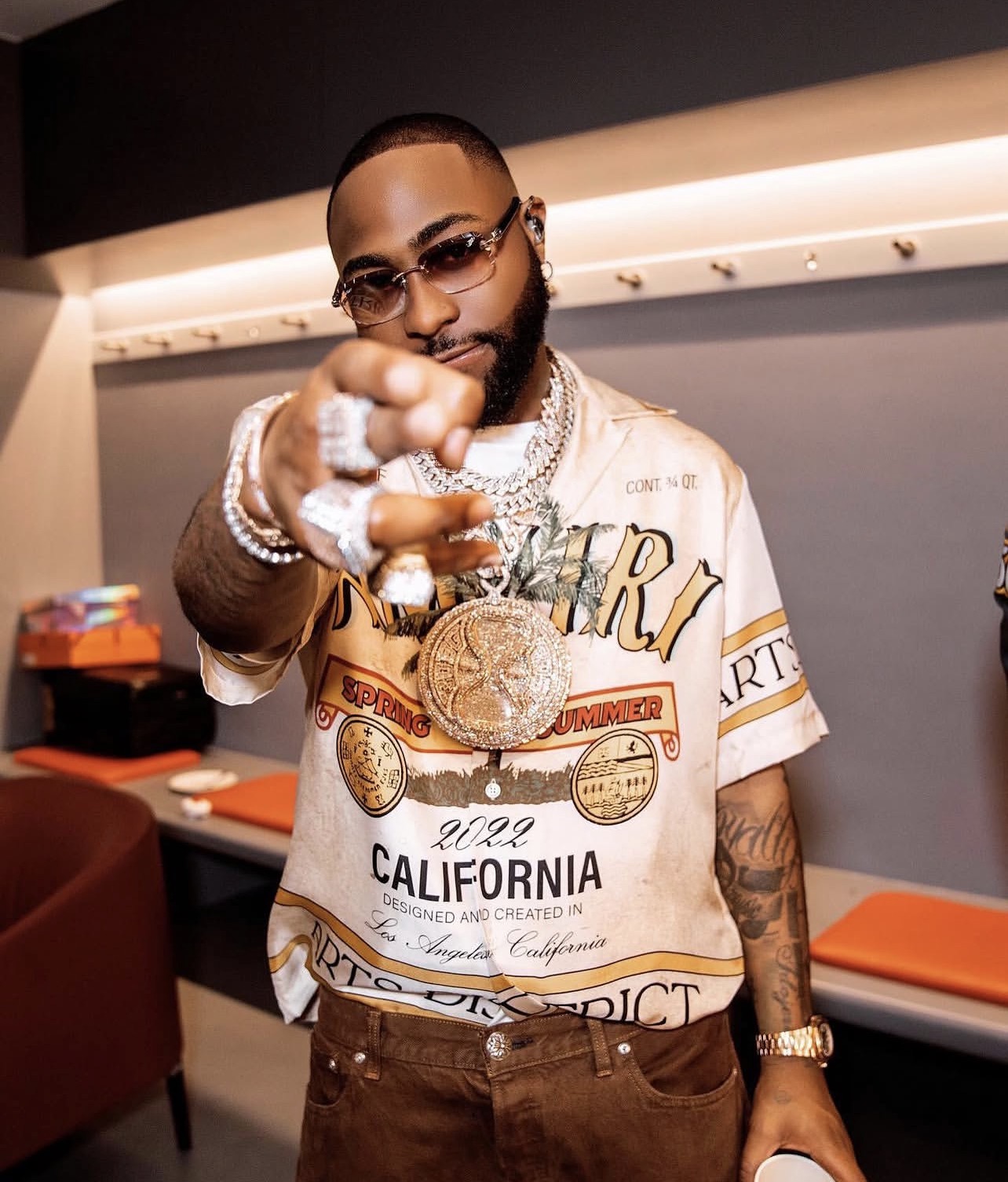
The disagreement took another turn on Monday, July 27, 2026, after Afrobeats star Davido publicly reacted to the face off involving his uncle, Governor Ademola Adeleke, and MC Oluomo. Rather than issuing a lengthy statement, the singer shared a brief message on his Instagram Story that immediately attracted widespread attention because of the ongoing dispute between the Osun State Government and the National Union of Road Transport Workers.
Davido, whose real name is David Adeleke, directly tagged MC Oluomo’s Instagram account before writing in Pidgin, “@kingmcoluomo dem say u Dey game… I doubt lol look ur mirror.” Although the singer did not provide further explanation, the timing of the post left little doubt that it was connected to the ongoing disagreement over the suspension of NURTW activities in Osun State.
The social media post came barely days after MC Oluomo, through the union’s Deputy National President, Aliyu Issa Ore, insisted that Governor Ademola Adeleke lacked the constitutional authority to suspend the activities of a nationally registered trade union. Davido’s remark therefore introduced another high profile voice into a dispute that had already attracted political, legal, security attention across the country.
The development also underscored the family connection at the center of the political debate. Governor Ademola Adeleke is Davido’s uncle, while the singer has remained openly involved in his political activities over the years. His latest Instagram Story signaled public support for the governor at a time when the disagreement with the NURTW national leadership continues without a resolution.
Election Timing Adds Another Layer To The Dispute
The disagreement between MC Oluomo’s national leadership and the Osun State Government became more sensitive because of the timing of the crisis. The state is approaching another major political season, with attention already turning toward the 2026 Osun governorship election. For the NURTW leadership, the situation required an active administrative structure that could coordinate the union’s responsibilities during election related activities.
The national leadership pointed to an existing Memorandum of Understanding between the union and the Independent National Electoral Commission as part of the reasons it moved quickly to establish a caretaker arrangement. According to Aliyu Issa Ore, the union needed recognized leadership in Osun while discussions continued over the internal disagreement. He stated that he had also engaged with INEC following directives from the national president, MC Oluomo.
The position of the union was that internal disagreements should not create a situation where the state chapter becomes inactive or lacks leadership. Officials argued that transportation remains an important part of election logistics because movement of personnel, materials, observers, security officials, voters in certain circumstances often depends on organized transport structures.
However, the Osun State Government maintained that security concerns remained the priority. Officials argued that the suspension was not targeted at eliminating the union but was necessary because activities linked to the crisis had created an atmosphere that required government intervention.
The Legal Battle Over Authority
At the center of the disagreement is a larger legal question about the limits of state government authority over organizations registered under federal laws. Both sides have presented different interpretations of their powers, creating a situation where legal arguments may eventually become necessary if dialogue fails.
The NURTW national leadership argues that the union operates under federal labour regulations and therefore cannot be suspended by an individual state government. According to the union, matters involving its administration, leadership structure and internal operations fall under the authority of the national body rather than state governments.
The Osun Government has presented a different argument. Officials have maintained that the action taken was not the suspension of the existence of NURTW as a registered organization. Rather, they described it as a temporary restriction on activities within motor parks because of security concerns.
The difference between these two positions is crucial. The union sees the directive as interference in its legally protected operations, while the state sees it as an exercise of its responsibility to maintain peace and protect residents. The outcome of the disagreement could determine how similar conflicts between state governments and national organizations are handled in the future.
Resumption Claims Create Fresh Tension
After the caretaker committee was inaugurated, the new leadership moved to reinforce its authority over NURTW activities in Osun. Reports indicated that Kazeem Oyewale announced the resumption of union operations while appealing for cooperation and peace.
The development created another point of disagreement because the state government had not withdrawn its suspension order. While the national leadership believed the committee restored administrative control, government officials maintained that the restriction on union activities remained active.
The situation therefore created two competing realities. The NURTW national body continued to recognize the caretaker committee as the legitimate structure for managing the union’s affairs in Osun, while the state government continued to insist that the suspension remained necessary until stability returned.
Current Situation
The dispute remains unresolved as both sides continue to maintain their positions. The Osun State Government insists that NURTW activities remain suspended, while the national leadership of the union continues to recognize the caretaker committee established in Osun.
With both parties refusing to withdraw their positions, possible outcomes include further negotiations, intervention from relevant authorities or legal proceedings to determine the extent of each side’s powers. Until a resolution emerges, the Osun NURTW crisis remains a major test of authority, governance and union administration in Nigeria.