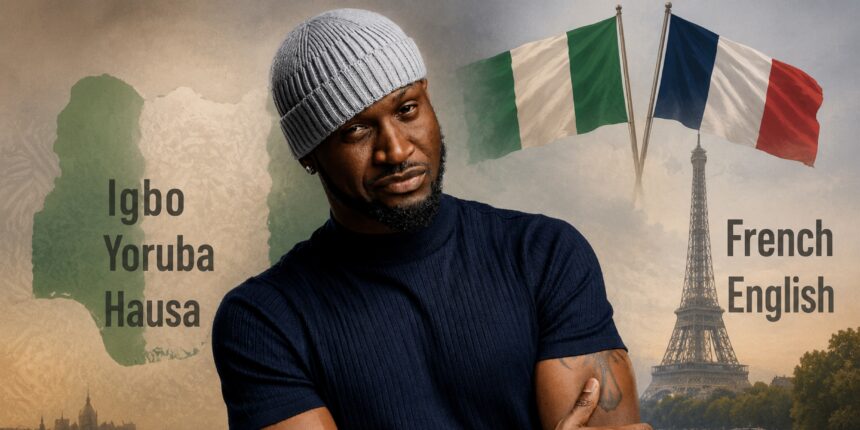
What began as a harmless social media post about singer Peter Okoye, popularly known as Mr P, watching his children speak French in Paris has grown into one of the biggest conversations on Nigerian social media this week.
The former P-Square member did not just celebrate his children’s fluency in French. He went further to question the value of Nigerian languages, repeatedly asking critics what practical benefits speaking an indigenous language offers. His remarks sparked fierce reactions, with many Nigerians accusing him of belittling the country’s cultural heritage, while others defended his stance, arguing that parents should prioritise languages that can give their children better opportunities in an increasingly globalised world.
From accusations of promoting a colonial mentality to arguments about migration, education and career prospects, the debate has become much bigger than one celebrity’s opinion. It has reopened an old conversation about whether Nigerians are doing enough to preserve their indigenous languages while preparing younger generations for life beyond the country’s borders.
A Paris Post That Started It All

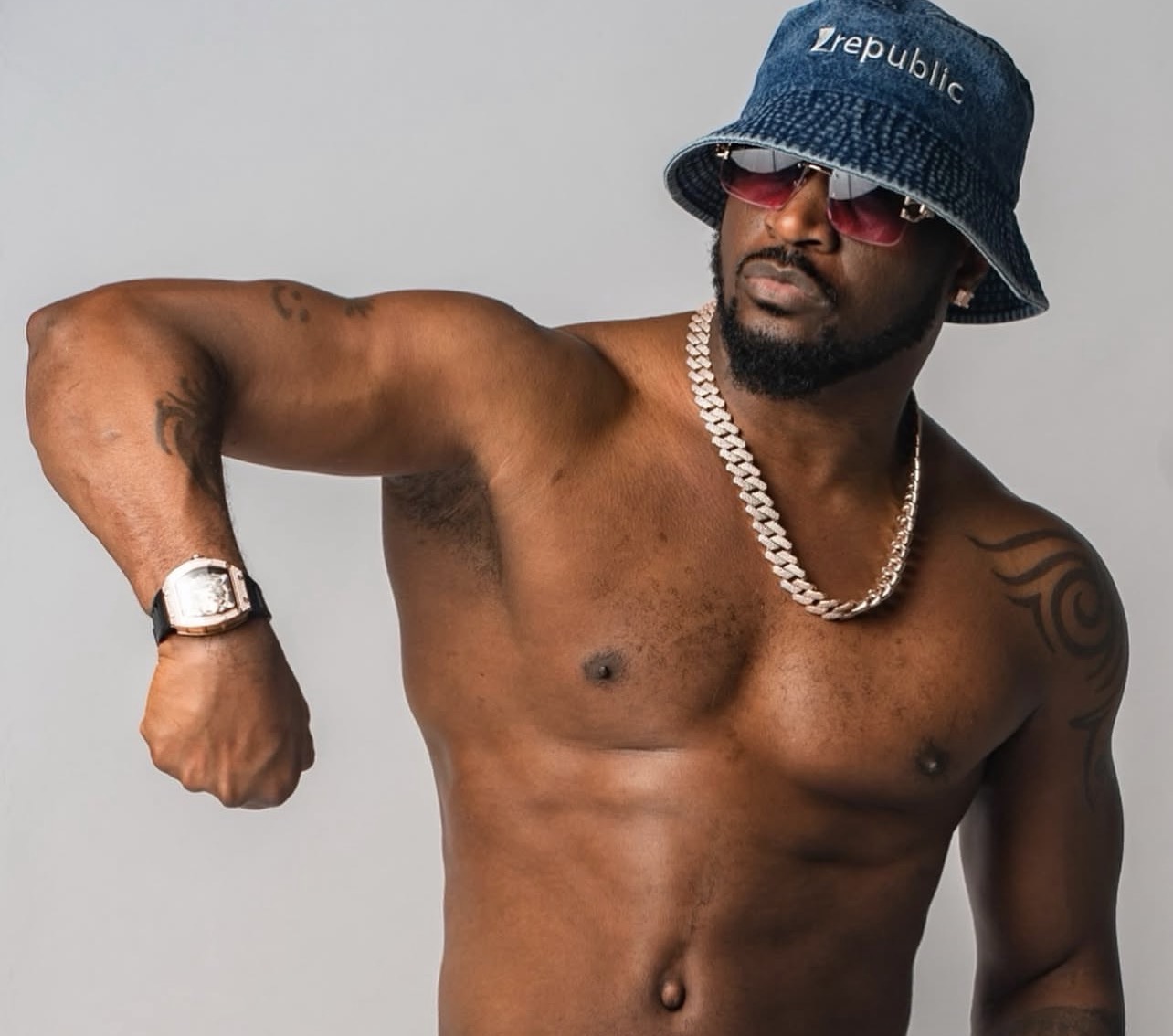
The debate began on Monday, July 27, when Mr P shared a post from Paris, France, where he was spending time with his family. Clearly impressed by his children’s command of French, he wrote:
“Still in Paris! ?? Watching my kids speak French so effortlessly makes me think… maybe it’s time to own a crib here in Paris. ?❤️ Just a thought. ??✨”
While many followers congratulated him for raising multilingual children, others quickly shifted the conversation by asking whether his children could also speak Igbo, their native language.
That simple question opened the floodgates. Rather than assuring critics that his children understood both languages, Mr P responded with a question of his own.
“And who naija language help? Make I hear word abeg.”
The response immediately divided opinion across X. For some, it was a practical question about preparing children for a competitive world. For others, it sounded like a dismissal of Nigeria’s indigenous languages and the cultures they represent.
Mr P Doubled Down Instead Of Backing Down
As criticism intensified over the following hours, many expected the singer to soften his position or clarify his remarks.
Instead, he became even more vocal. Responding to critics, Mr P insisted that his family’s choices were nobody else’s business.
“I’ve got just three words for you: MYB — Mind Your Business.
“Go and find someone else to pour your frustration on. Not here.”
He also questioned why strangers were concerned about the languages his children speak at home.
“When it’s your turn, teach your own kids all the languages in Nigeria if that’s your choice.
“As for me and my family, we’re good. Go and find another place to pour your frustration.
“Again, what exactly do you stand to gain if my children speak Nigerian languages? How does that improve your life?
“MYB — Mind Your Business.”
Rather than ending the conversation, the posts attracted even more reactions. Later that day, Mr P had firmly settled into his position.
In another lengthy post, he challenged critics once again.
“Again and again… Who Nigerian language help?
“If e pain you, Go hit your head for wall.
“I am a public figure and so what? Call me names. That’s your own cup of tea.”
He insisted that he had never complained about his children not speaking Igbo. Instead, he questioned why Nigerians seemed offended on his behalf.
“Did I ever complain that my kids can’t speak my language? No.
“So why are people angry on my behalf?”
He also criticised Nigerians for focusing on his family instead of bigger national issues.
“With everything going on in Nigeria, your biggest concern is whether my children speak Nigerian languages?
“Out of all the real issues facing the country, this is what keeps you awake?”
Mr P argued that many of the same people attacking him would gladly relocate abroad if given the chance.
“Meanwhile, many of the same people criticizing me would jump at the chance to get foreign citizenship or raise their own children abroad if they had the opportunity.”
He also pointed to Nigeria’s political elite.
“When our politicians send their children abroad to live, study and embrace other cultures while neglecting the value of ours, nobody holds them accountable.
“But somehow, I’m the one you want to tackle?”
Throughout the exchanges, one question remained at the centre of his argument.
“Who has speaking a Nigerian language really helped?”
The Backlash: ‘Language Is More Than Communication’
Mr P’s comments did not sit well with many Nigerians. To them, the issue was never about whether children should learn French or English. Instead, they argued that learning foreign languages should not come at the expense of indigenous ones.
One X user, Kalu, simply asked:
“Can they also speak igbo? Lost people.”
Another user, El Believe, accused the singer of embracing a colonial mindset.
“People like you are the reason Westerners don’t feel remorseful about colonialism, because even today, you’re still mentally enslaved.”
Another commenter, Quaesi, questioned why some Nigerians appear disconnected from their roots.
“The level of hatred some people have for their own birthplace deserves a fully funded UN doctoral research project.”
For many critics, indigenous languages are not just tools for communication. They are symbols of identity, history, tradition and belonging.
Many argued that children can comfortably learn English, French and their native language at the same time without sacrificing one for the other.
Not Everyone Disagreed With Him

Although the criticism dominated the conversation, Mr P also found supporters.
One of the most prominent voices was comedian KlintonCod, who revealed that he had repeatedly had similar arguments within his own family. He wrote:
“Crazy thing is I have argued this with my own father a thousand times. They are always pissed my kids speak French and English but not Igbo.”
Klinton explained that his position was based on what he believes gives children better opportunities later in life.
“The world is progressing but Nigeria regresses on a daily. Most people are running away from the country and 10 out of 10 times they will not use Igbo in a white man’s land.
“Speaking French and English or any globally recognised language will open far better doors for your kids than Igbo or Yoruba will, unless they have plans to become Igbo or Yoruba movie actors or artistry.”
He added that he was not against teaching indigenous languages. Instead, he believed parents should prioritise languages with greater international value.
“Now it doesn’t mean if I have the opportunity to teach them Igbo I wouldn’t, but I will prioritise a language that will help their lives in adulthood.”
Klinton also criticised what he described as selective patriotism.
“Listening to most Nigerians at your own risk. The idiots will act all patriotic but na them go dey throw party when dem collect UK passport.”
Another supporter, Benjamin Nnamdi, argued that Nigerians should be more concerned about pressing national challenges than the language spoken in another person’s home. He wrote:
“With all the real struggles Nigerians are facing every day — insecurity, economy, power — someone still wants to police what language your kids speak at home?
“That’s pure distraction.”
Mr P responded approvingly.
“And they want to shame me! What a shame! Jokes on them.”
Other users also backed aspects of his argument. Kator Tarkaa observed:
“I find it weird that people who are dragging him are doing so in English.”
Another user, Truth, questioned why the discussion had become such a major issue.
“Is Paris language your problem? Misplaced priorities.”
A Debate Bigger Than Mr P
Although the conversation started with one celebrity, it soon evolved into a wider discussion about the future of Nigerian languages. For one group, indigenous languages remain essential because they preserve family history, cultural identity and traditions that cannot easily be replaced.
For another group, the reality of today’s world means parents increasingly want their children to speak languages that can improve educational, career and migration opportunities.
Many Nigerian families now raise children who speak English as their first language, while others deliberately introduce French because of its growing importance across Africa and internationally.
The disagreement, therefore, is not simply about French versus Igbo or English versus Yoruba. It is about how parents balance cultural heritage with practical realities.
Culture Or Global Opportunity: Does Nigeria Have To Choose?
The controversy also raises an important question. Should learning foreign languages automatically mean abandoning indigenous ones?
Many believe the answer is no.
Children are capable of becoming multilingual, learning English, French and their native language at the same time. Across the world, many countries successfully preserve their indigenous languages while ensuring younger generations also learn internationally recognised ones.
For many Nigerians, that balance is what matters most. The debate is therefore less about choosing one language over another and more about ensuring that opportunities for the future do not come at the cost of losing cultural identity.
Conclusion
Whether people agreed with Mr P or strongly rejected his comments, one thing is certain: his remarks sparked a conversation that goes far beyond celebrity headlines.
His repeated question about “Who has speaking a Nigerian language really helped?”, challenged long-held beliefs about culture, identity and opportunity. His critics responded that indigenous languages are priceless because they connect people to their roots, while supporters argued that parents should prepare their children for a world where globally recognised languages often open more doors.
Perhaps the biggest lesson from the debate is that these two ideas do not have to compete. As Nigeria becomes increasingly connected to the rest of the world, many believe the real challenge is raising children who can thrive internationally without losing the languages and cultures that define where they come from.