Public health experts have continued to stress the importance of preventing cholera and protecting vulnerable groups from heat-related illnesses as rising temperatures and poor sanitation increase health risks in many communities.
Cholera is a highly infectious disease transmitted through contaminated food and water, and it can trigger sudden watery diarrhoea, vomiting and rapid dehydration if left untreated.
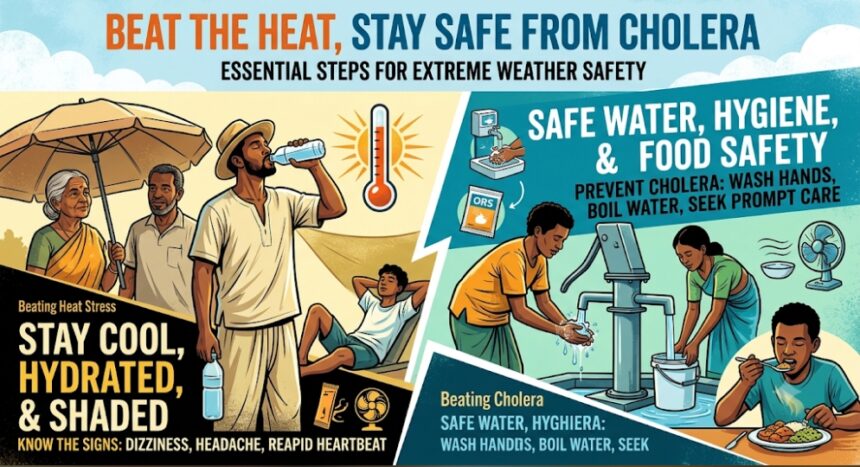
Health authorities advise members of the public to drink only safe or properly treated water, maintain regular handwashing with soap and ensure that all meals are thoroughly cooked and protected from contamination before consumption.
They also recommend avoiding open defecation and keeping homes and surrounding environments clean to reduce the spread of disease-causing organisms.
Medical experts say anyone experiencing frequent watery stools, excessive thirst, weakness or sunken eyes should seek immediate medical attention while beginning oral rehydration with clean water and oral rehydration salts.
“Early treatment can save lives and prevent complications, especially in children, older adults and people living in crowded communities or displacement camps.”
Healthcare professionals note that prompt diagnosis and treatment significantly improve recovery while reducing the likelihood of severe complications associated with cholera.
Alongside concerns about cholera, experts have also warned that prolonged exposure to extreme heat can lead to dehydration, heat exhaustion and heat stroke, which is considered a medical emergency.
They advise people to drink plenty of safe water throughout the day, even when they do not feel thirsty, to help maintain adequate hydration during periods of high temperatures.
Residents are also encouraged to avoid strenuous outdoor activities during the hottest parts of the day, wear loose-fitting and light-coloured clothing, and remain in shaded or well-ventilated environments whenever possible.
Health experts identify older adults, children, pregnant women and people living with chronic medical conditions as groups that face a greater risk of developing heat-related illnesses.
Common warning signs of heat stress include dizziness, headache, confusion, a rapid heartbeat, excessive sweating and very hot, dry skin.
When these symptoms occur, medical professionals recommend moving the affected person to a cooler location, providing fluids if the individual is conscious and seeking urgent medical attention if the condition deteriorates.
They also continue to emphasise that early detection of illness improves treatment outcomes and advise members of the public to consult qualified healthcare professionals instead of relying on self-medication.
Experts maintain that timely medical intervention remains one of the most effective ways to prevent avoidable complications, reinforcing the importance of the long-standing advice that a stitch in time saves nine.