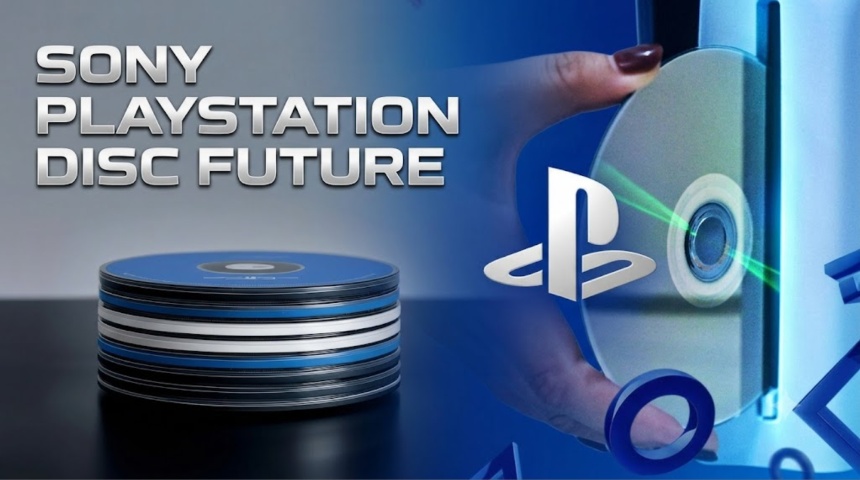
Sony has finally said something about the anger over its decision to kill PlayStation discs, and the message is basically: we hear you, we’re not changing our minds.
The company confirmed in July that it will stop manufacturing discs for new PlayStation games from January 2028. That gives retailers, publishers, and players about eighteen months to adjust before every new PlayStation release goes digital-only. For a while after the announcement, Sony said nothing further and let the backlash build on its own. Then, during a Q&A session tied to its Q1 2026 earnings call, CFO Lin Tao addressed it directly for the first time.
Her answer won’t satisfy the people who are angry about this.
What Sony Actually Said
Tao didn’t dodge the question, but she also didn’t offer much of an opening. Speaking through an interpreter, she confirmed the timeline again and walked through the reasoning behind it.
“We announced that from January 2028 onwards we will no longer be manufacturing game discs, so we announced it one and a half years ahead,” she said. “There are various reasons we made this decision, the biggest being that digitalisation of contents overall has been progressing, that’s the big factor.”
She framed it as a company-wide bet on where entertainment is heading, not just a PlayStation problem. “When we think about the future, we put in a lot of thought and time, and we cautiously considered this, and we came to this conclusion, and we’re going to cautiously move this forward.”
That’s about as close as Sony has come to acknowledging the outrage while still refusing to reconsider anything.
The Backlash, Explained
The reaction to the original announcement wasn’t subtle. A Change.org petition titled “Don’t Kill the Disc,” started by independent retailer PNP Games, has pulled in over 330,000 signatures. Fans have organized a boycott effort called PSBlackout, encouraging players to power down their consoles and log off PSN for a week in late August as a show of protest.
The core complaint isn’t really about nostalgia, even though Tao’s response leaned heavily on the emotional angle. It’s about ownership. Once a game only exists as a download tied to an account, you can’t resell it, lend it to a friend, or keep playing it if Sony ever decides to pull it from sale. Preservation is the other worry. Digital games can vanish from storefronts. Discs, whatever their flaws, tend to survive.
Tao touched on the emotional side of it without really addressing the ownership argument. “It’s a form of entertainment that’s loved by people, and it’s connected to people’s fond memories in many cases. And so we understand those emotions. We want to consider that. And in the future digital ecosystem, how do we engage the gamers is something that we would like to continue to explore.”
That’s a company saying it hears the feelings, while sidestepping the actual complaint underneath them.
Sony Says the Backlash Hasn’t Cost Them Anything
Asked point-blank whether the outrage has hurt sales, Tao’s answer was direct: no.
“At this point in time, we are not seeing any impact on our business,” she said. “But going forward, about the content sales, a large part is already digitized. And therefore, as a result of the discontinuation of discs, we don’t see that there will be any negative impact on our business.”
The numbers back that up, at least on paper. Sony’s own financials put the digital download ratio for full PlayStation game software at 82% across PS4 and PS5 combined. Industry analyst Mat Piscatella of Circana also noted recently that only seven PlayStation games have sold more than 100,000 physical units in the US so far this year. Most of the outrage is coming from a vocal minority who still care deeply about physical media, not from the broader install base, and Sony’s data seems to reflect that split.
Whether a petition and a week-long PSN blackout will actually register in the next earnings report is a different question. Boycotts driven by online anger have a habit of fizzling once people realize they still want to play the new God of War.
What Changes for Retail
One detail that’s been unclear since the original announcement is what actually happens to the physical boxes sitting on store shelves after 2028. Sony hasn’t confirmed a universal format, but multiple outlets report that retail copies will likely shift to boxes containing nothing but a download code, similar to how Take-Two is planning to distribute Grand Theft Auto VI.
Tao said Sony is working with regional retail partners to figure out arrangements that work for both sides, though she didn’t get specific about what that looks like in different markets. That matters more than it sounds like it should. PlayStation is the dominant console in more than 170 countries, and a lot of those markets don’t have the internet infrastructure or digital payment access that a code-in-a-box model assumes. Former PlayStation executive Shawn Layden has made a version of this point publicly, arguing that while an all-digital approach has worked for Xbox in markets like the US, Canada, and Australia, the rest of the world still leans on physical discs, and Sony can’t afford to alienate that much of its user base.
Sony has also confirmed one small concession: games released before January 2028 will still be eligible for disc reorders after the cutoff, as long as publishers request them. New titles releasing after that date are a different story. God of War: Laufey, due out February 16, 2027, is on track to be one of the last major PlayStation exclusives to get a disc release at all.
Is This the Music Industry All Over Again?
Longtime PlayStation watchers have pointed out that Sony has used this exact “digital is the future” framing before, going back to the PS3 era, when it talked up “future-proofing” the platform through the PlayStation Network. Back then, the pitch was about giving players more choice. This time, the pitch is closer to inevitability, dressed up as a broader industry shift rather than a PlayStation-specific call.
The comparison to what happened to the music industry keeps coming up, and it’s not hard to see why. Physical formats didn’t disappear because people stopped wanting them. They disappeared because the companies selling them decided streaming and downloads were cheaper to produce and distribute, and the market eventually followed. Sony ending disc production removes manufacturing and distribution costs on its end. Whether that math adds up the same way for players, who lose resale value and long-term access to their libraries, is a separate question entirely.
What Next?
Nothing about Sony’s position sounds like it’s going to shift before January 2028. Tao’s comments were about as clear as corporate messaging gets: the company has made its decision, it doesn’t see a financial reason to reverse it, and its focus now is on figuring out how to keep players engaged once physical media is gone rather than whether to keep it around.
The open questions are mostly about execution. Will retailers actually stock code-in-a-box versions of major releases? Will Sony offer any kind of preservation guarantee for games that get pulled from the PlayStation Store down the line? And will PS6, whenever it eventually gets announced, include a disc drive at all, or will this cutoff turn out to be the real end of physical PlayStation gaming?
For now, anyone who wants a disc copy of a new PlayStation game has roughly a year and a half left to grab one.