Colombia is still counting its dead.
A magnitude 7.4 earthquake tore through the country’s western region early Monday morning, and by Tuesday the toll had climbed past 130, with officials warning it will likely rise further as crews dig through collapsed buildings in Cali, Manizales, Pereira and dozens of smaller towns. President Abelardo de la Espriella has declared a state of national disaster and put soldiers on the ground in the hardest-hit areas.
For a quake that started in one of Colombia’s poorest and most remote provinces, the damage has reached remarkably far. Here’s what happened, why it hit so hard, and what the emergency response looks like right now.

What happened
The earthquake struck at 7:34 a.m. local time on Monday, with its epicentre near San José del Palmar in Chocó, roughly 240 kilometers (150 miles) west of Bogotá. The U.S. Geological Survey measured the quake at magnitude 7.4, striking at a depth of around 107 kilometers, which the Colombian Geological Service has called the country’s strongest recorded earthquake so far this century. A magnitude 4.8 aftershock followed shortly after.
Chocó itself is Colombia’s poorest department, where roads are scarce, and much of the region is only reachable by boat or plane. But the shaking didn’t stay local. It rattled Bogotá, Medellín, and cities across the country’s coffee-growing “Coffee Axis,” and was felt as far away as Venezuela, Ecuador and Panama.
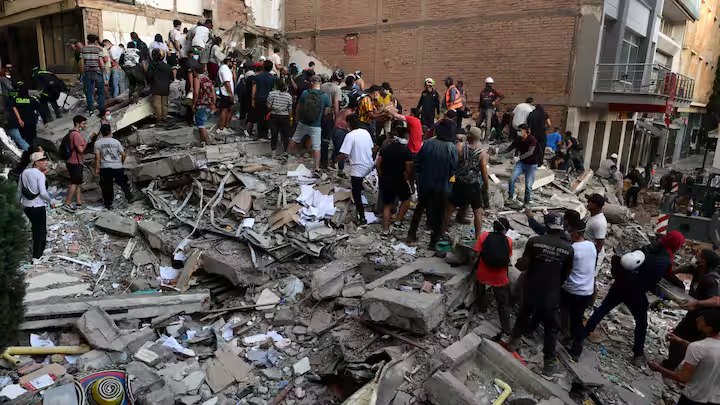
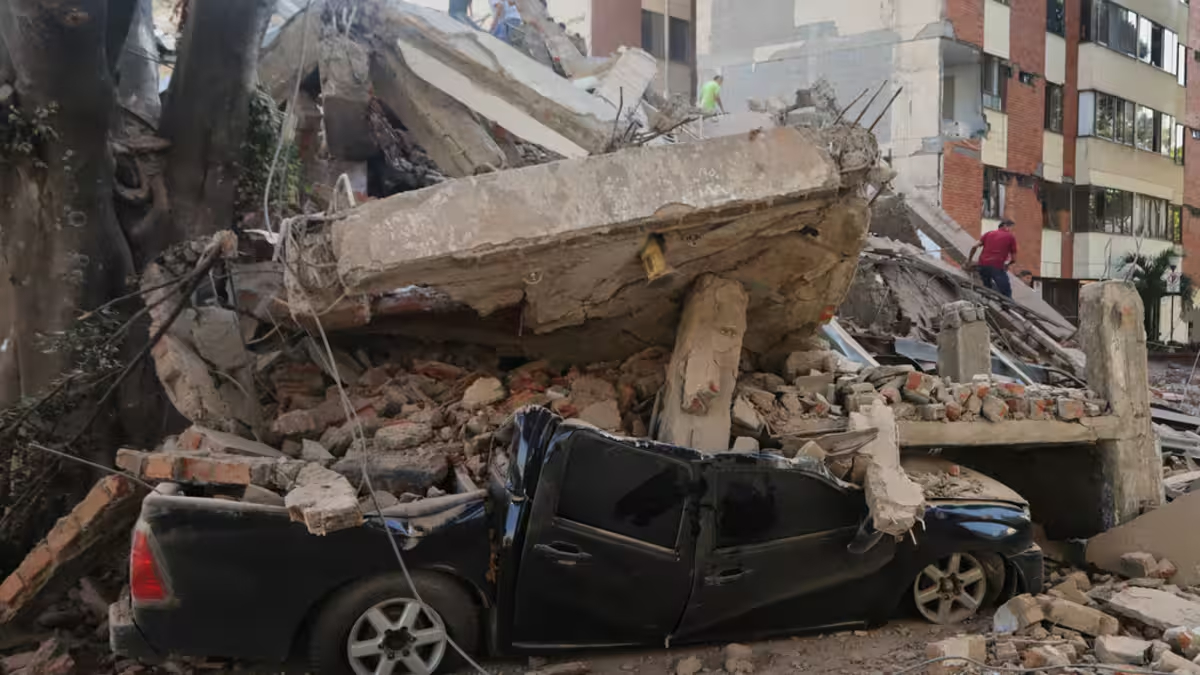
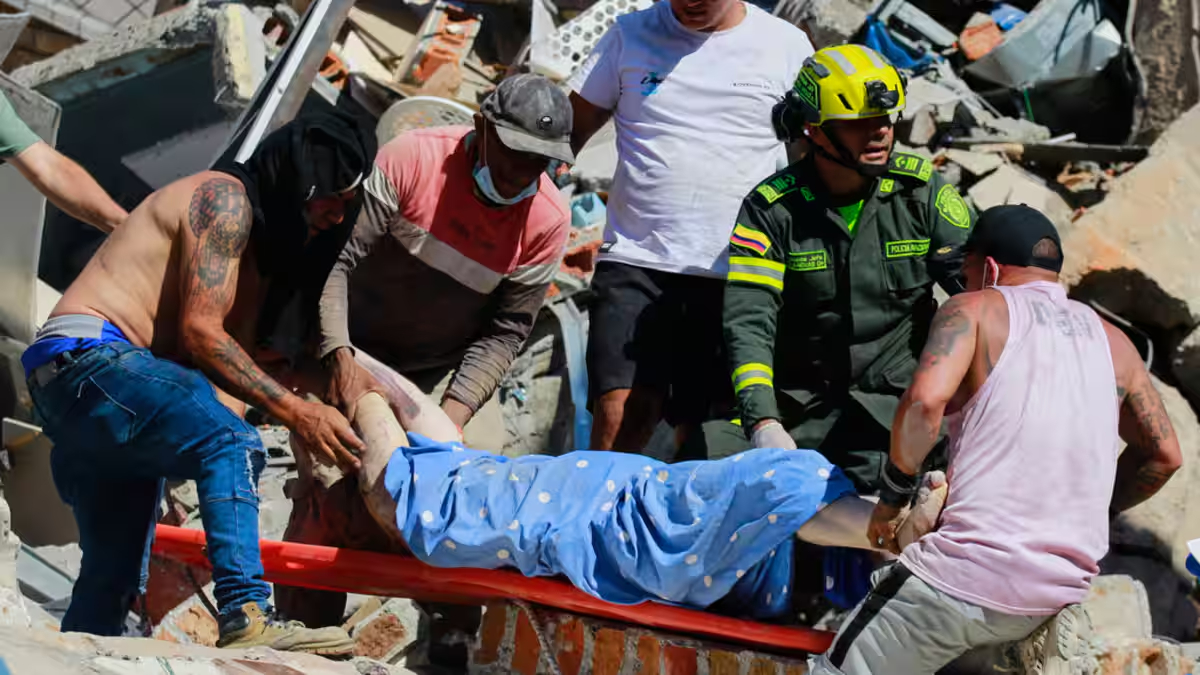
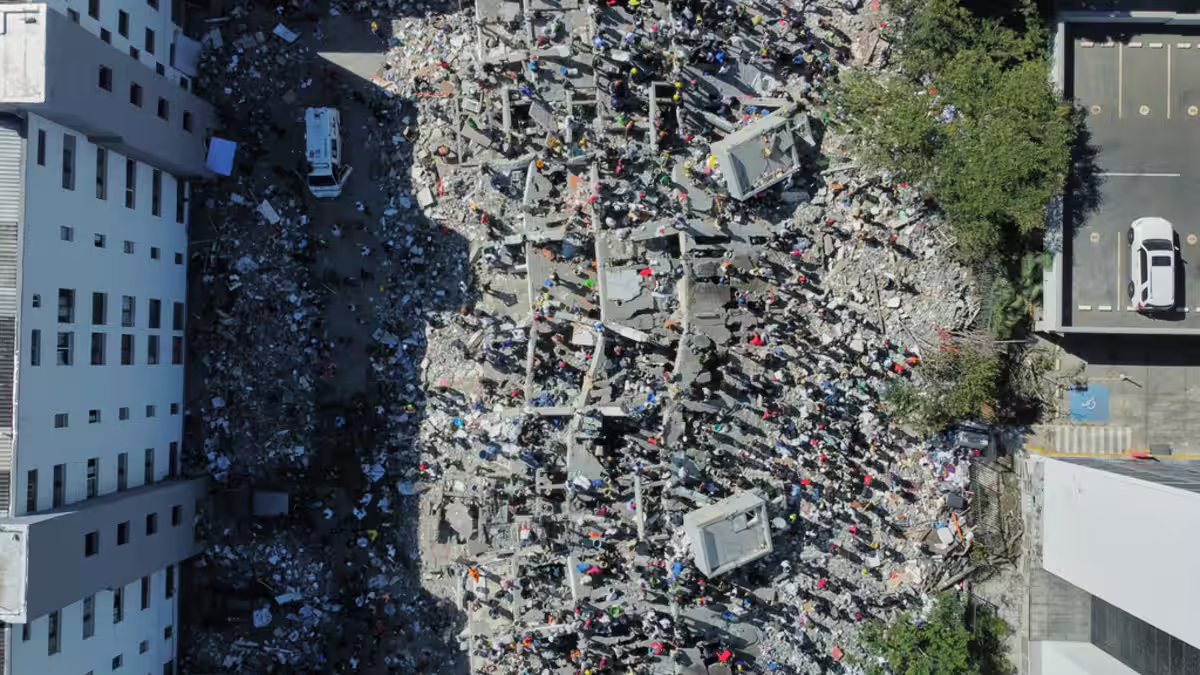
The human toll so far: over 130 dead, at least 87 injured, more than 60 buildings collapsed, and upwards of 1,600 homes damaged. Eighteen health centers, dozens of schools, community centers and roads were also hit. In Manizales, video circulating online showed part of the Metropolitan Cathedral Basilica, the country’s tallest cathedral, crumbling as the ground shook. In Cali, a man named Juan Carlos Osorio told local broadcaster Caracol that a nearby building “sounded like a bomb” going off before it came down.
Why a deep quake caused this much damage
Here’s the part that’s confused a lot of people, including some seismologists at first. A quake this deep, over 100 kilometers down, isn’t supposed to shake this hard. Depth usually works in a region’s favor: the deeper the rupture, the more the shockwaves disperse before they reach the surface.
Suzan van der Lee, a seismologist at Northwestern University, told Reuters the quake’s size, its inland location and the way the fault moved likely combined to punch above what its depth alone would predict. “This one was far below the Earth’s crust, and in theory, it shouldn’t cause as much shaking,” she said. “At this magnitude, it did actually cause a lot of shaking.” For scale, she noted a 7.4 releases roughly 32 times the energy of a 6.4.
Scientific American spoke with geophysicist Diego Carrera-Cevallos, who pointed to local geology as the other half of the story: the worst damage clustered where soft, sediment-filled valleys amplify shaking, essentially acting like a bowl of jelly that keeps wobbling after the initial jolt has passed. Colombia’s Geological Service says the quake originated from stress building up inside the Nazca plate itself, rather than at the boundary where the Nazca and South American plates meet.
There’s also a structural engineering problem layered on top of the geology. Writing for The Conversation, a researcher who has spent years testing reinforced concrete built to Colombian standards explained that many buildings in the country use thin concrete walls, often just 7 to 10 centimeters thick, reinforced with a single layer of brittle wire mesh instead of properly hooped steel. That construction style resists gravity and wind loads fine. It was never built to survive a 7.4.
Not Colombia’s first brush with disaster this year
This earthquake lands just weeks after a pair of quakes, magnitude 7.2 and 7.5, struck neighboring Venezuela on June 24, killing more than 6,000 people. Those two ruptured barely 39 seconds apart and at depths of under 25 kilometers, shallow enough that the ground near the surface absorbed the full force almost twice over. Colombia’s quake, by contrast, was a single deeper event, which is part of why casualties, as devastating as they are, haven’t approached Venezuela’s scale.
Colombians have their own grim reference point too. In 1999, a magnitude 6.1 quake near Armenia in the coffee region killed more than 1,100 people, a disaster still cited by engineers as the reason building codes changed. Monday’s quake suggests those codes haven’t caught up everywhere.
The emergency response
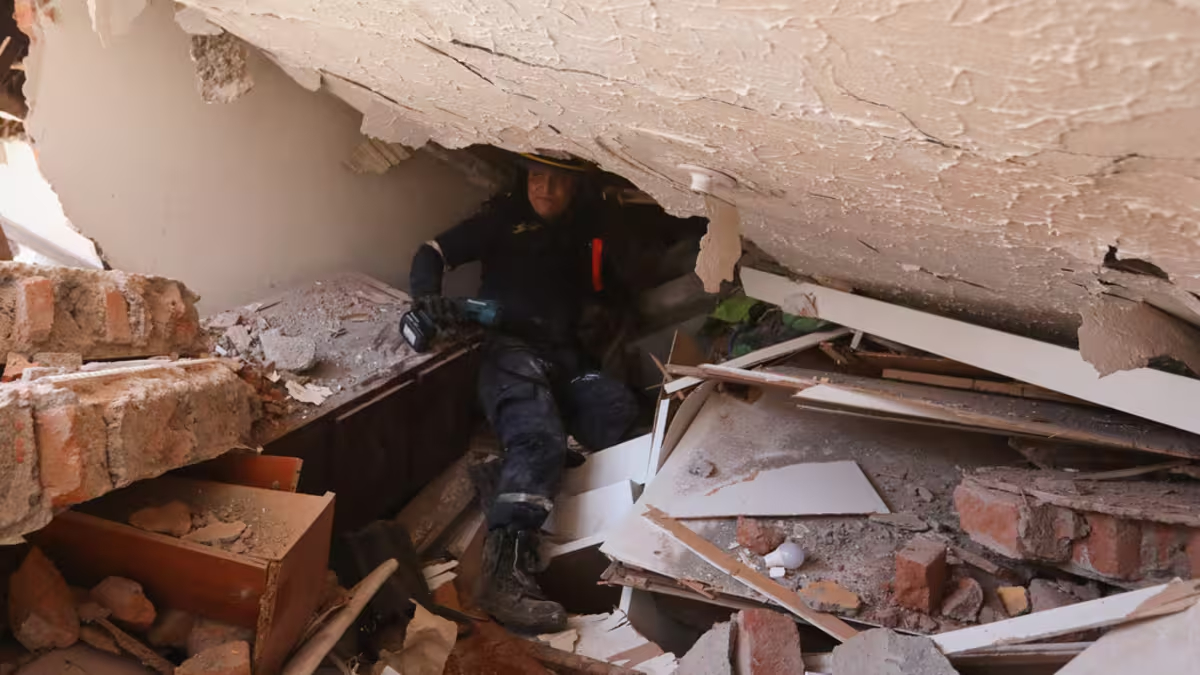
Colombia’s Civil Aviation Authority grounded flights at airports in Pereira, Manizales, Quibdó, Armenia, Cartago and Buenaventura while inspectors check runways and terminals for structural damage. In Cali and Manizales, search teams are working through rubble by hand in places, with residents forming human chains alongside professional rescuers to pull out neighbors and pass debris. Several people are still reported trapped.
President de la Espriella, only recently inaugurated, convened an emergency meeting with the national disaster risk agency, UNGRD, and addressed the country around 1 p.m. local time, saying “the national government has all of its capabilities deployed to protect lives, assist affected communities and deliver aid wherever it is needed.” The vice president is coordinating with the Foreign Ministry to bring in international support, and Israel’s foreign minister has already offered assistance.
For now, the numbers keep moving in one direction. Rescue crews are racing daylight and structural instability in equal measure, and officials have been blunt that the death toll isn’t final. Chocó, a region long overlooked even by its own government, is suddenly the center of the country’s attention, for the worst possible reason.
This is a developing story and figures on deaths, injuries and damage are expected to change as search and rescue operations continue.