Thursday, August 20, 2026, is set to bring a different atmosphere across parts of South West Nigeria, as communities prepare for a celebration that blends spirituality, tradition, identity and cultural heritage. For many people, the date may simply appear as another public holiday on the calendar, but for those connected to Yoruba traditional religion and indigenous culture, it carries a much deeper meaning.
Across south-west states, government announcements have already confirmed arrangements for the day, while Osun remains closely associated with the annual observance. Behind the official declarations, however, lies a much bigger story involving traditional rulers, worshippers, cultural groups, families, visitors and communities preparing to mark Ìṣẹ̀ṣe in their own distinct ways.
The Date Set for Isese Day 2026
Thursday, August 20, 2026, is the date for this year’s Ìṣẹ̀ṣe Day celebration, with the observance expected to be particularly visible across Lagos, Ogun, Oyo and communities with strong Yoruba traditional institutions. The day does not have the same federal holiday status as Christmas, Eid or Nigeria’s Independence Day, meaning that its recognition remains largely dependent on individual states and their respective decisions. That distinction is important because the declaration of a work free day in one state does not automatically make August 20 a public holiday across Nigeria. For millions of people connected to Yoruba culture, however, the significance of the date goes far beyond whether offices are open or closed, since the occasion provides an opportunity to reconnect with customs, traditional institutions, spirituality, history and values passed from one generation to another.
Lagos has placed particular emphasis on August 20, with Governor Babajide Sanwo Olu declaring Thursday, August 20, 2026, work free for public servants, political appointees and relevant state workers. The declaration was communicated through a circular signed by the Head of Service, Bode Agoro, giving the state’s public service a formal arrangement for the celebration. Ogun has also confirmed August 20 as a public holiday, while Oyo has declared the same date a work free day to enable residents and practitioners of traditional religion to participate in the observance. Osun has historically recognised the occasion as well, although the clearest current 2026 confirmations available from the supplied reports concern Lagos, Ogun and Oyo, making it important to distinguish long standing recognition from a newly issued state circular.
What Ìṣẹ̀ṣe Really Means
Ìṣẹ̀ṣe is commonly associated with Yoruba traditional religion, but the word itself carries a broader meaning connected to tradition, custom, inherited practices and established ways of life. The concept reaches into areas such as beliefs, values, ceremonies, language, community structures, ancestral knowledge, traditional authority and cultural identity. That wider meaning explains why government officials in Lagos have increasingly presented the celebration as more than a religious gathering. The state’s current messaging places emphasis on culture, heritage, values and the future, creating a wider framework through which the celebration can be understood by residents who may not personally practise Yoruba traditional religion.
For practitioners, however, the spiritual dimension remains central and should not be overlooked. Ìṣẹ̀ṣe provides an opportunity for people to honour Òrìṣà, ancestors and traditional spiritual authorities while observing customs that have been preserved within families, communities and religious lineages. The specific practices can differ considerably from one community to another because Yoruba traditional religion does not operate as a single ceremony with identical instructions everywhere. Different communities have their own histories, spiritual authorities, traditions and forms of observance, which means that what happens in one location may look different from what takes place somewhere else.
Why August 20 Matters
The significance of August 20 has grown through years of state level recognition, particularly across the South West. Osun was among the states historically associated with official recognition of Ìṣẹ̀ṣe Day, while Lagos, Ogun and Oyo later developed formal arrangements around the date. Ogun’s House of Assembly formally recognised August 20 in 2023, after which Governor Dapo Abiodun approved the arrangement. Lagos has also observed August 20 as a work free day since 2023 following a request from the Lagos State Council of Obas and Chiefs, giving the celebration a stronger institutional presence within the state.
That history helps explain why the 2026 celebration is attracting considerable attention. The date is no longer simply observed within individual religious communities without wider public acknowledgement. Government announcements, traditional institutions, cultural organisations and community programmes have increasingly brought the occasion into mainstream public discussion. The result is a celebration that now operates on several levels at once, with official state recognition sitting alongside religious observances, community festivals, cultural exhibitions and traditional gatherings.
States Confirmed for 2026
Lagos is one of the clearest states to have confirmed its 2026 arrangement, with the state government declaring Thursday, August 20, work free for public servants and relevant government workers. The decision comes alongside a broader state backed programme designed to present Ìṣẹ̀ṣe as an important part of Yoruba cultural heritage. Traditional institutions, cultural organisations and practitioners are expected to feature prominently in activities taking place across the state, while communities are also preparing their own programmes around the occasion.
Ogun has also confirmed August 20 as a public holiday, with the state describing the decision as part of efforts to preserve Yoruba culture, heritage and traditional values. The state has specifically connected the observance with the opportunity for practitioners to honour ancestors, observe traditional rites and promote spiritual and cultural values. Oyo has equally declared Thursday, August 20, a work free day, allowing residents and traditional religion practitioners to participate in the celebration. These 3 states currently provide the clearest confirmed examples of state level recognition for the 2026 observance based on the information available.
Osun remains an important part of the story because of its long association with Ìṣẹ̀ṣe recognition, although caution is required when describing its 2026 arrangement. Existing holiday calendars and previous official recognition point to August 20 as an established observance in the state, but the strongest current information supplied does not provide a fresh 2026 government circular as clear as those available for Lagos, Ogun and Oyo. Ondo and Ekiti are also not currently among the states with the same established August 20 work free arrangement, despite repeated calls from traditionalists for broader recognition across the South West and neighbouring areas.
Lagos Prepares for a Major Gathering
Lagos is arguably where the scale of this year’s celebration becomes most noticeable. The state government has said that more than 3 million traditional worshippers are expected to participate in the 2026 celebration. The figure was given by the Special Adviser to the Lagos State Governor on Tourism, Arts and Culture, Idris Aregbe, and reported by major Nigerian media organisations including Channels Television and Vanguard. The number should be treated as an official expectation rather than an independently verified attendance figure, but it nevertheless demonstrates the scale Lagos officials believe the celebration could reach.
Such a gathering would place Ìṣẹ̀ṣe among the most significant traditional religious and cultural events taking place in the state during the year. Lagos has the population, traditional institutions, cultural organisations and international visibility to turn a state celebration into an event watched well beyond Nigeria. That is also why officials have been careful to connect the occasion with the wider story of Yoruba heritage, rather than presenting August 20 simply as a local religious gathering.
The Global Yoruba Connection
Lagos has also highlighted the connection between Ìṣẹ̀ṣe and Yoruba descended communities outside Nigeria, particularly in places such as Cuba, Brazil, Trinidad and Tobago and the wider Caribbean. Centuries after the transatlantic slave trade scattered millions of Africans across different parts of the world, elements of Yoruba spirituality, language, music, ritual practice and cultural memory survived within communities outside Africa. Some of those traditions later developed into distinct religious and cultural systems while retaining recognisable Yoruba influences.
That global connection gives the 2026 celebration another layer of significance. Lagos is attempting to present Ìṣẹ̀ṣe as part of a cultural heritage story that stretches from Nigeria into the African diaspora. The celebration therefore has relevance not only for people physically attending events in Lagos but also for people interested in the survival, transformation and preservation of African traditions across generations and continents.
What Nigerians Can Expect on August 20
Traditional prayers are expected to form part of several Ìṣẹ̀ṣe Day programmes, although the exact format will depend on the community and religious tradition involved. Babaláwo, Ìyánífá, priests, priestesses and other custodians of traditional knowledge may take part in prayers and spiritual observances focused on themes such as peace, prosperity, protection, wellbeing and the future. These activities are not necessarily identical from one location to another because individual communities maintain different traditions and relationships with particular Òrìṣà and ancestral practices.
Rituals and offerings may also form part of some observances, particularly among communities where specific rites are traditionally carried out during important spiritual occasions. Such practices can be connected to particular Òrìṣà, ancestors, families, communities or religious lineages, meaning there is no single ritual that can accurately be described as the universal Ìṣẹ̀ṣe Day ceremony. Community leaders and religious custodians determine what is appropriate according to their own traditions, which is why the celebration can take different forms while still being connected to the same broader cultural occasion.

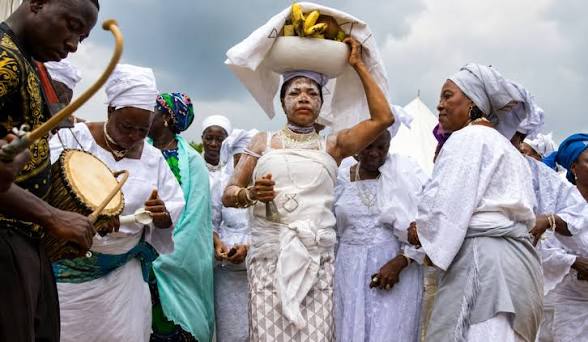
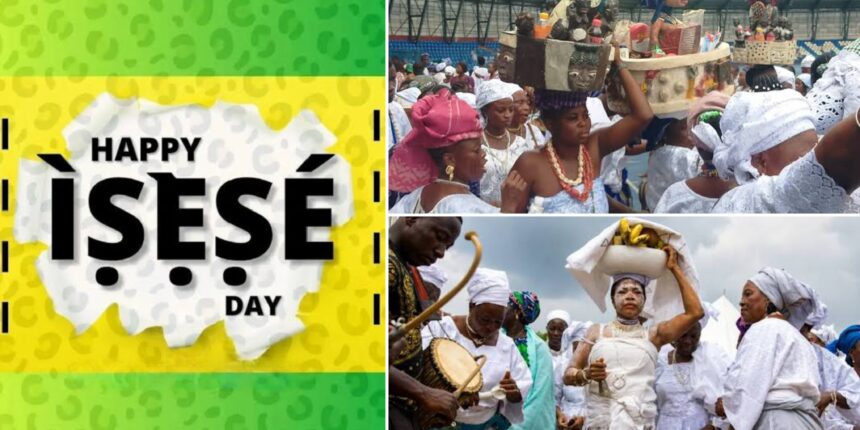
Drumming, singing, chanting and dancing are also expected to feature prominently, particularly at public cultural gatherings and community festivals. Indigenous percussion instruments, including bàtá drums, can provide the rhythm for processions and performances, while traditional clothing is likely to make the occasion visually distinctive. Beads, headgear, white garments and other forms of Yoruba attire may appear across different events, creating a strong display of cultural identity alongside the religious observances taking place.
Traditional Rulers Take Centre Stage
Traditional rulers and chiefs are expected to play visible roles during many of the celebrations, particularly because Ìṣẹ̀ṣe is closely connected to traditional institutions and community authority. Obas, chiefs and other custodians of indigenous heritage often serve as important links between historical traditions and contemporary communities. Their participation gives the occasion a formal cultural dimension while also reinforcing the relationship between traditional institutions, religious practitioners and younger generations.
Community participation is equally important because Ìṣẹ̀ṣe is not limited to official government programmes. Families, cultural associations, religious groups, traditional practitioners and local organisers may arrange their own gatherings, ceremonies and performances. That grassroots element is one reason the experience of August 20 could vary significantly from one neighbourhood to another, even within the same state.
Lagos Celebration Goes Beyond One Day
August 20 represents the main date, but activities surrounding the Lagos celebration have already been taking place before the actual observance. Reports indicate that the state programme is designed to culminate a full week of traditional activities, bringing together cultural leaders, traditional institutions, practitioners and other stakeholders. The Lagos State Council for Arts and Culture and the Association of African Traditional Religion Nigeria and Overseas, known as AATREN, have also been involved in preparatory activities leading up to the main celebration.
One seminar held in Alimosho focused on the theme “The Role of Nigeria in World Culture Development,” bringing traditional rulers, cultural leaders and stakeholders in African Traditional Religion into the conversation. The programme reflects the wider direction of the 2026 celebration, where cultural preservation is being discussed alongside traditional religious practice, heritage development and Nigeria’s position within global conversations about African culture.
A Community Programme in Orile Alagbado
Community level programmes are also providing a clearer picture of what residents can expect on the ground. Orile Alagbado Kingdom in Lagos has announced an Ìṣẹ̀ṣe Day Festival scheduled for 10 a.m. on Thursday, August 20, at Taiwo Yusuf Roundabout Junction. The programme is expected to bring together traditional rulers, chiefs, priests, cultural groups, residents and visitors for a mixture of rites, prayers, music, drumming, dancing and thanksgiving.
That type of local celebration shows why the experience of Ìṣẹ̀ṣe Day cannot be reduced to a single central event. Across communities, organisers can create programmes that reflect their own traditions, histories and cultural identities. A visitor attending a community festival may therefore encounter a different atmosphere from someone attending a formal state programme, even though both gatherings are connected to the same August 20 observance.
Culture Takes a Bigger Role in 2026
Lagos has made a deliberate effort to broaden the public understanding of Ìṣẹ̀ṣe this year. Government messaging has encouraged residents to look beyond the assumption that the celebration is exclusively about religious rituals. Officials have described Ìṣẹ̀ṣe through the connected ideas of culture, heritage, values and the future, presenting the celebration as part of a wider conversation about Yoruba identity and cultural preservation.
The approach also recognises the diversity of Lagos itself. The state’s 5 IBILE divisions, Ikeja, Badagry, Ikorodu, Lagos Island and Epe, each have distinctive historical and cultural identities. Encouraging residents across those areas to participate allows the celebration to move beyond a single location and become a broader cultural experience. Traditional music, clothing, storytelling, indigenous knowledge and community history can therefore sit alongside religious observances during the period.
The Spiritual Side Remains Central
The cultural framing does not remove the religious significance of Ìṣẹ̀ṣe Day for practitioners. For followers of Yoruba traditional religion, the occasion remains a time for spiritual observance, prayers, traditional rites, respect for ancestors and engagement with Òrìṣà traditions. Treating the celebration purely as a cultural festival would therefore leave out an important part of what August 20 means to the people who practise the religion.
Ogun’s official description of the occasion similarly connects the celebration with honouring ancestors and observing traditional rites. That dual character is one of the defining features of Ìṣẹ̀ṣe Day in contemporary Nigeria. Cultural participation can bring together a much wider audience, while religious observance remains deeply meaningful to practitioners who see the day through a spiritual lens.
The Push for National Recognition
The growing visibility of Ìṣẹ̀ṣe Day has also renewed calls for federal recognition. Traditional religion representatives have repeatedly asked President Bola Ahmed Tinubu to recognise August 20 and August 21 as national public holidays, arguing that indigenous religion and cultural heritage deserve formal recognition at the national level. The International Council for Ifa Religion has been among the groups calling for greater recognition and government support for traditional religious communities.
Those demands extend beyond the question of public holidays. Representatives have also called for stronger support for cultural festivals, traditional institutions, sacred sites, shrines and heritage locations, alongside greater representation of practitioners within cultural bodies. Governors in states including Ekiti, Ondo, Kwara, Kogi, Edo and Delta have also been urged to consider recognising August 20.
No current information supplied for the 2026 celebration indicates that August 20 and August 21 have become national public holidays. That means the existing system remains state based, with recognition varying from one part of the country to another. The distinction is especially important for workers and residents because a declaration by Lagos, Ogun or Oyo does not automatically create a nationwide holiday.
What the Holiday Means for Residents
For residents of Lagos, Ogun and Oyo, the most immediate practical difference will be the work free arrangements announced by their respective state governments. Public servants and relevant government workers can expect official observance of the day, while private businesses and organisations may operate according to their own schedules. People planning to attend large events should also pay attention to local announcements because gatherings, processions and festivals can affect movement around specific communities.
Traffic is another practical issue that could emerge around major celebration venues. Large gatherings involving traditional worshippers, cultural groups, traditional rulers and visitors can place pressure on roads and public transport routes, particularly where processions are scheduled. Lagos communities hosting large programmes may experience periods of heavier movement, making early planning useful for residents who need to travel through celebration areas.
Social media is also expected to play a major role in the visibility of the celebration. Photographs of traditional clothing, videos of drumming and dancing, interviews with traditional rulers, cultural performances and footage from community gatherings are likely to circulate widely. With Lagos positioning the occasion as a global heritage celebration, the online audience could extend well beyond Nigeria, particularly among Yoruba communities and African diaspora groups interested in indigenous heritage.
What Makes 2026 Different
The 2026 observance stands out because of the combination of state recognition, large attendance expectations, cultural programming and international heritage messaging surrounding the date. Lagos is not simply announcing a work free day and leaving communities to organise privately. The state has built a broader programme around the celebration, linked it to cultural development and highlighted the historical relationship between Yoruba traditions in Nigeria and communities across the African diaspora.
The expectation of more than 3 million participants also gives the 2026 celebration an unusual scale. Whether the final turnout reaches that figure cannot be determined in advance, but the official projection illustrates the level of attention being placed on the event. Large traditional gatherings, community programmes and state backed cultural activities could make August 20 one of the most visible Ìṣẹ̀ṣe celebrations in recent years.
The Story Behind the Celebration
At its heart, Ìṣẹ̀ṣe Day is about the preservation of traditions that have survived generations. Yoruba communities have maintained systems of knowledge covering spirituality, family, language, music, storytelling, traditional authority, festivals and relationships with the natural and spiritual world. Some of those practices have changed with time, while others remain closely connected to older forms of community life.

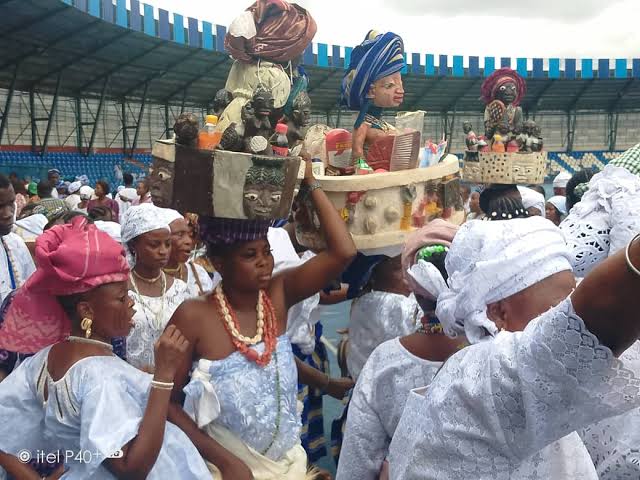
August 20 provides a public moment for those traditions to be brought into view. Older generations can participate alongside younger people, cultural custodians can pass knowledge forward, traditional institutions can take a visible role, and practitioners can observe their faith openly. That combination makes the day significant even beyond the official holiday declarations because it creates a space where inherited culture can be publicly expressed.
What to Watch on August 20
The scale of activities in Lagos will be one of the major things to watch as the celebration unfolds. The state’s expectation of more than 3 million participants places considerable attention on the various venues, communities and programmes taking place across the state. Traditional rulers, religious practitioners, cultural organisations and residents will all contribute to the atmosphere, while community events such as the Orile Alagbado festival will provide a more local view of the celebration.
Another important point to watch is how widely other states participate despite the absence of formal work free arrangements. Ondo and Ekiti, for example, remain part of the wider conversation about recognition, while traditionalists have also called for broader adoption in states such as Kwara, Kogi, Edo and Delta. The level of participation outside the officially recognised states could therefore add another dimension to this year’s observance.
The federal recognition debate will also remain part of the wider conversation surrounding the celebration. The calls for August 20 and August 21 to receive national holiday status have not resulted in a nationwide declaration for 2026 based on the current information available. That leaves Ìṣẹ̀ṣe Day operating within a state based system while traditional religion representatives continue to push for a broader national framework.
What Nigerians Should Remember
Ìṣẹ̀ṣe Day 2026 falls on Thursday, August 20, and the strongest confirmed state arrangements are currently from Lagos, Ogun and Oyo, with Osun remaining historically associated with the observance. Lagos has declared the day work free for relevant public workers, while Ogun and Oyo have also announced public holiday arrangements. The celebration itself will not look exactly the same everywhere because communities and practitioners maintain different traditions, meaning visitors can encounter prayers, rites, processions, drumming, dancing, cultural performances and traditional gatherings in different combinations.
The day also represents a meeting point between religion and culture. For practitioners, the spiritual meaning remains important, while the wider public can engage with indigenous clothing, music, language, history, heritage and traditional institutions. Lagos’ decision to promote the celebration through the broader themes of culture, heritage, values and the future reflects that wider understanding without removing the religious foundation that remains central to many participants.
The Bigger Picture for Isese Day 2026
August 20, 2026, therefore arrives with more than a holiday declaration attached to it. The date carries questions about cultural preservation, religious practice, traditional institutions, tourism, heritage, identity and the place of indigenous traditions in modern Nigeria. Lagos’ global heritage framing, the expected participation of more than 3 million traditional worshippers, the confirmed arrangements in Lagos, Ogun and Oyo, the continuing association of Osun with the celebration and the calls for national recognition have all helped push Ìṣẹ̀ṣe further into the national conversation.
What happens across communities on Thursday will ultimately provide the clearest picture of the celebration itself. Some people will approach the day through prayer and traditional rites, others through music, clothing, dance and cultural activities, while traditional rulers and community leaders will help give many gatherings their formal character. Across those different experiences, August 20 will remain tied to the same central idea of keeping inherited traditions visible and giving another generation an opportunity to encounter them.
For Lagos in particular, the day could become a defining moment for the state’s attempt to position Yoruba heritage on a much larger cultural stage. The planned activities, the expected turnout, the involvement of traditional institutions and the connection to Yoruba communities across the world all point towards an observance designed to attract attention beyond the usual circles of traditional worshippers. Thursday, August 20, will show how that ambition translates into the streets, communities, traditional centres and cultural spaces where Ìṣẹ̀ṣe Day will actually be observed.
The significance of Ìṣẹ̀ṣe Day 2026 will therefore not be found simply in whether people stay away from work or attend a public celebration. Its deeper importance lies in the visibility given to a living tradition that continues to exist within families, religious communities, traditional institutions and cultural organisations. As Lagos, Ogun and Oyo prepare for the day, as Osun remains connected to its established recognition, and as traditionalists continue their wider campaign for national recognition, August 20 stands as a date where spirituality, heritage and identity meet in full public view.