For more than 3 decades, the name MKO Abiola has remained tied to one of the most consequential chapters in Nigeria’s political history. His name carries the memory of an election that changed the country’s democratic conversation, a mandate that was never allowed to reach its expected conclusion, years spent behind bars, and a death that continues to attract questions decades later. Now, that story is heading to Nigerian cinemas in a documentary that does not merely revisit Abiola’s political journey, but takes viewers back into the atmosphere surrounding the events that made June 12 such a powerful symbol of Nigeria’s democratic struggle.
With voices connected to the election, military rule, diplomacy, journalism, human rights and Abiola’s private life, the film brings together people whose experiences place them close to different parts of the story. Its arrival in cinemas also comes with renewed attention on the events of 1993, 1994, 1995, 1996, 1997 and 1998, particularly the final chapter of Abiola’s life, where questions surrounding what happened before his death remain part of the historical record.
The MKO Documentary Coming to Nigerian Cinemas
Titled MKO, the documentary runs for 108 minutes and is directed by Ose Oyamendan, with American documentary filmmaker Mark Jonathan Harris serving as producer. Rather than treating Abiola’s story as a simple political biography, the film follows the chain of events surrounding the June 12 presidential election, its annulment, the political crisis that followed, Abiola’s detention and the circumstances surrounding his death on July 7, 1998. The structure allows the story to move from the excitement and expectation surrounding the election into the uncertainty and repression that followed, eventually reaching one of the most closely examined moments in the final days of military rule. That approach gives the documentary a wider historical frame because Abiola’s story cannot be separated from the struggle that eventually helped shape Nigeria’s return to civilian government in 1999.
The documentary has already had its international debut, meaning Nigerian cinema audiences will not be seeing the film for the first time globally. Its world premiere took place at Sheffield DocFest in the United Kingdom on June 12, 2026, a date that carried particular significance because June 12 is now recognised in Nigeria as Democracy Day. The film was selected for the festival’s International Competition section, placing the story of Abiola’s political struggle before an international documentary audience before its expected Nigerian cinema release. That journey from an international festival to cinemas in Nigeria gives the documentary an unusual route back to the country whose history it examines, especially because the central events occurred more than 30 years ago but continue to shape conversations about elections, political authority and democratic legitimacy.
The Latest Cinema Release Date
The latest reported cinema release date is October 2, 2026, with the documentary expected to open across Nigerian cinemas on that date. Earlier announcements, however, gave October 1, 2026 as the release date, creating a small but important discrepancy around the final Nigerian cinema schedule. October 1 would have placed the release on Nigeria’s Independence Day, making the timing especially symbolic for a documentary centred on the country’s political history and democratic journey. The later October 2 date is the latest reported information available, so it is safer to describe October 2 as the latest announced date while acknowledging that earlier reports had stated October 1.

The difference between the 2 dates does not change the larger significance of the cinema release, but it is worth keeping the dates properly separated because audiences planning to see the documentary will need the final cinema schedule. The film had already completed its world premiere in Sheffield on June 12, 2026, so October represents its Nigerian theatrical stage rather than its first public screening anywhere. For Nigerian audiences, however, the cinema release remains the more important milestone because it brings a detailed examination of Abiola’s story closer to the people and places connected to the history being explored.
Where the Story Begins: June 12, 1993
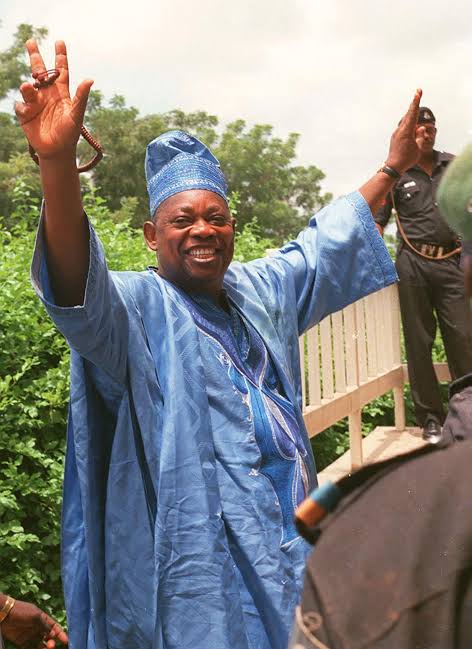
The story takes viewers back to June 12, 1993, when Nigerians went to the polls to elect a president during a period of military rule. Moshood Kashimawo Olawale Abiola contested the presidential election under the Social Democratic Party, with Baba Gana Kingibe as his running mate. The election became one of the defining political events in Nigeria’s modern history because Abiola was widely regarded as having won the vote, yet the process never reached the normal conclusion expected after a presidential election. The military government annulled the election before the final result could be officially declared, setting off a political crisis that would stretch far beyond the voting period.
For many Nigerians, the significance of June 12 was not simply about the candidate who won or lost an election, but about the belief that voters had made a choice and that the choice was subsequently denied. The annulment triggered protests and intensified opposition to military rule, while political activists, journalists and ordinary citizens became caught up in a wider struggle over the restoration of democratic government. Abiola gradually became more than a presidential candidate in this struggle, becoming a symbol of a mandate that supporters believed belonged to the Nigerian electorate. That transformation is central to understanding why his name remained so powerful even after the election itself had been cancelled.
The Annulment That Changed Nigeria’s Political Story
The decision to annul the June 12 election created a political crisis that could not easily be contained. The military government under Ibrahim Babangida had presided over the election, but the annulment left the country facing protests, uncertainty and growing demands for the restoration of the electoral mandate. Political repression followed, with activists and journalists operating under increasingly difficult conditions as the struggle against military rule intensified. The events of 1993 therefore became part of a much larger confrontation between democratic aspirations and military authority.
Abiola’s position also changed dramatically after the annulment. Rather than quietly accepting the cancellation, he continued to assert the legitimacy of the mandate he believed he had received from Nigerian voters. His decision placed him directly in conflict with the military establishment and eventually contributed to his detention. The documentary uses this period to establish how an election that lasted only a day could produce consequences that lasted for years, affecting political careers, families, activists, journalists and Nigeria’s international relationships.
Abiola’s Declaration of His Mandate
The confrontation reached another major point when Abiola declared his mandate and maintained that he had won the presidency Nigerians had voted for in 1993. His position was not treated as a routine political disagreement because the country remained under military rule and the authorities viewed the assertion of the June 12 mandate as a direct challenge to their authority. Abiola was eventually arrested and detained, beginning a period that would remove him from public life while keeping his name firmly at the centre of the democratic struggle.
His detention became one of the most painful chapters of the June 12 story because the man who had campaigned for the presidency was now separated from the political process he had attempted to lead. Years passed while the political situation around him continued to change, yet his detention remained a central reminder of the cost of challenging military authority during that period. The documentary revisits this chapter through people who experienced different aspects of the crisis, allowing the period of detention to be understood not simply as a political event but as part of a much larger human story.
The Years of Detention
Abiola spent years in military detention after insisting on his electoral mandate, and those years formed a crucial part of the political crisis surrounding June 12. His detention happened during a period when Nigeria faced intense political pressure, human rights concerns and international scrutiny. Activists and journalists continued to campaign against military rule, while diplomatic figures followed developments closely. Abiola’s detention therefore became connected to the broader international debate over Nigeria’s political situation.
The documentary brings several voices connected to this period into the story, including people who witnessed aspects of Abiola’s detention and others who were involved in the wider struggle. Theodore Zadok is among those featured, while Walter Carrington provides the perspective of a diplomat who served during the period. Human rights figures also contribute to the documentary, helping place Abiola’s detention within the larger question of political repression and the demand for democratic government.
The Political Figures Around June 12

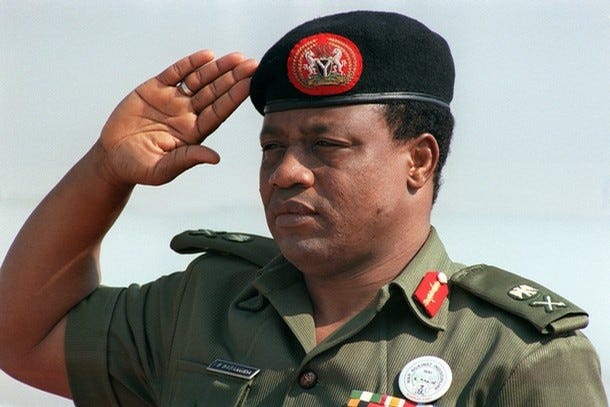
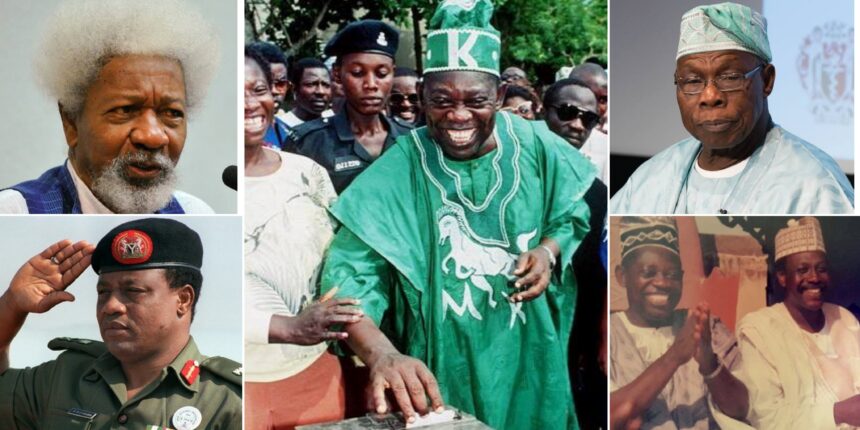
Ibrahim Babangida occupies an important place in the documentary because he was the military ruler whose government annulled the June 12 election. His role places him at the centre of the first major turning point in the story. Abdulsalami Abubakar is also featured because he became head of state during the final phase of military rule and was in power when Abiola died in 1998. Their positions connect different stages of the political crisis and help establish the sequence from the election annulment to the final period of military government.


Olusegun Obasanjo also appears among the featured figures, bringing another major political perspective to the documentary. His later role in Nigeria’s political history gives his account particular relevance to the transition from military rule to civilian government. Humphrey Nwosu, who was associated with the conduct of the 1993 election, also features, providing an electoral perspective on the events surrounding the vote. Baba Gana Kingibe, Abiola’s running mate, adds a direct political connection to the presidential ticket that contested the election.
Wole Soyinka’s Place in the Story
Wole Soyinka is another major figure featured in the documentary, bringing the perspective of a prominent pro democracy activist and writer who was closely associated with the struggle against military rule. Soyinka’s involvement in the political atmosphere surrounding June 12 places him within a wider network of voices that challenged repression and demanded democratic change. His contribution helps connect Abiola’s individual story with the broader campaign that developed after the election was annulled.


The inclusion of such voices is important because the June 12 crisis involved far more people than the candidate whose election was annulled. Activists, journalists, diplomats, human rights campaigners and political figures all became part of the story in different ways. Their experiences help show how the crisis moved from an electoral dispute into a national democratic struggle, with consequences that extended beyond Abiola himself.
The American Delegation Before Abiola’s Death
One of the most important moments revisited by the documentary is the meeting between Abiola and a United States delegation shortly before his death. Thomas Pickering led the delegation, and he is among the figures featured in the film. The meeting took place in July 1998, during a tense period in Nigeria’s political history and shortly after the death of military ruler Sani Abacha.
The meeting has remained significant because Abiola died on July 7, 1998, while meeting the American delegation. His death came only weeks before Nigeria eventually moved toward the end of military rule and a return to civilian government. The timing gave the event an extraordinary place in the country’s history, with Abiola dying at a moment when the political environment around him was changing rapidly.
July 7, 1998: The Death of MKO Abiola
Moshood Abiola died on July 7, 1998, after years of detention and political confrontation. His death came shortly after the death of Sani Abacha, who had ruled Nigeria during a significant portion of Abiola’s detention. Abiola had been expected to play a role in the political developments that followed the change in military leadership, making his sudden death particularly significant.
The circumstances surrounding his death have remained one of the most sensitive aspects of his story. The documentary examines competing accounts surrounding what happened during the meeting with the American delegation, including questions about the tea Abiola was served before he collapsed. Those questions have circulated for years, but the film does not present an established conclusion that Abiola was poisoned or murdered. Instead, the investigation revisits the accounts and circumstances that have continued to surround his death.
The Death Investigation Without a Simple Verdict
The documentary’s treatment of Abiola’s death is particularly important because it does not reduce a complicated historical question to an unproven conclusion. Questions about whether his death was natural, caused by another factor or connected to foul play have existed for decades, but suspicion and speculation are not the same as established proof. The film examines the competing accounts while allowing the circumstances to remain part of the historical investigation.
That distinction gives the death sequence a different weight from a conventional historical documentary. Rather than simply stating that Abiola died and moving on, the film returns to the people, circumstances and testimony surrounding his final hours. The result is a part of the story that invites viewers to examine what is known, what has been disputed and why questions about Abiola’s death have remained alive for so long.
The People Giving the Story Its Human Face
The documentary does not rely exclusively on political figures. Members of Abiola’s family are also featured, providing a personal dimension to a story that is often discussed mainly through elections, military governments and political crises. Their involvement allows the film to move beyond the public image of Abiola and into the experience of those who watched his political struggle, detention and death from a much more personal position.
Journalists connected to international publications such as The New York Times and Washington Post also feature, bringing the perspective of the international press coverage surrounding Nigeria during the June 12 crisis. Their accounts help place the events within the global attention that Nigeria received during the period. Adotei Akwei contributes a human rights perspective, while other participants help fill in different parts of the political and historical picture.
Ose Oyamendan’s Personal Connection to Abiola’s Story


For director Ose Oyamendan, the story is not distant history. He was a young journalist working with Weekend Concord, a newspaper owned by Abiola, during the June 12 crisis. That experience placed him close to the atmosphere surrounding the political events and gave him an understanding of the pressures affecting journalism and public discussion during the period.
His later work with international human rights organisations also gave him another perspective on political repression and democratic struggles. That background is reflected in the way the documentary approaches Abiola’s story, combining personal experience with historical investigation. Oyamendan is therefore not approaching June 12 simply as a filmmaker looking for an old political story, but as someone whose early professional life was connected to the period being examined.
More Than the Story of One Politician
Although the documentary carries Abiola’s name, its subject stretches beyond one politician. The June 12 election became a test of whether an electoral mandate could survive a military government’s decision to cancel it, while the years that followed showed the consequences of that confrontation. Abiola’s detention, the continued struggle for democracy and his eventual death became interconnected chapters in a national story.
That is why the film’s historical sequence matters. Starting with the election allows viewers to understand what Abiola was fighting to preserve, while the annulment explains why the political crisis began. His declaration of the mandate explains his arrest, his detention explains the significance of the later political developments, and his death brings the story into one of the most mysterious moments of the period.
Why June 12 Still Matters
June 12 remains one of the most important dates in Nigeria’s democratic history because it represents more than an election that was annulled. It became a symbol of the demand for political participation and the belief that votes should determine political leadership. The date also became associated with the sacrifices made by activists, journalists and ordinary citizens during the struggle that followed the annulment.
Nigeria eventually returned to civilian government in 1999, but the history of June 12 remained deeply embedded in the country’s political memory. The recognition of June 12 as Democracy Day further cemented its place in the national story. The fact that the documentary premiered internationally on June 12, 2026, adds another layer to its journey because the film returned to public attention on the same date that has become synonymous with Nigeria’s democratic struggle.
The Cinema Release Brings the Story Home
The Nigerian cinema release gives audiences an opportunity to encounter the June 12 story through a documentary format rather than through political speeches, newspaper archives or historical accounts alone. At 108 minutes, MKO has enough room to move through the election, annulment, detention and death while giving different participants space to explain their experiences.
The cinema setting also makes the release significant because the story belongs to Nigeria. The people whose lives were affected by June 12, whether directly or indirectly, form part of the audience that will now have an opportunity to revisit those events through the filmmakers’ work. For younger Nigerians who did not experience the political atmosphere of 1993 and 1998, the documentary provides a way of encountering that period through the testimony of people who were closer to it.
The Final Date Nigerians Should Watch
For now, October 2, 2026 is the latest reported date for the Nigerian cinema release of MKO. Earlier announcements had placed the release on October 1, 2026, which means the final cinema schedule should be checked closer to release before audiences make plans. The difference between the 2 dates is straightforward, but because the documentary has generated interest around its Nigerian theatrical debut, clarity over the final date will matter to viewers.
Regardless of whether the final schedule settles on October 1 or October 2, the documentary is already confirmed to have had its world premiere on June 12, 2026 at Sheffield DocFest. Its Nigerian cinema release therefore represents the next major stage in a project that has taken one of the most familiar names in Nigeria’s democratic history and placed his story within a detailed documentary investigation.
A Story Moving From 1993 to 2026
The distance between June 12, 1993 and October 2026 is more than 33 years, yet the story surrounding Abiola has never completely disappeared. The election remains part of Nigeria’s political memory, his detention remains associated with the struggle against military rule, and his death continues to attract questions about the final chapter of his life. The documentary brings those separate memories together into one narrative, allowing the events to be followed in sequence rather than remembered as disconnected moments.
That sequence begins with voters going to the polls in 1993 and ends decades later with audiences sitting in Nigerian cinemas to revisit what happened. Between those points are the annulment, protests, repression, Abiola’s declaration of his mandate, his arrest, years of detention, the death of Sani Abacha, the meeting with the American delegation and Abiola’s death on July 7, 1998. Each date adds another layer to a story that has remained unusually difficult for Nigeria to leave behind.
The Full Picture Behind MKO
MKO is therefore not simply another documentary about a famous Nigerian politician. Its story reaches into the heart of the country’s transition from military rule toward democratic government, using Abiola’s election, detention and death as the thread connecting several major moments in that history. The inclusion of political leaders, election officials, activists, diplomats, journalists, human rights figures and members of Abiola’s family gives the film several different entry points into the same historical period.
The unanswered questions surrounding Abiola’s death provide the investigative edge, but the documentary’s wider significance lies in the journey that led to that final chapter. The June 12 election of 1993, the annulment that followed, the struggle to restore the mandate, the years of detention and the political changes of 1998 all form part of the same chain of events. Seen together, they explain why Abiola remains such a powerful figure in Nigeria’s democratic history.
What Audiences Can Expect From the Cinema Release
Audiences going into MKO will encounter a 108 minute documentary built around historical testimony, personal accounts and the recollections of people connected to one of Nigeria’s most important political crises. The film revisits events that many Nigerians know through fragments, including the June 12 election, Abiola’s detention and the circumstances surrounding his death. By bringing those chapters together, it offers a single documentary journey through a period that transformed Nigeria’s political history.
The film does not need to manufacture a mystery around Abiola’s life because the history itself already contains enough unanswered questions. His election victory, its annulment, his decision to continue asserting his mandate, his years in detention and his death on July 7, 1998 have each generated lasting debate. MKO places those events back in sequence and gives viewers access to people whose lives and careers were connected to them.
The Date, The Film, The History
MKO is set to enter Nigerian cinemas in October 2026 after its June 12, 2026 world premiere at Sheffield DocFest. The latest reported Nigerian release date is October 2, 2026, although earlier announcements had stated October 1, meaning the final cinema schedule remains the date audiences should watch for. Directed by Ose Oyamendan and produced by Mark Jonathan Harris, the 108 minute documentary brings together a wide range of voices connected to Abiola and the June 12 crisis.


At the centre is a story that begins with a presidential election on June 12, 1993 and moves through annulment, political repression, detention and the death of the man whose name became inseparable from the struggle for the restoration of his mandate. Abiola died on July 7, 1998, but the questions surrounding his political journey did not end with his death. More than 28 years later, MKO brings those events back into focus, giving Nigerian cinema audiences the chance to revisit the election, the detention and the final days of one of the most consequential figures in the country’s democratic history.