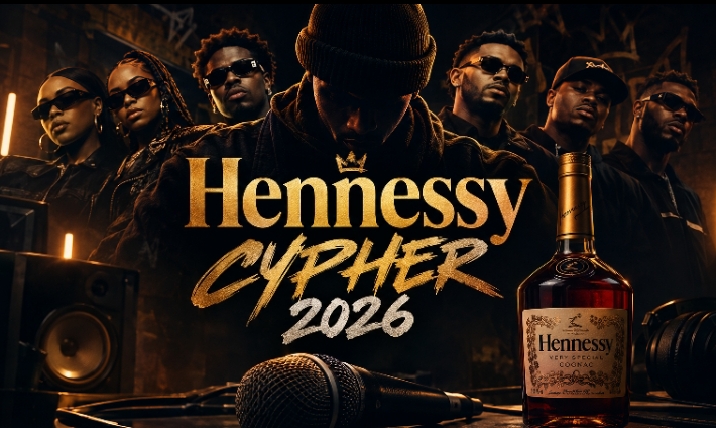
The beat is already out, the verses are beginning to land, and the clock is quietly moving toward the closing date. For rappers who have been waiting for a chance to put their pen, flow and personality in front of a major music platform, the Hennessy Cypher 2026 Open Verse Challenge has created a door that is still open, but not for much longer. The interesting part is that getting started does not require a complicated process, although knowing exactly where to find the beat, how to post an entry and which details matter could make the difference between simply joining the conversation and putting forward a serious submission.
The Hennessy Cypher has spent years connecting established African rap voices with new sounds, and the 2026 edition has taken that idea across several music scenes. This time, the official Cypher brings together ENNY, Fena Gitu, Kwesi Arthur, Suspect 95, Tenor and Yanga Chief, with Nigerian producer Sarz behind the production. Following the release of the Cypher on August 7, 2026, the beat was opened up for rappers who want to write their own verses and take their shot at the challenge.
That is where the opportunity becomes particularly interesting. There is a cash prize attached to the challenge, a clear deadline has been announced, and rappers are already putting their own interpretations of the instrumental forward. With September 18, 2026 set as the deadline, September 8 leaves roughly 10 days for anyone still considering an entry to make a decision, write, record and submit.
What Is the Hennessy Cypher 2026 Open Verse Challenge?
The Hennessy Cypher 2026 Open Verse Challenge is an opportunity built around the official Cypher instrumental produced by Sarz. Rather than leaving the released record as a finished collaboration between the selected artists, the campaign has opened the beat to other rappers who want to demonstrate what they can do with it. That gives upcoming artists a chance to work with the same production foundation and create their own verse around it.
The challenge is aimed at rappers who believe they can bring something distinctive to the instrumental. The idea is simple enough to understand without making the process complicated, because the rapper gets the challenge beat, writes a verse, records the performance and publishes the entry according to the campaign instructions. The opportunity therefore sits somewhere between a freestyle challenge and a structured brand backed rap competition, with the prize adding another reason for artists to take the submission seriously.
The 2026 campaign follows the wider Hennessy Cypher tradition of bringing African rap talent into one musical space. This year’s official project has an international character, with artists connected to the UK, Ghana, Kenya, Côte d’Ivoire, Cameroon and South Africa, while Sarz provides the Nigerian production connection. The Open Verse Challenge gives rappers outside that official lineup their own chance to interact with the same musical world.
When Was the 2026 Cypher Released?
The Hennessy Cypher 2026 was released on August 7, 2026, marking the arrival of the latest edition of the long running hip hop project. The release brought together ENNY, Fena Gitu, Kwesi Arthur, Suspect 95, Tenor and Yanga Chief over production from Sarz, creating a collaboration that crossed several African and international rap scenes.
The release date matters because the Open Verse Challenge should not be confused with the original Cypher recording. The official Cypher is already a completed project featuring its selected artists, while the challenge gives other rappers an opportunity to create their own verses using Sarz’s instrumental. Entering the challenge therefore does not mean entering a selection process to replace or join the artists already featured on the released Cypher.
For anyone discovering the opportunity now, that distinction is worth understanding before recording anything. The challenge is about taking the available beat and showing what you can do with it, rather than trying to recreate the original collaboration or present yourself as another member of the released lineup.
Who Produced the Hennessy Cypher Beat?

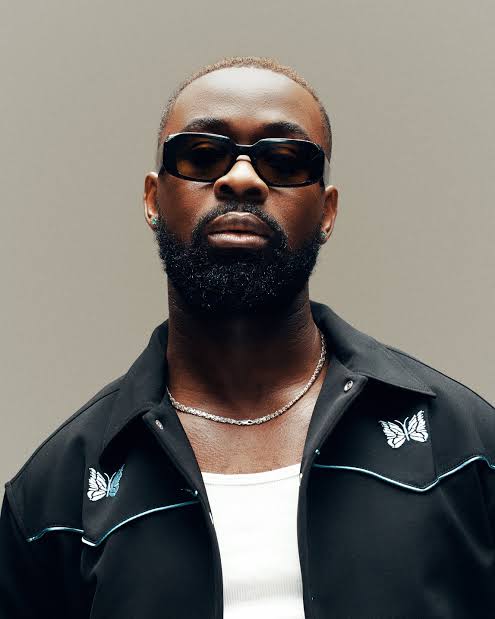
Sarz is the producer behind the Hennessy Cypher 2026 production, and his role becomes especially important for anyone planning to enter the Open Verse Challenge. The instrumental being used for the challenge comes from the same creative foundation behind the official Cypher, which means contestants are working with a production that has already been designed to accommodate different voices, flows and lyrical approaches.
For a rapper, the producer matters because a strong verse is not just about writing impressive lines on paper. The verse has to work with the rhythm, pockets, drums, bass movement and spaces within the instrumental. Sarz’s production gives contestants a musical structure to work with, but the rapper still has to decide where to enter, where to pause, where to accelerate and where to leave room for a line to hit properly.
That is why spending time with the instrumental before writing can be useful. Listening repeatedly can reveal small changes in the beat that might not be obvious during the first few plays. Those changes can become opportunities for a rapper to switch cadence, stretch a line, create a pause or land a punchline exactly where the production gives it room.
How to Get Sarz’s Hennessy Cypher Beat
The challenge instructions direct rappers to Sarz’s Instagram profile, where the beat can be accessed through the link in his bio. That route is important because contestants should work with the challenge instrumental supplied through the campaign rather than downloading an unrelated version from another music platform and assuming it is the correct file.
Once the beat has been obtained, the next step is to listen before rushing into writing. A rapper who immediately starts filling every available space may end up fighting the production instead of working with it. The instrumental should first become familiar enough that its rhythm feels natural, because that familiarity can make writing and recording much easier.
The beat should also be kept in its original structure when preparing the entry. Rather than treating the instrumental as a blank background, listen for its strongest moments and build around them. A memorable opening, a well timed pause or a flow change can make a verse feel connected to the production instead of sounding like lyrics that were written separately and forced onto the beat.
Who Can Enter the Rap Challenge?
The campaign is being promoted toward rappers and encourages them to step forward with their own verses. There is no publicly established requirement from the information currently available that an entrant must already have a record deal, major following or previous Hennessy Cypher appearance, which makes the opportunity particularly relevant to upcoming rappers who are looking for a platform to showcase their ability.
That means an artist does not need to arrive with a famous name before attempting the challenge. The focus is on the verse and the performance, giving an independent rapper an opportunity to present a piece of work without first needing to establish a major industry profile.
Specific eligibility details such as an official minimum age, nationality restriction or other formal requirements have not been clearly established from the currently available campaign information. For that reason, those details should not be invented or treated as confirmed rules. Anyone preparing an entry should follow the latest instructions attached to the campaign itself before submitting.
What Is the Cash Prize?
The Hennessy Cypher 2026 Open Verse Challenge carries a cash prize of ₦1,000,000 for the winning entry. That makes the campaign more than a simple social media freestyle exercise, because there is a defined financial reward attached to the competition.
The prize is certainly one of the biggest attractions, particularly for emerging rappers who are trying to turn their creativity into tangible opportunities. Still, the submission itself is where the real work happens. Having a prize available does not change the basic requirement that an entrant needs to produce a verse capable of standing out among other submissions.
The prize also explains why timing matters. With the deadline fixed for September 18, 2026, a rapper who waits until the final day may leave little room for mistakes, technical problems or a second recording. Getting started earlier creates room to rewrite weak lines, adjust the flow and record another take if the first version does not sound right.
When Is the Submission Deadline?
The submission deadline for the challenge is September 18, 2026. As of September 8, 2026, that leaves approximately 10 days before entries close, making the opportunity particularly time sensitive for rappers who have not yet submitted.
Those 10 days can disappear quickly when writing and recording are involved. A verse may sound good in a notebook but feel completely different once it is delivered over the instrumental. Recording can also expose timing problems, awkward phrases or lines that looked impressive on paper but do not sound natural when performed.
A sensible approach is therefore to avoid treating September 18 as the day to begin. The earlier the writing starts, the more time there is to listen to the beat, develop an idea, record multiple takes and make sure the final post follows the campaign instructions.
How to Enter the Hennessy Cypher 2026 Challenge
The entry process revolves around creating a performance using Sarz’s challenge beat and publishing it through social media with the required hashtags. The campaign information currently being promoted identifies #HennessyCypher2026 and #Hennessy as the key hashtags contestants should use when posting their entries.
The basic sequence is straightforward. First, obtain the challenge beat through the campaign route connected to Sarz’s Instagram bio. Next, write a verse that fits the instrumental rather than simply writing lyrics without considering the production. After that, record the performance carefully, check the sound and timing, then publish the entry with the required hashtags before the September 18 deadline.
The social media post should also make it easy for the performance itself to be heard or watched. There is little value in spending hours developing a verse and then uploading a recording where the beat overwhelms the vocals or background noise makes the words difficult to understand. The final post should present the rapper’s work as clearly as possible.
The Hashtags Every Entrant Should Know
The two hashtags currently being specified for the challenge are #HennessyCypher2026 and #Hennessy. Contestants should include the required hashtags when publishing their entries because they help connect individual submissions to the wider campaign.
Hashtags may look like a small detail compared with writing and recording, but they are part of the submission instructions being promoted. Leaving them out could make an entry harder to associate with the challenge, while using the required tags keeps the post connected to the campaign conversation.
The safest approach is to copy the hashtags exactly as promoted rather than creating alternative spellings or adding unnecessary variations. The key point is to make sure the final post contains #HennessyCypher2026 and #Hennessy before publishing.
Dremo, Dandizzy Join the Challenge
The Open Verse Challenge is already attracting known Nigerian rap names, with Dremo and Dandizzy among the rappers who have entered. Their involvement gives the challenge a more competitive feel because upcoming artists are no longer stepping into a completely unknown field where nobody has shown what they can do with the beat.
Their entries also give new contestants material to study, although studying should not turn into imitation. Listening to other rappers can help an entrant understand how the instrumental can be approached, but the strongest reason to participate is to show an individual identity rather than reproduce another artist’s cadence or style.
For a rapper preparing a submission now, the presence of Dremo and Dandizzy should be treated as motivation to sharpen the work. There is no advantage in trying to sound like either artist. The useful question is what you can bring to the beat that sounds unmistakably like you.
What Should a Rapper Say on the Beat?
There is no single subject that has to dominate an entry based on the campaign information currently available, which gives rappers room to choose an angle that fits their personality. That freedom can be useful because the verse can become more memorable when it is built around an actual idea rather than a collection of disconnected boasts.
A rapper could draw from personal experience, ambition, Nigerian life, music, relationships, struggle, success or the journey toward recognition. Local references can work well when they feel natural, particularly when they reveal where the rapper comes from without turning the verse into a forced collection of slang.
The biggest mistake would be writing a verse that could belong to almost anybody. Lines about being the best, taking over the game or defeating every opponent are familiar territory in rap. They can still work when written exceptionally well, but adding a personal angle gives the listener a clearer reason to remember the person behind the microphone.
Start With the Beat Before the Pen
The instrumental should come before the final lyrics. Play it repeatedly and listen for its rhythm, changes and open spaces. Once the structure becomes familiar, start experimenting with different flows using temporary words or sounds before settling on the actual verse.
That process can reveal where the natural pockets are. One section might suit a rapid delivery while another might work better with slower, heavier lines. A pause can also be more powerful than filling every second with words, especially when the next bar carries the punchline.
Writing directly against those musical details can make the final performance feel more natural. The goal is not simply to prove that you can write, but to show that you understand how your writing should move with Sarz’s production.
Build an Opening That Grabs Attention
The opening few bars deserve serious attention because they are the first impression of the performance. There is no need to spend valuable seconds introducing yourself with a long explanation of who you are or why you deserve to win. The verse should begin with confidence and immediately give the listener a reason to continue.
That opening could come through a striking image, a clever punchline, an unexpected statement or a line connected to a personal experience. The strongest choice depends on the rapper, but the principle remains the same: start with purpose rather than warming up for the verse.
A strong opening also establishes the rapper’s character. If the first bars immediately reveal a distinctive voice, the rest of the verse becomes easier to follow because the listener already has an idea of what makes that performer different.
Develop the Verse With Purpose
After the opening, the verse needs somewhere to go. Sixteen bars should not feel like sixteen unrelated lines placed beside one another. Even when the verse is heavily focused on punchlines, there should be some connection between the ideas so that the performance feels deliberate.
A rapper could begin with where they came from, move into what they have experienced and then turn that story into an expression of ambition. Another rapper could build the entire verse around wordplay and create a chain of connected punchlines. There is no requirement to use one particular formula, but the writing should feel like it has direction.
Flow changes can also help keep the performance alive. A change in cadence after several bars can make the listener pay attention again, especially when it arrives naturally with a change in the instrumental.
Make the Final Lines Count
The ending deserves as much attention as the beginning. A verse that starts strongly but finishes with ordinary lines can leave the listener remembering the weaker ending instead of the stronger opening.
The closing bars can bring the main idea together, deliver the biggest punchline or leave the listener with a memorable statement. There is no need to overcomplicate the ending. A clean final line delivered with confidence can be more effective than several extra bars added simply because the beat has not finished.
The final seconds should therefore be planned rather than left to chance. When the last line lands exactly where it should, the performance feels complete instead of sounding as though the rapper simply stopped when the instrumental ended.
Recording Quality Can Change the Whole Entry
A strong verse still needs a clean recording. An expensive studio is not necessarily required, but the listener should be able to hear the words clearly without fighting through excessive background noise, distortion or a beat that is louder than the vocal.
Timing is equally important. A rapper can have excellent lyrics and still lose impact if the delivery arrives late or early against the drums. Several takes can help identify those problems before the final version is posted.
The recording should also be listened to outside the environment where it was created. Headphones, a phone speaker and another ordinary listening setup can reveal different problems. If the vocal sounds clear across normal devices, the final entry is more likely to communicate the verse properly.
What the Challenge Is Not
The Open Verse Challenge should not be mistaken for a new selection process for the official Hennessy Cypher 2026 lineup. The official Cypher already exists and was released on August 7, 2026 with ENNY, Fena Gitu, Kwesi Arthur, Suspect 95, Tenor and Yanga Chief.
The challenge is a separate opportunity built around the Cypher instrumental. A rapper who submits a verse is participating in the Open Verse Challenge and competing for its stated prize, not automatically securing a place alongside the artists featured on the released record.
Understanding that distinction keeps expectations realistic and also helps entrants focus on the actual task. The goal is to make the strongest possible submission for the challenge rather than trying to present the entry as something it is not.
Why the Hennessy Cypher Platform Matters
The Hennessy Cypher has been running since 2011 and has become a recognised platform within African hip hop. Over the years, the project has featured rappers including Sarkodie, M.anifest, Ladipoe, Zlatan, Didi B, Octopizzo and Maglera Doe Boy, giving the platform a history that extends beyond the current challenge.
That history is relevant because a rapper entering the 2026 challenge is not simply attaching a verse to an unrelated promotional beat. The submission sits within a broader rap platform that has consistently connected artists from different African music scenes.
The current edition pushes that international character further, bringing together ENNY, Fena Gitu, Kwesi Arthur, Suspect 95, Tenor and Yanga Chief from different parts of the African and UK music landscape. Sarz’s production ties the project to Nigeria while the wider lineup creates a cross border rap setting.
The 2026 Cypher’s International Lineup
ENNY represents the UK and British Nigerian side of the lineup, while Kwesi Arthur brings Ghanaian rap into the project. Fena Gitu represents Kenya, Suspect 95 brings Côte d’Ivoire, Tenor represents Cameroon and Yanga Chief represents South Africa.
That combination gives the 2026 Cypher a broad regional identity rather than limiting the project to one country’s rap scene. Different accents, flows, references and musical approaches meet on the same production, which is part of what makes the Open Verse Challenge an interesting space for another rapper to contribute.
For Nigerian contestants, the opportunity is also a chance to show how a local rap identity can sit comfortably on a production connected to a pan African project. Nigerian references, delivery and wordplay can become strengths when they are used naturally and confidently.
A Simple Plan for the Remaining 10 Days
September 8, 2026 is not the day to panic, but it is also not the day to keep postponing the decision. With September 18 as the deadline, a rapper still has enough time to create a proper entry if the process begins immediately.
The first stage should focus on the beat and concept. Spend the first day listening repeatedly, testing flows and deciding what the verse should be about. The next stage should involve writing and rewriting, removing weak lines and keeping the strongest ideas.
Recording should come after the writing has settled. Multiple takes can then be compared, with attention given to pronunciation, timing, energy and vocal clarity. The final stage should involve checking the social media post, confirming the hashtags and making sure the submission is published before the deadline.
The Final Submission Checklist
Before posting, the rapper should have the official challenge beat obtained through the campaign route, a completed verse that fits the production and a recording where the vocals are clearly audible. The performance should also be checked from beginning to end so that there are no obvious timing problems, unwanted noises or sections where the rapper loses energy.
The post should include #HennessyCypher2026 and #Hennessy, while the submission should be made before September 18, 2026. These details are simple, but they should not be left until the final minutes when a technical issue could turn into a missed deadline.
There is also no reason to rush a weak verse simply because other rappers have already entered. Dremo and Dandizzy have shown that the challenge is active, but their participation does not remove the opportunity for another rapper to bring a different voice to the same instrumental.
Hennessy Cypher 2026 Challenge at a Glance
The Hennessy Cypher 2026 Open Verse Challenge is currently open to rappers who want to put their own verse on Sarz’s Cypher production. The official Cypher was released on August 7, 2026, while the challenge gives other artists a separate route to work with the instrumental.
The stated cash prize is ₦1,000,000, and the submission deadline is September 18, 2026. Entrants are directed toward Sarz’s Instagram bio to access the beat, while the campaign instructions currently specify #HennessyCypher2026 and #Hennessy for entries.
Dremo and Dandizzy have already entered, showing that the challenge is moving beyond announcement and into active participation. For anyone still considering a submission on September 8, the remaining time is enough to create something properly, but there is little reason to wait until the deadline approaches.
The Opportunity Is Still Open
The most important point for an interested rapper is simple: the window has not closed. September 18, 2026 remains the stated deadline, giving artists who have not entered a limited amount of time to make their move.
The challenge does not require an entrant to imitate the rappers already involved. It calls for a personal interpretation of the beat, which means the best use of the remaining days is to develop a verse that reflects the artist behind it. A Nigerian rapper can bring Nigerian experiences, another rapper can bring a completely different perspective, and both can work from the same production.
Sarz’s beat is already available through the campaign route, the hashtags have been specified, the cash prize is attached to the challenge and the deadline is approaching. What happens after that depends on the quality of the entries, but the first step is entirely within the rapper’s control: get the beat, write the verse, record it properly and submit before September 18, 2026.