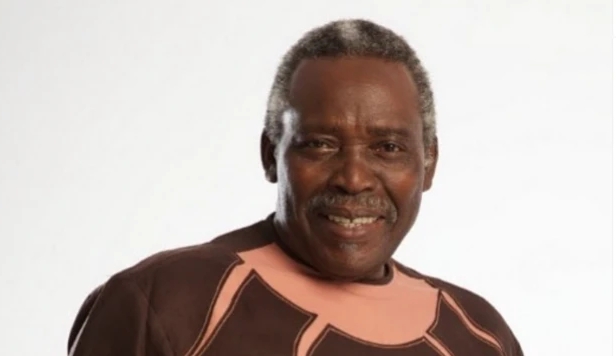
Nigerian veteran and widely respected actor, Olu Jacobs, has died. The prominent actor died on Wednesday at the age of 84, as announced by his family. Jacobs was not just another actor in Nigeria’s movie industry; he was a global icon whose style, panache and mastery of the profession led him to star in many British TV shows and feature films. He had an indelible impact on Nollywood as his entrance into the industry ushered in a period of renaissance, positive change and growth that earned him the appellation “the godfather of Nollywood”.
Born in Abeokuta, a town in South West Nigeria, as Oludotun Baiyewu Jacobs, he was one of the early Nigerian actors who developed an interest and passion for acting after an encounter with the undisputed father of theatre art in Nigeria, Chief Hubert Ogunde. After he attended one of Ogunde’s annual concert parties at Colonial Hotel in Kano in the 1970s, he decided to pursue a career in acting, and he subsequently travelled to England to study performing arts at the Royal Academy of Dramatic Art.
After he studied at the academy, he began his journey to make a name for himself in the acting world, especially British theatre, and it didn’t take long before he started starring in international films and acquired a reputation as a splendid and tremendous actor with an exceptional ability to interpret his roles in a remarkable manner that lived audience and viewers stunned and appreciative in equal measure. From historical epics, thrillers, and spy movies to contemporary comedies, his performances carried unparalleled discipline, grace, dignity and unflinching commitment to his profession.
In 1972, in what was one of his earliest stage roles, he played the character The Boy in “A Taste of Honey’ at the newly opened Crucible Theatre in Sheffield. He would go on to appear in various British television shows and series in the 1970s (including The Goodies, Till Death Us Do Part, Barlow at Large, The Venturers, Angels, 1990, The Tomorrow People and The Professionals). In 1978, he played the role of President Mageeba in Michael Codron’s presentation of Sir Tom Stoppard’s play Night and Day.
In the 1980s, Jacobs appeared in several international films, including John Irvin’s war film The Dogs of War, Roman Polanski’s adventure-comedy Pirates (1986) and the family-adventure film Baby: Secret of the Lost Legend (1985). On television, he was a cast member in TVS’s The Witches and the Grinnygog. In 1990, upon his return to Nigeria, he starred in the NTA detective series The Third Eye.
With his sterling and fine résumé as an actor in England, Olu Jacobs became a hugely influential and highly revered figure in the Nigerian movie industry when he returned to the West African country. He would go on to star in over 120 Nollywood movies, which included award-winning films like Dancing Heart (2006), Eyes of Gods (2004), Dry (2015), The Royal Hibiscus Hotel (2017), and Oloibiri (2016).
A career filled with laurels.
In 2011, the Nigerian government under former President Goodluck Jonathan awarded the national honour of Member of the Order of the Federal Republic (MFR) to Olu Jacobs. He was also honoured with the Industry Merit Award at the 2013 Africa Magic Viewers’ Choice Awards (AMVCA) and received Lifetime Achievement Awards from both the Africa Movie Academy Awards (AMAA) in 2016.
Olu Jacobs received the Africa International Film Festival (AFRIFF) in 2021, cementing his position as a true titan of African cinema.
Jacobs married fellow Nollywood actor Joke Silva in 1989. They have two children. They have three kids together. The couple founded and operate the Lufodo Group, a media corporation that consists of film production, distribution assets and the Lufodo Academy of Performing Arts.
In 2021, Rumours began to circulate on social media that Jacobs had passed away, but they were later debunked, and he was seen attending Afriff in November that year, where he was honoured with the Lifetime Achievement Award. His wife, Silva, later revealed in an interview with Chude Jideonwo that he is battling Lewy body dementia.