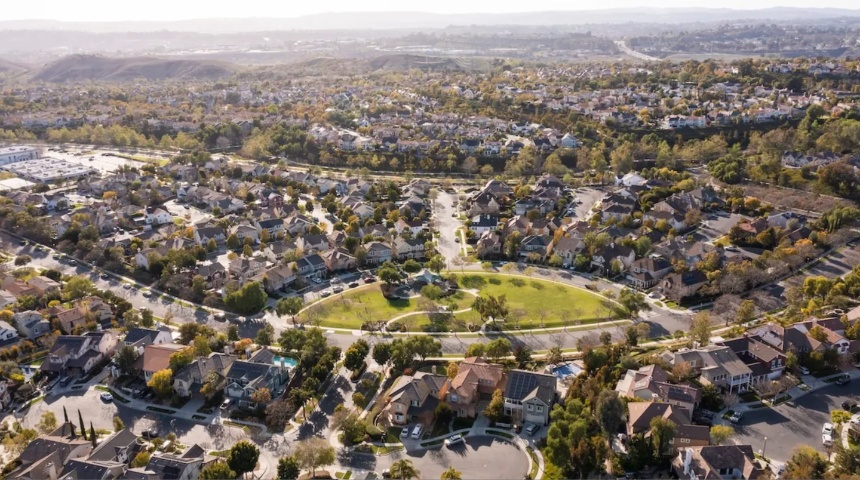
People move to Ladera Ranch for the parks and the quiet. This master-planned community in south Orange County has about 26,000 residents, and its lawns and open spaces span roughly 4,000 acres. Since spring, the Ladera Ranch cancer story has crowded out that reputation. At least six children in the area have been diagnosed with Ewing sarcoma, a rare bone cancer, and their families want to know why. As of September 21, 2026, nobody has given them an answer.
Ladera Ranch Cancer Cases: What Families Are Reporting
The public conversation shifted after Brody Matteson’s death. He was 17, and he died in March 2026 from complications of Ewing sarcoma treatment. In the weeks after, more families began speaking openly about rare cancer diagnoses in the community.
Brian Dalton is one of them. His daughter Lily, 23, spent much of her teenage years in Ladera Ranch and died in January of a rare cancer. Doctors told the family the tumor carried an Ewing sarcoma gene fusion.
The exact number of cases depends on who is counting. County supervisor Katrina Foley’s office refers to six children, and federal officials and local reporting use the same figure. KTLA has reported that around nine children have been diagnosed since 2007. Community advocates put the total higher, at roughly nine to twelve cases of Ewing and synovial sarcoma in and around Ladera Ranch, with at least six deaths. No health agency has confirmed that last figure. Some residents have also reported other cancers, including glioblastoma, though the state review has not established whether they are connected.
“Cluster” is the word most headlines use, but it is not an official finding. The state health department’s own page calls it a cancer “concern,” and that word choice says something about how much is still unproven.
Why Ewing Sarcoma Cases in Ladera Ranch Raised Alarm
Ewing sarcoma is uncommon. It affects only about 200 children nationwide each year and makes up roughly 1 percent of childhood cancers. It forms in bone or nearby soft tissue and mostly strikes adolescents and young adults. One summary puts the five-year relative survival rate at about 65 percent, better when it is caught early.
Against those numbers, a suburb of 26,000 people reporting several cases looks unusual, and that is the source of the alarm. Dr Janet Yoon, a pediatric oncologist and sarcoma specialist at City of Hope in Los Angeles, said the rarity makes the reports more worrying, and that she understands why further investigation is happening.
What Health Officials Have Found So Far
This is not the first look. In 2024, the county health agency asked the California Cancer Registry to check similar worries in Ladera Ranch, and the Registry found no discernible pattern at that time. The California Department of Public Health did its own county-level review that year. It found nothing unusual, but the agency admits the data available then was limited.
After residents pushed again, the county asked the Registry, the UCI Cancer Center and the Orange County Agricultural Commissioner to revisit the question. The state is running a second review, and it expects to finish in fall 2026, though the timeline could slip depending on scope and complexity. The state currently has two admissions. Officials say it is not yet known whether Ewing sarcoma and other cancers are occurring at higher than expected rates in Ladera Ranch. They also say that state environmental agencies have not identified any immediate environmental hazards.
Political pressure built quickly in July. Foley wrote to state health director Dr. Erica Pan, saying that Ladera Ranch families deserve answers, transparency and urgency from the state. First Assistant U.S. Attorney Bill Essayli asked the Environmental Protection Agency to investigate whether environmental factors are behind the cases and whether any federal environmental laws are implicated. In a rare bipartisan move, Democratic Congressman Mike Levin also asked the EPA to investigate. Republican Assemblymember Kate Sanchez formally asked Governor Gavin Newsom for a coordinated, state-led investigation.
The community also turned out in force. About 400 people packed a local middle school for a Ladera Civic Council meeting on July 21.
The Pesticide Question and the Landscaping Pause
Many parents suspect the herbicides and pesticides used on the community’s common areas. The evidence for that is thin, and the families say so themselves. Dustin Matteson, Brody’s father, has said there is no clear line of evidence pointing to pesticides, but it is one of the things that worries them.
The Ladera Ranch Maintenance Corporation (LARMAC), the master homeowners association, has responded in stages. Its July 21 factsheet announced a 60-day pause on routine use of certain weed-management and plant-growth products in the common areas it maintains. The pause first covered two herbicides, Lifeline and Atrimmec. Then residents reportedly caught crews using another product, Specticle G, and a landscape advisory committee asked to add it, which LARMAC agreed to. On August 27, LARMAC extended the pause from 60 to 120 days, through November 14. LARMAC’s own website lists Specticle and LifeLine as products in use, and they contain the active ingredients indaziflam and glufosinate-ammonium.
The pause has limits. It does not reach apartment communities, condominium associations, school property, retail centers or privately owned land, which each manage their own upkeep. The Capistrano Unified School District announced its own 60-day pesticide pause on August 5.
LARMAC says it has not applied herbicides or pesticides to parks, playgrounds, sports fields or school sites where children regularly play. Some residents don’t believe that. One told The Epoch Times she expects usage records to show otherwise. In a statement to People magazine, LARMAC said it knows of no determination by any agency that ties its landscaping practices to the illnesses, and that it has cut back on synthetic pesticides and moved to organic ones. Many residents want more than a pause. They are asking for a full pesticide ban and an independent study.
What Scientists Say About the Causes of Ewing Sarcoma
Researchers are cautious on this point. The American Cancer Society says it has not identified any lifestyle-related or environmental cause of Ewing sarcoma. Dr. Yoon said the same about genetic causes, adding that no confirmed genetic or environmental factor is known to raise the odds.
Logan Spector, an epidemiologist who studies Ewing sarcoma, told CBS Los Angeles that some childhood cancers have environmental causes, but Ewing sarcoma is not really one of them, and the strongest known risk factor is a child’s ancestry. The American Cancer Society does note that some studies have tied occupational or high-level exposure to certain pesticides to higher risk for several cancers, with results varying by chemical and cancer type. That is a different claim from linking pesticides to Ewing sarcoma.
Southwestern Pennsylvania went through something similar. Families there pointed to shale gas drilling after a newspaper investigation counted six Ewing cases in a single school district. Years later, no evidence still linked those cases to drilling. Small numbers are hard to interpret. A handful of cases can be a statistical accident or a real signal, and separating the two takes years.
The first physical evidence should arrive by year’s end. On September 14, researchers from Cal State Fullerton began collecting soil and water samples from local parks. Public health professor Jennifer Piazza leads the team, and they are testing the samples for heavy metals such as arsenic and lead, as well as pesticides. She expects results by the end of the year. She also warned that whatever turns up will not by itself show a cause for the children’s cancers.
What Parents Should Watch For
Dr. Yoon described the typical warning sign as pain that persists, wakes a child from sleep and limits daily activities. She called childhood cancer a “great masquerader” because growing pains and sports injuries are far more common. Her advice was to get a medical evaluation when pain lasts or gets worse, and to use a cancer center with sarcoma expertise if there is any doubt about the diagnosis. Parents anywhere can use that advice, not only those in Ladera Ranch.
Several deadlines are approaching. The state review is due in fall, the Fullerton lab results by year’s end, and LARMAC’s pause runs to mid-November while it develops a new integrated pest management policy. The advisory committee continues to push for an organic-first approach.
The honest summary is unsatisfying. A reported cluster is still unconfirmed, a suspected cause has no evidence behind it yet, and the investigations may end without a clear answer. The families know that, and they are asking for the work to be done anyway.