Someday, in the future, whether near or far, dispassionate and objective chroniclers of our checkered history, as a nation, would definitely record that a small band of unconscionable and perverse elements held the nation down for no explicable reasons. Even that perceived connivance by powerful forces makes the whole situation all the more unsettling and sordid. Power, or electricity, in this country has assumed a depraved dimension that is difficult to comprehend.
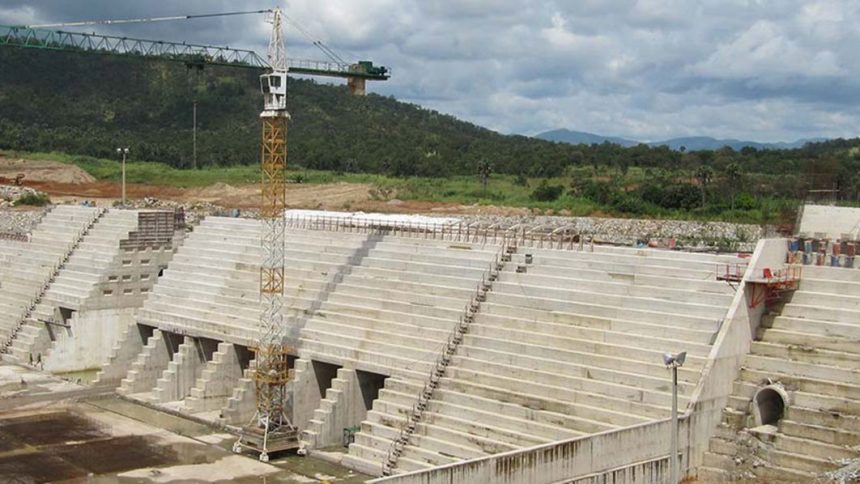
This devious handling and criminal mismanagement of the nation’s power infrastructure has led to chronic energy insecurity, which engendered the popular Mambilla power project litigation that has dragged on for years and almost plunged the nation into financial crisis. However, the long-running legal battle over the Mambilla hydropower project has finally come to an end with Nigeria emerging victorious. A ruling by the International Chamber of Commerce (ICC) tribunal in Paris on Thursday, September 17, handed Nigeria a victory in the case.
The ruling saved Nigeria from a massive payout in compensation for projects not executed, a scenario that would have further put a serious strain on the lean purse of the government. The tribunal ruled that Sunrise Power and Transmission Company’s claims against the federal government lacked merit. The company had demanded $680 million in a settlement dispute, tied to a separate arbitration where it is seeking over $2.7 billion in compensation for the abandoned 3,960-megawatt Mambilla project in Taraba State.
The panel also went a step further with its punitive ruling. It ordered Sunrise and its promoter, Leno Adesanya, to personally refund most of Nigeria’s legal costs: $11.82 million in total, with interest. This brings to a close a legal battle that has dogged the project for over two decades. There is also a lesson buried in the ruling itself. The tribunal held that Adesanya was personally bound by the arbitration agreement. Future contracts on Mambilla, or any major infrastructure project, will need clearer terms from the start, so that loopholes are not exploités by unscrupulous characters that will try to corruptly enrich themselves and sabotage the project in the process using legal machinations.
President Bola Tinubu called the ruling “the single biggest legal hurdle” blocking the plant’s progress. In his statement, he said the decision proves Nigeria “will continue to defend all opportunistic claims” against the state. He also described it as a stand against “predatory and exploitative claims by corrupt local and international entities and their enablers and funders.”
Now that the obstacle erected by the decade-long litigation has been crossed, one can only hope the government will show the needed desire to restart the project. In the past, successive governments foot-dragged on the awarding of the contract to a new contractor since the legal action instituted against the federal government was yet to be determined. But that fear and concern are now a thing of the past as the tribunal found no violation of the agreement on Nigeria’s side, and no basis for Sunrise’s compensation demand.
Energy security is crucial to industrialisation, which is key to economic growth, which in turn will spur prosperity. This consequential nexus between energy security and prosperity of a nation underscores how exceedingly important the Mambilla power project is to Nigeria. With the nation currently generating less than 5000 megawatts of electricity for a population of over 200 million people, at 3,960 megawatts, the project would be one of the biggest single additions to Nigeria’s power grid in history and with no doubts significantly solve the perennial challenges facing Nigeria’s electricity and power sector.
The legal victory is satisfying and raises hope, but it will amount to nothing if Nigeria does not make the best use of this deserved triumph. The best way to make this count is by totally committing to restarting the project and finishing it. The project was conceived in 1982, and with everything Nigeria, it has been hampered and bogged down by corruption, needless bureaucracy and utter lack of political will. This must change.
The real test now is execution. Nigeria needs a credible new plan: a contractor with proven capacity, funding that can withstand political and economic upheaval, and a construction timeline that places urgency and pragmatism over politicking. Hydropower projects of this magnitude will take at least half a decade to complete, all things being equal. Taraba State’s terrain and the project’s location near the Cameroon border add further engineering and diplomatic concern.
For ordinary Nigerians, this judgment on its own does not change anything by way of affordable electricity and energy security. But if the government is serious about tackling Nigeria’s serious energy deficiency and appalling power situation, the ruling could be a sign of good things to come and end the nation’s perennial pursuit of stable electricity as it clears a major hindrance that creates indifference and makes investors and government planners walk on eggshells around Mambilla.
If Nigeria plays its cards right and moves with purpose, intentionality and practicality, Mambilla could herald a new era for the country’s electricity supply and help unlock the massive economic potential of the country. If it suffers neglect again, as it has for over two decades, this legal win will end up as just another troubling episode in the nation’s rough-and-tumble history. The ICC ruling has paved the way for Nigeria. How the government proceed from here and its actions in the coming months will determine whether Mambilla finally becomes a power plant or remains a mirage.