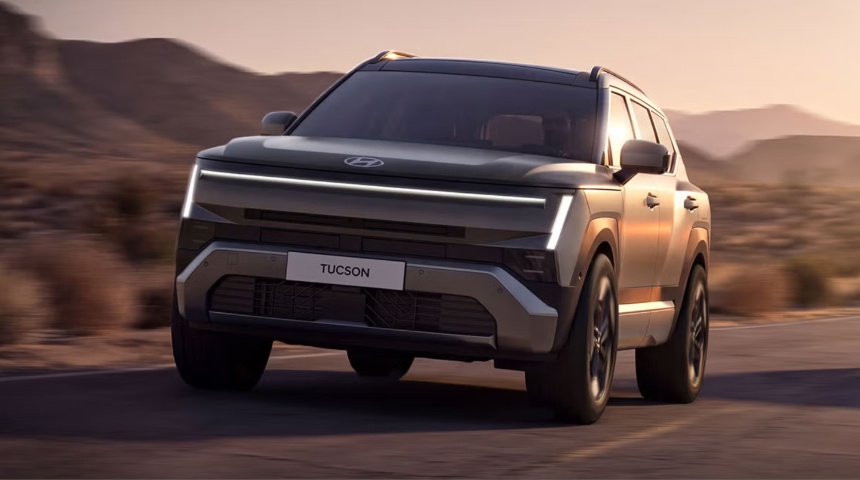
Hyundai has finally lifted the curtain on its next-generation Tucson, and the headline news is hard to miss: more power, a completely reworked cabin, and a styling overhaul that leaves almost nothing carried over from the outgoing model. After months of camouflaged prototypes and leaked spy shots, the fifth-generation Tucson made its global debut with its home market of South Korea getting the first look, and the Tucson Hybrid sitting right at the center of the announcement.
For a nameplate that has quietly become one of Hyundai’s most important global products, this is no small refresh. Tucson has surpassed 10 million cumulative global sales, and Hyundai is using this redesign to push the SUV deeper into hybrid technology, connected features and a more premium in-car experience. Here’s a full breakdown of what’s changed, what the hybrid powertrain now delivers, and what it might mean for buyers once the SUV reaches showrooms.
A Boxier, Bigger Tucson
Gone is the swoopy, heavily sculpted look that defined the outgoing generation. Hyundai has pulled the sheet off its fifth-generation Tucson, drawing heavy visual inspiration from the new Elantra and the rugged Crater concept it showed at the Montreal Auto Show, and the new Tucson abandons the softer curves of its predecessor for a much more assertive, blocky aesthetic. It’s part of the “Art of Steel” design language Hyundai first previewed on its Initium concept and has since carried into models like the Nexo.

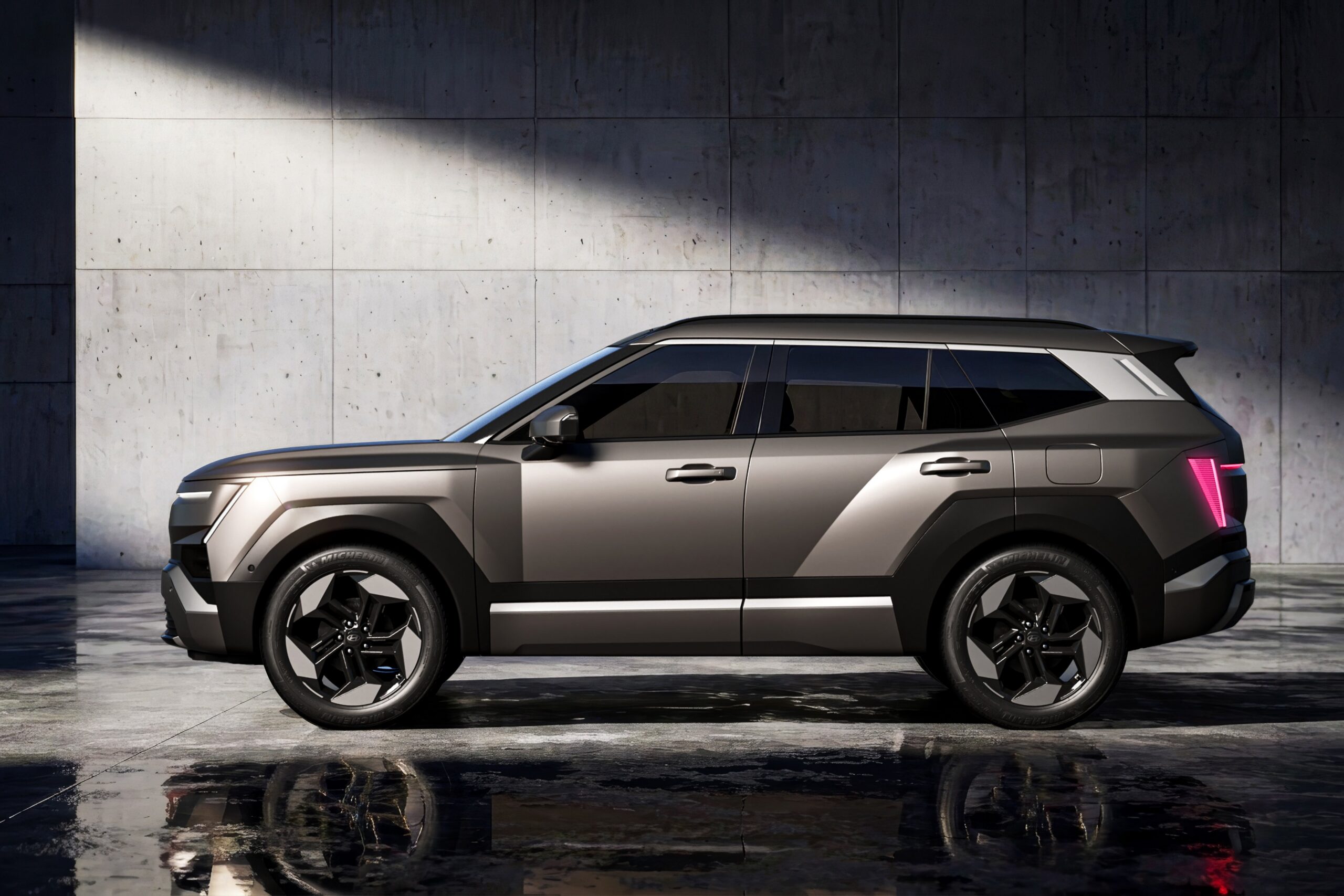
The car has also grown in almost every dimension that matters to families cross-shopping compact SUVs:
| Dimension | 2027 Tucson | Change vs. Outgoing Model |
|---|---|---|
| Length | 185 inches (4.7 meters) | +2.3 in / 60 mm |
| Width | 75 inches (1,905 mm) | +1.57 in / 40 mm |
| Wheelbase | 109.6 inches (2,785 mm) | +30 mm, roughly half the added length |
| Height | 66.3 inches (1,685 mm) | +0.8 in / 20 mm |
| Rear headroom | — | +1.1 in / 29 mm more than the outgoing model |
| Rear door opening angle | 83 degrees | Up 10 degrees for easier entry and exit |
That extra size isn’t just for show. Hyundai claims the extra length, width and height translate into a notably roomier cabin, and the wider rear doors should make it a lot friendlier for parents wrestling with car seats or anyone who’s ever banged a knee climbing into the back row.
Up front, the lighting signature is one of the boldest changes. Hyundai has given both ends an illuminated H-shaped motif, making the headlights and taillights look almost interchangeable at a glance, a light bar that runs the full width of the vehicle rather than sitting as a standalone element. Hyundai has also confirmed the rugged XRT trim is sticking around, and it comes dressed with tougher bumper styling and dark cladding for buyers who want their compact SUV to look a little more adventure-ready, even if it rarely leaves tarmac.
The Big Story: A 242-Horsepower Hybrid
This is where the “revealed” part of the headline really pays off. Hyundai has confirmed hard numbers for the new hybrid powertrain, and it’s a genuine step up from the current car.
| Spec | 2027 Tucson Hybrid | Outgoing Tucson Hybrid |
|---|---|---|
| Combined output | 242 hp | 231 hp |
| Torque | 280 lb-ft (380 Nm) | 271 lb-ft |
| 0-62 mph | 8.5 seconds | About 8.8 seconds |
| Engine | Turbocharged 1.6-liter gasoline four-cylinder paired with an electric motor | 1.6-liter turbo hybrid |
| Estimated fuel economy | Around 41 mpg equivalent | 36-38 mpg combined |
Under the hood, Hyundai is swapping in its next-generation hybrid hardware. The outgoing model uses Hyundai’s TMED-I system, but the new Tucson Hybrid moves to a lower-output version of the brand’s latest TMED-II hybrid setup, the same architecture that debuted on the new Palisade, pairing a smaller 1.6-litre turbo engine with a refined electric motor. The combined result is 242 hp and 280 lb-ft of torque, gains of 11 hp and 9 lb-ft over the current Tucson Hybrid.
Hyundai is also rolling out a new drive-quality feature alongside the extra power. Hybrid models get Hyundai’s E-Traction technology, which uses the electric motor to help manage the vehicle’s pitch and roll, aiming for steadier handling over uneven surfaces, a detail that suggests Hyundai wants the hybrid to feel noticeably more composed, not just quicker off the line.
If you’re not sold on paying extra for the hybrid, the standard gasoline Tucson isn’t being ignored either, though it clearly takes a back seat on performance. The non-electrified 1.6-litre turbo version is expected to produce around 177 hp and 160 lb-ft, about 27 percent less power and 43 percent less torque than the hybrid, and it needs roughly 9.5 seconds to reach 62 mph, a full second slower. Hyundai says the trade-off runs deeper than acceleration too; the gas-only model is expected to return roughly 43 percent worse fuel economy than the hybrid, which is a wide enough gap that most buyers will find the hybrid pays for its premium at the pump before long.
On the fuel economy side, Hyundai’s own testing in South Korea is encouraging. The hybrid returns 17.4 kilometres per litre domestically, equivalent to around 5.7 litres per 100 kilometres, though real-world consumption will vary with driving conditions. It’s worth noting that these are Korean-cycle figures rather than U.S. EPA numbers; American fuel economy ratings haven’t been announced yet, since the Korean figures are based on that country’s own testing methodology rather than the EPA’s.
Inside the Cabin: Bigger Screens, an AI Assistant, and Fewer Buttons
If the exterior redesign is dramatic, the interior overhaul might be even more so. The cabin is built around Hyundai’s new Pleos Connect digital ecosystem, replacing the previous generation’s dual curved displays with a large, tablet-style central touchscreen that’s expected to measure up to 17 inches on top-tier models, paired with a slim digital instrument cluster set high near the windshield.

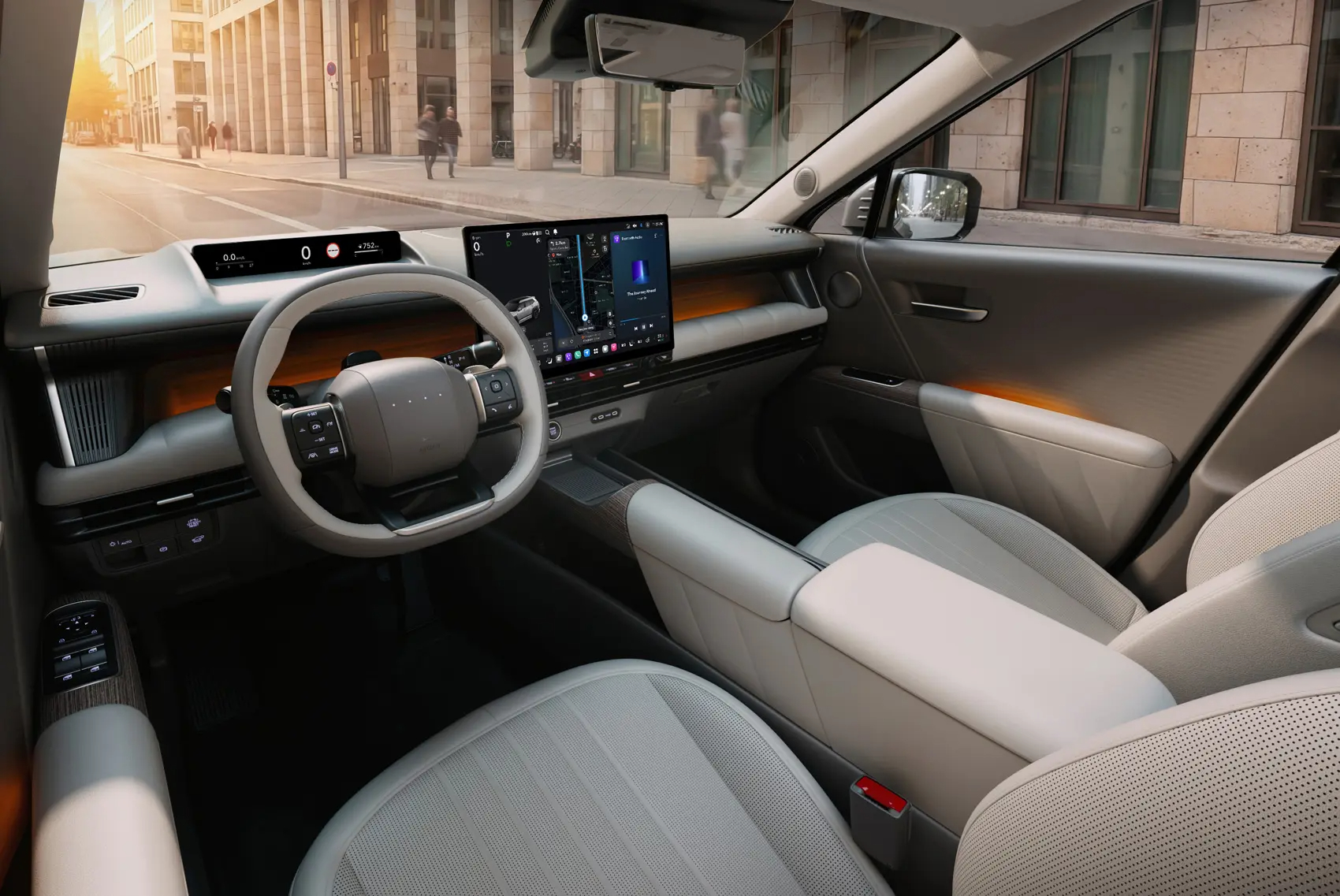
Hyundai hasn’t gone all-in on a screen-only cabin, though. Physical switchgear has been reduced significantly, but essential hard buttons remain below the main screen for things drivers reach for constantly. Reports from different regional reveals suggest the screen size may vary by market, some accounts point to a 14.6-inch central touchscreen for other markets rather than the full 17-inch unit, so expect the exact figure to firm up as Hyundai confirms specs market by market.
The other big interior talking point is the new voice assistant. Hyundai’s new PLEOS Connect interface comes standard, and the company says its “Gleo AI” assistant can understand natural conversation and provide situation-appropriate information, searches and more, essentially Hyundai’s answer to the wave of conversational AI features showing up across the industry. Other cabin details worth knowing about:
- The gear selector has moved to a column-mounted stalk, freeing up console space, which Hyundai has used for practical touches like dual wireless charging pads.
- Buyers get multi-zone climate control, built-in navigation, power memory seats, a card holder on the driver’s air vent, and a hidden palm rest tray.
- A smaller 9.9-inch digital instrument cluster is expected to sit in front of the driver on certain trims, working alongside the larger central display rather than replacing it.
Pricing and When You Might Actually See One
This is the part Hyundai has been the most tight-lipped about, and it’s important to separate confirmed information from informed guesswork.
What’s confirmed: Hyundai has committed to a global rollout beginning in South Korea, with the redesigned Tucson introducing a broader mix of electrified powertrains, updated cabin software and more pronounced styling differences between the standard SUV and the XRT variant. Initial-market launches are scheduled for Q4 2026.
What’s still unofficial: U.S. pricing and the exact U.S. launch date remain unannounced as of this writing, and for buyers outside South Korea, local availability, final specifications and pricing all remain dependent on Hyundai’s subsequent market announcements.
That hasn’t stopped analysts from putting numbers on paper. Industry estimates point to a starting MSRP around $32,000 for the base gas model in the U.S., with the base hybrid expected to start closer to $35,000 and a plug-in hybrid variant potentially landing around $43,000. Dealers fielding customer questions are being careful to frame these as forecasts rather than factory numbers — forecasters have floated a starting figure near $32,000 for the gas model, but that should be treated as an industry estimate, not an official Hyundai number, since redesigns almost always carry a price increase and this one adds a new infotainment platform along with a heavier electrified line-up.
If you’re currently shopping and your lease or loan timeline doesn’t line up with a late-2026 arrival, it’s worth knowing the outgoing Tucson isn’t disappearing overnight. The current generation is expected to stay on sale while the redesign works its way toward a full reveal, and outgoing-generation vehicles typically carry their strongest manufacturer incentives in the months right before a replacement lands, which could make a 2026 Tucson the smarter short-term buy for anyone who isn’t set on having the newest tech first.

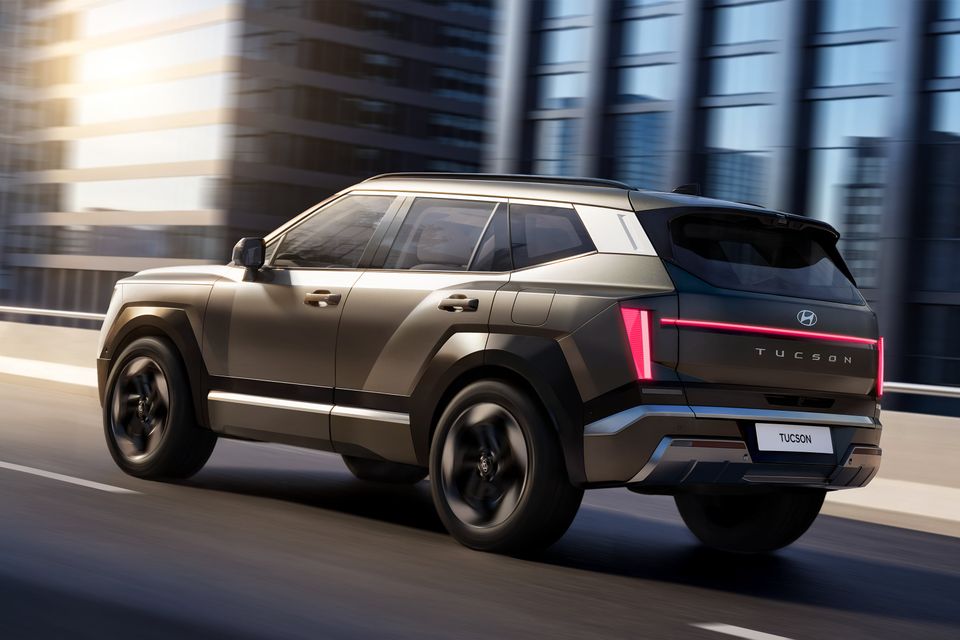
How It Stacks Up Against the Competition
The compact hybrid SUV segment has gotten crowded, and Hyundai isn’t pretending otherwise. The redesigned Tucson will compete directly against rivals like the Kia Sportage, Toyota RAV4, Honda CR-V, Mazda CX-50 and Subaru Forester, several of which have their own hybrid variants already well established with buyers. The extra horsepower, larger touchscreen and AI assistant give Hyundai a genuine talking point in that fight, but the segment’s heavy hitters, particularly the RAV4 Hybrid and CR-V Hybrid, aren’t going to concede ground easily on reputation or resale value.
The 2027 Hyundai Tucson Hybrid isn’t a mild update dressed up as a redesign, it’s a genuinely new SUV underneath the familiar name. A larger body, a completely reimagined cabin built around Pleos Connect and the Gleo AI assistant, and a hybrid powertrain that jumps to 242 horsepower all point to Hyundai making a serious push to keep Tucson at the front of the compact SUV pack. The redesign gives Hyundai a larger cabin, a stronger visual identity, better rear-seat practicality and a confirmed next-generation hybrid, but with U.S. pricing, EPA fuel economy and a firm on-sale date all still pending, the final verdict on value will have to wait until Hyundai puts those numbers on paper.
For now, expect more details to trickle out market by market over the coming months, with a U.S.-spec reveal likely to follow the Korean launch fairly closely.