For young creatives trying to turn an original idea into a project with wider social or environmental value, a new international opportunity has opened a door that reaches far beyond the usual creative competitions.
The programme is attracting attention because it combines financial support with mentorship, education, industry connections and an international development programme, giving selected participants the opportunity to take a promising idea much further than they may be able to do alone.
For Nigerians between the required age range, the application window is already open, but understanding the programme properly could be just as important as submitting an application before the closing date.
Swarovski Creatives for Our Future 2026 Opens
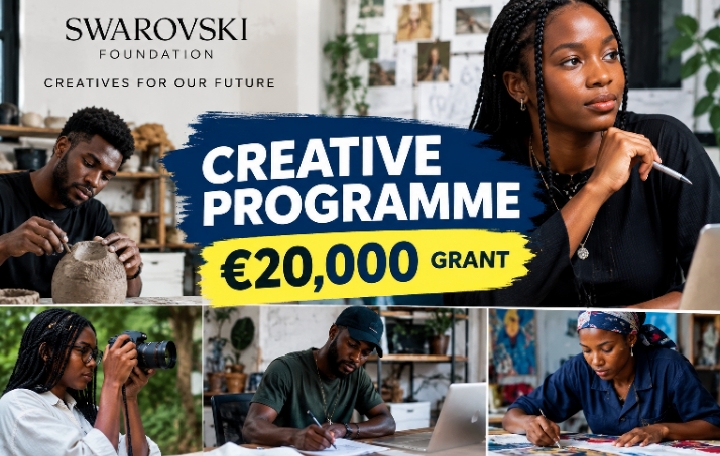
Swarovski Creatives for Our Future 2026 is a global grant, education and mentorship programme operated by the Swarovski Foundation in collaboration with the United Nations Office for Partnerships. The programme is designed for young creatives whose practices, ideas, projects or concepts can contribute to social, environmental or sustainable development challenges. The 2026 edition represents the 5th cycle of the programme and gives eligible creatives an opportunity to apply for €20,000 in project funding, alongside a wider programme of mentorship, masterclasses, networking and professional development.
Applications for the 2026 programme opened on September 9, 2026 at 12:00 a.m. GMT and will close on November 9, 2026 at 11:59 p.m. GMT. Nigerian applicants therefore have until November 9, 2026 to complete and submit their applications, provided they meet the programme requirements. The opportunity is global, meaning Nigerian applicants are not required to relocate to another country before applying, although successful participants are expected to take part in certain UK based programme activities during the programme period.
The €20,000 Grant Explained
The headline figure attached to the opportunity is €20,000 for every successful participant, but applicants need to understand exactly how the money works before treating it like a personal cash award. The funding is intended to support the development of the project submitted during the application process. It is therefore project funding rather than unrestricted personal income that a successful applicant can spend however they choose.
The €20,000 grant is divided into 2 payments. The first payment represents 75% of the grant, which is €15,000, while the remaining 25% is €5,000. The second payment is connected to the submission of the required project progress report, meaning participants are expected to demonstrate progress as they move through the programme.
The money may be paid in the participant’s local currency, depending on the arrangements made for the grant and the exchange rate applicable when the transfer takes place. Applicants should therefore focus on the €20,000 value of the programme rather than assuming that the exact naira equivalent will remain fixed from the application date through the payment period.
Another important point is the purpose of the funding. The grant is expected to help develop the project presented in the application. It is not designed to cover university tuition, general university expenses or an end of degree project. Anyone preparing an application should therefore be able to explain clearly how the money will move the proposed creative project from its current stage towards development, testing, production, implementation or wider impact.
Who Can Apply From Nigeria
The age requirement is one of the first conditions Nigerian applicants need to check. Applicants must be between 21 and 30 years old by the November 9, 2026 application deadline. The programme’s FAQ provides clarification for applicants approaching the upper age limit, meaning the applicant must be 30 or younger on the deadline date.
The opportunity is open worldwide, so Nigerian citizenship or residence does not prevent an eligible creative from applying. There is no requirement that applicants be based in the United Kingdom, Europe or another particular region. A creative based in Lagos, Abuja, Ogun State or another part of Nigeria can submit an application if the other conditions are satisfied.
Successful applicants should also be prepared for international travel. A valid passport is required during the application process, and participants are expected to travel to the UK for programme activities. UK entry requirements therefore become relevant for anyone who eventually receives an offer.
The programme also does not require applicants to have a registered company. An individual can apply without operating through a registered business, while applicants may also apply through a sole proprietorship or a company they wholly own. The stated application structure does not provide the same route for someone applying on behalf of a jointly owned company where they are simply a co founder or employee.
Creative Fields Covered
Swarovski Creatives for Our Future is aimed at creative practices that can connect creativity with sustainable development, rather than simply rewarding creative talent on its own. The programme lists several areas that can fall within its scope, including jewellery, fashion, art, design, architecture, videography, photography and engineering.
The list gives applicants an indication of the kind of creative work the programme is interested in, but the central issue remains the proposed project’s relationship with social, environmental or sustainable development challenges. A creative working in photography, for example, could potentially develop a project focused on environmental restoration, community empowerment or resource protection.
A designer could develop a new approach to sustainable materials or waste reduction, while an architect could propose a more sustainable housing concept. An engineer could combine creative problem solving with an innovative device or technology designed to address a practical environmental or social challenge.
The programme is therefore looking beyond aesthetics. An applicant may have excellent creative ability, but the application still needs to explain how that ability is being used to develop a meaningful solution or project with potential impact.
Creative Categories Excluded
One of the most important parts of the application process is understanding the categories that fall outside the programme’s scope. The fact that the opportunity is described as being for creatives does not mean every creative profession automatically qualifies.
Performing arts are specifically excluded from the programme. This includes music, dance, theatre and other artistic activities performed for an audience. A singer, rapper, dancer, actor or comedian should therefore not assume that a normal performance project qualifies simply because it is creative.
Literature and creative writing are also excluded. The stated exclusions cover areas such as poetry, novels, fiction, stories, screenplays, essays and song lyrics. Journalism is also listed among the excluded areas.
This clarification is particularly necessary for Nigerian applicants because the creative economy contains many different professions. Someone may be an established creative professional while still falling outside the specific scope of this programme. The strongest applications are likely to come from applicants whose creative practice fits one of the eligible areas while also presenting a clear connection to sustainable development.
Projects Swarovski Wants
The programme centres on projects that can use creativity to address practical challenges. The Foundation highlights areas including sustainable materials, waste reduction, natural resource protection, water pollution, reduced water consumption, community empowerment, equity, inclusion, environmental restoration, sustainable production, innovative devices and technology.
A project does not necessarily need to be a fully developed commercial product before an applicant can apply. Early stage ideas can potentially be considered, provided the applicant can demonstrate the project’s potential, feasibility and route towards development.
That means an applicant should avoid presenting only a broad ambition. A stronger application would explain the problem, the proposed creative response, the people or communities that could benefit, the resources required, the expected outcome and how the project could grow after receiving support.
The project should also have a realistic connection to sustainable development. Applicants are encouraged to demonstrate how their work aligns with the United Nations Sustainable Development Goals, particularly where the proposed project addresses issues involving communities, the environment, resources, equality or sustainable production.
Design Creativity Assessment
Creativity is one of the areas considered during the selection process. The Foundation looks at the originality and creative development of the proposed concept, practice or project.
A visually attractive idea alone is unlikely to tell the complete story. Applicants need to demonstrate how their creative process contributes to innovation or helps develop a sustainable solution. The application should make it clear why the proposed approach is creative and how that creativity contributes to solving the identified problem.
This is where a strong portfolio can become important. Previous creative work can help demonstrate the applicant’s ability, while the proposed project explains how that experience could be applied to a new sustainable development challenge.
Innovation Potential
Innovation is another area of assessment. Applicants are expected to show that their ideas are new, original or capable of improving an existing system, process or solution.
Innovation does not necessarily mean inventing something that has never existed anywhere in the world. A project could also improve an existing method, make a process more sustainable, reduce waste, lower resource consumption or create a more accessible solution for a particular community.
The important part is being specific. Applicants should explain the existing challenge and identify exactly where their proposed approach introduces a new solution or meaningful improvement.
Feasibility Scalability
The Foundation also considers whether the proposed project can realistically work and develop. This means applicants need to think beyond the idea itself and explain how the project could move from concept to implementation.
Feasibility can involve materials, technology, production, partnerships, research, community participation, testing or other resources needed to make the project possible. Applicants should use the available application space to demonstrate that they understand the practical requirements of their proposal.
Scalability is also relevant because the programme is interested in the potential for projects to reach wider audiences or communities. A small pilot project may have potential to expand, but the applicant should explain how that expansion could happen.
Measuring Project Impact
Impact is another major part of the application. The project should have a credible positive social, environmental or cultural effect, with applicants encouraged to explain both immediate and longer term outcomes.
A good impact explanation should connect the project to a real problem rather than simply claiming that it will change lives. Applicants can discuss the people affected, the environmental benefit, the resources saved, the communities reached, the waste reduced, the technology developed or other measurable outcomes connected to the project.
Quantitative or qualitative evidence can also strengthen the application where it is available. The aim is to show that the applicant understands the difference between having an interesting idea and demonstrating why that idea could make a meaningful contribution.
Sustainable Development Connection
Sustainable development sits at the centre of the programme. Applicants need to demonstrate how their creative practice or proposed project contributes to sustainable development or has the potential to do so.
The United Nations Sustainable Development Goals provide a useful framework for explaining this connection. An applicant could identify the relevant development challenge, connect it to the appropriate goal and explain how the project could contribute towards addressing that challenge.
The connection should remain practical. Applicants do not need to force their projects into every possible development goal. A clear relationship between the project and the particular social or environmental issue being addressed is more useful than listing several goals without explaining the connection.
Funding Plan
The application also requires applicants to explain how they intend to use the €20,000 grant. This is one of the areas where applicants need to be precise because the money is intended to develop the proposed project.
A funding plan could cover relevant project development costs such as materials, equipment, research, testing, production, technical support or other expenses directly connected to the proposed work, depending on the project’s requirements and the programme’s terms.
Applicants should be able to explain why each major area of spending is necessary and how the proposed investment contributes to the project’s development. The budget should therefore look realistic rather than simply allocating €20,000 without a clear explanation.
Application Documents Required
The application process requires several important materials. Applicants need to submit a creative portfolio of no more than 50MB, giving the selection process an opportunity to see previous or current creative work.
A 2 minute introduction video is also required. The video should introduce the applicant and the proposed project, while the maximum file size is 150MB. Applicants should treat this as an opportunity to communicate the core idea clearly rather than attempting to pack every detail of the project into 2 minutes.
The application form itself must be completed online in English. The Foundation encourages applicants to provide detailed and comprehensive responses, meaning applicants should avoid extremely brief answers where the question requires explanation.
A valid passport is also required, while applicants need to provide 1 academic or professional reference. Supporting documents relating to the proposed project can also be included where relevant.
Portfolio Preparation
The portfolio can play an important role because it gives applicants an opportunity to demonstrate their creative practice rather than relying entirely on written descriptions.
Applicants should select work that is relevant to the proposed project and demonstrates their creative ability, development process and previous experience. The 50MB limit means files should also be prepared carefully so that the portfolio remains within the required size.
A portfolio does not need to become a collection of every piece of work an applicant has ever produced. The focus should remain on showing the strongest evidence of creative ability and the applicant’s connection to the project being proposed.
The 2 Minute Introduction Video
The introduction video has a strict maximum length of 2 minutes, so applicants need to use the available time carefully. The applicant should introduce themselves, explain the project and communicate the central reason the project deserves development.
A complicated introduction can quickly consume the available time. A direct explanation of the applicant’s creative practice, the problem being addressed, the proposed solution and the intended impact can give the selection process a clearer picture of the idea.
Applicants should also remember that the application is submitted in English. Clear communication is therefore important, particularly where the proposed project involves technical or specialised concepts.
Application Deadline
The official 2026 application period opened on September 9, 2026 at 12:00 a.m. GMT. The deadline is November 9, 2026 at 11:59 p.m. GMT.
Applicants should avoid waiting until the final day to begin preparing their materials because the application requires several components, including a portfolio, video, reference and project information. A last minute application could also leave little time to correct file size problems or incomplete sections.
Only 1 entry is permitted per applicant. This means applicants should select their strongest eligible project rather than attempting to submit several different ideas.
Selection Timeline
The application deadline is only the beginning of the wider programme process. After applications close on November 9, 2026, the submitted projects go through the selection process.
Top applicants are expected to be invited for interviews around January 2027. Successful applicants are expected to receive notification around April 2027.
The programme itself is expected to begin in Fall 2027, bringing together grant support, mentor matching and masterclasses. Selected participants are also expected to travel to London for an announcement or programme event during Fall 2027, with final arrangements subject to confirmation.
The cohort is expected to complete the programme in September 2028 through an online graduation. The Terms and Conditions state that the judging and selection process can take up to 6 months.
Mentorship Masterclasses
The financial grant is only one part of the support available to selected participants. Successful creatives also receive access to 1 on 1 mentorship, educational masterclasses, industry networking, communication opportunities and industry event access.
The programme therefore extends beyond the initial funding period. Participants are expected to continue developing their projects while receiving guidance and engaging with the wider cohort.
The Foundation says successful participants will generally be expected to participate in programme activities around 2 to 3 times per month from September 2027 to September 2028. Anyone applying should therefore be prepared for an ongoing commitment rather than treating the opportunity as a single grant payment.
London Travel Support
Travel to the UK is part of the programme for successful participants, and the stated travel package goes beyond simply providing an airfare.
The Terms and Conditions provide for 1 round trip flight from the nearest international airport, visa and vaccination entry costs, airport and local transfers, single room hotel accommodation, meals and a specified travel expense reimbursement subject to receipts.
The Foundation also provides basic travel insurance coverage, while participants may choose to obtain additional insurance. Certain personal expenses, taxes and other costs specified in the travel terms are not necessarily covered.
Applicants should therefore understand that UK travel forms part of the programme structure, while also recognising that participants may still have personal expenses connected to international travel.
Nigerian Creative Already Highlighted
Nigerian creatives have already appeared within the programme’s international story. The Swarovski Foundation’s 2026 graduate feature highlights Blossom Eromsele from Nigeria.
Her project, AllSpace Modular Home, focuses on refugee housing through a solar powered, low cost shelter made from recycled materials. The project is presented as an adaptable approach designed to provide sustainable housing solutions for displaced communities.
Her example provides a useful illustration of the type of intersection the programme is designed to support, where creative practice connects with innovation, sustainability and a practical social challenge.
The example also shows why applicants should think beyond the traditional definition of creative work. A project can sit across several disciplines while still maintaining a clear creative foundation.
Swarovski Crystals Are Not Required
Applicants may also wonder whether their project needs to involve Swarovski crystals or jewellery because of the organisation behind the programme. The answer is no.
The official FAQ states that proposed projects do not need to integrate crystal. Applicants should therefore focus on the strength of their creative practice and the sustainable development problem their project addresses.
This widens the possible range of eligible ideas across areas such as design, architecture, photography, fashion, engineering and other creative practices that fit the programme’s stated requirements.
Project Changes After Selection
Applicants should take care when defining their proposed project because the grant is connected to the project submitted during the application process.
The programme’s FAQ states that the grant must be used to develop the project applied for. Changing the project after selection could result in the participant losing their position and award.
This makes project clarity important before submission. Applicants do not necessarily need to know every detail of the project’s future development, but the central idea, purpose and proposed use of the grant should be clear enough for the selection process to understand what they are supporting.
Programme Participation Requirements
Successful applicants are expected to show progress throughout the programme. The Foundation says participants will be monitored through regular online meetings, mid programme check ins and progress reports.
Participants may also be asked to provide a short biography, portrait photograph, 5 to 10 images of their creative work, a personal website link where applicable, Instagram and LinkedIn handles and a short question and answer about sustainable practices.
These materials may be used by the Foundation for programme communication and promotional activities. Applicants should therefore understand the publicity arrangements before submitting their materials.
Publicity Rights
The Terms and Conditions contain provisions allowing the Swarovski Foundation and Swarovski to use submitted media content, winners’ names, likenesses and related promotional materials for programme and publicity purposes.
This means applicants should understand the terms attached to photographs, videos and other materials before submitting them. The publicity provisions form part of the wider participation conditions and are worth reading carefully alongside the grant requirements.
One Entry Per Applicant
The programme allows only 1 entry per applicant. That restriction makes project selection an important part of the preparation process.
Applicants with several creative ideas should consider which eligible project has the clearest connection to sustainable development, the strongest evidence of feasibility, a realistic funding plan and a convincing pathway towards impact.
Submitting several unrelated ideas is not an option under the programme’s 1 entry rule, so the application should be built around a single coherent proposal.
Is Nigeria Eligible?
Nigeria is eligible because the programme is open globally. The official programme information describes Creatives for Our Future as an international opportunity for creatives around the world, while the Terms and Conditions state that the programme is open to residents of all countries subject to relevant travel and entry requirements.
For Nigerian applicants, the main issue is therefore not nationality but compliance with the programme’s age, creative practice, project, documentation and participation requirements.
A Nigerian applicant who is 21 to 30 years old by November 9, 2026, works within an eligible creative field, has a qualifying project and can meet the documentation and travel requirements can submit an application.
Nigerian Application Checklist
Before submitting an application, Nigerian creatives should confirm that they are 21 to 30 years old by November 9, 2026 and that their creative practice falls within the programme’s eligible areas.
The proposed project should have a clear social, environmental or sustainable development connection, while the applicant should be able to explain its innovation, feasibility, scalability and expected impact.
The applicant should also have a valid passport, a creative portfolio of no more than 50MB, a 2 minute introduction video of no more than 150MB and 1 academic or professional reference.
The application should be completed in English, with a clear explanation of how the €20,000 would be used to develop the proposed project. Applicants should also be prepared to participate in the programme from September 2027 through September 2028 if selected.
The November Deadline
The most important date for applicants is November 9, 2026 at 11:59 p.m. GMT. Applications opened on September 9, 2026, giving eligible creatives roughly 2 months to prepare their submissions.
Applicants should therefore use the period before the deadline to develop their project explanation, prepare the portfolio, record the introduction video, secure the required reference and organise supporting materials.
The opportunity is not structured as a simple cash giveaway. Its financial support is tied to the development of an eligible creative project, while successful participants are expected to remain engaged with the programme for an extended period.
What Nigerians Should Understand
Swarovski Creatives for Our Future 2026 presents a €20,000 project grant for selected young creatives, but the most important part of the opportunity is the combination of funding, creative development, mentorship and sustainable development.
Nigerian applicants should pay particular attention to the programme’s exclusions because music, dance, theatre, literature, creative writing and journalism fall outside the stated scope. A creative professional may therefore need to distinguish their general career from the specific project they are submitting.
The programme is open globally, applicants do not need a registered company, projects do not need to involve Swarovski crystal and early stage concepts can potentially be considered. The central requirement is a credible creative project capable of addressing a social, environmental or sustainable development challenge.
Applications close on November 9, 2026 at 11:59 p.m. GMT. For eligible Nigerian creatives, the application therefore comes down to presenting a clear project, demonstrating the creative thinking behind it, showing how the €20,000 would be used and explaining how the idea could develop into a practical solution with measurable impact.
The official application process also makes clear that receiving the grant would be the beginning of a longer programme rather than the final step. Successful participants are expected to take part in mentorship, masterclasses, networking, progress monitoring and other activities through September 2028, with UK travel forming part of the programme structure.
For a Nigerian creative whose work sits at the intersection of creativity, innovation and sustainable development, the November 9 deadline provides the point at which the application must be ready. The strength of the submission will depend on how clearly the applicant can connect their creative practice to the problem they want to address, the solution they are proposing, the resources required and the impact they hope to create.