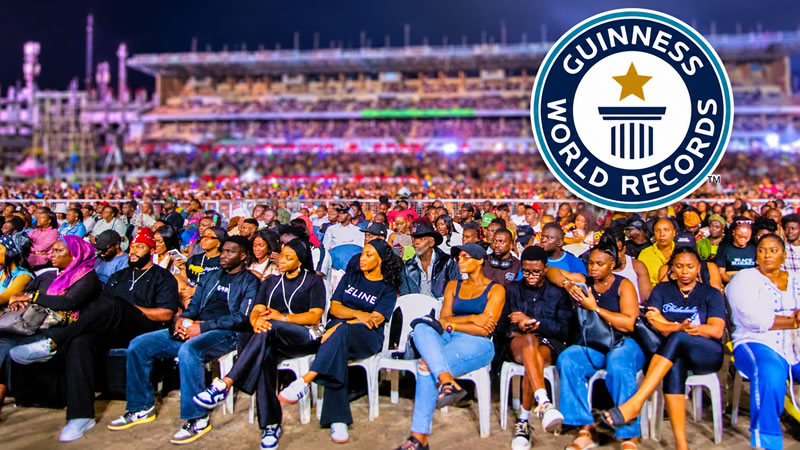
For years, Nollywood has continued to find new ways to take Nigerian stories beyond the cinema screen, but the events surrounding the latest release of Black Market placed the Nigerian film industry in a completely different spotlight. Thousands of people converged on Tafawa Balewa Square in Lagos on Saturday, September 26, 2026, for a screening that was designed from the beginning to become more than a movie premiere.
By the time the film ended, the crowd had become part of a new Guinness World Records milestone, with 51,000 viewers recognised as the qualifying attendance for the largest attendance at a film screening in a single location.
The figure was enough to move Nollywood past a record that had stood since 2015, although the wider event attendance was reported to be considerably higher. That difference between the number of people who attended the event and the number Guinness recognised is one of the details that makes the story worth examining more closely.
The record breaking screening at TBS
Saturday, September 26, 2026, became the date attached to the latest Guinness World Records achievement connected to Nollywood after Black Market was screened before a huge audience at Tafawa Balewa Square in Lagos. The organisers had been working towards the event for months, with the Guinness attempt forming part of the wider plan for the film rather than becoming an unexpected development after the crowd arrived. Their original target was 50,000 people watching the movie simultaneously, a figure that was already considerably higher than the existing record of 43,624. The final qualifying figure reached 51,000 viewers, giving the Nigerian production a margin of 7,376 over the previous record. That meant the target set by the organisers was also surpassed by approximately 1,000 qualifying viewers.
The scale of the gathering became visible several hours before the movie itself began. Gates were reported to have opened at about 2pm, allowing people to enter the venue ahead of the main programme, while the red carpet activities began at approximately 3pm. The actual film screening was scheduled for around 7pm, leaving several hours for entertainment and other activities before the movie started. Music, food, games and other forms of entertainment formed part of the experience as people waited for the main screening. Long queues were reported around Tafawa Balewa Square as the crowd continued to build, creating the kind of atmosphere expected from an event that had been publicly promoted as a Guinness World Records attempt.

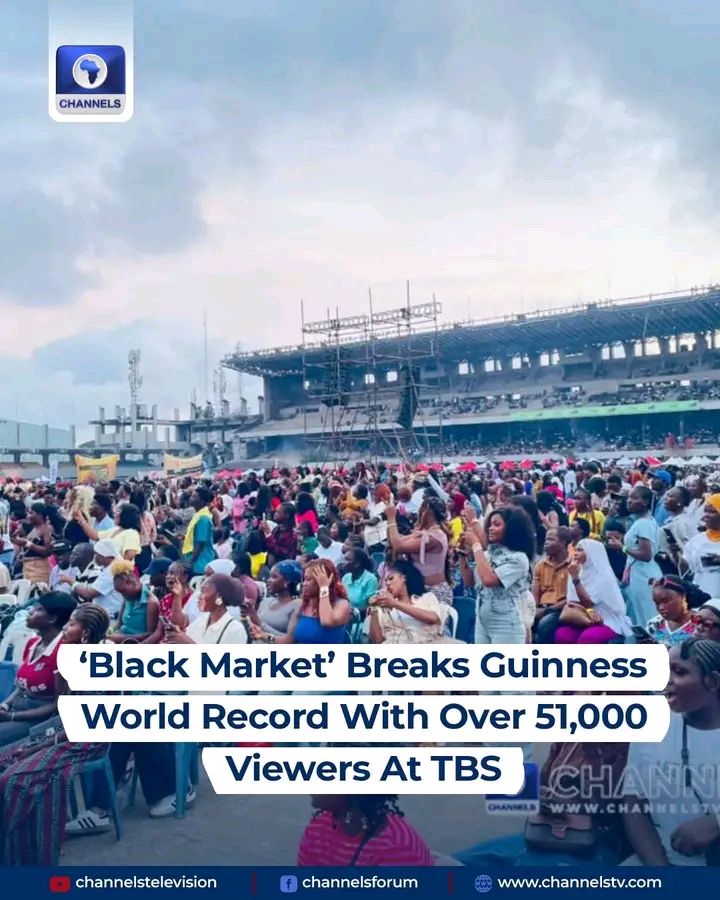
The final Guinness figure is important because it should not be confused with the total number of people who attended the wider event. Lagos Deputy Governor Obafemi Hamzat said approximately 64,000 people attended the event, while the Guinness qualifying attendance was 51,000. Those 2 figures describe different measurements of the gathering and should therefore be presented separately in any report about the record. The 64,000 figure refers to the reported overall event attendance, while the 51,000 figure represents the number of viewers who qualified for the Guinness record based on the requirements attached to the screening. Keeping that distinction clear prevents the story from giving the impression that Guinness recorded 64,000 people as the official screening figure.
The Guinness record Nollywood surpassed
Before the Lagos screening, the published Guinness World Records benchmark for the largest attendance at a film screening stood at 43,624 people. That record was established on October 4, 2015, when Iglesia Ni Cristo screened Felix Manalo at the Philippine Arena in the Philippines. The figure remained the benchmark for more than a decade before the Black Market screening produced a new qualifying attendance figure. With 51,000 viewers recognised for the Nigerian screening, the Lagos event moved beyond the previous record by 7,376 people. The difference is significant because it shows that the Nigerian screening did not simply edge past the previous figure by a small number of viewers.
The previous record had been associated with a major organised screening involving a very large audience, which meant that attempting to break it required considerably more than simply finding a large venue. The organisers of Black Market therefore had to build the screening around the requirements of the record attempt. Their target of 50,000 viewers was already above the 43,624 benchmark, giving them a clear number to work towards before the event took place. Reaching 51,000 qualifying viewers meant that the final result exceeded both the previous record and the original target. The development also placed a Nigerian film production alongside a record category that had previously been held by an event in the Philippines for more than 10 years.
Guinness World Records record categories are based on specific requirements, which is why the number of people present at a venue is not automatically identical to the number eventually recognised for a record. For Black Market, the key issue was the number of people who actually watched the movie under the qualifying conditions rather than simply the number of people who passed through the gates.
Why 51,000 became the key figure
The number 51,000 is the figure that should sit at the centre of the Guinness aspect of the story because it represents the qualifying viewers recognised for the screening. People began arriving at TBS hours before the movie started, but the record was ultimately concerned with those who remained for the screening according to the qualifying requirements. That made the final figure different from the number of people who may have attended the venue during the earlier parts of the programme. The distinction is simple but important because a large public gathering does not automatically translate into a record for film attendance.
The reported 64,000 overall attendance therefore provides useful context rather than replacing the Guinness figure. It shows that the event attracted an even larger crowd around the screening, while 51,000 became the number attached to the record itself. Both figures can appear in coverage of the same event without creating a contradiction when their meanings are properly explained. One measures the wider event attendance reported by a public official, while the other represents the qualifying number used for the Guinness record. For readers following the story, understanding that difference makes the record claim much clearer.
The organisers had originally aimed for 50,000 simultaneous viewers, which meant the final 51,000 figure represented another small milestone within the larger achievement. Their initial target had already been deliberately set above the previous record of 43,624, leaving little doubt about the ambition behind the event. Reaching 51,000 meant that the screening cleared the target while also establishing a new benchmark. The result turned the planned attempt into a measurable achievement that could be compared directly with the previous record.
How the event unfolded at TBS
The day began long before the first frame of Black Market appeared on the giant screen. People started making their way towards Tafawa Balewa Square ahead of the programme, with the gates opening at approximately 2pm. The red carpet followed around 3pm, giving celebrities, filmmakers, public officials and other guests an opportunity to appear before the movie screening. Those early hours were also part of the larger experience because the event had been designed to keep the crowd engaged before the main attraction. Music, games, food and other entertainment activities helped fill the time before the screening began.
Crowds continued to build around the venue as the scheduled screening time approached. The scale of the gathering was visible through the queues and the number of people entering the venue, with reports describing a heavy turnout around TBS before the film began. The organisers were not simply trying to stage an ordinary cinema premiere, so the event had the atmosphere of a large public celebration. The Guinness attempt gave the gathering an additional objective, with everyone who remained for the screening contributing to the possibility of establishing a new record.

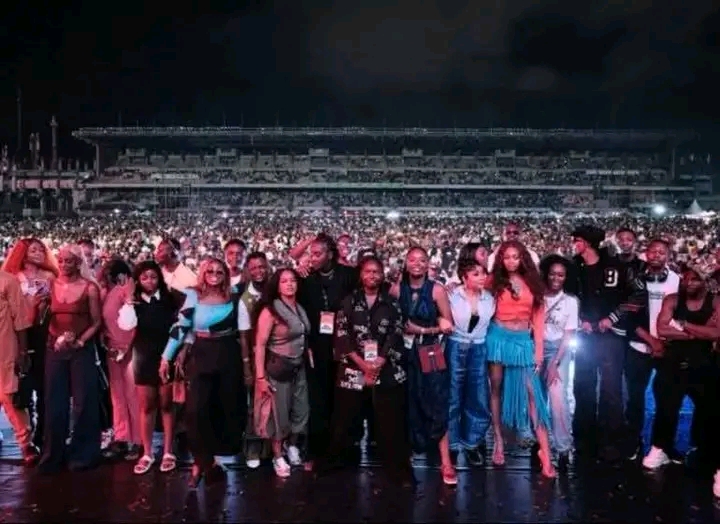
The main screening took place at approximately 7pm, bringing the focus back to the reason the crowd had gathered. Thousands of viewers watched Black Market together as the organisers worked towards the qualifying number required for the Guinness attempt. Once the qualifying figure was established, the achievement was celebrated by the crowd, with cheers and fireworks forming part of the response. The moment effectively transformed the screening from a planned industry event into a record breaking occasion for the Nigerian film industry.
The film behind the record
Black Market is a Nollywood crime thriller directed by Fatimah Binta Gimsay, who also co wrote the movie with Abdul Tijani Ahmed. The story follows 5 women whose involvement in cross border smuggling creates a dangerous situation that becomes even more complicated after the daughter of one of them is kidnapped. The film brings together crime, family pressure, danger and difficult choices, giving the record breaking screening a narrative that goes beyond the spectacle of the event itself. Its large scale public screening therefore placed both the film and the wider production team at the centre of the record attempt.
The cast features several recognisable names from the Nigerian entertainment industry. Linda Ejiofor Suleiman, Lateef Adedimeji, Omowunmi Dada, Scarlet Gomez, Teniola Aladese, Susan Pwajok, Ibrahim Yekini, popularly known as Itele D Icon, and Uzor Arukwe are among the principal cast members associated with the project. Their involvement helped give the film a recognisable ensemble while the production team focused on taking the premiere beyond the traditional cinema environment. The decision to stage the screening at TBS also gave the movie an unusually large public platform.


Fatimah Binta Gimsay’s role was particularly significant because she was both the director and one of the writers behind the project. Working alongside Abdul Tijani Ahmed on the screenplay, she helped develop the story that eventually became the centrepiece of the record attempt. The film was therefore not simply attached to a Guinness record after production had ended. The screening strategy was part of a wider project that had been discussed publicly before the September event, giving the record attempt a clear connection to the film’s original launch plans.
The team behind Black Market
The screening was organised by Rixel Studios in collaboration with FilmOne Studios, Signet Ring Studios and Switch Visuals Production. FilmOne handled distribution for the movie, bringing another established name in the Nigerian film business into the project. The collaboration brought together production, distribution and event planning interests around a single objective. Rather than limiting the premiere to a conventional cinema audience, the team created a large public screening that could accommodate the scale required for the Guinness attempt.
The wider production team included Nora Awolowo, Fatimah Binta Gimsay, Abdul Tijani Ahmed, Omowunmi Dada and Susan Pwajok, among others. Their involvement reflected the collaborative nature of the project, with people connected to different areas of the entertainment industry contributing to the production and public presentation of the film. The scale of the screening also meant that the event itself required extensive planning because thousands of viewers had to be brought into one location for the same movie experience.
Planning for the Guinness attempt was already underway months before the September 26 screening. Reports from July 2026 indicated that the filmmakers intended to hold the premiere at Tafawa Balewa Square and were targeting 50,000 people. At the time, the existing record was 43,624, meaning the Nigerian team had deliberately selected a target that would surpass the established benchmark if achieved. That earlier announcement is important because it shows that the Guinness attempt was not an idea created after the crowd arrived. It was a central part of the project’s plan from the beginning.
The people who attended the event
The size of the crowd was matched by the number of entertainment personalities and public officials who appeared at the event. Lagos Deputy Governor Obafemi Hamzat was among the public figures associated with the screening, while Lagos Commissioner for Tourism, Arts and Culture Toke Benson was also present. Their attendance placed the record attempt within a wider Lagos cultural setting, particularly because Tafawa Balewa Square has hosted major public gatherings and entertainment events over the years. The presence of government representatives also gave the event an official public dimension beyond its role as a movie screening.
Several Nollywood personalities were also reported at the venue, including Lateef Adedimeji, Kunle Remi, Stan Nze, Linda Ejiofor, Gabriel Afolayan and Kunle Afolayan. Their presence connected the record attempt to the wider Nigerian film industry, rather than leaving it as an isolated project involving only the cast of Black Market. The gathering effectively brought actors, filmmakers, public officials and thousands of ordinary movie viewers into the same space. That combination contributed to the atmosphere surrounding the event before the record was announced.
The crowd itself remained the most important part of the achievement because the record depended on qualifying viewers rather than celebrity attendance. Every person who remained through the screening under the required conditions formed part of the final figure that Guinness recognised. That is why the 51,000 number carries more significance than the number of famous names present at the venue. The celebrities helped give the event visibility, but the viewers provided the attendance figure that ultimately changed the record.
The record attempt had been planned months earlier
The July 2026 announcement gave the public an early indication of how ambitious the Black Market team intended the premiere to be. The filmmakers set a target of 50,000 people for the TBS screening, placing the proposed event more than 6,000 viewers above the existing record at the time. That target required considerable organisation because the aim was not simply to attract a large crowd for a concert or public gathering. The people needed to participate in a film screening that could satisfy the requirements attached to the record category.
The strategy also meant that the movie itself had to become part of the attraction. A Guinness attempt could draw attention to the event, but the screening still had to revolve around Black Market. The team therefore combined the film premiere with entertainment and other activities that could keep people engaged throughout the day. By the time the movie began, the crowd had already spent hours at the venue, making the eventual screening the culmination of the programme rather than the only activity on the schedule.
The final result showed how closely the event came to the organisers’ original objective. A target of 50,000 qualifying viewers became an official figure of 51,000. The previous record of 43,624 was left behind by 7,376 viewers. The wider event attendance was reported at approximately 64,000, making the overall gathering even larger than the number used for the record itself. Those figures provide the clearest numerical summary of how the day unfolded.
What the new record means for Black Market
The Guinness achievement gives Black Market a distinction that extends beyond its release as a Nollywood crime thriller. Instead of being remembered only for its cast, story or production team, the film is now connected to a record breaking screening involving 51,000 qualifying viewers. That gives the movie a unique place within the history of large scale film screenings. The achievement also places Tafawa Balewa Square at the centre of a major Nigerian entertainment event that attracted tens of thousands of people.
The record also highlights the scale that can be achieved when a film premiere is presented as a major public experience. Traditional movie releases generally depend on individual cinema screenings spread across different locations, but the TBS event brought a huge audience together for the same film at the same location. That was the central idea behind the Guinness attempt, and the 51,000 qualifying viewers demonstrated that the organisers reached the level required to establish a new record.
The achievement is particularly notable because the previous benchmark had remained in place since October 4, 2015. More than 10 years separated the Felix Manalo screening in the Philippines from the Nigerian attempt, meaning the Lagos event was challenging a record that had stood for a considerable period. The 51,000 qualifying viewers did not merely produce a new number for the category. They moved the benchmark from 43,624 to a figure more than 7,000 viewers higher.
The figures that tell the full story
Several numbers now define the Black Market screening. The most important is 51,000, which represents the qualifying attendance recognised for the Guinness World Records attempt. The wider event attendance was reported at approximately 64,000, giving the gathering a significantly larger overall footprint. The previous record stood at 43,624, while the organisers had initially targeted 50,000. The new Nigerian record therefore surpassed the previous benchmark by 7,376 viewers and exceeded the organisers’ target by approximately 1,000 qualifying viewers.
The dates are equally important when following the sequence of events. The previous record was established on October 4, 2015, at the Philippine Arena in the Philippines. Plans for the Nigerian attempt were publicly discussed in July 2026, with the organisers targeting 50,000 people for the proposed screening. The actual Black Market screening took place on Saturday, September 26, 2026, at Tafawa Balewa Square in Lagos. Those dates show the progression from the old record to the planning stage and finally to the new Nigerian achievement.
The distinction between the 51,000 qualifying viewers and the approximately 64,000 overall attendance should remain central to any account of the event. Treating the 2 figures as if they describe exactly the same thing would make the record easier to misunderstand. Guinness recognised 51,000 qualifying viewers for the screening, while the wider event was reported to have attracted approximately 64,000 people. That difference does not weaken the achievement. Instead, it explains how a large event attendance can produce a smaller but officially qualifying screening figure.
A new chapter for the Nollywood screening
The story of Black Market at Tafawa Balewa Square ultimately goes beyond the size of the crowd that gathered in Lagos on September 26, 2026. The event began with a target of 50,000 viewers and ended with 51,000 qualifying viewers recognised for a Guinness World Records achievement. Between those 2 figures was a carefully planned programme involving the cast, filmmakers, entertainment personalities, public officials and thousands of people who remained for the screening. The wider event attendance was reported at approximately 64,000, adding another layer to the scale of the gathering.
The previous benchmark of 43,624 had stood since October 4, 2015, when Felix Manalo was screened at the Philippine Arena in the Philippines. More than 10 years later, Black Market moved the record to Nigeria with 51,000 qualifying viewers at TBS Lagos. The margin of 7,376 viewers provides a clear measurement of the difference between the old record and the new one. The achievement also shows that the organisers’ original 50,000 target was not simply an ambitious promotional figure, because the final qualifying attendance actually went beyond it.
For the people who gathered at Tafawa Balewa Square, the event was a day of entertainment, music, food, games, celebrity appearances and eventually a major film screening. For the filmmakers behind Black Market, it became the culmination of months of planning around a Guinness World Records attempt. For Nollywood, the date now carries another record connected to the industry’s ability to turn a movie release into a large public event. The number that will remain attached to that achievement is 51,000, while the approximately 64,000 reported overall attendance provides the wider picture of just how large the gathering became.
The significance of the September 26 screening can therefore be understood through the numbers, the planning and the people who made the event possible. A 50,000 person target became 51,000 qualifying viewers, the previous 43,624 record was surpassed by 7,376, and the wider event was reported to have attracted approximately 64,000 people. Those figures tell the central story without confusing the official qualifying attendance with the total crowd. At the heart of it all was Black Market, a Nollywood crime thriller that turned its Lagos premiere into a Guinness World Records event and gave Tafawa Balewa Square a memorable place in the latest chapter of Nigerian cinema history.