For several days, Ile Ife became the centre of a celebration where ancient tradition met competitions, fashion, athletics, creative talent and royal ceremonies. The 2026 Olojo Festival carried the familiar weight of Yoruba history, but its programme stretched far beyond the traditional scenes many people associate with the annual celebration. From the spiritual preparation of the Ooni of Ife to sporting activities, cultural performances, exhibitions, talent auditions and a pageant opportunity, the festival created several different paths for people to take part in the celebration.
The events unfolded across September, with the main programme building towards September 28, when the Cultural Talent Hunt Grand Finale formed part of the final night at the Ooni’s Palace in Ile Oodua, Enuwa, Ile Ife. Before that final gathering, participants had already passed through a series of activities that gave the festival a different rhythm each day. Athletes competed for substantial cash prizes, young creatives appeared before judges during the Cultural Talent Hunt, fashion took its place within the programme, while traditional rites remained at the heart of the celebration.
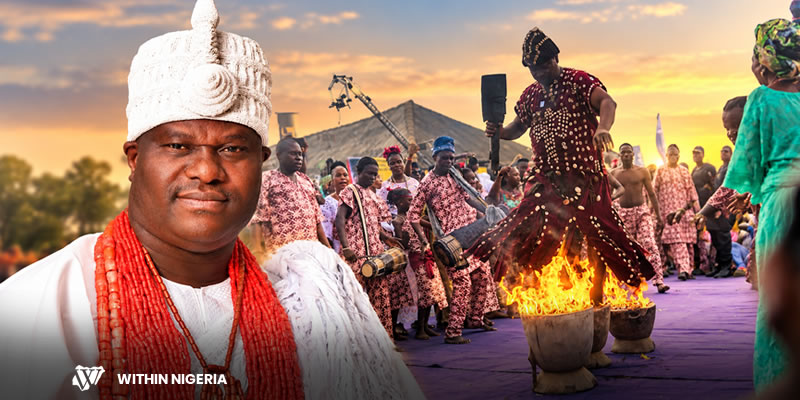
At the centre of the entire period was the Ooni of Ife, Oba Adeyeye Enitan Ogunwusi, Ojaja II, whose preparation for the main ceremonies added another layer to the festival. His 7 day spiritual seclusion began on September 20 and continued until the traditional activities that followed the period of preparation. The seclusion was connected with spiritual communion, reflection and prayers for Nigeria, communities, families and young people, creating the setting for the major traditional ceremonies that followed.
The spiritual preparation begins
The story of Olojo 2026 began to take a deeper traditional turn on September 20, when the Ooni entered a 7 day period of spiritual seclusion ahead of the main Olojo ceremonies. This period is significant because the Olojo celebration is closely connected with the traditional institution of the Ooni and the spiritual heritage associated with Ile Ife. Rather than appearing immediately at the centre of the public festivities, the Ooni spent the period in preparation for the rites that would eventually lead to his public appearance.
Reports from the Ooni’s palace described the period as one involving spiritual communion, reflection and prayers. The prayers extended beyond the palace itself, with attention given to Nigeria, communities, families and young people. That detail gives the seclusion a wider social meaning within the festival because the period of preparation was presented not merely as a private royal exercise but as part of the traditional responsibilities surrounding the Olojo celebration.
The conclusion of the seclusion brought the Ooni back into the public side of the festival through the sacred Aare Crown. His appearance in the crown became one of the major traditional moments connected with the celebration. The crown carries a significant place within the Olojo rites, and the subsequent traditional procession and Okemogun pilgrimage formed part of the ceremonies that drew attention to the historical and spiritual character of the festival.
The 7 day seclusion therefore created an important opening chapter before the public activities reached their busiest stage. While visitors and participants were preparing for different events across Ile Ife, the traditional side of the festival was also moving towards its central ceremonies. This combination of private spiritual preparation and public cultural celebration remained one of the defining features of Olojo 2026.
The programme spreads across Ile Ife
The published programme showed how broad the 2026 Olojo Festival had become. Activities began building from September 16 and continued through September 28, creating a calendar that gave visitors, participants and cultural enthusiasts several reasons to follow the celebration. Each date carried a different activity, while the main traditional ceremony remained the central point around which the wider programme developed.
From September 16 to September 23, the programme included the Cultural Colloquium, presentation of festival sponsors to the Ooni, the RAIA ROOKS tournament, Oonirisa’s Laurels Presentation, Gbajure Traditional Carnival, Adire Oodua Cultural Procession and Olojo Festival Rendezvous. These activities brought together discussions, entertainment, traditional culture, community participation and contemporary cultural interests.
The Cultural Colloquium provided an intellectual side to the celebration, while the presentation of sponsors to the Ooni connected the commercial partners with the royal institution at the heart of the festival. The RAIA ROOKS tournament brought competition into the programme, while the Gbajure Traditional Carnival and Adire Oodua Cultural Procession gave traditional and cultural expression a visible place within the wider schedule.
The programme also showed how fashion and contemporary cultural presentation had become part of the festival experience. Adire, in particular, appeared more than once within the schedule, later returning through the Adire Oodua Cultural Exchange Exhibition. This helped give traditional textile culture a place alongside the sporting and entertainment activities that attracted another section of the audience.
September 24 brings the competitions
September 24 became one of the most interesting dates in the Olojo 2026 calendar because several activities connected with competition and talent discovery took place on the same day. The programme listed the Ayo Olopon Traditional Game Competition, the Olojo Festival Cultural Talent Hunt Audition and the Ife 5KM Road Race. Each activity attracted a different type of participant, yet all were placed within the same festival environment.
The Ayo Olopon Traditional Game Competition brought an old Yoruba game into the centre of the celebration. Ayo Olopon is deeply associated with Yoruba culture and traditional recreation, making its inclusion a natural connection between the festival’s cultural identity and its competitive programme. The activity also demonstrated that the festival was not relying only on large stage performances to present culture to visitors.
The Cultural Talent Hunt Audition provided another route into the programme, this time for people with cultural and creative abilities. Participants had an opportunity to present their talents as part of a competition that would later return during the final night. The audition on September 24 therefore became an early stage in a process that eventually reached the Cultural Talent Hunt Grand Finale on September 28.
The same date also produced the sporting opportunity that attracted significant attention because of its cash rewards. The Ife 5KM Road Race was held in Ile Ife on September 24 and brought young athletes, members of the general public and professional athletes into the competition. The event was presented as a platform for discovering and developing emerging African sporting talent while also promoting Yoruba culture.
The ₦1 million road race prize
The Ife 5KM Road Race became one of the clearest opportunity stories attached to Olojo 2026 because the competition carried a substantial cash reward. The official event information identified youth, general public and professional athletes among the participant categories, while also advertising cash prizes, certificates and mentorship opportunities.
The race was not presented simply as a recreational run around Ile Ife. Its organisers connected the event with talent discovery and the development of young athletes, creating a sporting pathway within the wider cultural festival. The organisers also expressed an interest in identifying promising talents who could potentially receive access to training facilities and coaching.
The women’s race was won by Ronke Akanbi, who received ₦1 million. Post race reporting stated that the prize money was transferred to her account immediately, giving a clear indication that the advertised reward was tied to an actual competition result rather than being presented only as promotional material.

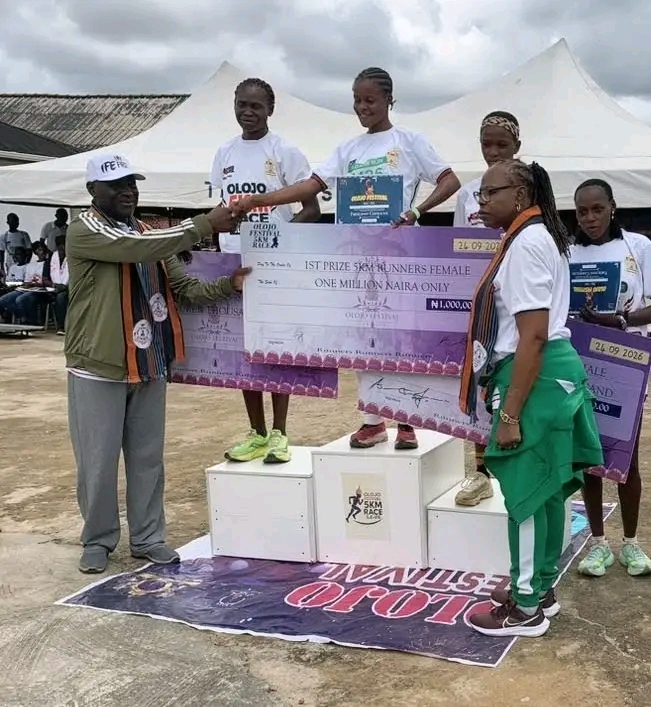
The men’s race was won by Davin Sunday Gyan, with Boy James Giang finishing behind him and Raymond Illia also among the leading competitors. The result gave the road race a clear competitive structure, with separate recognition for male and female winners.
The important point for anyone looking at Olojo 2026 from an opportunity perspective is that the ₦1 million prize belonged to the 5KM road race. It was not a general festival giveaway available to everyone who attended the celebration. Promotional information had stated ₦1 million for the fastest male and ₦1 million for the fastest female, making the sporting competition a distinct opportunity within the larger Olojo programme.
The race was organised by Sooko Adeleke Odewade with the Alade’fa Athletic Family Initiative. Beyond the immediate prizes, the organisers connected the competition with a longer term goal of discovering young athletes and helping promising runners develop through coaching and access to training opportunities. That talent development element gave the road race a purpose beyond the prize money.
September 25 brings community culture
The programme moved into another phase on September 25, when activities focused more strongly on community, traditional messaging and cultural presentation. The schedule included Iwode Ife, also known as Ojo Ilagun, which involved community cleansing. The activity formed part of the traditional side of the festival and helped maintain the connection between the public celebration and the cultural practices surrounding Olojo.
Another scheduled activity was Oonirisa’s Terrestrial Message to Mankind. The programme placed this alongside the community cleansing activity, giving the day a strong traditional and royal character. The message also formed part of the broader sequence leading towards the central ceremonies that would follow.
Fashion also appeared prominently on September 25 through the Ile Ife Fashion Exhibition. Its inclusion showed the breadth of the festival, especially because fashion was not treated as something completely separate from the cultural celebration. The wider Olojo programme had already featured Adire related activities, while the fashion exhibition provided another platform for cultural identity to be expressed through clothing and creative presentation.
September 25 also became important for the Queen Moremi Ajasoro Cultural and Leadership Pageant, whose audition and screening were reported for the Ooni’s Palace in Ile Ife. This created another opportunity connected with the wider Olojo period, although it remained separate from both the 5KM race and the Cultural Talent Hunt.
Queen Moremi opportunity takes another route
The Queen Moremi Ajasoro Cultural and Leadership Pageant added a different opportunity angle to the festival period because its focus was cultural representation, leadership and pageantry. The 2026 registration requirements stated that applicants had to be Nigerian, between 18 and 27 years old, fluent in English and Yoruba, possess a skill, follow the QMA Instagram account and not be a previous winner.
Knowledge of Yoruba language, culture, tradition and heritage was also listed as an added advantage. Those requirements placed cultural knowledge alongside personal skills and communication ability, giving the pageant a clear cultural dimension within the wider Olojo celebration.
The official registration form also asked applicants what they would do if they won the competition with ₦1 million and a car. That detail established the stated winner benefits on the registration page. The reward was therefore separate from the cash prizes connected with the 5KM race.
The distinction is important because several different competitions existed around the same festival period. The Cultural Talent Hunt had its own audition and grand finale, the Ife 5KM Road Race had its own sporting categories and prizes, while the Queen Moremi Ajasoro Pageant had its own eligibility requirements, screening process and stated winner benefits.
The QMA audition and screening scheduled for September 25 therefore gave another group of participants a route into the wider cultural programme. Rather than competing on the running track or performing through the Cultural Talent Hunt, applicants were entering a cultural and leadership pageant connected with the heritage of Queen Moremi Ajasoro.
September 26 takes the festival into its centre
September 26 was the central traditional day on the published programme. The official Olojo Festival Cultural Ceremony took place alongside the Okemogun Pilgrimage and the Ooni’s Aare Cultural Procession. These events brought the festival back firmly to the traditional institution and spiritual heritage that define Olojo.
The Okemogun Pilgrimage remained one of the major highlights because it connected the public celebration with the historic traditions associated with Ile Ife. The pilgrimage, combined with the Ooni’s appearance and procession, gave the day a ceremonial character that was different from the competitive events held earlier in the programme.
The Ooni’s Aare Cultural Procession also became part of this central sequence. Following the period of spiritual seclusion that began on September 20, the public appearance of the Ooni in the sacred Aare Crown gave the traditional celebration a highly visible moment.
For people following the festival through its different stages, September 26 represented the point where the spiritual preparation, royal tradition and public celebration came together most clearly. The activities surrounding the day were not simply entertainment events, because they formed part of the traditional Olojo ceremonies connected with the Ooni and Ile Ife.
September 27 brings royal reception
The programme continued on September 27 with the Grand Royal Invitational Reception, identified as Ojo Ajoyo. The event provided another opportunity for invited guests and participants to gather around the royal institution as the festival moved towards its final day.
The Adire Oodua Cultural Exchange Exhibition also appeared on the September 27 programme. Its inclusion reinforced the place of textile culture within the wider festival. Adire had already appeared earlier in the programme, and the exchange exhibition created another platform through which the cultural significance of the fabric could be displayed.
Oonirisa’s Ife Award for Community Service was also scheduled for the same day. The award added a recognition element to the programme, focusing attention on community contribution within the wider celebration. This made September 27 different from the sporting competitions and traditional ceremonies that had dominated earlier stages.
The sequence showed how Olojo 2026 continued to move between different expressions of culture. There was space for traditional rites, athletics, fashion, exhibitions, awards and royal gatherings, all within one festival calendar. By this stage, the programme had already covered several different areas before the final night arrived.
September 28 closes the celebration
September 28 brought the grand finale of the 2026 Olojo Festival programme. The day’s schedule included Oonirisa’s Ancestral Home Traditional Procession, Ojo Ibile and the Cultural Talent Hunt Night Grand Finale. The combination placed traditional celebration and contemporary talent on the same final day.
The Cultural Talent Hunt Grand Finale was particularly significant for participants who had entered through the audition held on September 24. Their journey moved from the initial audition into the final night, giving the competition a clear progression within the festival programme.
The grand finale was held at the Ooni’s Palace in Ile Oodua, Enuwa, Ile Ife. The location placed the closing talent celebration directly within the royal environment that had remained central to the wider festival throughout the month.
The final day therefore brought together several strands of the programme. Traditional processions represented the heritage side of Olojo, Ojo Ibile kept the cultural focus visible, while the Cultural Talent Hunt gave performers a final platform in front of the festival audience.

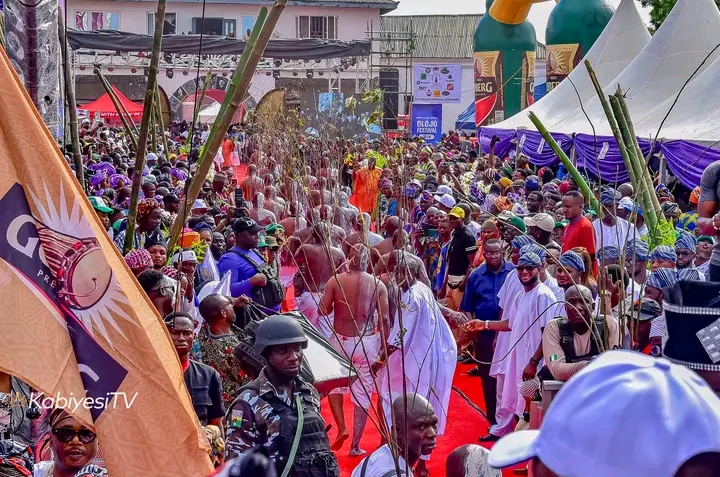
The September 28 programme also marked the point where the different opportunity stories around Olojo 2026 became easier to distinguish. The road race had already produced its winners on September 24, the Queen Moremi screening had taken place during the September 25 programme, while the Cultural Talent Hunt reached its final stage on September 28.
Culture reaches beyond the main ceremony
One of the clearest features of Olojo 2026 was the way culture appeared in different forms throughout the programme. Traditional games, processions, spiritual rites, fashion exhibitions, textile displays, talent performances and sporting activities were all placed within the same festival calendar.
That approach meant that participation was not limited to people attending the main Olojo ceremony. Athletes could enter the 5KM race, performers could audition for the Cultural Talent Hunt, eligible young Nigerians could pursue the Queen Moremi Ajasoro Pageant, while visitors could attend exhibitions, processions and other cultural events.
The theme, “Cultural Preservation Through Sustainable Tourism,” also fitted this broad programme. The festival created multiple public activities capable of attracting different audiences to Ile Ife, while the traditional ceremonies continued to provide the central cultural foundation.
Adire featured prominently through the Adire Oodua Cultural Procession and later the Adire Oodua Cultural Exchange Exhibition. Fashion received its own exhibition on September 25. Traditional games had their own competition, while athletics provided a modern sporting platform connected to talent discovery.
The result was a festival that combined several generations and interests within one calendar. Traditional institutions remained central, but younger participants could also find opportunities through sport, creative performance, pageantry and cultural activities.
The sponsors behind the festival
The 2026 celebration also involved a range of corporate sponsors and partners. Companies and organisations identified in connection with the festival included Nigerian Breweries, Nigerian Distilleries Limited, Seaman’s Schnapps, MTN, Moniepoint and Ojaja Drinks.
The Ooni acknowledged the sponsors in connection with the festival, reflecting the role that corporate partnerships played in supporting a programme that extended across several days and multiple categories of activity.
The involvement of businesses also reflected the wider direction of the festival theme. A celebration built around cultural preservation and sustainable tourism requires visibility, organisation and resources, particularly when the programme includes ceremonies, exhibitions, sporting events, talent activities and public gatherings.
The combination of traditional institutions, corporate partners, cultural organisations, athletes, creatives and visitors gave Olojo 2026 a broad base of participation. Each group entered the festival from a different angle, but the activities remained connected through the cultural identity of Ile Ife.
The opportunities should be kept separate
Looking back at the 2026 programme, 3 different opportunity stories stand out, but they should not be merged into one prize announcement. The Ife 5KM Road Race was a sporting competition with cash prizes, including ₦1 million for the winning male runner and ₦1 million for the winning female runner. Ronke Akanbi won the women’s race, while Davin Sunday Gyan won the men’s race.
The Cultural Talent Hunt was a separate cultural and creative competition. The programme confirmed the September 24 audition and September 28 grand finale, but a specific cash prize for the competition has not been sufficiently established by the available information. Attaching a specific cash figure to the talent hunt without stronger documentation would therefore create confusion.
The Queen Moremi Ajasoro Cultural and Leadership Pageant was another separate activity. Its official registration requirements stated the eligibility conditions, while the registration form referred to ₦1 million and a car as the stated winner benefits. The pageant should therefore not be presented as though those benefits belonged to the Cultural Talent Hunt or the 5KM race.
This distinction is particularly important for anyone searching for opportunity stories connected with the festival. Olojo 2026 contained several competitions, but each had its own participants, process and reward structure.
A festival built around many paths
The story of Olojo 2026 ultimately stretches beyond the main royal procession because the festival created several different paths into the celebration. Someone interested in athletics could enter the 5KM race, while a creative performer could pursue the Cultural Talent Hunt. Someone meeting the Queen Moremi requirements could enter the cultural and leadership pageant, while visitors could experience traditional games, fashion, exhibitions and royal ceremonies.
The sequence from September 20 to September 28 also created a clear movement through the festival. The Ooni began his 7 day spiritual seclusion on September 20, the competitive and talent activities gained attention on September 24, community and fashion activities followed on September 25, the central traditional ceremonies came on September 26, royal and cultural exhibitions continued on September 27, and the final procession and Cultural Talent Hunt Grand Finale arrived on September 28.
That sequence explains why the 2026 Olojo Festival cannot be reduced to one ceremony or one opportunity. The festival programme was broad enough to accommodate spiritual preparation, traditional rites, community activities, sport, fashion, talent discovery, pageantry and cultural exhibitions.
Ile Ife remained the centre throughout the celebration, with the Ooni and the traditional institution providing the foundation for the programme. Around that foundation, different activities gave athletes, creatives, performers, fashion participants, cultural enthusiasts and visitors their own points of connection.

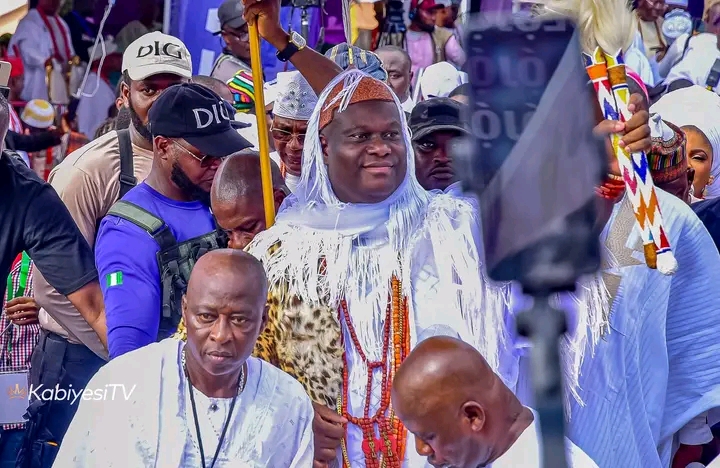
By September 28, the programme had completed its major sequence, leaving behind a festival that had moved through several different expressions of Yoruba culture. The 5KM race had already produced its winners, the Queen Moremi screening had taken place, the Cultural Talent Hunt had reached its grand finale, and the traditional ceremonies had followed their own established path.
Olojo 2026 therefore offered a picture of Ile Ife where tradition remained at the heart of the celebration while sport, fashion, talent and contemporary cultural activities occupied their own spaces around it. The festival’s 2026 programme showed that cultural celebration can take many forms, from the quiet preparation of a royal seclusion to the energy of a road race, the creativity of a talent audition, the presentation of fashion and the gathering of performers at the final night.
The celebration may have reached its formal conclusion on September 28, but the sequence of events explains why Olojo continues to command attention beyond a single ceremonial day. Its 2026 edition brought together the spiritual, traditional, competitive and creative sides of Ile Ife, creating a festival calendar in which different people could experience the same heritage through very different routes.