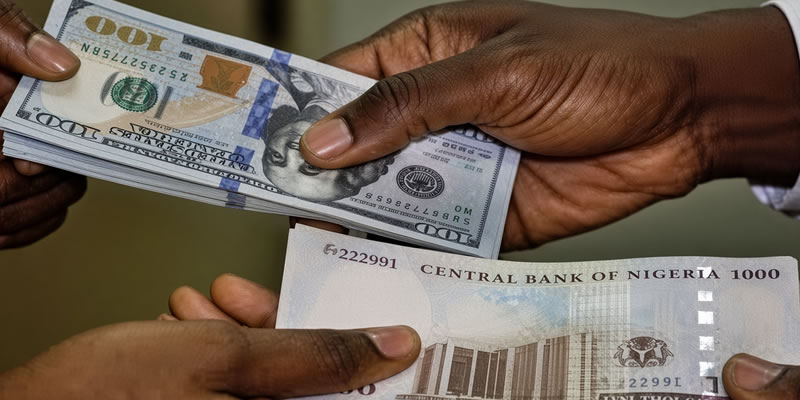
Naira edges closer to ₦1,320 on the official window as reserves hold near 18-year highs. Here is what the dollar costs in Lagos today, and why the numbers look the way they do.
If you are checking the dollar to naira rate today, October 1, 2026, the short answer is that the naira is still holding a position it has not occupied in more than two years. At the official window, a dollar costs roughly ₦1,329. On the street, it costs about ₦1,384. The gap between the two is narrow by recent standards, and that is the real story behind the figures.
Dollar to Naira Today: The Quick Numbers
| Market | Rate (₦ per $1) | Notes |
|---|---|---|
| Official (NFEM/CBN) | ₦1,329.16 | Latest published figure, September 30, 2026 |
| Black market (closing) | ₦1,384 | Reported close on September 30 |
| Black market (buy/sell) | ₦1,375 / ₦1,385 | Range quoted by street-rate trackers |
| Gap between the two | About ₦55 | Roughly 4% above the official rate |
A word on timing before going further. The Central Bank of Nigeria publishes its official figures at the close of each trading day, so the freshest verified official rate is Wednesday’s. Naija News reports that data from the CBN showed the naira selling at ₦1,329.16 per dollar, a small improvement on the previous session. Today’s own closing figure will be posted later in the day. Street rates move through the day and differ from one operator to the next, so treat any parallel market number as a guide rather than a fixed price.
Official Market: Naira Keeps Its Narrow Winning Streak
At the Nigerian Foreign Exchange Market, the naira has been grinding out small gains rather than making dramatic leaps. On Tuesday, September 29, the currency traded at ₦1,330.4737 per dollar and closed the day at ₦1,331. That was a slight improvement of at least ₦0.86 from the ₦1,331.3292 recorded the day before. Wednesday’s ₦1,329.16 pushed it a little further, an improvement of about ₦1.31 in a single session.
These are small moves, but the direction is what matters. The naira has been gaining ground for weeks.
| Date | Official rate (₦/$) |
|---|---|
| August 24, 2026 | ₦1,349.99 |
| August 26, 2026 | ₦1,343.00 |
| August 31, 2026 | ₦1,335.50 |
| September 1, 2026 | ₦1,329.00 |
| September 28, 2026 | ₦1,331.33 |
| September 29, 2026 | ₦1,330.47 |
| September 30, 2026 | ₦1,329.16 |
The September 1 reading was a milestone. The naira broke below the ₦1,330 mark that day for the first time since 2024, and between August 14 and September 1 it gained ₦29.25 per dollar, an appreciation of about 2.15%. Since then, it has largely held that ground, moving sideways with a mild downward tilt in the rate, which in plain terms means a slightly stronger naira.
Black Market: Street Rate Sits Near ₦1,384
On the parallel market, the dollar closed Wednesday at ₦1,384. Trackers that monitor street dealers put the buying rate at ₦1,375 and the selling rate between ₦1,385 and ₦1,390.
Earlier in the month, street rates were in much the same neighbourhood. One tracker put the dollar at ₦1,390 on September 4, and another showed buying and selling rates of ₦1,370 and ₦1,385 around September 11. In other words, the parallel market has barely moved in four weeks, which is a notable change for a market once known for sudden jumps.
One caution for anyone searching for rates online: some exchange-rate pages are not refreshed daily and still display figures from August or earlier. A few show a black market rate above ₦1,420, and one lists ₦1,480 for early September. These do not match what dealers and market reporters were quoting this week, so check the date stamp before you rely on a number.
What ₦1,329 and ₦1,384 Mean in Real Money
For readers who need to convert actual amounts, here is how the two rates compare. The official column uses ₦1,329.16, and the black market column uses the ₦1,384 rate.
| Amount in USD | At official rate (₦) | At black market rate (₦) |
|---|---|---|
| $1 | 1,329 | 1,384 |
| $10 | 13,292 | 13,840 |
| $50 | 66,458 | 69,200 |
| $100 | 132,916 | 138,400 |
| $500 | 664,580 | 692,000 |
| $1,000 | 1,329,160 | 1,384,000 |
| $5,000 | 6,645,800 | 6,920,000 |
On a $1,000 transfer, the difference works out to about ₦55,000. That is why the spread between the two markets still matters to importers, students paying foreign fees, and families receiving remittances, even though it has shrunk considerably.
Why the Naira Is Holding Firm
The simplest explanation is that Nigeria has more dollars in the bank than it has had in a generation. Gross external reserves stood at $54.61 billion as of September 14, 2026, up $12.76 billion from a year earlier, a 30.5% increase. Reserves crossed the $54 billion line on September 3, the first time since December 2008.
The pace has been steady. Reserves were at $49.96 billion on June 3 and had reached $53.11 billion by August 24. They have grown by about $7.09 billion since the start of 2026, and the figure now sits above the CBN’s own projection of about $51.04 billion for the whole year.
Several things are feeding that build-up:
- Foreign exchange inflows. Reports tie the rise to higher oil earnings and other FX inflows, with remittances from Nigerians abroad also playing a part.
- Tight monetary policy. The CBN’s Monetary Policy Committee held the benchmark rate at 26.5% at its July meeting, keeping returns on naira assets attractive to investors who bring dollars into the market.
- Market reforms. The unification of exchange rate windows since 2023 has narrowed the room for arbitrage and made the official rate a more realistic price.
A bigger reserve cushion gives the central bank room to step in when the naira comes under pressure, and it signals to investors that the currency is less likely to be hit by a sudden shock. That confidence is a large part of why street traders have not pushed the dollar sharply higher.
The Gap Is Smaller, and That Matters
For years, the difference between official and parallel rates was a headline in itself. Today, the spread is around 4%. That is a long way from the double-digit gaps that defined the worst of the foreign exchange crunch, and it means fewer people have a strong reason to avoid the banking system for their dollar needs.
A narrow spread also lowers the pull of speculative hoarding. When the street price barely differs from the bank price, there is little profit in sitting on dollars and waiting for the naira to slip.
What This Means for Households and Businesses
A steadier naira does not make life cheaper overnight, but it does change the planning picture.
Importers face less uncertainty when pricing goods that arrive in two or three months. Analysts have noted that a firmer naira should help bring import costs down if the stability holds.
Students and parents paying school fees abroad are seeing a rate that has been fairly predictable through September, which makes budgeting easier.
Travellers should still compare quotes. Bureau de change operators add their own margins, and the rate on offer at an airport kiosk is rarely the one you see in news reports.
Savers and small businesses holding dollars have watched their naira value drift down slightly through the month, a reminder that the currency’s direction is not a one-way bet.
Can the Naira Keep This Up?
Analysts are cautious. The gains rest on conditions that can change. One reserves report notes that the build-up remains closely tied to oil revenues, capital inflows and the wider performance of the foreign exchange market. Other voices warn that reserves growth can only last if the CBN avoids heavy intervention, fiscal authorities keep spending in check, and the reforms are not reversed.
Put simply, a weak oil price, a surge in foreign debt payments, or a sudden exit by portfolio investors could all test the naira again. For now, none of those pressures is visible in the data, and the market has settled into a calm pattern.
How to Get the Best Rate Today
- Check the date and source. Look for a timestamp from today or yesterday, and favour figures from the CBN or established financial news outlets.
- Compare more than one dealer. Street rates can differ by ₦5 to ₦15 between operators in the same city.
- Ask for the buy and sell rates separately. The quoted headline number is often one or the other.
- Use licensed channels for large amounts. Banks and authorised dealers offer paper trails and protection that informal deals do not.
On October 1, 2026, the dollar is worth about ₦1,329 at the official window and around ₦1,384 on the parallel market. The naira has held its strongest position since 2024 for a month, supported by reserves at an 18-year high and a central bank that has kept policy tight. The spread between the two rates is thin, the daily moves are small, and the mood in the market is calm. Rates will update through the day, so check back for the latest figures.
Rates are indicative and based on published CBN data and market reports. Actual rates at banks and bureau de change outlets may differ because of margins, demand and supply conditions.