There is a particular sentence that has travelled through generations of Nigerian families with remarkable endurance, usually spoken when the present becomes difficult and the future is still expected to bring relief. It can come from a parent trying to encourage a child, from a teacher speaking to a student, from an older sibling advising a younger one, or from a worker trying to explain why patience is still necessary. One day, things will be better. The person hearing it may not ask for a date, because the promise has always belonged to the future, and the future has always seemed close enough to keep believing in it.
Nigeria has lived through several versions of that future since October 1, 1960. The country has changed beyond recognition in population, cities, technology, entertainment, banking, business, politics, education and the way its people connect with the rest of the world. Yet some of the ordinary hopes attached to independence remain remarkably familiar, especially when the conversation turns to electricity, jobs, affordable food, housing, transport, security, healthcare and the ability of an average family to live without constantly calculating the next expense.
At 66, Nigeria therefore arrives at another Independence Day with a complicated story to tell. It is a story of genuine progress sitting beside stubborn difficulties, of a population that has grown from about 45.05 million in 1960 to more than 230 million projected for 2026, and of citizens who have repeatedly adapted to circumstances that demanded more from them than previous generations could have imagined. The journey from 1960 to 2026 is not simply a story of success or disappointment. It is the story of a country that kept moving, even when the destination seemed to keep moving further away.
The Nigeria They Inherited
Nigeria became independent from British colonial rule on October 1, 1960, with Abubakar Tafawa Balewa serving as Prime Minister and Nnamdi Azikiwe becoming President when the country became a republic on October 1, 1963. Balewa’s tenure lasted from October 1, 1960, until January 15, 1966, according to the historical record of the State House. Those early years carried the weight of a new nation trying to define itself, build institutions and manage the enormous expectations attached to political independence.
The Nigeria that entered independence had a population of about 45.05 million, a fraction of the more than 230 million people expected to live in the country in 2026. Agriculture occupied a central position in economic life, while different regions developed strong production bases around commodities such as cocoa, groundnuts, palm products and cotton. The country already had commercial activity, educational institutions, growing towns, political structures and an emerging industrial base, meaning independence did not begin from an economic desert. Nigeria inherited challenges, but it also inherited resources, people and opportunities capable of supporting an ambitious national project.
The Central Bank’s 1961 annual report recorded significant agricultural export production and continued industrial expansion around the early independence period. Those records are important because the popular memory of the period can sometimes reduce 1960 to a symbolic date without considering the economic activity already taking place. Nigeria had products that connected it to international markets and regions with their own economic identities. The expectation was not merely that political independence would change the flag. There was a broader hope that control over national affairs would eventually translate into greater prosperity, stronger institutions and a better standard of living.
The Oil Turning Point
Commercial oil had been discovered at Oloibiri in 1956, with exports beginning in 1958, only 2 years before independence. Petroleum would later transform the country’s public finances and external trade, particularly as production expanded after the Civil War. By 1974, oil revenues accounted for more than 80 percent of federal revenue and more than 90 percent of export earnings, reflecting how quickly petroleum moved from being one part of the economy to becoming central to the financial structure of the Nigerian state.
Oil brought enormous possibilities. It created revenue capable of funding roads, schools, hospitals, public institutions, major construction projects and other forms of national development. It also gave Nigeria a much stronger position in international energy markets and generated wealth on a scale that earlier agricultural exports could not match in the same way. The country entered an era in which petroleum became closely connected with government spending, foreign exchange earnings and national economic planning.
That transformation also created a vulnerability that remains relevant decades later. Government revenue became heavily exposed to changes in oil prices, production levels and conditions in international energy markets. When petroleum revenues were strong, public finances could benefit considerably. When production fell, prices weakened or external pressures intensified, the consequences could reach government budgets, foreign exchange availability, public spending and household economic conditions. Nigeria had gained a powerful source of wealth, but its dependence on that source also became one of the defining features of the national economic story.
The Years That Interrupted Progress
The path from independence was never a straight road. Nigeria’s first military coup took place in 1966, beginning a period of political instability that would profoundly alter the country’s young democratic experiment. The Civil War followed from 1967 to 1970, bringing enormous human suffering and destruction before the country entered the difficult process of reconstruction.
Military rule subsequently became a major part of Nigeria’s political history. Scholarly historical accounts describe the period from 1966 to 1999 as being dominated by military governments, with civilian rule returning briefly between 1979 and 1983 before another military takeover. Generations therefore grew up with different experiences of government, political participation and national expectations. For some Nigerians, democracy became an interrupted promise rather than a continuous reality.
The years also carried major economic changes. Urbanisation accelerated, oil became increasingly important, new cities expanded and government institutions grew. Nigeria’s population continued to rise, creating larger demands for schools, housing, healthcare, transport, employment and public infrastructure. Every generation inherited a country that was larger than the one before it, but the pressure on government systems also became larger.
The Return Of Democracy
May 29, 1999 became another major date in the national story as Nigeria returned to civilian government under President Olusegun Obasanjo after decades of military rule. The return represented more than a change in the people occupying government offices. For many Nigerians, democracy carried expectations that political freedom would eventually be accompanied by stronger institutions, better infrastructure, more employment opportunities, greater accountability, improved public services and higher living standards.
The significance of that transition has grown with time. By 2026, Nigeria has experienced 27 consecutive years of civilian government, its longest uninterrupted period of democratic rule. That continuity is itself an important historical development because the country has moved from repeated military interventions to an extended period in which elected civilian governments have succeeded one another.
Yet democracy was never presented to ordinary citizens merely as a constitutional arrangement. For many families, its value was connected to everyday life. A democratic Nigeria was expected to create an environment where a child could receive a good education, graduate into productive work, establish a home, raise a family and enjoy basic public services without every stage becoming an exhausting financial struggle. Those expectations have remained part of the national conversation long after 1999.
A Country That Truly Changed
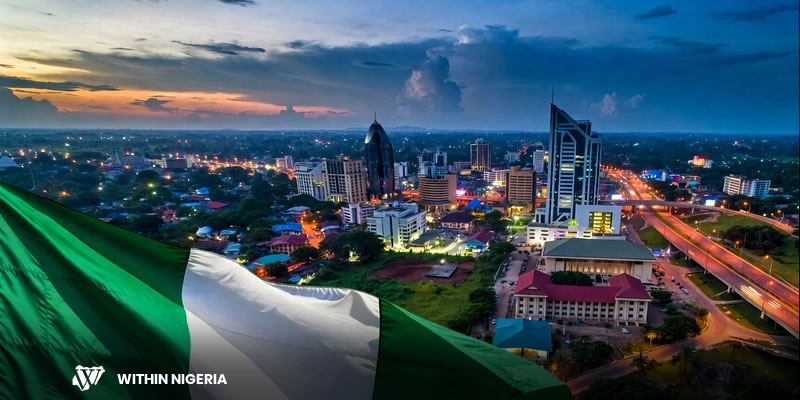
Nigeria in 2026 is unmistakably different from Nigeria in 1960. Mobile phones have transformed communication, businesses operate through digital platforms, banking has moved far beyond traditional branches, fintech companies have changed how millions of people make payments and access financial services, while internet access has opened opportunities that could not have been imagined by most Nigerians at independence.
Entertainment has also become one of the country’s most visible global achievements. Nollywood developed into a major film industry, while Nigerian music, particularly Afrobeats, has reached audiences across continents. Nigerian artists now perform on major international stages, collaborate with global stars and operate within an entertainment economy that connects Lagos, Abuja and other Nigerian cities to audiences around the world.
Technology has created another layer of change. Nigerian entrepreneurs can build companies for customers outside the country, freelancers can work for foreign clients, creators can earn from digital audiences and small businesses can advertise to thousands of potential customers without owning a traditional media outlet. A person with a smartphone can now conduct activities that once required physical offices, expensive equipment and access to formal institutions.
The banking revolution tells a similar story. Digital payments, mobile banking and fintech services have made financial transactions faster and more accessible for millions of Nigerians. The growth of these services has also shown how quickly Nigerians can adopt new systems when they solve practical problems. The country may still struggle with major infrastructure gaps, but its people have repeatedly demonstrated an ability to build alternatives around those gaps.
Longer Lives, Larger Expectations
Life expectancy provides another measurable sign of change. World Bank data put Nigeria’s life expectancy at about 37.2 years in 1960, compared with about 54.6 years in 2024. The difference represents more than a number on a development chart. It reflects changes across decades in medicine, public health, education, sanitation, nutrition and access to healthcare, even though serious health challenges remain.
The same country that had about 45.05 million people at independence now has a population projected to exceed 230 million in 2026. More people are living longer, more children are entering schools, more young people are seeking employment and more families are competing for housing and public services. Progress therefore creates another challenge because every improvement also increases expectations and demand.
A larger and more connected population naturally expects more from the state and the economy. A graduate with internet access may compare opportunities in Lagos with opportunities elsewhere in the world within seconds. A small business owner can see how businesses operate in other countries. A young worker can discover remote employment opportunities abroad without leaving home. Nigerians are more informed about possibilities than many previous generations were, and that awareness can make gaps in local services feel even more visible.
The Economy Still Has A Human Face
Nigeria’s economy continues to grow, but economic growth and household comfort are not identical measures. The World Bank reported real GDP growth of 4.2 percent during the first half of 2026, compared with 3.9 percent during the same period a year earlier. The NBS reported real GDP growth of 3.89 percent year on year in the first quarter of 2026, with the non oil sector accounting for 96.08 percent of real GDP.
Those figures show an economy that is producing more, but a national economy can expand without every household experiencing the expansion in the same way. GDP measures the value of economic activity across the country. A family sitting at home calculating food money, rent, transport costs and electricity expenses experiences the economy through prices and income.
That distinction has become especially important in 2026. The World Bank has said that Nigeria’s improving macroeconomic performance has included stronger growth, improved reserves and better fiscal revenues, while also noting that growth remains insufficient to create enough productive jobs and substantially reduce poverty. The numbers therefore tell 2 stories at once. There is improvement in important economic indicators, while the pressure on ordinary households remains significant.
The Cost Of Living Test
Nigeria’s inflation story in 2026 shows why the difference between economic statistics and household experience matters. NBS data showed headline inflation at 15.39 percent in August 2026, slightly below the 15.43 percent recorded in July and substantially below the 23.14 percent recorded in August 2025. The rate at which prices were increasing had therefore slowed considerably from the previous year.
Food remained under substantial pressure, with food inflation recorded at 19.57 percent year on year in August 2026. For households, food prices are not an abstract economic indicator. They are the cost of rice, beans, bread, vegetables, meat, cooking ingredients and the daily meals that have to be provided regardless of broader economic trends.
That is why slowing inflation does not automatically mean that life has returned to an earlier level of affordability. Inflation measures the rate at which prices are changing. Once prices have risen significantly, a lower inflation rate means they are rising more slowly, not that they have returned to their previous levels. A worker can therefore hear that inflation has fallen while still spending considerably more money on the same household needs.
The practical question for many families is straightforward. Can today’s income comfortably cover today’s food, rent, transportation, electricity, school expenses and healthcare? That question brings the national economic story directly into the kitchen, the market, the bus stop and the family budget.
Poverty Beyond Income
Poverty gives the story another dimension because financial hardship is not limited to the amount of money entering a household. Nigeria’s 2022 Multidimensional Poverty Index found that 133 million Nigerians, representing 62.9 percent of the population at the time, were multidimensionally poor. That measurement considered deprivation across areas including health, education, living conditions and access to basic services.
The World Bank’s current estimates provide another perspective. It estimated that 69.6 percent of Nigerians lived below the lower middle income poverty line of $4.20 per person per day in 2025, while 50.8 percent, equivalent to about 123 million people, were estimated to be living in extreme poverty using its updated $3 per day measure.
The IMF has separately reported poverty at 63 percent using Nigeria’s national poverty line and estimated that 27 million Nigerians experienced food insecurity in autumn 2025. These figures should not be treated as identical measurements because the poverty lines and methodologies differ. Their importance lies in the broader picture they provide of the scale of economic and social deprivation facing millions of people.
Poverty also changes the meaning of progress. A family may own a smartphone while struggling to pay rent. A student may have internet access while worrying about school fees. A small business may receive digital payments while spending heavily on electricity and transportation. Modernity and hardship can therefore exist in the same household at the same time.
The Search For Work
Employment is another area where the headline figure can tell only part of the story. NBS recorded unemployment at 4.3 percent in the second quarter of 2024, while youth unemployment stood at 6.5 percent. At the same time, informal employment was extremely high at 93 percent.
That informal economy is central to the Nigerian experience. Millions of people sell goods, provide services, trade online, drive for transport platforms, work as artisans, freelance, run small shops, create content, take short term jobs or operate businesses that do not fit neatly into the traditional image of formal employment.
The World Bank has highlighted the scale of the challenge by noting that Nigeria needs to absorb approximately 3.5 million people entering the labour force every year. The issue is therefore not simply whether Nigerians are doing some form of work. It is also whether enough people can access stable and productive employment capable of supporting households and allowing workers to build financial security.
A graduate can spend years acquiring qualifications before discovering that the available opportunities are limited. Another person can create a business from a smartphone and survive through determination and adaptability. Both are part of the same labour market, and both demonstrate the distance between having something to do and having an economically secure livelihood.
Electricity As A National Symbol
Electricity may be the clearest symbol of the distance between Nigeria’s technological progress and its infrastructure reality. World Bank data put electricity access at 62.5 percent of the population in 2024. That means a country where millions of people can conduct sophisticated digital transactions and participate in global online markets still has a large population without reliable access to electricity.
The Federal Ministry of Power announced another grid stabilisation programme in July 2026, citing recurring grid collapses, ageing transmission infrastructure, voltage fluctuations and the need for investment in reliability. The repeated attention to the national grid shows that electricity remains an active development challenge rather than an issue that belongs only to Nigeria’s past.
The contradiction is easy to understand from an ordinary person’s perspective. Someone can own a modern smartphone, operate an online business, receive payments from another country and work remotely for an international client, yet still have to plan around electricity supply. Businesses spend money on alternative power. Families consider fuel costs alongside food costs. Students organise study schedules around available electricity.
That reality has existed across several generations, which is why electricity has become more than an infrastructure issue. It has become part of the meaning of the promise that one day ordinary life will become easier.
The Meaning Of ₦70,000
Nigeria approved a new national minimum wage of ₦70,000 in 2024, with a review promised after 3 years. The figure represented an increase in the nominal amount workers covered by the national minimum wage could earn, but the real value of a salary depends on the prices attached to everyday life.
A salary increase therefore cannot be examined separately from food, housing, transport, electricity, healthcare and other household expenses. If income rises while essential expenses rise rapidly, the worker may receive more naira without experiencing the same improvement in purchasing power.
That is one of the reasons the cost of living has become such a powerful measure of public experience. People rarely calculate their economic position through GDP alone. They calculate it through the amount remaining after rent, food, transport, school fees, power costs and other obligations have been paid.
The salary is the same number on paper, but the basket of goods it can buy is not necessarily the same.
A Population More Than 5 Times Larger
Population growth sits underneath almost every development challenge Nigeria faces. About 45.05 million people lived in the country around independence. More than 230 million are projected for 2026. The country is therefore trying to provide opportunities and public services for a population more than 5 times the size of the population it had when independence arrived.
Every additional generation adds demand for classrooms, hospitals, roads, houses, jobs, transport systems, electricity and food. A school system that might have served a smaller population adequately can become overwhelmed as the number of children increases. A road built for an earlier population can become heavily congested as cities expand. Housing pressure can intensify as more people move toward major economic centres.
Population growth is not itself a problem. A large population can provide a large workforce, a large consumer market and enormous potential for innovation. The challenge lies in creating enough productive economic activity and infrastructure to match that scale.
Nigeria’s future therefore depends not only on how much its economy grows, but on how effectively that growth keeps pace with the needs of the people living within the country.
The Nigerian People Changed Too
Perhaps the most remarkable part of the journey is the adaptability of Nigerians themselves. The Nigerian of 1960 depended heavily on the physical economy surrounding them. The Nigerian of 2026 can sell products through social media, work remotely, freelance for international clients, receive digital payments, create content for global audiences, build technology companies, study online and operate businesses without owning a traditional office.
That transformation has created an entirely different relationship between the individual and opportunity. A young person in Lagos can learn a skill from an online course, advertise services through social media and find customers outside Nigeria. A fashion entrepreneur can reach buyers across several cities without opening multiple shops. A musician can distribute music to listeners around the world. A creator can build an audience without waiting for traditional media approval.
The ingenuity is visible everywhere. It appears in roadside businesses, online stores, transport services, technology companies, entertainment, fashion, food businesses, education and countless small enterprises operating from homes, shops and shared spaces.
Many Nigerians have therefore stopped waiting for a perfect system before trying to build a livelihood. They have created work around the limitations of the economy, found alternative routes through difficult circumstances and learned to turn technology into an economic tool.
The Generation That Kept Moving
Every generation has had its own version of the promise. Someone who was young at independence could look toward the decades ahead with the confidence that the new country would develop. Someone growing up after the Civil War could hope reconstruction would bring stability. Someone living through military rule could look toward democracy. Someone who became an adult after 1999 could expect civilian government to gradually deliver stronger institutions and better living conditions.
The promise kept changing shape because Nigeria kept changing. The child of one generation became the parent of another, and the language of hope moved with them. Finish school. Find a job. Earn more. Build a house. Start a business. Move to a better city. Give your children a better life.
Yet the pressure also kept changing. Rent became more expensive. Transport became more expensive. School fees increased. Food costs changed. Electricity remained a household concern. Healthcare could become a major financial burden. The worker who earned more money could still discover that the cost of living had risen alongside the salary.
That is the emotional centre of Nigeria at 66. The promise did not necessarily disappear. It kept being postponed.
The Numbers Tell Two Stories
Nigeria’s 66 year journey becomes clearer when the numbers are placed beside the human experience. Population rose from about 45.05 million in 1960 to more than 230 million projected for 2026. Life expectancy increased from about 37.2 years in 1960 to about 54.6 years in 2024. Democracy moved from repeated military interruptions to 27 uninterrupted years of civilian rule since 1999.
The economy also changed profoundly. Agriculture was central at independence, petroleum became dominant in federal revenue and exports, and the modern economy now includes major service industries, telecommunications, financial technology, entertainment and digital businesses. Nigeria has produced companies, creators, artists and entrepreneurs operating beyond its borders.
At the same time, poverty remains widespread, productive employment remains a major challenge, electricity access is incomplete, food prices remain under pressure and infrastructure demands continue to grow. These realities do not erase the progress that has taken place. They show that development is not a single journey where one improvement automatically solves every other problem.
Nigeria can therefore experience progress and frustration at the same time. A country can become more connected while remaining poorly powered. It can become more democratic while citizens continue demanding stronger public services. It can record economic growth while households struggle with purchasing power. It can produce globally successful artists while millions of families remain focused on basic economic survival.
66 Years Later
October 1, 2026 marks 66 years since Nigeria became independent. The distance between that day and today is enormous, but the connection between both moments can still be found in the expectations ordinary people attach to the future.
Nigeria has survived political crises, a Civil War, military rule, economic shocks, oil price cycles, inflation, population pressure and major changes in technology. It has also produced achievements that deserve to be recognised, from democratic continuity to longer life expectancy, expanding digital services, a globally recognised creative economy and a population capable of adapting rapidly to new opportunities.
Yet independence was never only about surviving. It was also about building a country where ordinary life could become more secure and predictable. That expectation remains visible whenever Nigerians discuss electricity, food prices, employment, housing, healthcare, transport, security and the value of their income.
The most striking feature of the 66 year journey is therefore the distance between the Nigeria people imagined and the Nigeria they experience each day. The country has moved forward in many measurable ways, but the finish line has never remained in one place. Every generation reaches the future and discovers a new set of challenges waiting there.
A parent still tells a child to be patient. A student is still told that education will open doors. A graduate is still told to keep searching for work. A worker is still encouraged to earn more. A business owner is still told to keep pushing. A family still hopes that the next year will be easier than the last.
That sentence has survived for decades because hope has survived with it.
“One day it will be better” is therefore more than a casual Nigerian expression. It is a record of generations trying to make sense of a country that has changed enormously while carrying some of the same unresolved expectations from one era into another.
At 66, Nigeria has travelled far from the country of 1960. Its population is larger, its cities are bigger, its people are more connected, its economy is more complex, its culture has reached global audiences and its citizens have found new ways to work, communicate and survive. The journey is real, the progress is real, and so are the difficulties that remain.
The question now belongs to the next chapter, because another generation is already growing up hearing the same promise. One day, things will be better. The future that previous generations kept waiting for has become the present, and the country is once again standing at the beginning of another future.