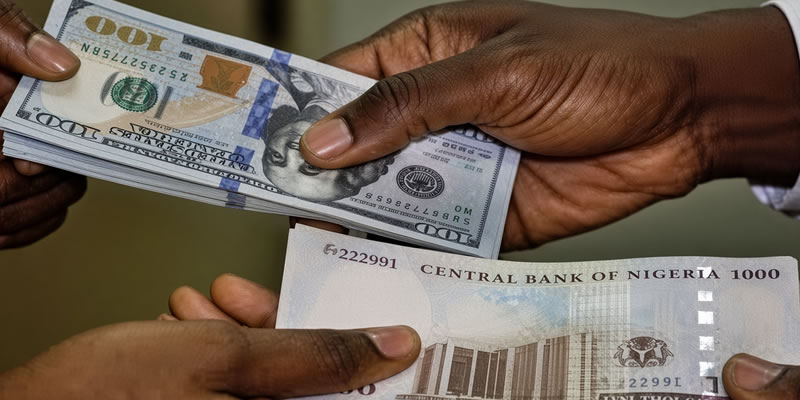
The naira has opened the weekend about where it spent most of the past month. On Friday, October 2, the dollar traded at roughly ₦1,328.17 at the Nigerian Foreign Exchange Market (NFEM), while the Central Bank of Nigeria’s (CBN) reference rate was ₦1,329.16. Because the official window is shut on Saturdays and Sundays, those Friday figures are the latest benchmark. Trading resumes on Monday, October 5.
Anyone checking the exchange rate today for school fees, business imports, travel or a family remittance is looking at a currency that has barely moved in weeks. Here is where each rate stands.
Exchange rate today: the quick numbers
| Currency pair | Official / benchmark rate | Parallel (street) market |
|---|---|---|
| US dollar (USD) | ₦1,329.16 (CBN, Oct 2) | ₦1,365 to ₦1,390 |
| British pound (GBP) | ₦1,758.36 (CBN selling rate, Sept 24) | Varies by dealer |
| Euro (EUR) | ₦1,511.63 (CBN selling rate, Sept 24) | Varies by dealer |
Official dollar rate: Friday close. Pound and euro: the most recent CBN rates published. Parallel rates differ between trackers and cities.
Dollar to naira: the official market
The CBN’s published rates for Friday put the dollar at ₦1,328.16 to buy and ₦1,329.16 to sell, a spread of only one naira. Reuters reported the week before that the naira was changing hands around ₦1,328 in intraday trading, with market participants crediting central bank liquidity support for the calm.
The calm is itself the story. At the start of September the naira broke below ₦1,330 per dollar for the first time since 2024, and it has stayed close to that level since. Over the preceding weeks it had gained about ₦29 per dollar between August 14 and September 1, an appreciation of roughly 2.15%.
| Date | Official dollar rate (₦) | What happened |
|---|---|---|
| Aug 14 (approx.) | ~1,358 | Starting point of the late-summer rally |
| Sept 1 | 1,329.43 (weighted average) | Naira dips below ₦1,330 for the first time in two years |
| Sept 24 | 1,328.17 (CBN central rate) | Rate holds after the MPC meeting |
| Sept 30 | 1,329.16 | Small improvement on the previous session |
| Oct 2 | 1,328.17 (NFEM) | Flat finish to the week |
Parallel market: what the street is paying
Bureau de change operators and street dealers are quoting a higher price, and trackers disagree on exactly how much. AbokiFX showed the dollar at ₦1,365 to buy and ₦1,375 to sell on Friday afternoon. Monierate’s black-market page showed about ₦1,372 on the buy side and ₦1,363 on the sell side, and said the dollar had eased by 0.84% against the naira over 24 hours. Other trackers put the selling rate as high as ₦1,390, and the dollar closed Wednesday at about ₦1,384.
The dollar has been drifting down in the parallel market this week, which suggests demand for cash dollars is easing. A reasonable working range for Saturday is ₦1,365 to ₦1,390, depending on your city, the dealer and how much you are buying.
That puts the gap between the two markets at roughly ₦46 to ₦61 per dollar. For comparison, the gap was about ₦52 earlier in the year, when the official rate sat at ₦1,362.55. The spread is small by Nigerian standards, but it is not nothing if you are moving large amounts.
Pound and euro against the naira
The CBN does not publish a fresh pound or euro rate every day, so the latest official figures are from September 24. On that day the pound had a selling rate of ₦1,758.36 and the euro ₦1,511.63, with both staying above ₦1,500. The same release listed the Chinese yuan at ₦197.92, the UAE dirham at ₦361.76 and the Swiss franc at ₦1,605.45.
Live market indications on Friday were a little higher. Monierate showed the pound at about ₦1,781.52 and the euro at about ₦1,519.52.
| Currency | CBN selling rate (Sept 24) | Market indication (Oct 2) |
|---|---|---|
| £1 | ₦1,758.36 | ~₦1,781.52 |
| €1 | ₦1,511.63 | ~₦1,519.52 |
| CHF 1 | ₦1,605.45 | n/a |
| ¥1 (yuan) | ₦197.92 | n/a |
The CBN says its published figures are reference rates and may not match what banks and authorised dealers quote customers. Expect the price at your bank counter, card statement or transfer app to land somewhat above or below these numbers.
How much is that in naira?
Using the CBN’s official dollar rate and a parallel rate of ₦1,375:
| Amount | Official ($ at ₦1,329.16) | Parallel ($ at ₦1,375) | Difference |
|---|---|---|---|
| $10 | ₦13,292 | ₦13,750 | ₦458 |
| $50 | ₦66,458 | ₦68,750 | ₦2,292 |
| $100 | ₦132,916 | ₦137,500 | ₦4,584 |
| $500 | ₦664,580 | ₦687,500 | ₦22,920 |
| $1,000 | ₦1,329,160 | ₦1,375,000 | ₦45,840 |
And for the other two:
| Amount | Pound (at ₦1,758.36) | Euro (at ₦1,511.63) |
|---|---|---|
| 10 | ₦17,584 | ₦15,116 |
| 50 | ₦87,918 | ₦75,582 |
| 100 | ₦175,836 | ₦151,163 |
| 500 | ₦879,180 | ₦755,815 |
| 1,000 | ₦1,758,360 | ₦1,511,630 |
Why the naira has stopped sliding
Three things are doing most of the work.
Reserves are at a multi-year high: Nigeria’s external reserves stood at $54.86 billion on September 24, up from $45.57 billion on January 2, a gain of 20.4%. That is $3.82 billion above the CBN’s own year-end projection of $51.04 billion. After the latest policy meeting, Governor Olayemi Cardoso described the country’s reserves as having reached about $55 billion and called the external position the strongest in 18 years. A bigger cushion gives the central bank more room to step in when the market gets jumpy.
Liquidity has improved: Traders have pointed to central bank support and steadier dollar supply in the official window. When dollars are easier to find at the formal rate, fewer people go looking for them on the street, which is what the narrowing gap suggests.
Policy has shifted: At its 307th meeting, the Monetary Policy Committee cut the benchmark rate from 26.5% to 23%, a 350-basis-point reduction reported as the largest in the bank’s history. In July, the committee had held the rate at 26.5% for the second meeting running. A cheaper borrowing environment is good news for businesses, though currency watchers will be asking whether lower yields make naira assets less attractive to foreign investors. So far, the exchange rate has not reacted.
What to watch next week
Monday’s NFEM session will show whether the naira keeps hugging the ₦1,328 to ₦1,330 band. Other things worth watching are the next reserve update from the CBN, any change in the parallel-market gap, and how the markets digest last week’s rate cut. Oil prices matter too, because crude earnings remain a big source of the dollars flowing into the country.
Frequently asked questions
What is the exchange rate today, October 3, 2026?
The official dollar-to-naira rate is about ₦1,329.16, based on Friday’s close. The parallel market is around ₦1,365 to ₦1,390 per dollar.
Why are there different exchange rates for the same currency?
The official rate comes from transactions in the regulated NFEM. The parallel rate reflects what dealers charge for cash on the street, and it moves with local supply and demand, so it varies from one tracker and one city to another.
Does the exchange rate change on weekends?
The official market is closed, so the CBN rate stays at Friday’s level until Monday. Street rates can still shift slightly.
How much is $100 in naira today?
About ₦132,916 at the official rate and roughly ₦136,500 to ₦139,000 in the parallel market.