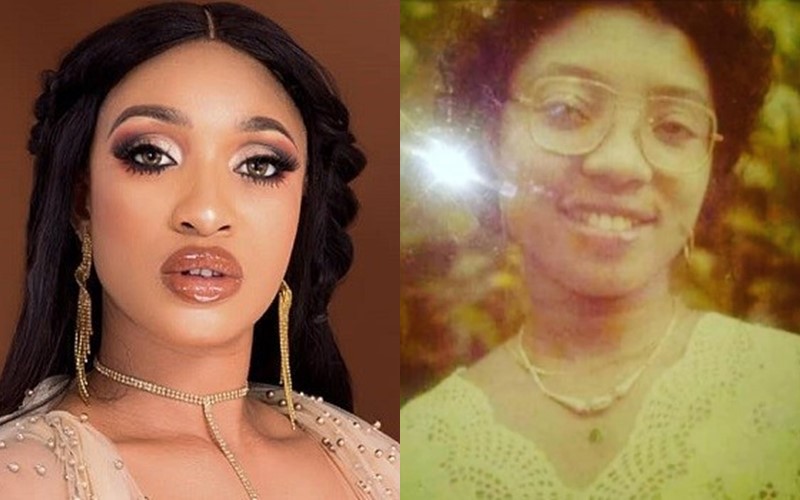
Nollywood actress turned evangelist, Tonto Dikeh has used a deeply personal message to speak about addiction, pain and the people struggling behind what others often see as destructive behaviour.
In a recent social media post, Dikeh urged people to “say no to drugs” while drawing from her own experience with addiction. Rather than presenting addiction simply as a matter of bad choices, she asked her followers to look at the pain that can exist beneath the behaviour.
WITHIN NIGERIA recalls the actress had previously spoken publicly about her own struggles. In December 2025, she testified at Streams of Joy International in Abuja that she had smoked since she was 13 and described a 27-year struggle with smoking. She also spoke about alcohol dependence, anger and other personal battles, saying she believed her faith had helped her overcome them.
In March 2026, she again spoke about her past at the Women of Fire Prayer Conference in Tanzania, describing herself as someone who had moved from addiction and a troubled past to a life centred on her Christian faith. Her latest message, however, goes beyond her own story. These are seven things Dikeh wants people to understand about addiction and those trapped in it.


1. Addiction does not make the pain disappear
One of the clearest points in Dikeh’s message is that drugs and other substances may offer temporary relief, but they do not remove the pain that caused someone to seek that escape in the first place. She shared:
“I’ve been down this dark road. Substances don’t make the pain go away. The hurt stays, and addiction slowly steals your life, one day at a time.”
For Dikeh, this is something she is speaking about from personal experience rather than from a distance. Her latest message therefore carries a simple warning that what may begin as an attempt to escape pain can eventually become another source of destruction.
2. The chaos people see may be hiding someone who is hurting
Dikeh’s second post is particularly focused on the difference between what people see and what a person may actually be experiencing. She wrote:
“I was once the chaos people judged.
The noise. The mess. The broken decisions.”
But she said there was another story underneath that behaviour, adding:
“What many didn’t see was the truth behind it all. behind the anger, the addiction, the self-destruction, was a soul screaming for help, not attention.”
That distinction is central to her message. She is not asking people to excuse destructive behaviour. Instead, she wants them to recognise that the person displaying that behaviour may also be dealing with pain that outsiders cannot see.
3. She believes addiction can be a symptom of deeper pain
Perhaps the strongest line in the post is Dikeh’s statement:
“Drugs weren’t the problem, they were the symptom.”
She went on to explain what she meant by that.
“Addiction wasn’t my identity, it was my escape from pain I didn’t know how to name.”
This is a significant shift from simply describing addiction as the problem itself. For Dikeh, her experience was connected to something deeper, like pain, desperation and a search for relief. She described herself as being “desperate for relief, for peace, for someone to see past my actions and hear my cry.”
Her point is that treating the visible behaviour alone may not address whatever is driving a person towards substance use in the first place.

4. She does not want addiction to become a person’s identity
Dikeh also draws a line between what someone is battling and who they are.
“Addiction wasn’t my identity,” she said.
Later, she urged people to remember that those trapped in addiction are “not weak, not worthless, not beyond redemption.”
This is one of the most hopeful parts of her message. Having publicly described herself as an addict in the past, Dikeh now uses her own story to argue that a person’s worst period should not necessarily become the definition of their entire life.
Her March 2026 testimony reflected the same theme. Speaking about her transformation, she described herself as having gone “from a drug addict to an altar that praises God.”
5. She wants people to look beyond the behaviour
Tonto Dikeh’s message is also a call for compassion. She acknowledged the anger, self-destruction and “broken decisions” associated with her own past, but said those actions did not tell the complete story. She wrote:
“I wasn’t lost because I loved the darkness. I was lost because I was hurting.”
That line captures the heart of the message. She is asking people not to confuse someone’s destructive actions with the entirety of their character. For someone struggling with addiction, the behaviour may be what the world sees first, while the fear, loneliness, trauma or emotional pain underneath it may remain hidden.
6. Her understanding of recovery is deeply tied to her faith
Faith is at the centre of Dikeh’s account of how she came through her struggles. In her words:
“And yet, God heard the cries I couldn’t articulate.”
She described her experience in spiritual terms, saying:
“When people saw chaos, Heaven saw a wounded soul worth rescuing. When I was written off, God was writing a comeback.”
This follows a significant change in the way Dikeh has publicly spoken about her life over the past year. In December 2025, she attributed her freedom from smoking and alcohol to her relationship with God, saying she prayed for the habits to be taken away. She also said she had found a sense of peace that she had not known before.
By February and March 2026, she was publicly documenting a deeper commitment to Christian discipleship and ministry.
In February she shared that she had completed a discipleship class and had begun taking part in evangelism and prayer activities. In March, she conducted her first deliverance session shortly after completing her discipleship program. By August 2026, she officially launched her own church/ministry, the New Wine Prophetic Tabernacle in Abuja, fully stepping into her role as an evangelist and ministry leader. That faith-based understanding is clearly reflected in her latest message.
7. She wants people to pray for those battling addiction
Perhaps the most important message Dikeh wants people to take away is that condemnation should not be the only response to addiction. In her words:
“Hate the drugs. Hate the addiction. But never stop praying for the person trapped inside it.”
She repeated the point later, saying:
“So hate the drugs. Hate the addiction. But never stop praying for the person trapped inside it.”
For Dikeh, prayer is not about pretending addiction does not exist or ignoring the damage it can cause. It is about refusing to treat the person struggling with it as hopeless. She ended with the strongest evidence she could offer: herself. Tonto Dikeh wrote:
“I am living proof that behind the chaos can be a destiny waiting for healing. And if God could pull me out, restore me, and give me a voice. then no soul is too far gone.”
Conclusion
Tonto Dikeh’s latest message is ultimately less about her past than it is about how people respond to others who are still trapped in theirs.
She has openly acknowledged the smoking, alcohol dependence, anger and other struggles she says once controlled parts of her life. In December 2025, she described herself as someone who had smoked for 27 years and battled alcohol dependence before experiencing what she considers a spiritual breakthrough.
Now, months later, she is using that history to speak to people who may still be where she once was. Her message is simple: condemn the addiction, but do not give up on the person. Because, as Dikeh’s own story has become for her, the person behind the chaos may still have a life waiting beyond it.