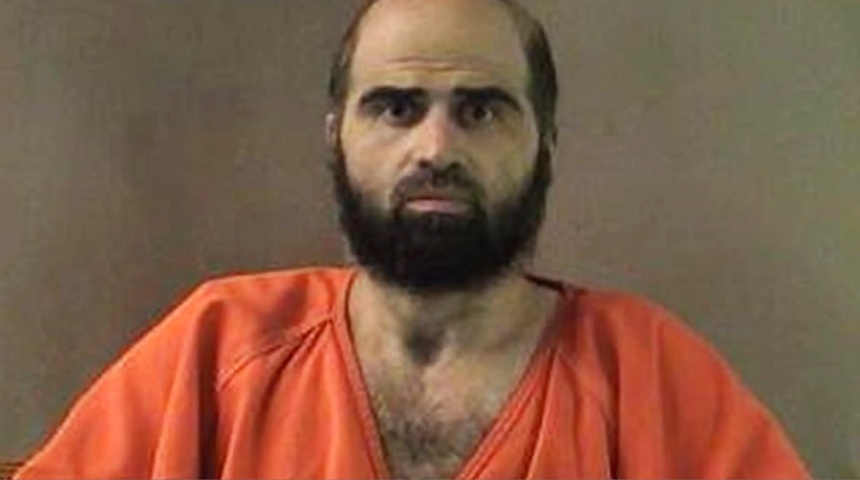
The United States military is preparing to carry out its first execution in more than six decades, and the Pentagon intends to let the public watch it. The Pentagon said on Thursday that the firing squad execution of the Fort Hood shooter, Nidal Malik Hasan, will be livestreamed. The announcement came a day after Defense Secretary Pete Hegseth described the event as “public.”
The plan is already drawing sharp reactions. No American execution has ever been broadcast, and many people are asking how this one will work.
What the Pentagon has said about the livestream
Hegseth first raised the idea in an interview with the conservative outlet Real America’s Voice. He said the execution would take place at Fort Hood on Dec. 3. Asked whether Hasan had made any final requests or contacted the Trump administration, Hegseth answered, “Don’t care. We’ll see him on December 3rd.”
The Pentagon then moved to remove any doubt. Officials clarified on Thursday that the execution will be livestreamed and that more details would follow. A Pentagon official told Reuters that the Secretary was correct and the execution would be broadcast live.
For now, the practical questions are unanswered. It is not clear from Hegseth’s remarks whether troops, spectators or military officials would attend in person, though Army regulation calls for at least two media outlets to be chosen as witnesses. The White House has not filled in the gaps either. On Thursday, it referred questions about the livestream to the Pentagon.
How the Fort Hood shooter reached this point
Hasan was an Army psychiatrist with the rank of major. He walked into a medical building at Fort Hood where soldiers were waiting in long lines for immunizations and medical clearance before deployment. Witnesses said he first sat among them. Then he opened fire.
The 2009 attack left 13 people dead and 32 others injured. Soldiers later described how quickly he reloaded, which left almost no chance to stop him. Investigators recovered 146 shell casings inside the building and dozens more outside, where he fired at soldiers running toward the parking lot. The attack ended when authorities shot Hasan in the back.
His 2013 trial was unusual. He made almost no effort to defend himself, and observers said he seemed to be courting martyrdom. He told the court that he acted to protect Muslim insurgents abroad. He also described himself as a soldier who had “switched sides.” A military jury sentenced him to death. He has been held at the U.S. Disciplinary Barracks at Fort Leavenworth, Kansas, ever since.
From final appeal to presidential approval
Hasan’s legal options narrowed over the years. His final appeal was rejected in April 2025. The last step was presidential sign-off. President Donald Trump approved the firing squad execution, and the Army secretary was to decide the time and place. Pentagon spokesperson Sean Parnell wrote on X that “judgement day” had finally come for Hasan.
Parnell said Trump acted on Hegseth’s recommendation. The Trump administration recently widened the federal execution methods to include firing squad, electrocution and gas asphyxiation, partly because lethal injection drugs have been hard to obtain.
Hegseth had pushed for this outcome for some time. He told the Daily Caller News Foundation he was fully committed to seeing the death penalty carried out, and said victims and survivors deserve justice without delay.
A first in more than 65 years
If it goes ahead, this will be a historic moment for the armed forces. The last military execution took place on April 13, 1961. A firing squad has not been used by the U.S. military since the Second World War. The last such execution was carried out in 1945 for desertion.
Military death row is also small. Four men are on it, Hasan among them. President George W. Bush approved the execution of Army Spc. Ronald Gray in 2008, but a judge put it on hold and Gray remains at Leavenworth.
Why a televised execution is so unusual
The livestream is the part that has surprised legal observers. No state or federal execution has ever been televised in the United States, and the last public execution happened in Owensboro, Kentucky, on August 14, 1936. One expert quoted in coverage said he could not recall a case where the government itself started the push to show an execution.
The timing adds to the scrutiny. Questions about how the death penalty is carried out have grown since the botched lethal injection of Christa Pike in Tennessee. The failed attempt led Tennessee’s governor to halt further executions this year and order an independent review. Asked whether it might change his thinking on capital punishment, Trump called it “an interesting situation.”
Could the December date slip?
Possibly. Legal experts say Hasan has one more card to play. He could resist the execution and file a habeas petition in civilian court, which could significantly delay it. An article in the magazine Army Lawyer suggested such a filing could put the process on hold, potentially for years.
Whether he will do that is unclear. Given how he behaved at trial, he may not want to seek a delay.
What survivors and families still want
For many people tied to the attack, the execution is only part of the story. The Pentagon labelled the shooting “workplace violence,” a decision criticised by lawmakers, victims’ families and national security experts. Survivors say that label has kept families from receiving the benefits they are owed, and one survivor said an execution would amount to only partial justice unless the classification changes.