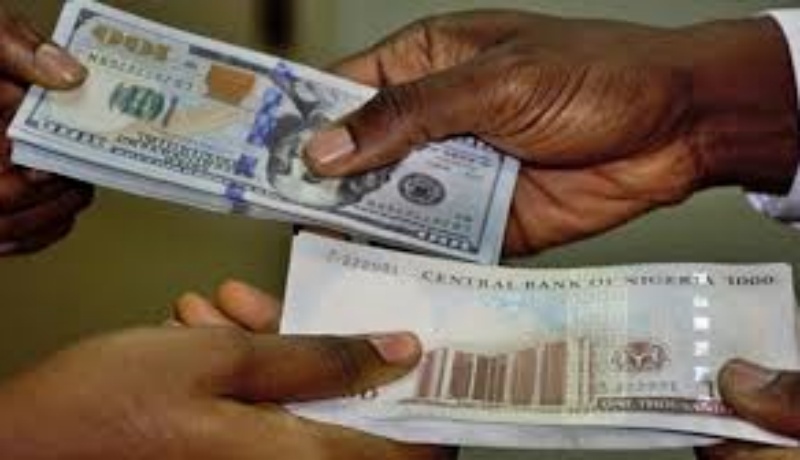
The dollar to naira rate today, Sunday, October 18, 2026, is about ₦1,331 to ₦1,332 at the official Nigerian Foreign Exchange Market (NFEM), while Bureau De Change operators and street dealers are buying the dollar at about ₦1,375 and selling it at about ₦1,390.
- Dollar to Naira Today at a Glance
- Official Market: What the NFEM and CBN Rate Show
- Black Market: What Street Dealers Are Quoting
- How Big Is the Gap Between the Official and Black Market Rates?
- How Much Is $100, $500, $1,000 and $5,000 in Naira Today?
- Why Has the Naira Been So Steady?
- How the Naira Has Moved This Year
- Dollar to Naira Today: Frequently Asked Questions
Because the official market does not trade on weekends, the Central Bank of Nigeria (CBN) has no fresh rate to publish today. The official figure below is carried over from Friday’s session and will stay in place until trading resumes on Monday. The parallel market, which never fully shuts, gave Saturday’s quotes, and dealers say little has changed since.
For anyone paying school fees abroad, settling an import bill, sending money home or just wondering what a dollar is worth this Sunday, here is where the naira stands and why it has been so quiet.
Dollar to Naira Today at a Glance
| Market | Buying rate (₦) | Selling rate (₦) | Note |
|---|---|---|---|
| Official (NFEM / CBN) | about 1,331.61 | about 1,331.61 | Thursday, October 15 rate; Friday’s early spot rate was about 1,331.09 |
| Black market (BDC / street) | about 1,375 | about 1,390 | Saturday, October 17 quotes from Lagos, Abuja, Kano and Port Harcourt |
| Gap between the two | about ₦58 | Roughly 4.4 per cent above the official rate |
Rates differ by city, dealer, transaction size and time of day. Treat every figure here as a guide and confirm with your bank or dealer before you transact.
Official Market: What the NFEM and CBN Rate Show
The naira has hardly moved in the official window all week. It strengthened by 98 kobo on Thursday to close at ₦1,331.61 per dollar, up from ₦1,332.59 on Wednesday, according to NFEM data. That session was an active one, with turnover of about $577 million. The dollar traded between ₦1,327 and ₦1,333.50 during the day.
Friday started in similar fashion. Early spot trading put the naira at about ₦1,331.09 to the dollar, and reports from the session described a steady market backed by good dollar supply and CBN interventions. A final Friday close had not been widely published at the time of writing, so Thursday’s figure remains the last firm official print.
The week’s one wobble came on Tuesday, when the naira slipped to a close of ₦1,335.50, a loss of about ₦2.50 from the day before. It recovered the next day.
| Date | Official NFEM rate (₦/$) | What happened |
|---|---|---|
| Monday, October 12 | about 1,332.10 | Week opened steady |
| Tuesday, October 13 | about 1,332.97 (closed at 1,335.50) | Mild weakening |
| Wednesday, October 14 | about 1,332.59 | Naira regained ground |
| Thursday, October 15 | 1,331.61 | Gain of 98 kobo; turnover near $577m |
| Friday, October 16 | about 1,331.09 (early spot) | Steady in morning trade |
Different outlets report either the day’s average NFEM rate or the closing rate, which is why you will see slightly different numbers for the same day. The gaps are small, usually under ₦3.
Black Market: What Street Dealers Are Quoting
On the parallel market, dealers in Lagos, Abuja, Kano and Port Harcourt quoted the dollar at about ₦1,375 when buying and ₦1,390 when selling on Saturday. That is the same band they held on Thursday and Friday, with a ₦15 spread between the two sides. A person selling $100 would get roughly ₦137,500, and someone buying $100 would pay about ₦139,000.
Not every tracker agrees. Some aggregators show quotes as low as ₦1,355 to ₦1,365 on the buying side, and at least one report put the parallel rate nearer ₦1,358 on Thursday. Dealers in Lagos have often quoted a little lower than those in other cities. If you are shopping around, expect a spread of ₦10 to ₦20 depending on where you stand and how much you want to exchange.
| Date | Black market buying (₦) | Black market selling (₦) |
|---|---|---|
| Monday, October 12 | 1,365 – 1,370 | about 1,380 |
| Tuesday, October 13 | about 1,365 | 1,373 – 1,390 |
| Wednesday, October 14 | 1,365 – 1,370 | 1,375 – 1,377 |
| Thursday, October 15 | about 1,375 | about 1,390 |
| Friday, October 16 | about 1,375 | about 1,390 |
| Saturday, October 17 | about 1,375 | about 1,390 |
The parallel rate has crept up a little since early in the month. On October 7 dealers were selling at about ₦1,362 to ₦1,370 while the official rate was ₦1,331.50. So the street dollar is roughly ₦20 to ₦28 dearer than it was ten days ago, while the official rate has barely changed.
How Big Is the Gap Between the Official and Black Market Rates?
At ₦1,331.61 officially and ₦1,390 on the street, the premium is about ₦58 per dollar, or a little over 4 per cent. That is small by the standards of recent years. In January, the official rate sat near ₦1,420 to ₦1,427 while the parallel market was quoted at ₦1,482 to ₦1,495, a gap of more than ₦60. In early September the street selling rate was about ₦1,410 against an official rate near ₦1,321 to ₦1,327, a gap of about ₦80 to ₦90.
The gap has narrowed since then, but it has not closed. Dealers say demand from travellers, students, small importers and people who cannot easily get dollars through their banks keeps the street price above the official one.
How Much Is $100, $500, $1,000 and $5,000 in Naira Today?
| Amount | At the official rate (₦1,331.61) | At the black market selling rate (₦1,390) |
|---|---|---|
| $100 | ₦133,161 | ₦139,000 |
| $500 | ₦665,805 | ₦695,000 |
| $1,000 | ₦1,331,610 | ₦1,390,000 |
| $5,000 | ₦6,658,050 | ₦6,950,000 |
On a $5,000 transaction, the difference between the two markets is almost ₦292,000. That is the reason many people with access to a bank or an authorised dealer still try the official route first.
Why Has the Naira Been So Steady?
Several things are working in the naira’s favour.
Reserves are strong: Nigeria’s external reserves have been hovering around $55 billion this month, according to CBN data, well above the $51.04 billion the central bank projected for the whole of 2026. A headline on Friday noted that the reserves dipped slightly, the first fall in about three months. Net reserves are reported at about $46 billion. One caution for readers: some outlets briefly reported a jump to $58.81 billion earlier this week, but Nairametrics later corrected that figure after a revision to the CBN data, so be wary of any article still quoting it.
Liquidity at the official window is healthy: Daily NFEM turnover has been running in the hundreds of millions of dollars. Analysts say steady supply, helped by oil-related receipts and central bank interventions, has kept the official rate inside a band of roughly ₦1,327 to ₦1,336 for weeks.
Monetary policy has loosened: At its September meeting, the CBN cut the Monetary Policy Rate by 350 basis points, from 26.5 per cent to 23 per cent. Inflation has also been cooling, and a Friday headline reported the headline rate at 14.63 per cent.
Outside assessments are positive: The World Bank’s October 2026 Africa Economic Update described the naira as one of the more resilient African currencies in the second quarter, with a maximum depreciation of 2.6 per cent between March and June, and noted that it had recovered some ground by August. The bank also raised its 2026 growth forecast for Nigeria to 4.3 per cent.
How the Naira Has Moved This Year
| Period | Official NFEM (₦/$) | Black market (₦/$) |
|---|---|---|
| January 12, 2026 | about 1,426.69 | about 1,482 – 1,495 |
| Early September 2026 | about 1,321 – 1,327 | about 1,400 – 1,410 |
| October 7, 2026 | 1,331.50 | about 1,362 – 1,370 |
| October 15 – 17, 2026 | about 1,331 – 1,332 | about 1,375 – 1,390 |
Since the start of the year, the naira has gained roughly ₦95 against the dollar in the official market, an improvement of about 6.7 per cent. Analysts had mostly expected a weaker currency. Forecasts published earlier in the year ranged from ₦1,470 to ₦1,520 (SBM Intelligence) and ₦1,350 to ₦1,450 (Cordros Securities), while Fitch said it expected about ₦1,450 by December. At around ₦1,331, the naira is firmer than most of those calls.
Dollar to Naira Today: Frequently Asked Questions
What is the dollar to naira rate today, October 18, 2026?
The official NFEM rate is about ₦1,331 to ₦1,332 per dollar, carried over from Friday. The black market is buying at about ₦1,375 and selling at about ₦1,390.
Does the official rate change on weekends?
No. The NFEM trades on business days, so the CBN rate stays at Friday’s level until Monday.
What is the difference between the NFEM rate and the CBN rate?
The NFEM rate reflects dealings in the official market. The CBN publishes it as the day’s reference and closing rate, so the two are effectively the same number.
Why is the black market rate higher than the official rate?
Demand for dollars outside the official window, from travellers, students and small businesses that cannot always get foreign exchange through banks, keeps parallel prices above the official level.
How much is $100 in naira today?
About ₦133,161 at the official rate and about ₦139,000 at the black market selling rate.
Exchange rates change quickly. The figures above are based on the latest CBN and NFEM data and parallel market quotes available on October 17 and 18, 2026. Confirm live rates with your bank or a trusted dealer before you exchange money.