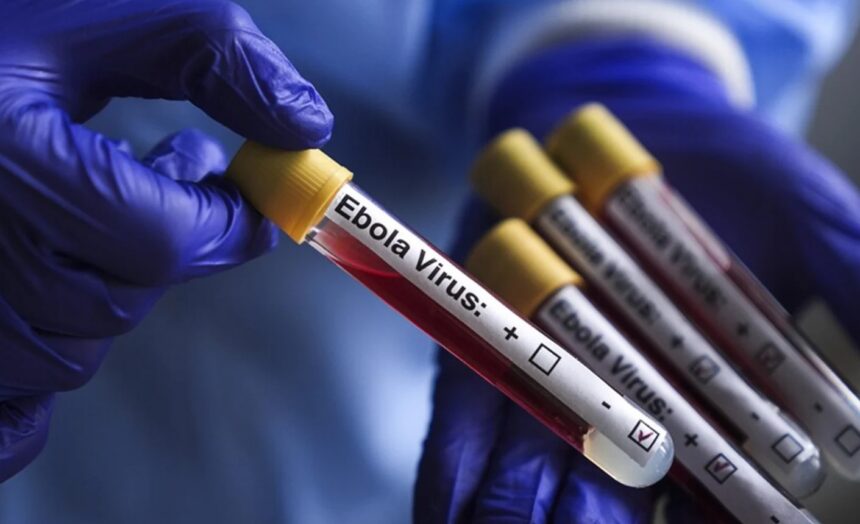
Nigeria has recorded a case of the virulent Ebola disease, the federal government has disclosed.
The government confirmed the case in the Federal Capital Territory (FCT)today, 20 October 2026, after a laboratory test returned a positive result.
The disease was said to have been brought into the country by a woman who recently arrived in Nigeria on an international flight from Uganda.
She was admitted to a private hospital in the FCT after showing signs of ill health. She received medical care for several days at the facility before the diagnosis was confirmed.
She is currently in isolation and receiving medical care.
The Coordinating Minister of Health and Social Welfare, Prof. Muhammad Ali Pate, disclosed that contact tracing has begun, with 44 close contacts identified so far, including healthcare workers, patients, caregivers and travel contacts.
The Federal Government, through the Nigeria Centre for Disease Control and Prevention (NCDC), is working with FCT health authorities to contain the infection and prevent further spread.
Authorities have urged Nigerians to remain calm but vigilant, practise regular hand hygiene and report suspected exposures or symptoms to public health authorities.
The NCDC toll-free call centre is available 24 hours daily on 6232 for information and suspected case reporting.
Recall that Nigeria recorded its first-ever case of Ebola in 2014 after a Liberian American lawyer, Patrick Sawyer, became the first index case for the introduction of the virus into Nigeria during the West African Ebola epidemic in 2014.
However, medical personnel in Lagos State, alongside officials of the federal Ministry of Health at the time, performed exceptionally in containing the spread of the virus, with some losing their lives in the process.
Ameyo Stella Adadevoh, the physician who attended to Sawyer and blocked his departure from his quarantine facility to curb the wider spread of the virus despite immense pressure and threats from the Liberian government, also lost her life to the deadly disease.
Nigeria would go on to earn commendation from other countries and international health organisations for how well it managed and curtailed what could have been a health emergency disaster capable of killing hundreds of people in the country.