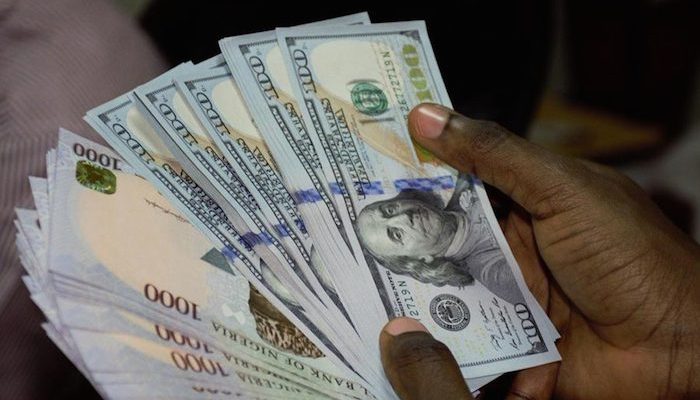
The naira opens Wednesday, October 21, 2026, in much the same place it has spent most of the month. At the official window, a dollar costs about ₦1,332. On the street, dealers are asking between ₦1,370 and ₦1,390 for the same dollar.
The official market has barely moved in three weeks, with daily closes confined to a band of roughly ₦1,331 to ₦1,336. That quiet is happening alongside strong numbers elsewhere: the country’s external reserves have reached an 18-year high, and the Central Bank of Nigeria (CBN) has just delivered its biggest interest rate cut in two decades.
Here is where the dollar-to-naira rate stands today, how it got here, and what the gap between the two markets means for your money.
Dollar to Naira Today at a Glance
| Market | Rate (₦ per $1) | Note |
|---|---|---|
| Official NFEM / CBN | about ₦1,332 | Latest published CBN close was ₦1,332.26 on October 16 |
| Live mid-market quotes | ₦1,330 to ₦1,333 | Readings from currency trackers late on Tuesday |
| Black market, buying | ₦1,365 to ₦1,375 | What dealers pay you for dollars |
| Black market, selling | ₦1,370 to ₦1,390 | What dealers charge you for dollars |
| Gap (selling rate vs official) | ₦38 to ₦58 | Roughly 3% to 4% |
A word on the numbers: the CBN publishes its figures after trading closes, and the data for Monday and Tuesday had not been posted when this article was written. The official figure above therefore leans on the last confirmed close and on live market readings. Black market rates differ from one dealer to the next, so treat them as a guide, not a fixed price.
Official Market: NFEM and CBN Rate
The Nigerian Foreign Exchange Market (NFEM) is the CBN’s regulated trading window, and its rate is the volume-weighted average of transactions on the day. It serves as the country’s official reference rate.
The latest confirmed close is ₦1,332.26 per dollar on Friday, October 16. That was a slip of about 64 kobo from ₦1,331.61 the day before, a move of around 0.05%. Turnover on the day came to $837.31 million, according to CBN data.
October has followed the same pattern, with small moves in both directions and no sign of a breakout.
| Date | NFEM closing rate (₦/$) |
|---|---|
| October 2 | 1,332.00 |
| October 5 | 1,332.90 |
| October 6 | 1,331.50 |
| October 7 | 1,332.75 |
| October 8 | 1,333.55 |
| October 9 | 1,332.49 |
| October 12 | 1,332.99 |
| October 13 | 1,335.50 |
| October 14 | 1,332.59 |
| October 15 | 1,331.61 |
| October 16 | 1,332.26 |
The weakest day was October 13, when the naira closed at ₦1,335.50, its softest level since August. It recovered within a session. Real-time trackers showed the dollar at ₦1,330 to ₦1,333 late on Tuesday, so the official market looks set for another flat day.
The naira also holds its ground against other major currencies. On October 15, the euro traded at ₦1,490.48 in the official market.
Black Market Dollar to Naira Rate Today
On the parallel market, the story is less tidy. Aboki Forex had the dollar at ₦1,370 early on Tuesday. Other trackers put the selling rate at ₦1,380 and ₦1,390, with buying rates between ₦1,365 and ₦1,375. Dealers in Lagos, Abuja, Kano and Port Harcourt usually quote within a few naira of each other, though the quote you get depends on who you ask and how much you want to buy.
The street rate has also drifted over the past few weeks.
| Period | Official NFEM (₦/$) | Black market (₦/$) |
|---|---|---|
| June 11 | about 1,360 to 1,366 | 1,395 to 1,405 |
| August 26 | about 1,346 | about 1,400 |
| September 3 | about 1,329 | 1,395 to 1,410 |
| September 23 | 1,327.78 | about 1,389 |
| October 6 | 1,331.50 to 1,332.90 | about 1,357 |
| October 20 to 21 | about 1,332 | 1,370 to 1,390 |
The official rate has strengthened by roughly ₦30 since June. The street rate has barely shifted over the same stretch. During August, the naira gained about 1.5% in the official market while the parallel market moved by a mere 0.06%.
Why the Gap Between Official and Parallel Rates Persists
A ₦38 to ₦58 gap is far smaller than the chasms Nigerians remember from earlier years, but it has not closed. A few ordinary forces keep it open.
The official window handles large, documented transactions through banks and licensed channels. The street market sells convenience: cash dollars, small amounts, no paperwork, same-day delivery. People pay a premium for that, and dealers price it in. Demand also tends to spike for school fees, medical trips and foreign travel, and those buyers rarely have the time or documents to go through formal channels.
For anyone who can access the official window, the saving is clear. For everyone else, the practical advice is to compare quotes before you buy.
Why the Naira Is Holding Steady
Three developments sit behind the calm.
Reserves are at a multi-year high: Nigeria’s external reserves climbed to $58.81 billion on October 12, the highest since November 2008. They had stood at $55.08 billion on October 9, so the latest jump added roughly $3.7 billion in one reported movement. Net reserves are put at about $46 billion. A bigger cushion gives the CBN more room to smooth out sudden swings.
The CBN has cut interest rates sharply: On September 22, the Monetary Policy Committee lowered the benchmark rate by 350 basis points, from 26.5% to 23%. That is the largest single cut since December 2006. The bank said the move was backed by easing inflation, stronger growth, a stable exchange rate and higher reserves. Headline inflation stood at 15.39% in August.
Not everyone expected a calm reaction. Bismarck Rewane, the managing director of Financial Derivatives Company, had said the cut could put the naira under pressure. So far the official rate has held within a narrow range, though the Oct 13 dip shows the market is not immune to jitters.
The economy is growing: Real GDP rose 4.43% year on year in the second quarter, according to the National Bureau of Statistics, and the International Monetary Fund has since raised its growth outlook for Nigeria.
None of this guarantees the naira will stay put. Reserves do not turn into a stronger currency overnight, and the October 13 episode proved it: the naira weakened that day even as reserves hit their 18-year high.
How Much Is $1, $100, $500 and $1,000 in Naira Today?
The table below uses the official rate of ₦1,332 and the two ends of today’s street selling range.
| Amount | Official (₦1,332) | Black market (₦1,375) | Black market (₦1,390) |
|---|---|---|---|
| $50 | ₦66,600 | ₦68,750 | ₦69,500 |
| $100 | ₦133,200 | ₦137,500 | ₦139,000 |
| $500 | ₦666,000 | ₦687,500 | ₦695,000 |
| $1,000 | ₦1,332,000 | ₦1,375,000 | ₦1,390,000 |
| $5,000 | ₦6,660,000 | ₦6,875,000 | ₦6,950,000 |
On a $5,000 purchase, the difference between the official rate and the top street rate comes to ₦290,000. That is why importers, students and small businesses keep a close eye on which window they can use.
What to Watch This Week
Several things could move the rate in the coming days.
- CBN data for October 19 and 20: Once the bank posts these figures, they will show whether the naira stays inside its ₦1,331 to ₦1,336 band.
- Market turnover: Trading volume has swung widely this month, from about $570 million on October 2 to more than $1 billion on October 6. A sudden jump or collapse in activity often comes before a shift in price.
- Reserves: Another increase would add to the case for stability. A reversal would raise questions.
- The street spread: If the black market premium widens beyond ₦60, it usually signals stronger demand for cash dollars.
Frequently Asked Questions
What is the dollar to naira rate today?
The official NFEM rate is about ₦1,332 per dollar. On the black market, dealers are buying at ₦1,365 to ₦1,375 and selling at ₦1,370 to ₦1,390.
What is the difference between the NFEM rate and the CBN rate?
The NFEM rate comes from trades on the platform, while the CBN publishes session rates, including the closing rate and averages. The two usually differ by less than a naira.
Why is the black market rate higher than the official rate?
The street market charges a premium for cash, speed and convenience, and demand for physical dollars often exceeds what dealers can supply.
Does the NFEM trade on weekends?
No. The NFEM trades on business days only, so the CBN’s rate stays at Friday’s level until Monday’s figures are published.
Will the naira get stronger or weaker?
Nobody can say for certain. Record reserves and a stable official market argue for calm, while the sharp rate cut and the persistent street premium are reasons for caution.