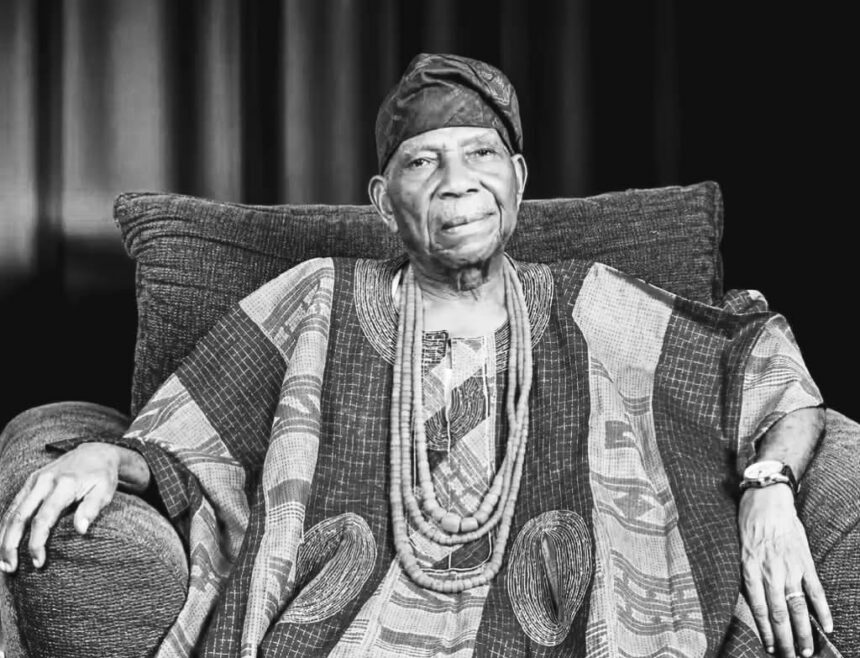
The late Afenifere leader, Reuben Fasoranti, devoted more than seven decades to education, public service and the struggle for democratic governance, leaving behind a legacy that extended from classrooms in Ondo State to Nigeria’s political arena.
Fasoranti, who died on Tuesday at the age of 100, was remembered by political leaders across party lines for his counsel, integrity and unwavering commitment to the ideals of federalism and restructuring.
President Bola Tinubu said he would miss Fasoranti’s “voice of wisdom, moral authority, and fatherly counsel”, while former President Olusegun Obasanjo recalled receiving advice from the elder statesman despite their political differences.


Reuben Fasoranti praying for Bola Tinubu ahead of his successful 2023 presidential ambition
Former Vice-President Atiku Abubakar also described his legacy as one that “towers above any title or office”.
Born on May 11, 1926, in Uso, near Owo in present-day Ondo State, Fasoranti initially aspired to become a medical doctor but abandoned the ambition after discovering that the schools available to him lacked the teachers and facilities needed to pursue science subjects.

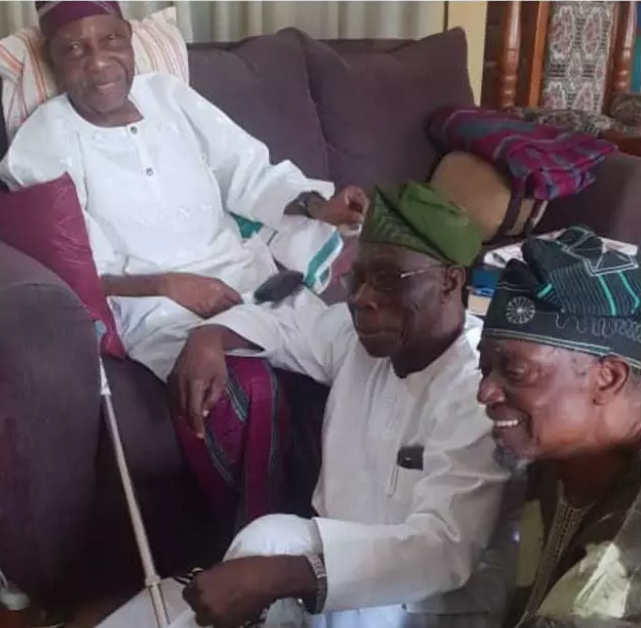
The experience redirected him towards teaching, a profession through which he later established and managed schools that produced prominent figures, including former Ekiti State governor, Kayode Fayemi.
After attending St Andrews Primary School in Owo and Ondo Boys’ High School, Fasoranti proceeded to Yaba Higher College, now Yaba College of Technology, before studying geography at the University College, Ibadan, now the University of Ibadan.
He began his teaching career at Ondo Boys’ High School before travelling to the United Kingdom to obtain a postgraduate diploma in education at the University of Hull and later earning a master’s degree in education administration and school management at Macquarie University in Sydney, Australia.

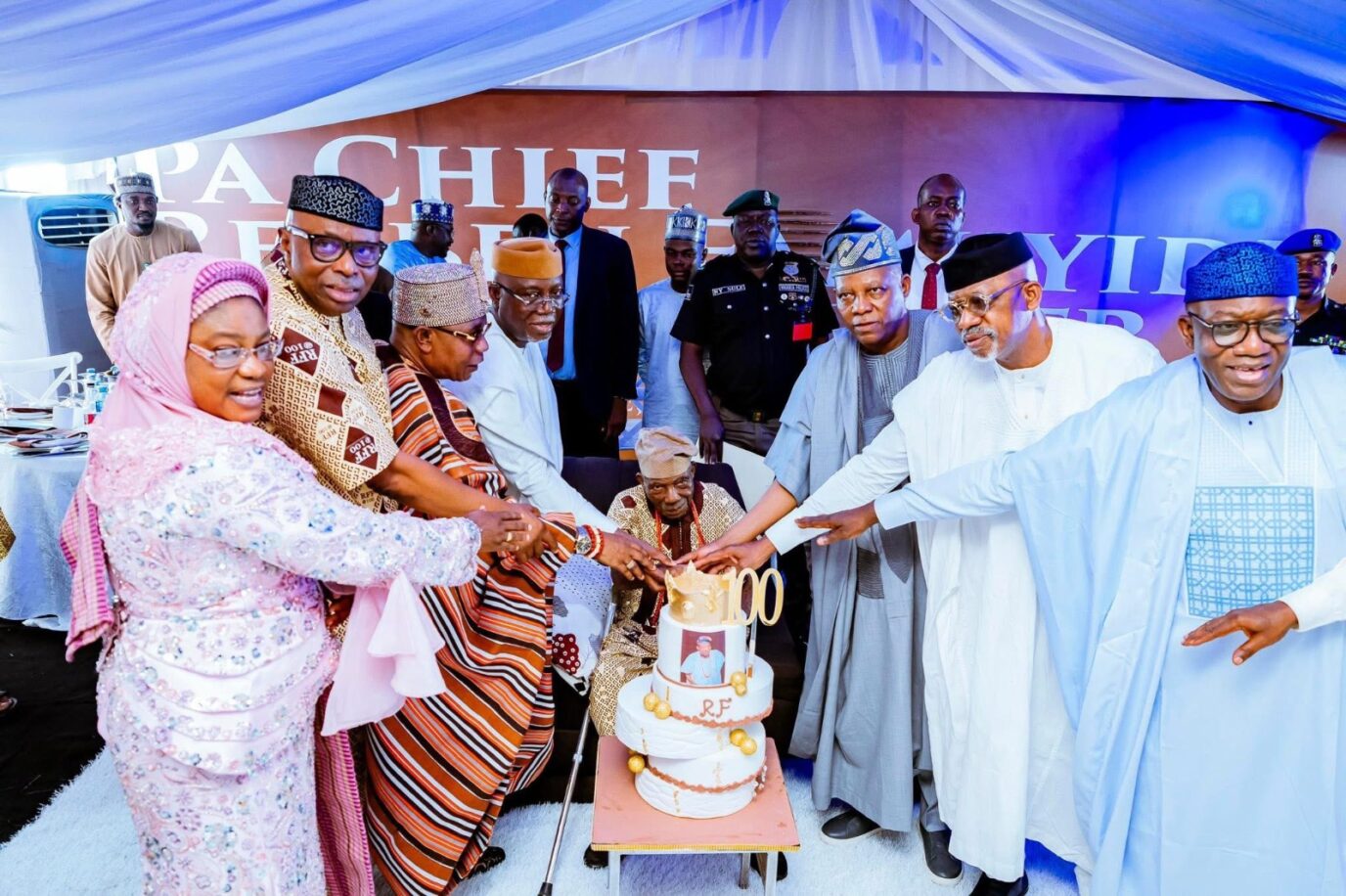
Returning to Nigeria, he founded Anglican Grammar School, Iju/Itaogbolu, in Akure in 1957 and served as its principal for 14 years before the state government took over the institution in 1972.
He subsequently headed Iwo Baptist School in Osun State, Olivet Baptist School in Oyo State and Christ’s School in Ado Ekiti, before establishing Omolere Nursery and Primary School, Akure High School and St Frances’ Academy in Igoba, Akure.
Fasoranti’s involvement in politics developed alongside his teaching career, with his admiration for the ideas of former Western Region premier, Obafemi Awolowo, leading him to join the Action Group.
“I was fascinated by his ideas. He would come there to campaign, and I attended all those rallies,” he told Vanguard in 2011, explaining how Awolowo’s political philosophy inspired him to become a disciple of the former premier.
His commitment to public service was reflected in his time as a councillor, a position he said he held without remuneration while continuing to work as a school principal.
“When I was a councillor, I was also a school principal, and I did not take anything from the council. I was doing it for free because I had a job,” he told Vanguard in 2019.
He later served as Ondo State commissioner for finance under Governor Adekunle Ajasin during the Second Republic, maintaining strict boundaries between public resources and personal use.
His daughter, Oluwafunmilayo, recalled in 2018 that his official vehicle was returned to the government office after work, despite her suggestion that it should remain at home.
Fasoranti’s political career was interrupted when the military government led by former President Muhammadu Buhari seized power in December 1983 and detained officials of the ousted civilian administration.
During his imprisonment, one of his daughters died while receiving treatment in the United Kingdom, and he was briefly released to be informed of the tragedy before being returned to custody.
“He returned the same day,” Oluwafunmilayo said, describing the emotional toll the incident took on the family.
Following years of military rule, Fasoranti joined the National Democratic Coalition, a pro-democracy group that demanded the restoration of civilian government and the recognition of the annulled June 12, 1993, presidential election, widely believed to have been won by Moshood Abiola.
He also co-founded Afenifere in 1993 alongside political figures including Abraham Adesanya, Bola Ige, Ayo Adebanjo and Olu Falae, with the organisation eventually evolving into a Yoruba socio-cultural group.
Fasoranti became Afenifere leader in 2008 after Adesanya’s death, although internal divisions marked parts of his tenure as the organisation navigated changing political circumstances.
He remained a committed advocate of Awolowo’s political philosophy until his death, while his personal life was marked by the loss of his wife, whom he married in 1955 and who died in 1991, and their daughter, Funke Olakunrin, who was murdered by gunmen along the Benin-Ore road in 2019.
Beyond the political positions he occupied, Fasoranti’s life was defined by his work in education, his advocacy for democracy and his insistence on public accountability, principles that continued to shape his standing among Nigeria’s political and civic leaders.