The announcement of a winner in Nigeria’s presidential election is the final stage of a process that begins at individual polling units and passes through several layers of collation before reaching the Independent National Electoral Commission’s headquarters in Abuja.
At the end of voting, the presiding officer accredits voters using the Bimodal Voter Accreditation System and counts the ballots publicly before recording each political party’s score on Form EC8A, the official polling unit result sheet.
The presiding officer signs the document, while available polling agents also countersign it, and a copy of the result is displayed at the polling unit on Form EC60E for public viewing.
From there, the figures move through the collation structure, with officers at each stage compiling results submitted from the level immediately below.
The process covers ward, local government area, state and national collation, with each officer responsible for recording and verifying the figures presented to them.
How the results forms work
At ward level, the collation officer aggregates the polling unit results recorded on Form EC8A and transfers the figures to Form EC8B.
The local government collation officer then combines the ward totals on Form EC8C, while the State Collation Officer for the Presidential Election, known as SCOPE, compiles the local government results on Form EC8D.
The figures on the state-level form include registered voters, accredited voters, valid votes and rejected ballots, alongside the scores recorded by each presidential candidate.
Katsina State’s 2023 presidential election figures, for instance, showed 3,516,719 registered voters, 1,097,663 accredited voters, 1,058,673 valid votes and 32,514 rejected ballots.
Atiku Abubakar of the Peoples Democratic Party received 489,045 votes in the state, narrowly ahead of Bola Tinubu of the All Progressives Congress, who secured 482,283.
The final collation takes place in Abuja, where the INEC chairman serves as the returning officer for the presidential election.
Joash Amupitan currently occupies the position after succeeding Mahmood Yakubu in October 2025.


At the national collation centre, each SCOPE presents the original Form EC8D containing the presidential results from their respective states.
After the state submissions, the returning officer displays Form EC8DA, which summarises the results by state, alongside Form EC8E, the document used for the final declaration.
Polling agents are given the opportunity to make observations before the declaration, after which they receive duplicate copies of the relevant documents.
What determines the winner?
The candidate with the highest number of votes does not automatically qualify to become president, as the Constitution also sets a geographical spread requirement.
Under Section 134 of the Constitution, a presidential candidate must secure the highest number of votes cast and at least one-quarter of the votes in not less than two-thirds of all the states and the Federal Capital Territory.
The scale of the 2023 election illustrates the figures involved, with INEC recording 93,469,008 registered voters, 25,286,616 accredited voters, 24,025,940 valid votes and 939,278 rejected ballots.
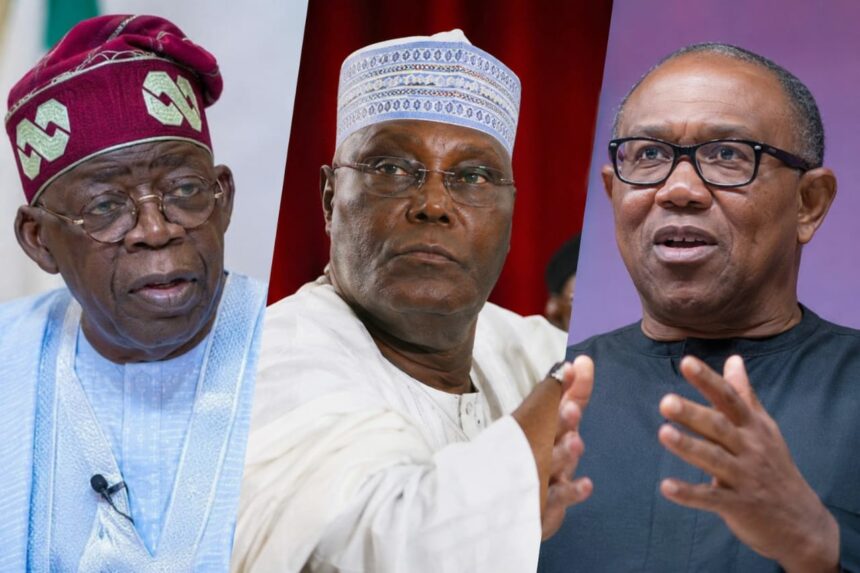
Tinubu polled 8,794,726 votes nationally, ahead of Atiku, who received 6,984,520, Peter Obi of the Labour Party, who scored 6,101,533, and Rabiu Kwankwaso of the New Nigeria Peoples Party, who secured 1,496,687.

In the legal proceedings that followed the election, Tinubu’s lawyers told the presidential election petition court that their candidate secured at least 25 per cent of the votes in 29 states.
They also argued that Atiku met the requirement in 21 states, while Obi achieved it in 16 states and the Federal Capital Territory, although those figures were presented in Tinubu’s final written address rather than INEC’s official declaration.
Electronic transmission and the legal debate
The electronic transmission of polling unit results has remained a major point of disagreement in Nigeria’s electoral process.
INEC uploads polling unit result sheets to its Result Viewing Portal, known as IReV, but the Supreme Court ruled in the 2023 election dispute that the platform was intended for public viewing rather than serving as the legally recognised collation system.

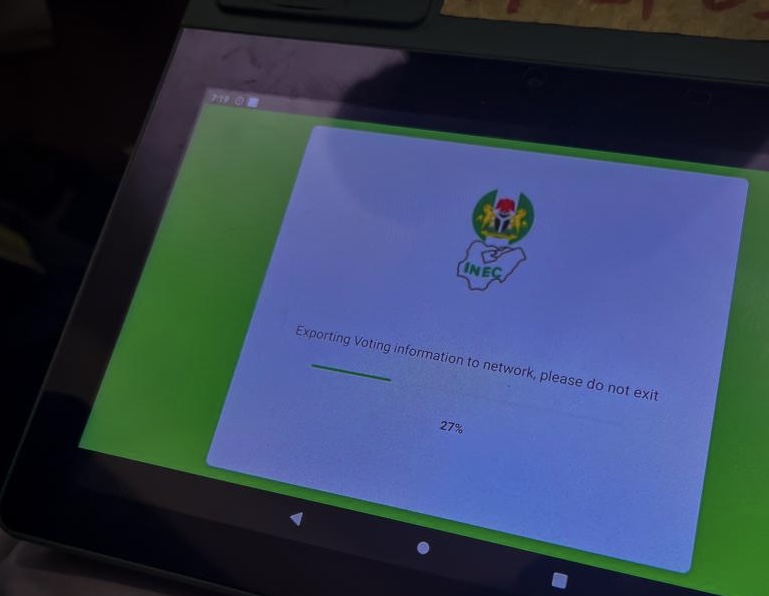
The court also held that failure to upload results to IReV could not, on its own, invalidate the election.
However, the Electoral Act 2026, signed by President Bola Tinubu in February, introduced a provision requiring presiding officers to transmit Form EC8A electronically to the portal.
Section 60(3) of the new law provides that where electronic transmission fails because of communication challenges, the signed physical Form EC8A remains the primary document for collation and declaration.
Senate Leader Opeyemi Bamidele has described the provision as making electronic transmission mandatory, while critics argue that the exception for transmission failures leaves room for manual records to remain decisive.
The collation process therefore depends on the documents produced and signed at each stage, particularly when results are disputed.
Declaring Tinubu winner in 2023, Yakubu said the APC candidate had been elected “having satisfied the requirements of the law.”