

To return the power to elect public officers to the electorate, we must end the “selectorate” system in which a handful of judges constantly determine election winners; to do this, INEC must fulfil its sacred obligation to conduct credible polls that reflect the will of the people.
One intrinsic element of democracy is periodic elections, which let citizens choose those who will govern them and run the affairs of the state. The best way to put a democratic nation in jeopardy is to frustrate the electorate’s ability to choose leaders in free, fair, credible elections, or to subvert their electoral choices and will through underhanded tactics. But this has largely been the problem with elections in Nigeria in the last decade. Nigerians’ ability to freely elect those who will govern them and manage the nation’s affairs has effectively been ceded to a band of mercantile legal luminaries who determine who occupies public office and who gets what after most elections.
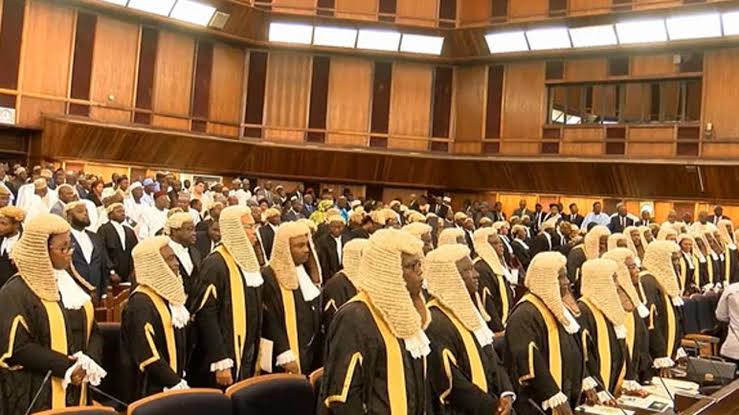
On Monday, the President of the Court of Appeal, Justice Monica Dongban-Mensem, swore in the 375 judges who will serve on tribunals that will hear election petitions filed by aggrieved parties across the country after the 2027 elections.
Section 285(1) and (2) of the 1999 Constitution, as amended, vests in the President of the Court of Appeal the responsibility of constituting Election Petition Tribunals for the adjudication of disputes arising from National and State Houses of Assembly and Governorship elections. Similarly, Section 134(3)(a) and (b) of the Electoral Act, 2026, prescribes the timelines for constituting the tribunals and opening their registries.
While it is important to envisage certain post-election events and factor them into the nation’s electoral and democratic process, it will be extremely damaging for our democracy if we create an entrenched a system that put ability and power to determine who wins in election in the hands legal practitioners and judges and not the people.
Nigeria is essentially the only democratic nation in the world where the aftermath of every general election is greeted with waves of election-related litigation and petitions challenging the outcome of the polls. And at the centre of this unsettling anomaly is the Independent National Electoral Commission (INEC), the very body that should prevent this sickening aberration, is actually the one entrenching it and has made it a convention of some sort. The major reason the judiciary has become the decider of election outcomes is largely that INEC has lent itself to the shenanigans of unscrupulous and power-hungry politicians who have turned the conduct of free and credible elections into a chaotic exercise and embarrassing theatrics that rarely reflect the will of the people.
There is absolutely nothing wrong with setting up a tribunal to listen to the grievances of those who participated in an election; however, this should not become a permanent replacement for the electorate and their ability to elect public office. Entrenching this practice undermines our democracy, and to course-correct, INEC must live up to expectations and perform the task it is saddled with in line with the spirit and letter of the law and not according to the whims and impulses of desperate politicians.
INEC’s inability to conduct transparent and credible polls has also been cited as one of the reasons why our polity’s socio-political terrain has become repugnant, regressive and viscerally repulsive. By the same token, the assertion that the way the nation’s election umpire conducts elections has largely contributed to the many malaise and socio-economic challenges the country is grappling with has gained traction and dominated national discourse. When people who should not be on the ballot are shoehorned into public office via rigged polls, public services take a hit and accountability suffers.
It must be stated here and now that one of the reasons this perennial electoral and democratic ignominy has endured is because it has enjoyed the seeming imprimatur of some high-ranking justices and judges who turn logic on its head when hearing election petitions and reinforce the impunity and rascality of INEC instead of checking the electoral body and ensuring that the will of the people prevails.
To return the power to elect public officers to the electorate, we must end the selectorate system where a handful of judges constantly determine who wins an election, and to do this, INEC must fulfil its sacred obligations and responsibility of conducting credible polls that reflect the will of the people and if it fails to hold what many sensible and right-thinking Nigerians deem a free and fair election, the judiciary must step in to save the day and ensure the will of the people is not subverted.
This is the only way we can deepen our electoral process and strengthen our democracy.