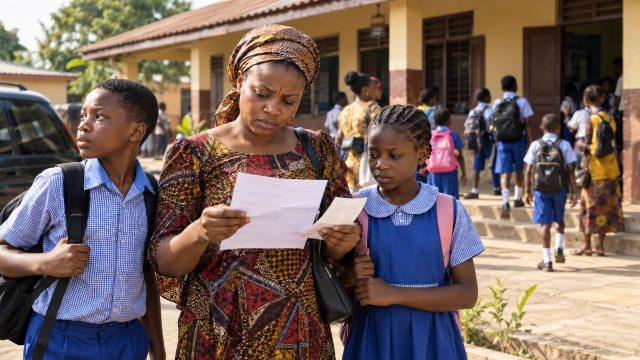
The arrival of a new school term brings another round of financial decisions for Nigerian parents, with families expected to put together everything their children need before returning to the classroom. From settling tuition and purchasing textbooks to replacing uniforms, paying transportation charges and providing money for feeding, the preparations often require substantial spending within a short period. For households with 2, 3 or more school age children, the responsibility can become particularly demanding, especially when several payments fall due at the same time.
Across different parts of the country, the amount parents must set aside for education is changing, with private schools adjusting their fees, booksellers increasing prices and transportation operators reviewing their charges. Some institutions also request additional payments for development projects, graduation ceremonies, feeding arrangements, examinations and other activities. These expenses create a financial commitment that goes beyond the amount initially advertised as school fees, leaving parents to calculate how much they need to spend before their children can settle into another academic session.
The situation has become increasingly visible ahead of the 2026/2027 academic session, as reports from different Nigerian communities documented higher charges across several categories of school expenses. Behind the figures are households making difficult adjustments, parents reconsidering their spending priorities and schools attempting to maintain their operations amid rising costs.
The Rising Cost of School Fees
Tuition remains one of the biggest financial commitments facing parents whenever a new academic term approaches, particularly those whose children attend private schools. Although school fees differ according to location, educational level and the services provided, documented increases ahead of the September 2026 resumption showed that some families were preparing to pay considerably more than they had paid during the previous session.
On September 14, 2026, a survey of private schools across Nigeria documented tuition increases ranging between 30 and 40 per cent in some institutions. The figures from Lagos provided a clearer picture of the adjustment, with a private secondary school in Ipaja increasing its termly tuition from ₦86,000 to ₦124,000. Another school in Egbeda raised its fees from ₦250,000 to ₦320,000 per term, representing additional payments of ₦38,000 and ₦70,000 respectively.
The difference becomes more significant when a household has 2 children attending the same institution. A parent whose children previously required ₦172,000 for tuition at the Ipaja school would now need ₦248,000, assuming both children pay the same rate. At the Egbeda school, the equivalent payment for 2 children would rise from ₦500,000 to ₦640,000 per term. These calculations cover tuition alone, without transportation, uniforms, textbooks or feeding.
The increases were also evident across Lagos, Ogun and Oyo, where private school proprietors defended adjustments of up to 30 per cent ahead of the 2026/2027 academic session. For parents whose monthly earnings have remained relatively stable, paying the new amounts means finding additional money within household budgets that already cover rent, food, electricity, healthcare and other essential responsibilities.
Textbooks Become Another Expensive Requirement
Preparing a child for school also involves purchasing the books required for different subjects, alongside exercise books and other learning materials. Depending on the class, parents may be expected to provide textbooks for Mathematics, English Language, Basic Science, Social Studies, Civic Education and several other subjects. Dictionaries, mathematical sets, drawing materials and notebooks can further increase the amount required before resumption.
A September 10, 2026 investigation documented textbook price increases of approximately 25 to 30 per cent for core subjects at basic education and senior secondary levels. A bookseller operating in Agege, Lagos, attributed the adjustments to higher printing costs and limited competition among recognised publishers, while also discussing the effect of the Federal Ministry of Education’s textbook approval and ranking arrangements.
The pressure is also visible in the cost of ordinary exercise books. One parent reported that branded exercise books which previously sold for ₦700 each had increased to ₦1,000. The difference is ₦300 per book, meaning a child required to purchase 15 books would need an additional ₦4,500 compared with the previous price. Families with several children may have to multiply that expense according to the number of books required by each school.
Another issue concerns where parents are permitted to purchase prescribed learning materials. An investigation published on October 22, 2026, documented parents in Lagos and Abuja who said their children’s schools required them to obtain textbooks and notebooks directly from the institutions. Some parents complained that they were not allowed to purchase the same materials independently from bookshops, while other schools permitted outside purchases provided the correct titles and editions were obtained. This difference in purchasing arrangements adds another consideration to the financial decisions parents must make.
Transportation Charges Take More Money From Families
School transportation has become another substantial expense, particularly for parents whose workplaces and homes are far from their children’s schools. Families that depend on school buses often have to pay transportation charges at the beginning of each term, while those without access to school buses must arrange private drivers, public transport or personal journeys to ensure their children arrive safely.
Figures documented in September 2026 showed how sharply some transportation charges had increased. A parent identified as Roseline Imoh, who lives around Apple Junction in Festac, Lagos, said her son’s school bus charge increased from ₦60,000 to ₦117,000 per term. The additional ₦57,000 represents an increase of 95 per cent, placing a much heavier responsibility on the household.
Another parent, Linus Nwadike, said he previously paid ₦90,000 for the transportation of 2 children but was asked to pay ₦130,000 for the new term. Joel Ibidapo also reported an increase in his child’s school bus charge from ₦110,000 to ₦130,000, adding ₦20,000 to his previous transportation expenses.
The adjustments are connected to the operating expenses schools incur when maintaining buses and generators. A June 2, 2026 investigation documented a Lagos private school owner who said his institution spent more than ₦2.2 million weekly on fuel for its buses and generators. The school subsequently increased its transportation charge from ₦45,000 to ₦60,000 and added ₦10,000 to tuition fees across the board.
Another school administrator in Lekki reported purchasing 4,000 litres of diesel within the first 2 weeks of resumption, at a cost of approximately ₦4 million in a week. Some institutions were also considering suspending their bus services because of fuel and maintenance expenses. For parents, these developments mean that transportation arrangements which previously appeared manageable may require considerably more money in the new term.
Uniforms, Shoes, Bags Increase Resumption Expenses
School uniforms are another recurring requirement, especially for children who have outgrown their previous clothes or need replacement items after months of regular use. Parents may have to purchase everyday uniforms, sportswear, school shoes, socks, belts, ties, sweaters and other clothing specified by their children’s institutions.
A parent identified as Joel Ibidapo reported that his child’s uniform increased from ₦45,000 to ₦50,000 ahead of the new term. Another parent, Ayo Teju, reported spending ₦65,000 on uniforms and footwear, although the amount remained unchanged during the period covered by the report.
The actual amount depends on the school, the number of clothing items required and whether parents are purchasing a complete uniform package or replacing individual items. Some institutions also have separate clothing requirements for sports activities, cultural events and special school occasions, adding to the amount families may have to spend.
School bags and lunch bags introduce another expense, particularly when children need replacements. Younger pupils may require new bags as they grow, while older students may need stronger bags capable of carrying several textbooks and notebooks. These purchases may not happen every term, but they often coincide with the period when parents are already paying tuition and purchasing other school supplies.
For households with 3 children, the financial responsibility can become more demanding because each child may require different uniform sizes, footwear and learning materials. Even where some items can be reused by younger siblings, parents still have to replace clothing that has become unsuitable or worn out.
Boarding Fees Place Additional Pressure on Parents
Families with children attending boarding schools face a different category of expenses because their financial responsibility extends beyond classroom instruction. Tuition may be accompanied by hostel accommodation, feeding, toiletries, bedding, laundry, personal care products and other necessities required during the child’s stay at school.
A September 10, 2026 report documented a private school in the Agbado area of Lagos that increased its hostel fees by approximately 50 per cent, with inflationary pressures identified as the reason for the adjustment. For parents already paying substantial tuition, such an increase creates another significant financial obligation before their children can resume.
The experience of Ayo Teju also provides an example of the amount involved in boarding arrangements. The parent reported paying ₦480,000 in boarding fees for the term, although the charge remained unchanged during the period covered by the September 2026 account. The figure demonstrates the size of the commitment that can accompany boarding education, even before other expenses are considered.
Feeding arrangements can also affect the amount parents must provide. An October 2026 investigation documented a Lagos parent, Emem Paul, whose children attended Ride On Excellent Ville Nursery and Primary School on Lagos Island. She said the school imposed a feeding arrangement that prevented pupils from bringing food from home. She eventually insisted that her children be exempted, threatening to withdraw them otherwise.
The school’s proprietress, Latifat Ibrahim, defended the arrangement and explained that food and other services were included in the institution’s payment structure. The case illustrates how feeding can become part of the compulsory financial arrangement in some schools, while other parents may have the freedom to provide meals independently.
Graduation Ceremonies Introduce Unexpected Bills
Another expense that has attracted attention is the amount parents are required to spend on graduation ceremonies and end of session activities. Although these occasions are intended to celebrate children’s academic progress, the associated payments can become another financial commitment, particularly when several children are graduating during the same academic year.
An October 22, 2026 investigation documented the experience of a parent identified as Mrs Kuburat in Abuja. She said she paid almost ₦100,000 in graduation related charges at Megaliy International School for her 3 children, who were graduating at different educational levels.
The reported charges included ₦20,000 for the child graduating from nursery, ₦25,000 for the Junior Secondary School graduate and ₦50,000 for the Senior Secondary School graduate. The combined payment amounted to ₦95,000. She also explained that during years when none of her children graduated, she paid ₦10,000 per child towards the school’s end of session ceremony.
A Lagos parent, Damilola Ojuolape, provided another example involving her 9 year old daughter. She said the school charged ₦45,000 for graduation, while she spent another ₦154,000 preparing the child for the occasion. Her expenses included a green dress, jewellery, a purse, sunglasses and a wristwatch, bringing the combined amount to ₦199,000.
These experiences show how school expenses can extend into clothing, photographs, celebrations and other activities outside ordinary classroom requirements. For parents managing several financial responsibilities, graduation charges can arrive at a time when tuition, examination payments and other expenses are already competing for attention.
Additional Levies Increase the Amount Payable
Some schools also request payments for development projects, ICT facilities, examinations, laboratory use, extra lessons, cultural activities, excursions and end of session programmes. These charges differ between institutions, but they can significantly increase the amount parents eventually spend during an academic session.
The October 2026 investigation documented a school in Katsina where parents contributed ₦3,000 for non graduating pupils and ₦5,000 for graduating pupils towards a speech and prize giving programme. The school’s Head of Quality Assurance, Ugwu Chinedu, confirmed the payments but described them as voluntary. He explained that pupils whose parents did not contribute could still attend, although they would have to bring their own food instead of receiving the school’s refreshments.
Another documented case involved St Martin’s Nursery and Primary School, where the first term fee for the primary section was reported as ₦34,150. The school’s head teacher said subsequent terms cost approximately ₦20,950. Additional graduation charges in the secondary section included ₦4,000 for JSS3 pupils and ₦7,500 for SS3 pupils.
Such expenses make it important for parents to understand the complete payment structure of a school rather than relying only on the tuition figure. A school may advertise one amount as its termly fee, while other payments become necessary when examination periods, graduation activities or special programmes approach.
Public School Admission Requirements Also Attract Expenses
The financial pressure is not limited to families whose children attend private schools. Parents seeking admission into public secondary schools may also have to provide documents, purchase uniforms and settle specified registration requirements.
An October 11, 2026 investigation into Lagos public school admission documented requirements facing new JSS1 and SSS1 entrants. These included tax clearance documentation involving ₦20,100, a ₦6,800 registration fee, birth certificates, National Identification Numbers and Lagos State Residents Registration Agency certificates. Parents also had to prepare for the purchase of school uniforms, badges, berets, sportswear and ties.
The report stated that the tax related payment had increased from ₦10,100 in 2025 to ₦20,100 in 2026. A teacher interviewed during the investigation described the amount as a tax penalty paid to the state government rather than tuition collected by the school.
The investigation also documented the experience of a child identified as Thomas Eze, who reportedly could not complete the transition into JSS1 because his father, who had lost his construction job, could not afford the requirements. The case brings attention to the financial difficulties that can affect admission and progression even when families are seeking public education as a more affordable option.
Education Inflation Reflects the Wider Economic Pressure
The increasing cost of preparing children for school also reflects the broader economic conditions affecting Nigerian households. Education expenses are influenced by several components, including tuition, learning materials, transportation, accommodation and other services, meaning that changes in their prices can affect families differently.
An analysis of National Bureau of Statistics data published in September 2026 recorded education services inflation at 10.72 per cent year on year in August, compared with 7.51 per cent in July. This represented an increase of 3.21 percentage points, even as headline inflation eased marginally from 15.43 per cent in July to 15.39 per cent in August.
The monthly education services inflation figures showed 22.48 per cent in January, 18.59 per cent in February, 13.74 per cent in March, 7.44 per cent in April, 7.21 per cent in May, 7.86 per cent in June, 7.51 per cent in July and 10.72 per cent in August 2026.
These figures provide a wider picture of the pressure affecting education related services, although they should not be interpreted as the exact price increase for every school item. The cost of textbooks, uniforms, transportation and tuition can change at different rates depending on the market and the individual institution.
Why Schools Are Adjusting Their Charges
School proprietors have also pointed to the rising cost of maintaining educational institutions. Their responsibilities include paying teachers, purchasing learning materials, maintaining classrooms, providing electricity, operating school buses and meeting other administrative expenses.
During discussions ahead of the 2026/2027 academic session, proprietors in Lagos, Ogun and Oyo attributed fee increases to higher fuel expenses, rent, infrastructure costs, transportation, textbooks and teachers’ salaries. Some argued that adjusting tuition was necessary to keep their schools operational and retain qualified staff.
The fuel expenses documented in Lagos provide a practical example of these pressures. A school spending more than ₦2.2 million weekly on fuel for buses and generators has a substantial operating commitment, while another institution reported spending approximately ₦4 million on 4,000 litres of diesel within 2 weeks of resumption.
These expenses help explain why school owners are reviewing their charges, although the actual financial position differs from one institution to another. Parents, meanwhile, have to manage the increases alongside their own household expenses, creating a difficult relationship between the cost of providing education and the ability of families to pay for it.
Government Moves To Reduce Textbook Expenses
The Federal Government introduced a reusable textbook policy on January 9, 2026, as part of efforts to reduce the financial burden associated with purchasing learning materials. The policy promotes durable textbooks designed to last between 4 and 6 years, allowing pupils to reuse books across academic sessions and enabling siblings to share suitable copies.
It also prohibits the bundling of disposable workbooks with textbooks, limits the number of approved textbooks per subject and grade level, and requires meaningful improvements to educational content before revised editions are introduced. The intention is to prevent parents from repeatedly purchasing new textbooks because of minor changes in book layouts or pagination.
Another measure restricts graduation ceremonies to pupils completing Primary Six, JSS3 and SSS3 rather than allowing schools to organise graduation ceremonies at every educational level. This is intended to reduce unnecessary spending on activities that may place additional pressure on families.
The effectiveness of these measures will depend partly on implementation across schools. Parents who continue to encounter expensive textbook packages or repeated purchases may still struggle to experience the intended relief, particularly where schools maintain specific purchasing arrangements.
Proposed Examination Fees Raise Further Concerns
Parents with children approaching the end of secondary education also have examination registration to consider. The Federal Government proposed increasing the registration fees for the 2027 West African Senior School Certificate Examination and National Examinations Council examinations from ₦27,500 to ₦50,000.
The proposed adjustment represented an increase of ₦22,500, approximately 81.8 per cent. However, the proposal was suspended in July 2026 to allow further consultations with stakeholders, meaning the proposed ₦50,000 should not be treated as an approved examination fee.
For households with children in SS3, examination preparation already involves several expenses, including textbooks, extra lessons, registration preparations and other academic requirements. Any eventual adjustment to examination charges could therefore introduce another financial consideration for parents approaching the final stage of their children’s secondary education.
Parents Adjust Household Spending To Keep Children In School
The combined expenses are already influencing how some Nigerian families manage their children’s education. Parents are delaying payments, reducing spending on private lessons and reconsidering whether they can continue paying for particular services.
A September 2026 investigation documented Chima Nwosu, who said his family could not complete school fee payments because charges had increased while their earning capacity had reduced. Another parent, Adekunle Oguns, said he had stopped paying for private lessons and instead began teaching some subjects, including Mathematics, Further Mathematics, Citizenship Education and English, himself.
An October 2026 investigation also documented parents who postponed school payments because of financial difficulties. Lois Ugbede said she was forced to pay her children’s fees later than she normally would, while Tolulope Eludini described delayed payments as an option she sometimes had to consider.
For some families, the next decision may involve transferring children to less expensive schools, changing transportation arrangements or reducing spending on activities outside the classroom. Others may have to reconsider boarding arrangements or find ways to spread payments across several weeks.
The implications are particularly important for households with multiple school age children, because tuition increases and additional charges affect each child separately. A payment that appears manageable for one pupil can become considerably more demanding when multiplied across 3 or 4 children.
The Growing Financial Burden On Children’s Education
The rising cost of preparing children for a new school term is becoming a wider household concern, with expenses extending across tuition, textbooks, uniforms, transportation, feeding, accommodation and school activities. Documented cases from Lagos, Abuja, Ogun, Oyo and other parts of the country show that the amount parents spend depends heavily on the schools their children attend and the requirements attached to their education.
Some families are dealing with tuition increases of 30 to 40 per cent, while others are facing substantial adjustments to school bus charges, textbook prices and hostel fees. Additional payments for graduation ceremonies, feeding arrangements and other activities further increase the amount required during an academic session.
Nigeria’s existing out of school children challenge also makes the situation important. UNICEF has previously reported an estimate of approximately 18.3 million Nigerian children out of school, although that figure is an earlier national estimate and should not be presented as the number of children excluded because of the 2026 resumption expenses. The documented experience of Thomas Eze nevertheless illustrates how financial requirements can affect a child’s transition into another educational level.
Preparing a child for school now involves considerably more than settling the advertised tuition fee. Parents must account for the full range of payments required throughout the term, while schools face increasing expenses in maintaining their services. For many Nigerian households, the challenge is finding enough money to meet these obligations without sacrificing other essential needs, making each new academic session another major financial responsibility.