



Veteran Nigerian actor Yemi Solade has stirred conversation across the entertainment industry after boldly declaring that he is Pete Edochie’s senior in Nollywood, challenging long-held narratives about the origins of the Nigerian film industry.
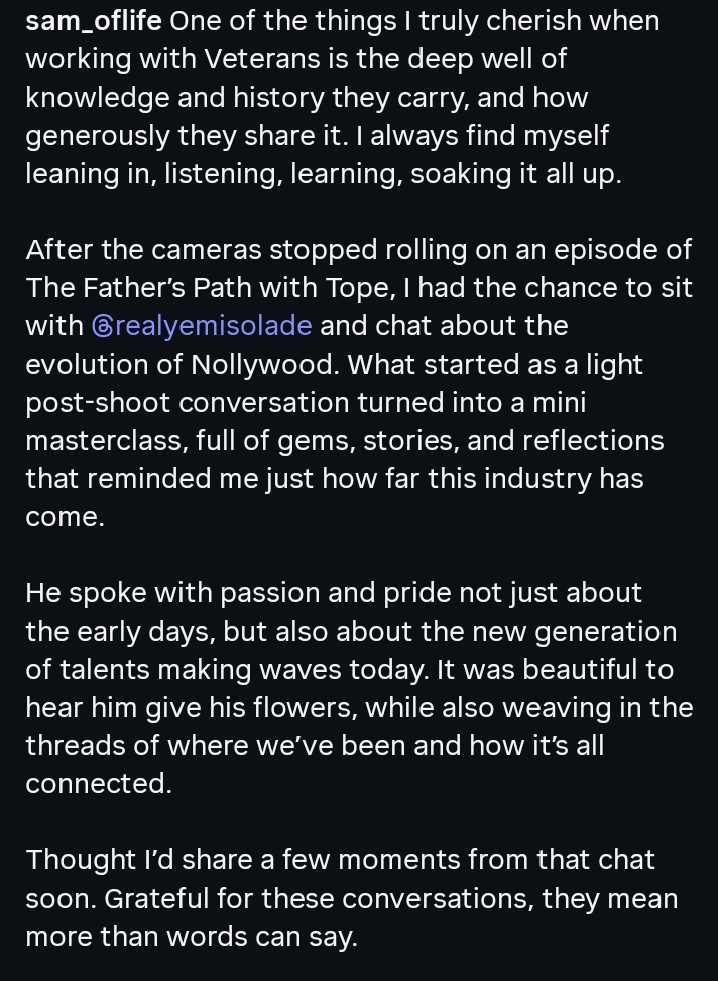
In a new video clip from a behind-the-scenes segment of The Father’s Path with Tope, hosted by actress Tope Olowoniyan, Solade tackled what he called the “misconception” that the English-speaking actors in Nigeria created Nollywood ahead of their Yoruba counterparts.
According to the seasoned actor, the Yoruba industry had a fully functional entertainment structure before the rise of Nigeria’s modern film era.
He explained that Yoruba theatre practitioners were already thriving with live stage plays and traveling productions long before the arrival of VHS tapes and home videos, which accelerated the rise of English-language films.
Solade pointed out that although English-speaking actors gained early national attention because of their proximity to media technologies, it was the Yoruba creatives who laid the foundation of what would later become Nollywood.
The actor further addressed claims surrounding Living in Bondage — the 1992 film often regarded as Nollywood’s first movie. While acknowledging its impact, Solade dismissed the suggestion that it marked the industry’s origin. He insisted that Yoruba actors were already producing visual and live content well before the film’s release.
The boldest moment came when Yemi Solade claimed that he preceded Pete Edochie, the legendary actor and star of Living in Bondage, in Nollywood.
WATCH HIM SPEAK IN THE CLIP BELOW


Solade’s comment has reignited debate about the true roots of Nollywood and whether the contribution of Yoruba cinema and its veterans has been consistently undervalued in mainstream discussions.
As reactions trail the viral clip, many are calling for a broader recognition of the pre-1990s Yoruba theatre influence that shaped Nigeria’s acting traditions and helped birth today’s globally recognized industry.